Building Britain’s resilience through defence
From shipbuilding to advanced digital systems, Babcock’s Tom Newman sat down with PoliticsHome to explain how defence investment fuels growth, innovation, and resilience – proving that national security and economic prosperity go hand in hand
Tom Newman, Babcock’s Chief Executive for Land and the UK Aviation Sector, has spent his whole career in the defence industry. He began as a graduate naval architect at Vosper Thornycroft on the south coast, working his way up to Head of Steelwork. When Babcock acquired the business more than a decade ago, he joined the group and has since held a series of senior leadership roles.
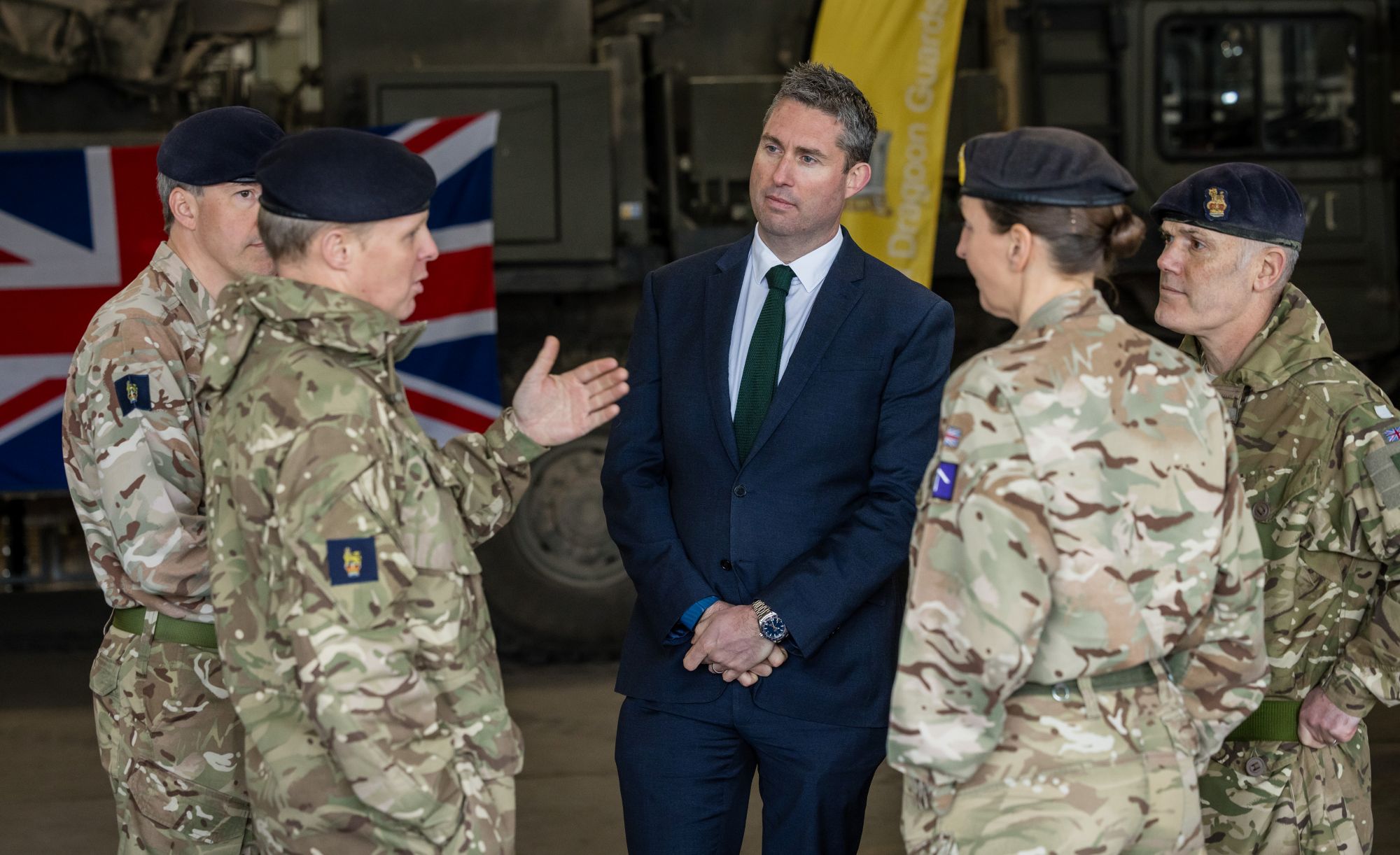 Tom Newman with the UK Ministry of Defence at the signing of a five-year British Army strategic support partner contract
His career has furnished Newman with a unique perspective on how the UK defence industry has changed during a period of significant shifts in the nature and extent of global threats. Newman believes that has shaped a new public and political consensus around the need for the UK to have full control over the systems and products that keep us all safe.
“We’ve seen how the world’s changed – Brexit, Ukraine, shifting alliances, and what it’s shown is the need for resilience,” he explains. “In defence, resilience means having sovereign capability. That means being able to design, build, and support the systems that protect the UK, under UK control. That’s something we’re absolutely focused on as a business.”
Throughout our conversation, Newman always emphasises the growing role that major defence businesses like Babcock play as a key “strategic partner” when it comes to the nation’s security. Babcock, he tells us, is now much more than an external supplier delivering cutting-edge platforms and products. It is a business that has become an integral part of a much broader conversation about how government thinks about security.
“We deliver across four sectors – aviation, marine, nuclear, and land,” Newman explains. “We operate in every region of the UK and in many countries overseas. What makes that strategic is the enduring nature of those relationships. We have very long-term contracts, and that both allows us and requires us to behave strategically, not just tactically. That’s a privileged place to be.”
That strategic role has an economic dimension as well as a military one. Defence is now seen across Whitehall as an important part of the UK’s growth story. Babcock’s numbers provide a compelling reason why this shift has taken place.
“We contribute £4.3bn to UK GDP and support over 67,000 jobs, including thousands in our supply chain,” Newman tells us. “We spend more than £550m a year with UK SMEs. A good chunk of that is in some of the most historically underinvested areas of the country. And we have over 1,800 apprentices and graduates in training.”
For Newman, this is not just about numbers on a page. Behind every individual statistic are real people and real communities that are benefitting from the UK’s world-leading defence industry while also helping keep Britain safe. For Newman, that is a source of personal as well as professional pride.
“I came into this sector as a graduate,” he tells us. “I’m passionate about creating all sorts of different career pathways to encourage people into the defence industry.”
Newman reels off an impressive series of examples of where defence investment is making a real difference to the lives of ordinary Britons from the south coast to the northernmost reaches of the UK. At Devonport in Plymouth, Babcock has worked with the city council and the Department for Work and Pensions to recruit people who were out of work into new roles. Similar programmes have been developed in their shipyard in Scotland. Babcock itself has employees in over 97 per cent of UK constituencies.
“It’s all about creating high-quality jobs in places that need them,” Newman explains to PoliticsHome. “And when those jobs are in defence, they are jobs that also keep the country safe.”
That point matters in the current political climate. In the past, defence spending was sometimes perceived as a drain on the public finances. Newman believes that framing has fundamentally shifted.
“I think it’s very clear that there’s been a huge shift politically in the UK around this – a recognition that defence investment is not a sunk cost, it’s something that creates long-term value,” he says. “For us, it’s about translating that investment into economic and social value –into skills, jobs, and growth.”
 Build partner for Patria's armoured personnel carrier to meet the operational requirements of the British Army
And every one of those jobs is directly supporting UK resilience and sovereignty in defence. Babcock has been central to work with the British Army on new vehicles and digital transformation. At DSEI this year, the UK joined the common armoured vehicle programme with Finland’s Patria, with Babcock as build partner. Newman argues that such partnerships bring world-leading technology to the UK and embed it domestically.
“By partnering with firms like Patria we can transfer the technology, embed it here, and make sure it sits in the UK as a sovereign capability,” he says. “That means it can be used regardless of what happens globally.”
Export opportunities are expanding elsewhere, too. In Scotland, the Type 31 frigate programme at Rosyth is already creating exports, with designs sold to Poland and Indonesia. The company is also engaged in the AUKUS programme to support Australia’s future submarines, and in secure communications within the Five Eyes community.
“I think the next decade could be the most exciting in Babcock’s history,” Newman says. “We are a trusted partner. That trust is what makes the UK a base for exports to allied nations. Keeping the UK safe is inextricably linked to keeping our allies safe.”
Newman is clear that defence investment underpins both security and prosperity. The sector sustains high-skilled jobs, spreads opportunity to areas that might otherwise have been left behind, supports SMEs, and creates exports that reinforce alliances.
“Defence spending is not just a cost. It’s a strategic investment in national security, in our economic strength, and in resilience,” he concludes. “It’s about defending the freedoms we value and our democracy. Babcock is now the strategic partner that government needs us to be.”
