Why Dover is still the nation’s gateway
Doug Bannister, Port of Dover, CEO, and Sir Chris Bryant MP, Minister for Trade, at the Great British Trade Reception at Labour party conference
From energy supply to digital borders, the Port of Dover is at the heart of the UK’s economic resilience. Cross-party voices across this year’s party conferences called for long-term investment to keep Britain competitive and its trade routes open for business.
There were plenty of policy differences on display between the Labour, Conservative, and Liberal Democrat party conferences this autumn. However, on one issue, all of the parties appeared to agree. Britain’s future as a trading nation depends on the gateways that connect it to the world. Across a series of events hosted by the Port of Dover, politicians from all three major parties echoed the same theme - frictionless trade and connectivity are vital for the future of the UK’s economy.
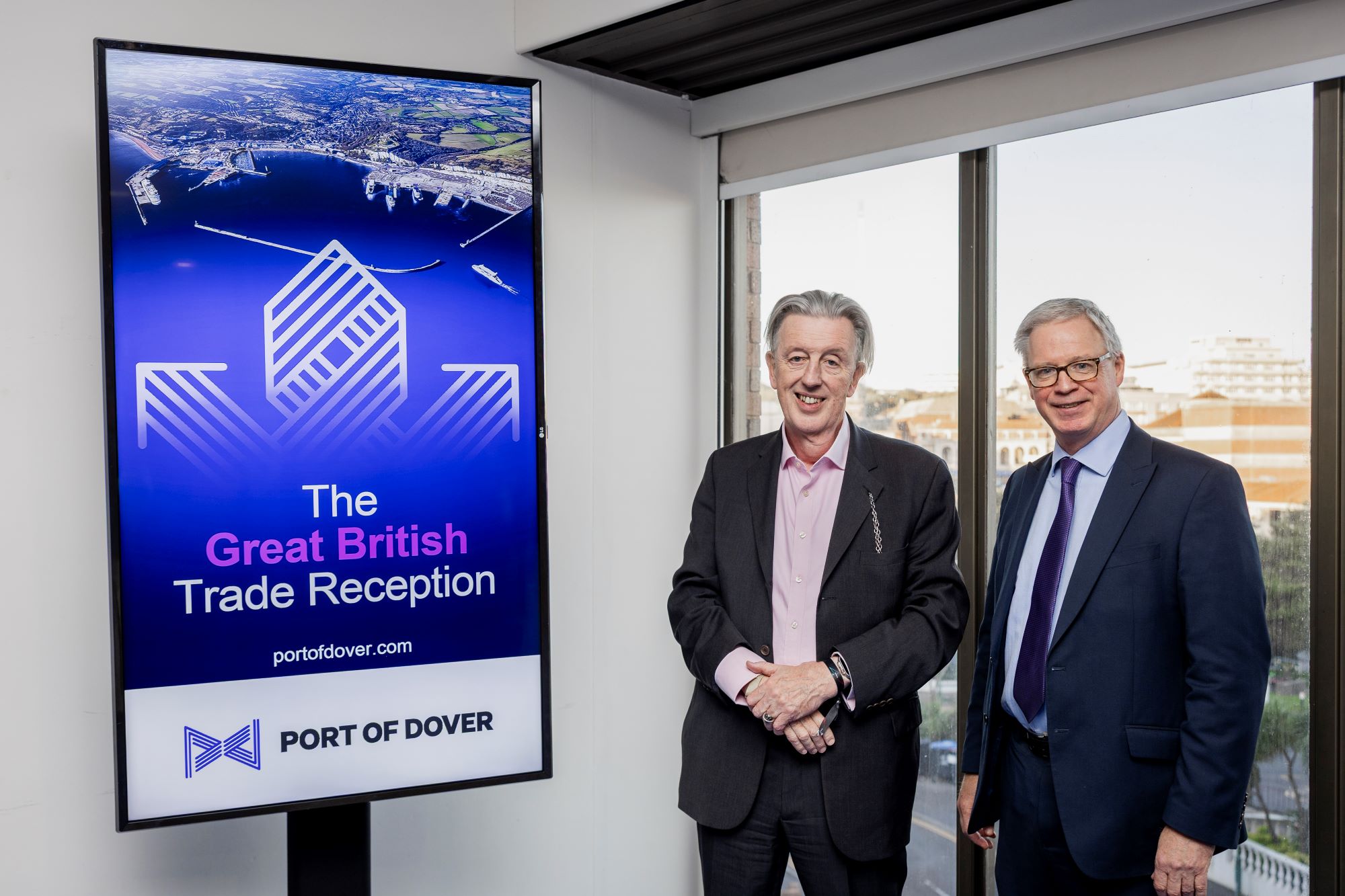 Paul Kohler MP, former Liberal Democrat Spokesperson for Transport and Doug Bannister, Port of Dover, CEO
Doug Bannister, Chief Executive of the Port of Dover, set out the context for discussions at all three conference events.
“When the Port of Dover flows, the British economy flows,” he told delegates. The numbers support Bannister’s claim. Each year, one third of all UK-EU trade, worth around £144bn, passes through Dover’s docks. With 120 ferry crossings a day, it is Europe’s busiest trading corridor.
“We are investing to grow that value to £173bn,” Bannister told conference attendees. “Because this is not just about a port. It’s about national productivity.”
The Port’s 2050 Masterplan outlines how new berths, expanded cargo facilities, and digital systems could make trade faster, cleaner, and more efficient. But Bannister warned that growth will depend on infrastructure and energy.
“To electrify short straits shipping and power new shore-side operations, we’ll need close to 170 megawatts of electricity by 2030. Today we have eight.” Across the Channel, he noted, Calais has secured 100 megawatts and Dunkirk has a nuclear plant on site. “That’s the scale of competition we face.”
At the Labour conference in Liverpool, newly appointed Minister for Trade Chris Bryant picked up the theme, setting out the government’s determination to secure frictionless trade and revive confidence in open markets.
“Why the passion for frictionless trade?” Bryant asked. “Because we’re a trading nation. For many people, Britain is the White Cliffs of Dover and ships leaving harbour. We are, and always will be, a seafaring trading nation.”
He told delegates that his priority is to remove barriers and complete the unfinished web of trade agreements left hanging after Brexit. “I’m a passionate believer in free trade based on fair principles and responsible business,” he said. “Practical, mutually beneficial deals are what we should do more of.”
But Bryant also issued a warning. “Protectionism has crept into politics across many countries,” he said. “I don’t believe in small-corner populism. Britain can be bigger and more ambitious on the world stage, and that starts with frictionless trade.”
At the Conservative conference in Manchester, Bannister again set out the Port’s ambitions, stressing that Dover’s reach extends far beyond the South East. “Half of our freight is destined for areas north of London,” he said. “This is a national gateway, not a regional asset.”
He highlighted Dover’s progress in digital innovation with £40m invested in facilities for the new EU Entry-Exit System, and the deployment of artificial intelligence that predicts traffic flow with 98 per cent accuracy. “It’s these technologies that let us plan, reduce delays, and move towards touchless travel and trade,” he said. “Brexit gave us the freedom to chart our own course. Now we must use it to lead in digital transformation and green supply chains.”
Jerome Mayhew, the Shadow Minister for Transport, reinforced the strategic case. “Maritime strength runs in our blood,” he told the audience. “It has shaped our history, and it will shape our future.”
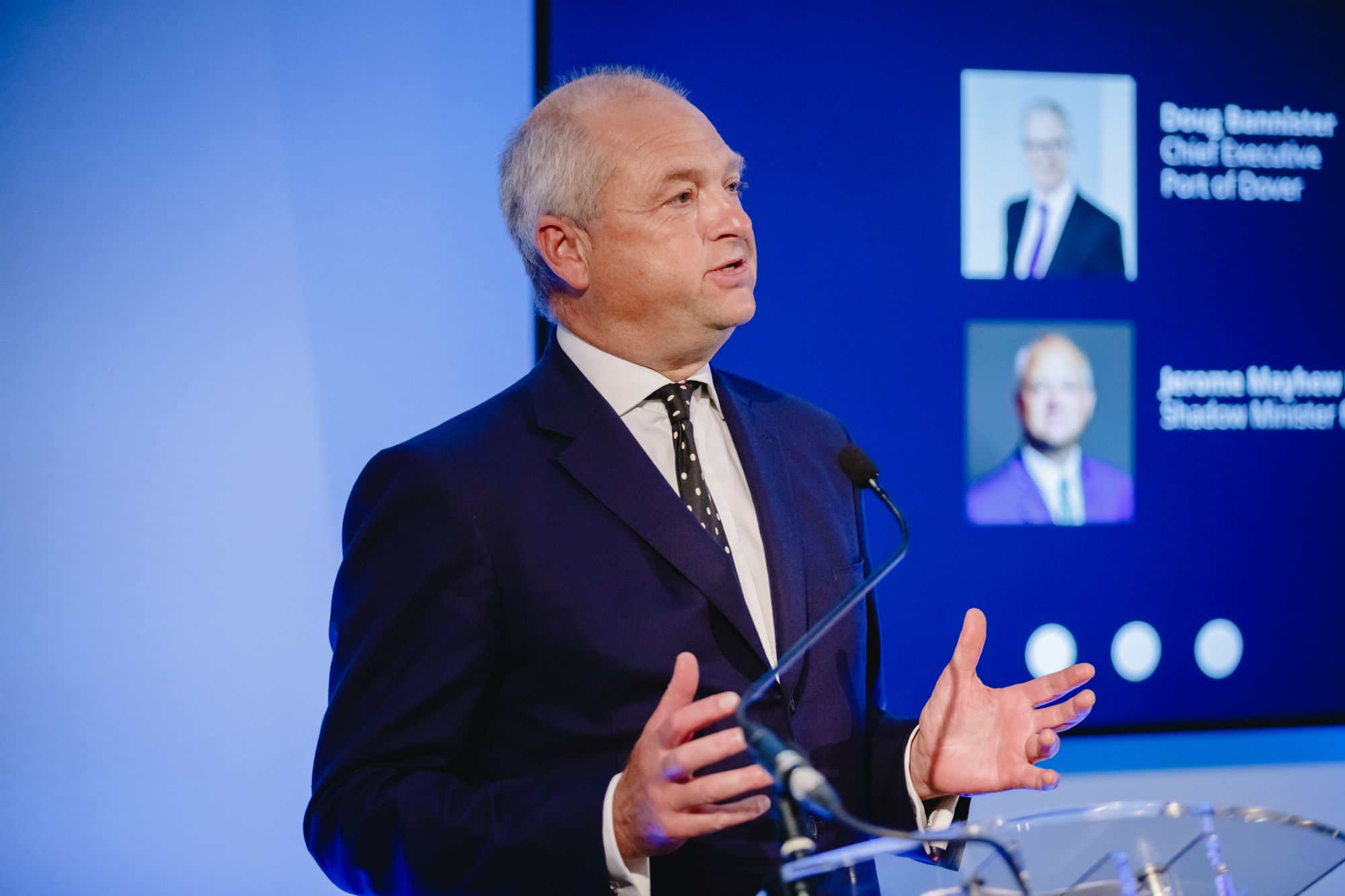 Jerome Mayhew MP, Shadow Minister
for Transport
Mayhew described Dover as “an artery through which flows the food we eat, the medicines we need, and the goods we manufacture.” If that artery falters, he warned, “the ripple spreads across the whole economy.” The challenge, he said, is to “remove friction and let Britain’s trade flow freely”.
Mayhew linked Dover’s agenda to wider transport reform. “Ports are not isolated islands,” he said. “Electricity, rail, and road connectivity are essential to move goods efficiently nationwide.” Long-term bottlenecks, from grid capacity to freight access, must be addressed if Britain is to compete. “We’ll remain true to our seafaring past and invest in our maritime future.”
At the Liberal Democrat conference in Bournemouth, then Transport Spokesperson Paul Kohler struck a similar note. “Dover is Britain’s bridge to Europe, our closest gateway to our largest trading partner,” he said. “A well-connected Dover is essential not only for growth but for cooperation and shared prosperity.”
Kohler praised the port’s long-term planning. “The 2050 Masterplan shows how to increase trade by 20 per cent, create thousands of jobs and regenerate coastal communities,” he told the audience. “It demonstrates what happens when investment, innovation, and environmental responsibility come together.”
But he also called for national policy to catch up with local ambition. “Ports must be treated as part of a wider transport ecosystem. Rail and low-carbon connections should be central to national policy,” he argued. “By combining digital borders, decarbonised operations and efficient inland transport, Dover shows how it’s possible to grow the economy while reducing environmental impact.”
As is becoming traditional, the conferences also included an evening social event, Dover Soul, where MPs and others could come together to celebrate Dover’s progress and continue the day’s discussions.
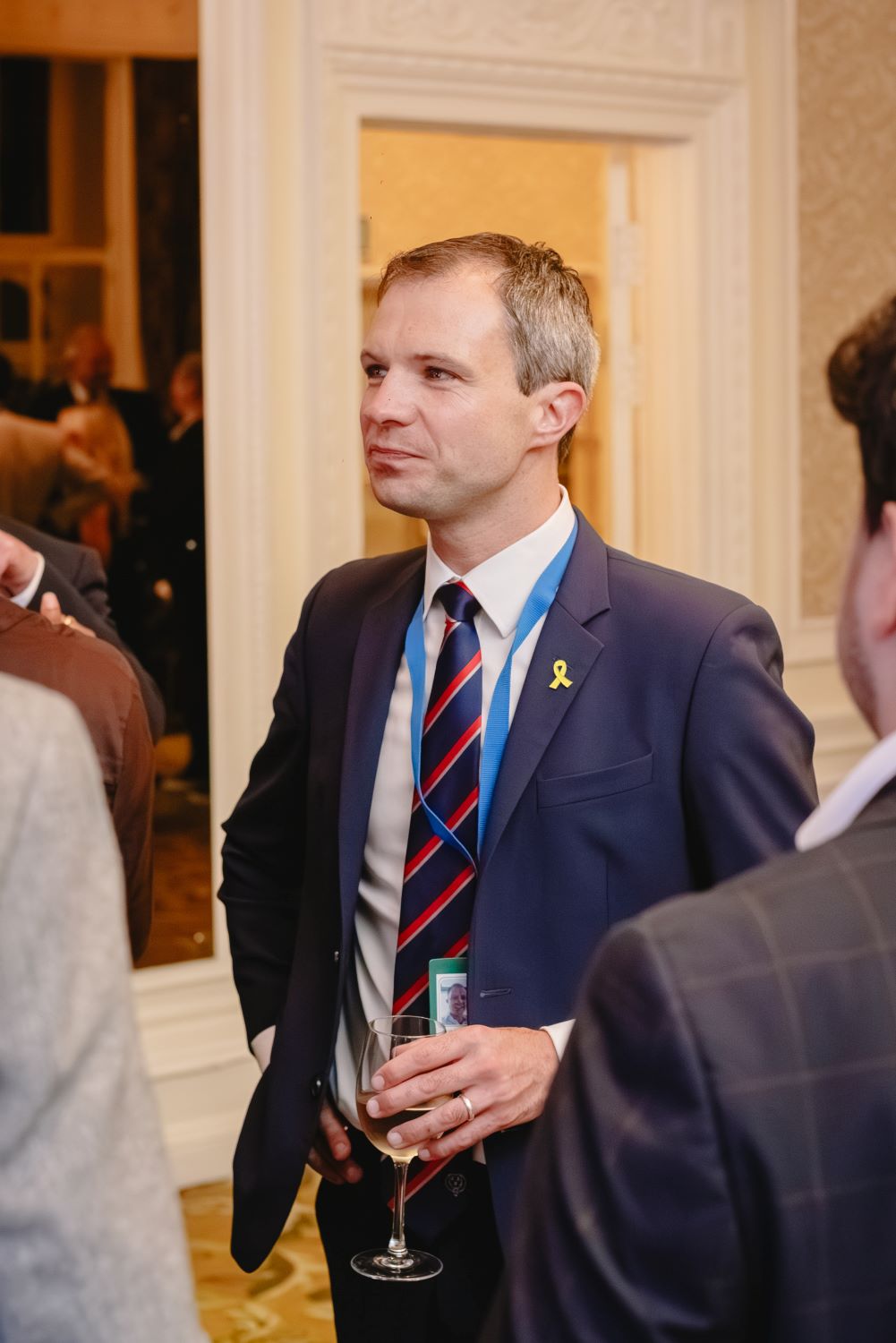 Andrew Bowie MP, Shadow Minister
for Energy Security and Net Zero,
attending the Great British Trade
Recepton at Conservative party
conference
“As far as Port of Dover is concerned, we consider ourselves to be also the soul of the nation,” Bannister told audiences, which included Labour MPs Tan Dhesi and Ruth Cadbury and Conservatives Gavin Williamson and Andrew Bowie.
Across all three conferences, there emerged a common view of Dover’s strategic importance to the nation. Labour, Conservatives, and Liberal Democrats all acknowledged that Britain’s trading strength rests on infrastructure that is modern, connected, and sustainable. Whether framed as a growth strategy, a net-zero mission, or an industrial revival, the fundamental underpinning was the same. When frictionless trading borders work, so does the nation’s economy.
For Bryant, it is also a matter of the UK’s core identity. “We are a seafaring trading nation,” he told the Labour audience. “That is who we are, and who we must remain.”
For more information about the Port of Dover, visit www.portofdover.com.
