The race to create more quality jobs in offshore wind is on
Liam Jackson made the transition from oil and gas to offshore wind five years ago. Credit: Ørsted
The offshore industry has a plan for how to deliver the 45,000 skilled jobs needed by 2030 to meet the UK government’s clean energy targets
Liam Jackson works as a senior project manager for Ørsted, a global leader in offshore wind. He’s based in Grimsby at Ørsted’s East Coast Hub – the world’s largest operations and maintenance base for offshore wind.
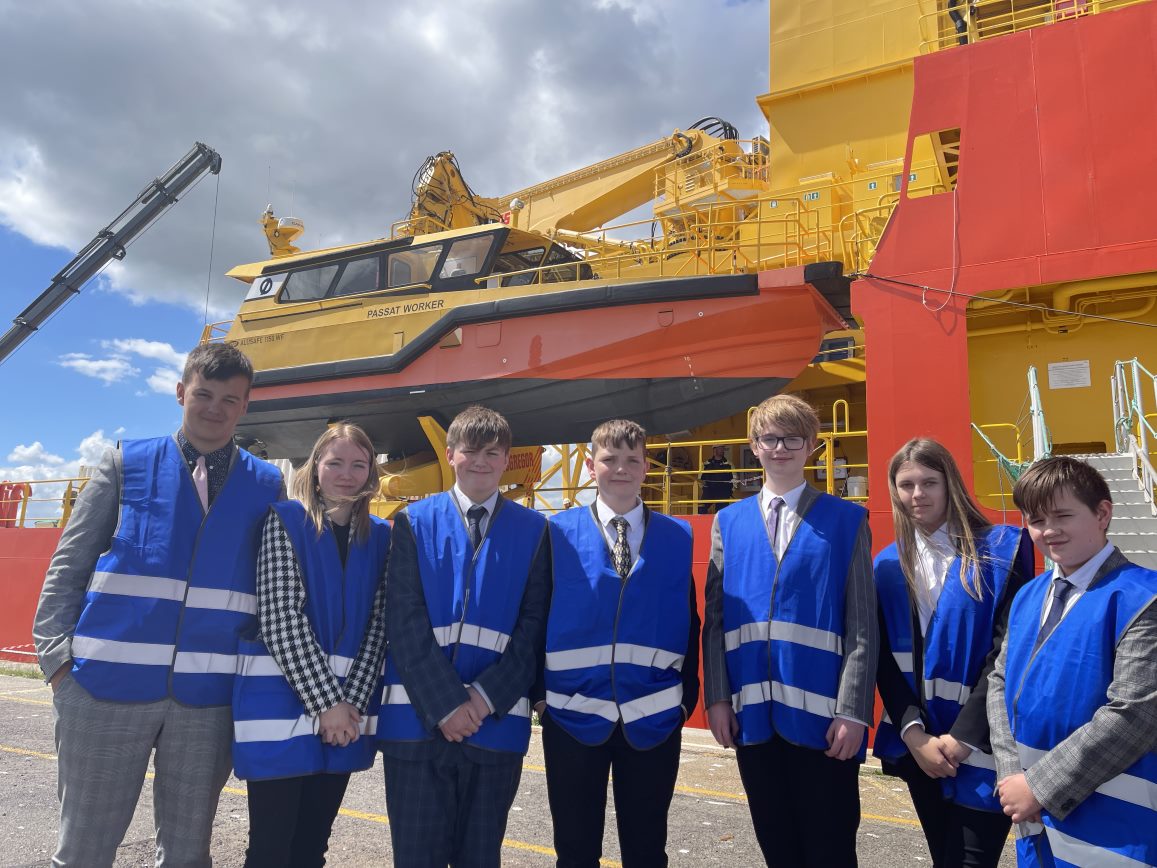 Students from Engineering UTC Northern Lincolnshire visiting Ørsted’s East Coast Hub in Grimsby
Credit: Ørsted
But he hasn’t always worked in offshore wind. The civil engineering apprenticeship he gained at Grimsby College in the early 2000s first led him to the region’s refineries, gas fields and chemical plants.
However, the 38-year-old father of two was inspired by the potential of renewable energy and was impressed by the sheer scale of the industry he saw growing out of his hometown.
For the past five years, Liam has been using his expertise to help Ørsted supply seven per cent of the UK’s electricity each year.
He’s not alone. The offshore wind industry’s workforce has already climbed to more than 30,000 in the UK – and to meet minimum government targets for the clean energy transition by 2030, 75,000 workers will be needed.
Currently, there is a skills shortfall. It will take greater coordinated action between industry, local and national governments, and the education sector to develop the right skills and build a diverse work force.
The good news in the race to create quality jobs is that we are not at a standing start. We are already data rich.
Industry has identified the critical and scarce roles that will be needed, mapped out the skills required for each, and the pathways to get people there. These include technical managers like Liam, as well as wind turbine technicians, high voltage technicians, installation engineers, fabrication specialists and planning officers.
We have a clear plan on how to deliver and are already driving progress on three priorities.
Firstly, we are targeting where we know the right skills exist. That includes attracting individuals like Liam working in related sectors like oil and gas, manufacturing, or the armed forces, and ensuring the right upskilling and training opportunities are available.
Key to our success will be delivering on the government’s recent commitments in the Clean Energy Jobs Plan to expand the Energy Skills Passport initiative and invest in regional skills interventions to help those in carbon-intensive industries transition to renewable energy.
Secondly, we must step up efforts to attract the next generation of energy workers to offshore wind, particularly those from coastal and industrial regions.
Ørsted has partnered with two government-funded University Technical Colleges in the Humber to prepare 14 to 19 year olds with the skills they will need to enter the workforce.
Our own apprenticeship scheme has also supported almost 100 wind turbine technician apprentices in our Grimsby and Barrow bases. We’ve recently begun developing shared apprenticeships in critical roles with other leading offshore wind developers – recognising that industry needs to work together, rather than simply compete for skills.
Finally, we need to ensure our jobs continue to be attractive and high-quality. That means inclusive, respectful and welcoming workplace cultures with safety as their bedrock, and career pathways to support development.
There is much to do to grasp this once in a generation opportunity to create high quality jobs as part of the green energy transition.
The offshore wind industry, the UK, devolved and local governments, and the education sector all have a plan. Now it’s time to deliver it.
Learn more about what Ørsted is doing to close the skills gap here.
