Between war and peace: future challenges in UK defence
Britain faces a new reality: neither at war nor at peace, the country must adapt its strategy, procurement, and investment in personnel to meet evolving threats
Luke Pollard: “We aren’t at war, but we aren’t at peace”
At a Labour Party Conference event hosted by BAE Systems, Defence Minister Luke Pollard told Sky News journalist Tamara Cohen that Britain’s security posture must adapt to an unfamiliar landscape. “We aren’t at war, but we aren’t at peace,” he said, highlighting a fundamental challenge for the Ministry of Defence (MoD): it still operates as if in peacetime.
The reality, Pollard said, is starkly different. The MoD recorded 80,000 attacks from state actors over the past two years. “Every single day, the UK is under attack from our adversaries,” he noted, pointing to sub-threshold threats such as cyber attacks and drone incursions in Eastern Europe. These acts are neither war nor peace, yet they demand urgent response.
“This blurred reality requires us to rethink how defence operates,” Pollard explained. “If we are at war, we know what we would do in that situation, and in peacetime, we can take longer to procure. But in this moment, we have to do things differently – a different legislative approach, a different spending approach, and a different way to look after the people who serve in our armed forces.” He argued that the “binary nature of peace and war is in many cases unhelpful.”
Fixing procurement
Faster procurement is essential to bolstering Britain’s readiness. But Pollard warned that the MoD’s rigid system “locks in a micro-management style” and “doesn’t breed efficiency” or allow innovation.
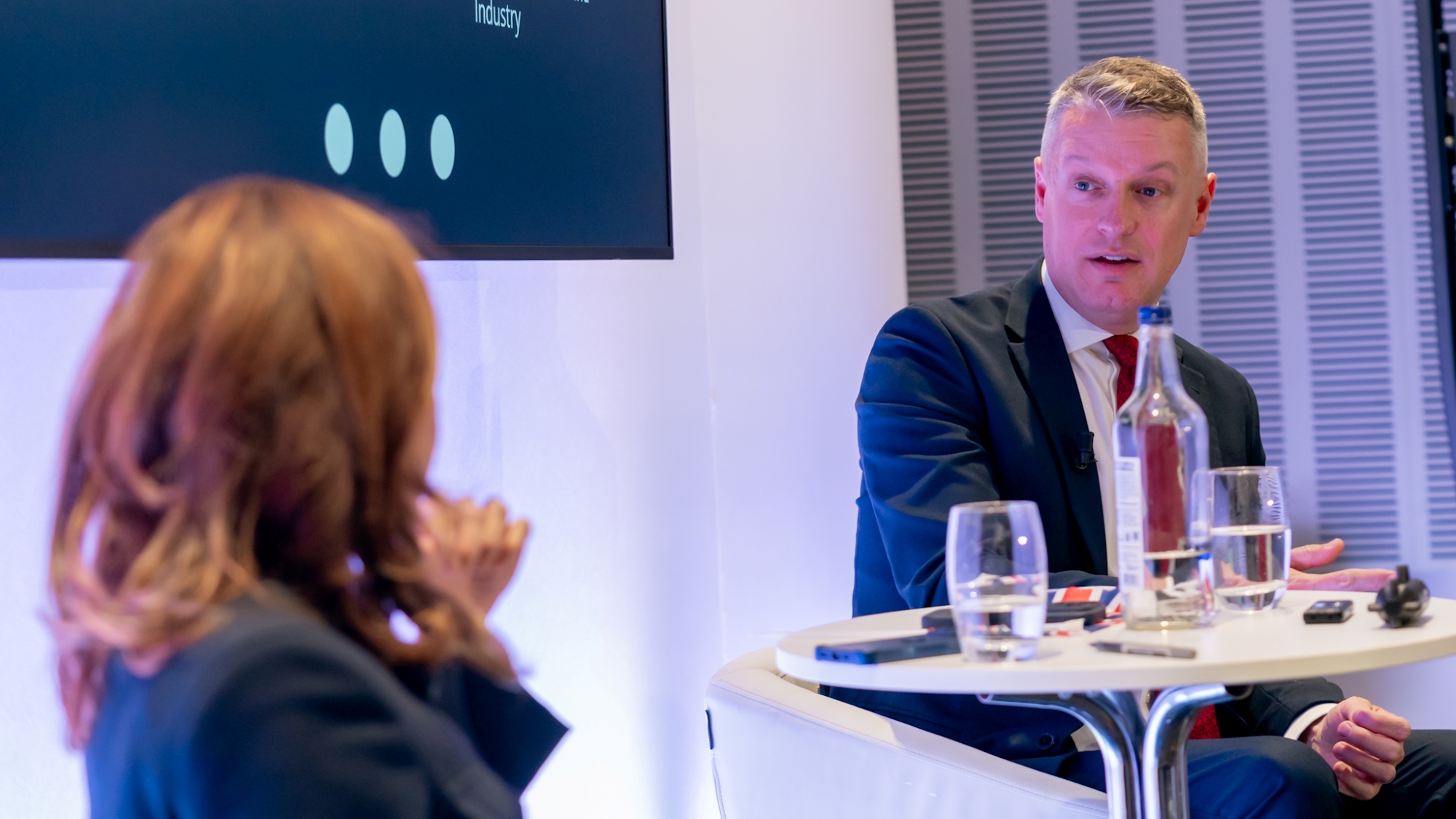 Luke Pollard MP, Minister for Defence Readiness and Industry, speaking at BAE System's Labour Party Conference interview
“We need to recognise,” he stressed, “that we need things at a pace which we have not needed for decades, that the threat is real and building.” While progress has been made around skills and investment, he added, “the brutal reality is that the hard decisions haven’t stopped yet.”
However, procurement reform is not just about readiness; it also supports industrial capacity and economic growth. Pollard backed building “all warships in Britain” and directing more of the defence budget to domestic industry, describing defence spending as “an engine for growth.” He pointed to the deal with the Norwegians for them to purchase Type 26 frigates as an example of collaboration that strengthens both industrial capability and international defence readiness.
Investing in people, not just kit
On defence spending, Pollard highlighted the additional £5bn this year and plans to reach 3.5 per cent of GDP by 2035. But he emphasised: “It's not just about how much money you've got; it's about how you spend it."
Investment in personnel, he said, is as critical as spending on equipment. The armed forces have received “the biggest pay rise in 20 years” and the end of sub-living-wage salaries. “We have chosen to value our people more, and that is as key a security consideration as investing in new frigates or in GCAP.” Pollard also announced £1.5bn for defence housing to address “black mould, leaky roofs, broken boilers,” describing accommodation as “in a shameful state.”
Backing Ukraine
Pollard closed by reaffirming Britain’s commitment to Ukraine, with annual support rising from £3bn to £4.5bn this year through interest from frozen Russian assets.
He also highlighted a new UK-Ukraine agreement to share battlefield intellectual property, which will help “use the data and innovations that we’re seeing on the front line in Ukraine to innovate with technology in the UK, export it back to Ukraine, and also keep that innovation for how we’re retooling up our own forces.”
“We will continue supporting Ukraine for as long as it takes,” he concluded.
James Cartlidge: “The threat we face is now”
At the Conservative Party Conference, Shadow Defence Secretary James Cartlidge struck a similar tone on urgency and caution but warned that current government plans fall short.
Cartlidge echoed Pollard’s concerns about procurement, describing a “parallel universe” where the UK procured rapidly for Ukraine at scale and pace, but has not done the same for its own capabilities. “That’s extraordinary,” he said.
Though Cartlidge acknowledged that the Labour government “talks a good game,” he expressed disappointment in the pace of change: “The threat we face is now. Most of the government's promises are things in the 2030s – that's far too far away." He argued that Treasury caution remains a key obstacle. While funding for Ukraine is already agreed, no further money can be allocated for procurement until savings are made, a stance he called “extraordinary given the threat we face. They need to move much faster.”
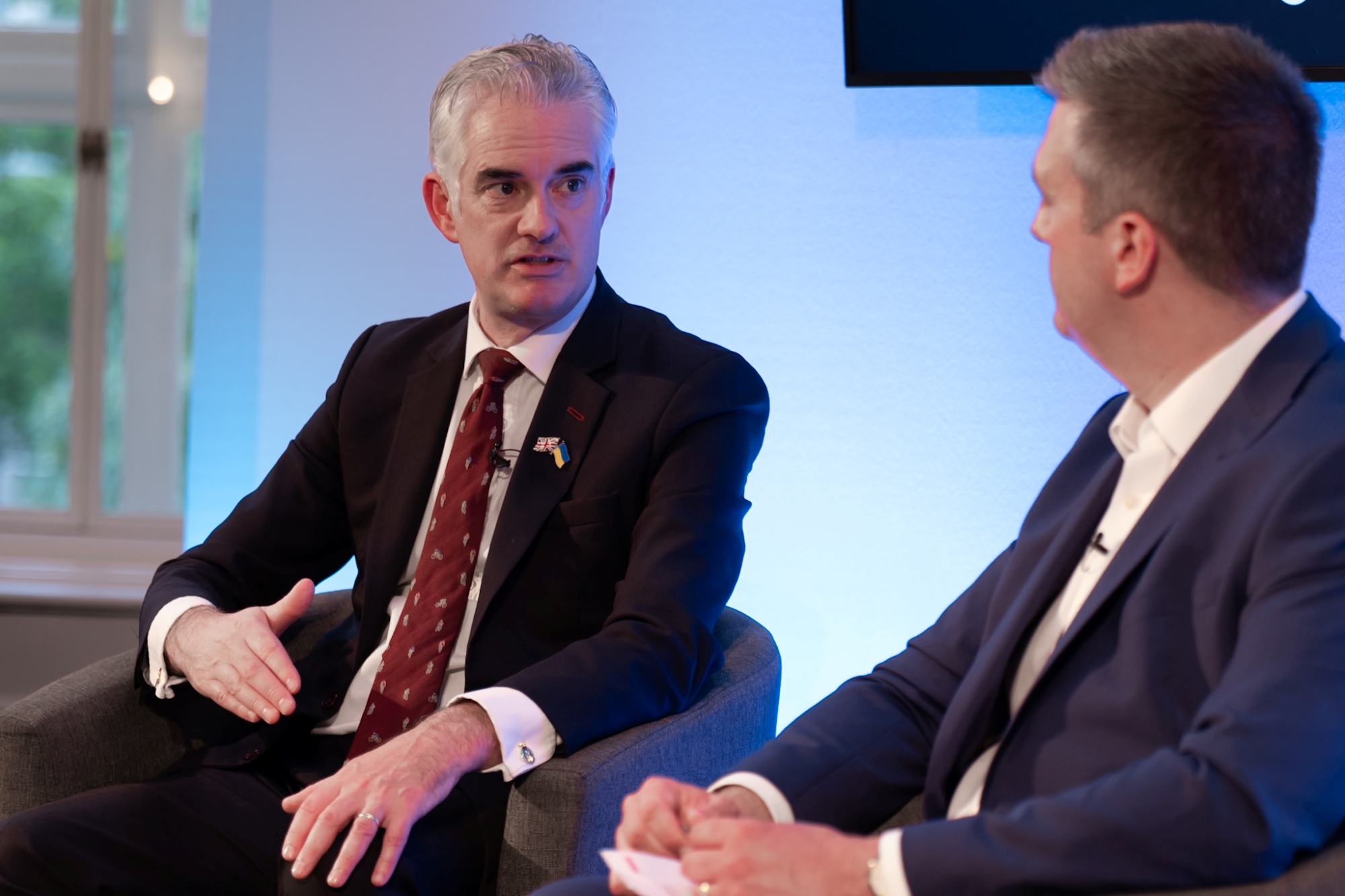 James Cartlidge MP, Shadow Secretary of State for Defence, speaking at BAE System's Conservative Party Conference interview
Alongside calling on the Treasury to release enough money for the armed forces, Cartlidge said it isn’t just the kit that matters: “the key is the data link between those on the front line, those in the army, and the SMEs.” Where British defence SMEs have succeeded, it has been through direct feedback from the frontline, allowing further product development. “This is the reality of modern warfare,” he said.
Standing with Ukraine and our allies
On NATO, Cartlidge was unequivocal. "NATO is not some foreign group of nations – it's us, our closest allies, the means by which we defend against an existential attack," he said. He praised British volunteers fighting for Ukraine and commended former MP Jack Lopresti for joining the Ukrainian military as "extremely brave." Sustaining support for Kyiv is both morally necessary and strategically vital, especially as some European allies "start to wobble." "The best way to stand up to Putin is to show we are strong with our allies," he said.
The fiscal reality
Cartlidge concluded with a warning on Britain’s fiscal constraints. On the government’s claimed 5 per cent defence spending commitment, he said: “This area is in danger of entering Monty Python territory. You can describe money how you like, but if you want to spend real money, you've got to take it from somewhere.”
The UK faces dual dependencies: “We can't have a growing welfare state and falling defence expenditure, and we can't keep depending on the US.” Both will force the country toward greater productivity or risk serious consequences.
To find out more about BAE Systems and its contribution to defence and security, as well as the UK’s economy, please visit https://www.baesystems.com/en-uk/our-contribution-to-the-uk-and-its-regions

