Securing the Legacy of Britain’s Nuclear Pioneers
Nuclear operators preparing waste drums that will store graphite and stainless steel waste from AGR fuel dismantling.
When Parliament debates nuclear energy, the conversation is usually about tomorrow's reactors. Yet far less attention is paid to the Advanced Gas-cooled Reactor (AGR) stations that have powered Britain for decades, the electricity they continue to generate, and the vital work that begins once they stop.
Behind the UK's ageing reactor fleet moving from generation to defueling and decommissioning, sits a wider national system: the people, facilities, transport capability and long-term stewardship needed to manage nuclear materials safely, securely and responsibly. It is complex work, often unseen, but essential to the UK’s energy security, environmental responsibility and value for the taxpayer
Across the Nuclear Decommissioning Authority (NDA) group, our responsibility is at the heart of the national system to keep the lights on and support our generation fleet.
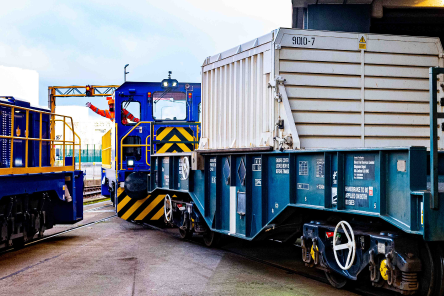 Flask containing spent fuel arrives by train into the Fuel Handling Plant on the Sellafield site.
For decades, the UK’s AGR fleet has played a central role in the country’s electricity system. Since the 1960s, AGR stations have provided reliable, low-carbon power. Today, four stations from the original fleet continue to generate, while others have moved into defueling and decommissioning.
Working in close collaboration with EDF, the operators of the AGRs, the NDA group brings together the complementary capabilities of Sellafield Ltd and Nuclear Transport Solutions to safely transport, receive, dismantle and store spent fuel from those stations. Every tonne of fuel received represents electricity already delivered to homes, schools, hospitals and businesses across the UK.
Today, Sellafield receives around 200 tonnes of spent AGR fuel each year. That fuel has already generated the equivalent electricity needed to boil more than 1.7 trillion kettles of water.
Supporting a national programme
Sellafield is often described as a decommissioning site. That is true, but it is not the full picture as it also plays a critical role in supporting the UK’s AGR operating programme.
It safely receives used fuel from power stations that are still generating electricity, helping those stations continue to operate. At the same time, it supports stations that have finished generating, enabling them to defuel safely before moving into the next phase of their lifecycle.
That places Sellafield at the heart of a nationally important collaboration between EDF, the NDA and its group, in conjunction with the Office for Nuclear Regulation, the Environment Agency and Scottish Environment Protection Agency. Once reactors are defueled and the fuel transported to Sellafield, ownership of the AGR sites transfer to NDA and stewardship passes to Nuclear Restoration Services (NRS), the NDA group's centre of excellence for reactor decommissioning. Drawing on decades of expertise gained through the decommissioning of the UK's Magnox and research reactor sites, NRS will apply proven skills, innovation and experience to safely decommission the AGR fleet, reduce long-term hazards and restore sites for future generations.
It is a reminder that decommissioning is not simply an end point. The NDA group sustains national capability, protects specialist skills, supports communities and gives the UK confidence that it can manage its nuclear legacy responsibly.
Adapting to meet the country’s needs
At the centre of this work are some of Sellafield’s most important operational facilities: the Fuel Handling Plant, the interim AGR Storage Pond, the Thorp Receipt and Storage Pond, and the Flask Maintenance Facility. These facilities have supported the UK’s nuclear programme for decades and they continue to evolve to meet national need.
As AGR stations move through different phases of their lifecycle, that ability to adapt matters, as demand across the system changes. Fuel movements increase, operational requirements shift, and reliability becomes even more important.
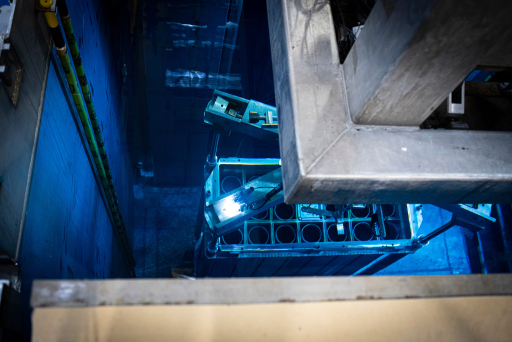 63-can rack in Thorp pond - a space saving rack that allows Sellafield Ltd to store more spent fuel.
In recent years, Sellafield has introduced more efficient storage arrangements so that 50% more spent fuel can be safely stored in the same pond. It has improved how fuel is received and handled, strengthened the management of pond conditions, and enhanced process flows to support more reliable flask maintenance.
Without the development of the new storage rack, a new storage pond would have been required, potentially costing billions of pounds. This has helped Sellafield meet the needs of the national programme without requiring new infrastructure and ensures we protect value for the taxpayer.
Ready for the next phase
The UK has already entered a major period of AGR transition. The NDA group successfully supported the defueling of Hunterston B and Hinkley Point B on time and on budget, and continues to support the defueling of Dungeness B. In doing so, the system has managed a significant increase in fuel movements, rising from a historic average of around 150 tonnes per year to between 200 and 300 tonnes in recent years.
On April 1st 2026, 246 staff transferred from EDF to NRS at Hunterston B, bringing their existing expertise and ensuring the continuation of skilled, well-paid jobs at the site. It involved the transfer of thousands of files and records, more than 20 contracts and six site licences and permits from EDF to NRS.
This transfer provides the template for Hinkley Point B transferring to NDA/NRS in October 2026, where we will continue to build on this success that was the result of careful planning, strong partnerships and the ability to adapt facilities and operations to changing national demand.
Looking ahead, there is more to do. While further AGR life extensions may still come forward, planning is already under way for the next peak defueling phase. The four remaining AGR stations are currently expected to commence defueling by the end of the decade, which will once again increase the volume of fuel moving through the system.
The bigger picture
The decisions being made today will shape the UK’s ability to manage nuclear materials for decades to come.
By making the AGR defueling programme efficient and reliable, Sellafield, with the support of the capabilities across the NDA group, is helping reduce the overall cost of decommissioning for the UK taxpayer. By safely managing spent fuel, it supports environmental responsibility and long-term stewardship. And by maintaining the capability to receive, handle and store AGR fuel, it helps keep future options open as policy and technology evolve.
The UK’s nuclear story is not only about the electricity already generated. It is also about how the country responsibly manages what comes afterwards.
The NDA group has been solving complex nuclear challenges for generations. As the AGR programme evolves, so will we. By strengthening resilience across our facilities and operations, we are preparing for what comes next and continuing to play our part in the UK’s nuclear fuel cycle.
We have been innovative problem-solvers for 80 years. The next challenge is already in front of us, and we are ready to meet it.
