There Is Too Much Westminster "Doomerism" About Artificial Intelligence, Says AI Minister
Kanishka Narayan attends Prime Minister Andy Burnham's Cabinet as Minister for Artificial Intelligence (Alamy)
10 min read
The AI minister has said the government must find a middle ground between “boomerism” and “doomerism” on artificial intelligence.
Kanishka Narayan added that the government must "make the weather" when it comes to public opinion on AI, rather than simply following what opinion polls say.
He spoke to PoliticsHome at the Labour Party conference in Liverpool earlier this week, as AI becomes an increasingly salient talking point in British politics.
According to Narayan, the "median" view in Westminster on AI is too negative, and the government should position itself closer to the middle ground.
“If we take either the path of extreme boomerism of our tech and just say ‘go, go, go’, we would have done a disservice to the British public view. If we take the path of extreme scepticism and doomerism, which I think is the median view in the Westminster bubble, I think we would have done a disservice to the British public view," he said.
“The only view that is an appropriate democratic representation of the British public view is to take all of that together, and also to shape the practical instantiation of that, rather than to simply take polls as both reading the weather and making the weather. We have to try and make the weather.”
Numerous tech industry insiders, including an employee of Anthropic, have issued warnings in recent months about the risk of an AI apocalypse, in which the technology could “kill all humans” in the next decade.
According to Narayan, who was appointed as a junior minister for AI and online safety last year before being promoted to the cabinet table this year by Prime Minister Andy Burnham, these warnings should be taken seriously because they are “backed up by the evidence that I’m seeing”.
“I'm absolutely never going to belittle or diminish the scale of concern, and that's exactly why we're trying to move extremely fast, both on testing, on defending and resilience, and on building capacity," he said.
Technology as an industry has not engaged sufficiently with politics and the British public
However, Narayan is concerned that the media and politicians can overstate public fears about the existential risks posed by AI. As AI minister, he wants to build greater public trust in the technology.
“Technology as an industry has not engaged sufficiently with politics and the British public," he admitted.
"It's also true that people who represent the British public's views, through in particular media, society, and civil politics, have done a very bad job of representing the richness and nuance of public influence.”
Narayan has used AI-generated synthetic focus groups provided by a private company, particularly while he was a backbench MP, to test public opinion on AI and other issues. The model is trained on data from real-life focus groups.
“They have a chatbot interface, and you can just say, ‘I want to try and do a speech about this; here is a broad-brush draft of my speech. What do you think, can you do some message testing with your synthetic focus group?’
"You might not get as much real-time understanding because there's a lag between when they did the real focus group, but segmentation and views don't change that much, so on broad-brush questions like how should I think about AI, doing static focus groups with that is very useful.
"It effectively meant that all of us in politics, instead of just the Labour Party HQ and No 10, being able to use focus grouping, were able to effectively challenge ourselves in our thinking by being able to do that."
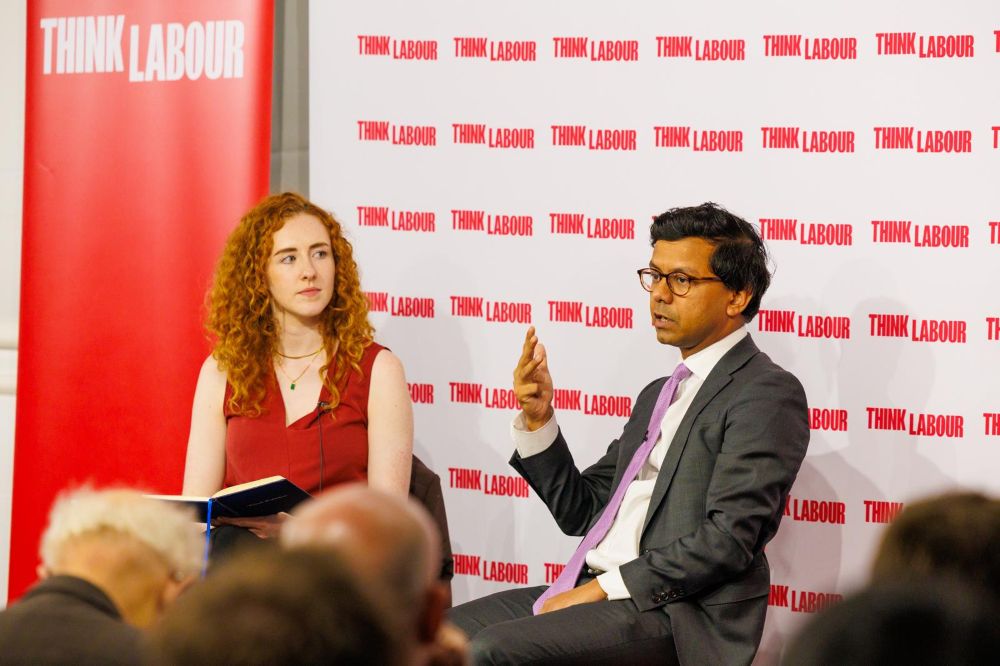 (Andrew Porter Photography)
Despite his own enthusiasm for the technology, Narayan is “sceptical” about putting too much of his own private data online, so he mostly limits his use of AI chatbots to an “authorised” professional setting.
The minister also does not use AI for tasks that might limit his own capacity to think for himself, including writing his speeches or carrying out people management tasks.
“I never use AI to write speeches because I actually really love the ability to craft speeches, and as a consequence of doing so, clarify my own opinion,” he said.
“So I try not to use AI for those reasons. Not because I think AI is bad at the business; it's actually in some cases pretty good, potentially better than others, but for me, it's really important not just to preserve private data, but also to think: what are we doing to our capacity over time?”
The minister said that the British public’s fears about AI are not as salient in political debate as they are in the US, and argued that the British public is “most consistently extremely against giving our data to foreign companies”, while also being concerned about the impact of AI on the jobs market.
This is why Narayan believes that building the UK’s sovereign artificial intelligence strategy is crucial. The government has designated five AI Growth Zones (AIGZs) across the country to accelerate the construction of large-scale AI data centres and boost local digital economies.
However, tech industry bodies have warned about a gap between the aims of these zones and their deliverability, with several having faced setbacks in their development.
Narayan admitted the pace has not matched what he wants it to be.
“If people want to build a dashboard and attract where we are, I'm super happy to be held accountable for it,” he said.
“I want to do better in terms of pace,” he continued, adding that the government had made policy changes late last year to accelerate grid connections and planning.
“The pace with which I would like that to happen has not been the pace in practice, and so I'm very focused on rolling up my sleeves on all of those five sites to make sure that we can move faster in execution.”
He dismissed a report by The Guardian that showed the government does not know exactly what UK data centres are actually used for.
“What I'm absolutely not trying to do is fail to build the absolute minimum level that this country needs, which is what we're really aiming for, and even within that minimal amount, be extremely picky about making sure that we're forcing every unit of that for usage in one area or another.”
While the AI Growth Zones would provide energy discounts to some qualifying AI data centre operators in specific regions, Narayan rejects the idea of setting standardised mandatory incentives or discounts across the country for residents where new data centres are built.
the biggest capital investment cycle of our lifetime, probably since the railroads
While he believes building public consent is important, he said he is “not wedded to a singular way of driving that through central diktat”, and thinks that reform of the planning process is needed instead.
He also wants to gain public consent for data centres by communicating the potential manufacturing jobs created and the positive impact of investment – “the biggest capital investment cycle of our lifetime, probably since the railroads” – which he thinks could also help to drive investment in clean energy.
“While we're building this, we should be very clear about the scale of what we're trying to build. We are not trying to build a ton of data centres in every postcode. That is not the plan.”
There have also been numerous major hacking incidents involving AI agents across the world in recent months, including a rogue OpenAI agent hacking Australian government websites and systems in June. OpenAI has confirmed that it is also reviewing a report of a failed hacking attempt against a Canadian government body. The incidents have raised major concerns about tech companies’ grip on the technology.
Narayan said that the UK’s reliance on the US for access to frontier large language AI models – the most advanced, high-capability artificial intelligence systems – is his biggest concern when it comes to AI security.
“If you think about all the constraints that apply, within those constraints, what is the maximum control that we can get?" he said.
"That's the question that we have to answer. Across the three dimensions of testing, defending, and building, there is a lot more that we can do than we have done historically. None of it gives you complete control because it's not possible in this world.
“We need a major uplift in our cybersecurity and in some part of our security defence as well. And actually, as a country, we have great capability there. It's just a question of now executing on it.”
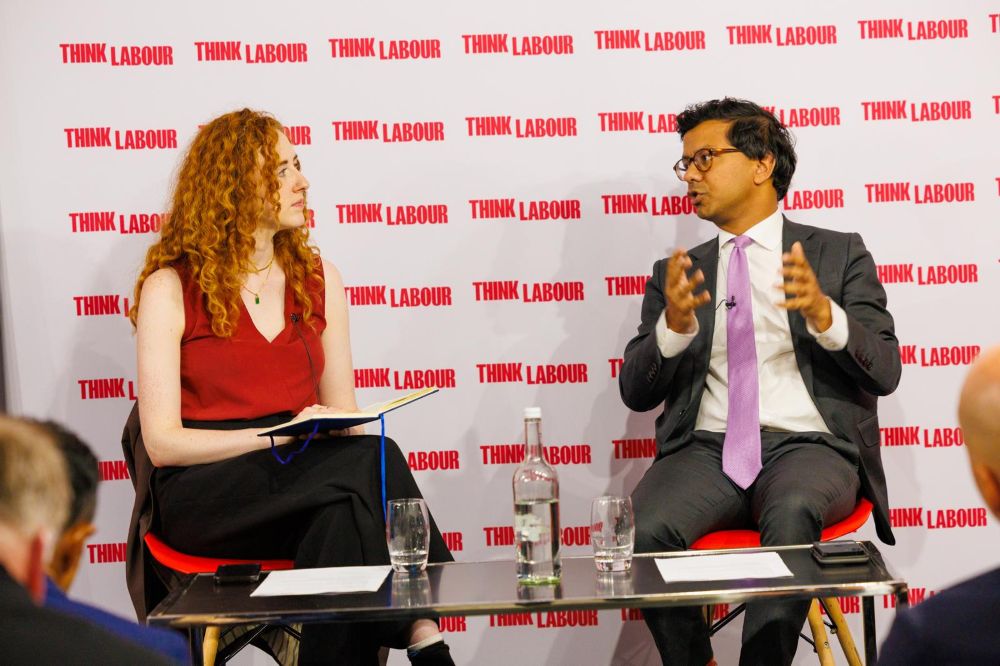 (Andrew Porter Photography)
The minister said that the G20 summit next year, to be hosted by the UK, will be crucial for the UK to be able to exert control and convene world powers to agree on values surrounding tech.
In his speech to the conference, Burnham said he wants to see the UK become a “global leader” and an “honest broker” in AI.
He added that at the G20 next year, he wanted to put AI “centre stage” and work with the other G20 nations to “develop a new global code to capture its benefits whilst being clear-eyed about its risks”.
Former prime minister Keir Starmer was described by those who worked with him as being enthusiastic about the benefits of AI. Asked whether he feels the same about Burnham, Narayan said that Burnham's pledge to put AI centre stage was a "maximalist ambition".
Narayan added that the Prime Minister’s first personal request upon promoting him was to ask him to prioritise creating regional population health datasets that match up with genetic data to provide better services for patients and drive foreign investment.
“He's now said that to me three times,” Narayan said.
During his tenure as Mayor for Greater Manchester, Burnham oversaw the region's resistance to awarding any contracts to the US data analytics giant Palantir, arguing that local data platforms functioned better and strengthened public trust. There are now questions over whether the PM will translate this into national policy by exercising an upcoming break clause to cancel the NHS's £330m contract with Palantir.
As the first AI minister to sit on the cabinet, Narayan said he now spends “most of my time convincing the cabinet, my parliamentary colleagues and the bubble that technology is the way that we can achieve our primary political growth.”
“I tried to bring in the last year a startup philosophy to government, and I think we now need to bring a sort of government philosophy to startups and technology,” he added.
For Narayan, a distinctly Labour vision for AI should be framed around how people’s lives will directly be improved by 2030, listing his hopes that they will have higher wages, jobs that give them confidence in their own and the country’s future, and an education attainment gap that is closed through tech enhancing the work of teachers.
“And in all of that, when people come home from school and from work, they will feel like when they go on their screens or their devices, they are doing so with a sense of control over their lives," he said.
