Can Labour Persuade The Public To Get Behind Digital ID In 2026?
7 min read
The government faces what one Labour MP described as a “ticking time bomb” in its bid to persuade the public to get behind its digital ID policy next year.
The government has said that it wants to make digital ID mandatory for right-to-work checks by the end of the current Parliament in 2029.
Getting the policy right is a challenge, as is persuading the public to support it. PoliticsHome analysis has found that in some Labour-run constituencies, an estimated one in 16 constituents recently signed a petition protesting the introduction of digital ID.
While the idea appeared to enjoy public support before Prime Minister Keir Starmer unveiled the policy in September, a survey published by think tank More in Common shortly after the launch found that net support for digital ID had fallen from 35 per cent in June to -14 per cent in the weekend after the announcement.
In late October, the information commissioner warned that without public support, the policy would not succeed.
The vision
The original sell for the digital ID scheme was that it would help tackle illegal migration, but the government appeared to change tack soon after, instead seeking to emphasise the positive impact that the scheme could have across the public sector.
PoliticsHome understands that there is an acknowledgement within government that the original argument around tackling illegal working and how it could help combat illegal immigration was badly explained. However, there is a belief internally that there is still a chance for this argument to be a success.
As recently revealed by PoliticsHome, ministers are set to tour the country early next year and speak to members of the public directly about the digital ID policy.
The consultation is viewed as an opportunity for a major reset in how the policy is being communicated.
The challenge facing ministers in changing public opinion appears significant.
At the beginning of December, a packed petitions debate discussed what one MP described as “the fourth most signed petition in the history of parliamentary e-petitions”, which called for the government to backtrack on the policy.
PoliticsHome analysis shows that in 120 Labour constituencies across the UK, more than one in 20 constituents are estimated to have signed the petition, comparing signatories to population estimates. The petitions committee aims to ensure that each individual who signs the petition can only sign once, although some duplications may fall through.
Cabinet ministers Bridget Phillipson, Lisa Nandy, Jonathan Reynolds, Yvette Cooper, Ed Miliband and John Healey all have constituencies with these instances of signatures.
Writing for The House last month, the Tony Blair Institute (TBI) think tank, which strongly supports a policy of digital ID, argued that government messaging around it must focus on how it could make the lives of everyday people easier.
"Public services are broken. On average, Britons spend 1.5 weeks a year dealing with bureaucracy. Digital ID is an essential piece of the new infrastructure we need to fix this," the TBI wrote.
Some Labour MPs believe it would have been wiser for the government to have made the scheme voluntary at first, to allow the public to see the benefits of such an approach.
Bad actors
The Labour government has also been faced with the challenge of overcoming misinformation and disinformation about digital ID, which spread widely and rapidly following Starmer's announcement.
The BBC was forced to apologise after its comedy TV show Have I Got News For You aired the false claim that a company run by the son of former prime minister Tony Blair, Euan, had been awarded a government contract the produce the scheme.
Secretary of State for Science, Innovation and Technology Liz Kendall told MPs in October that there had been "a lot of misinformation" and "scaremongering" circulated about digital ID.
The Labour MP for Milton Keynes Central, Emily Darlington, told PoliticsHome that she is concerned about well-funded campaigns trying to derail the government’s efforts by “deliberately putting misinformation out there”.
Darlington warned that there is an aspect of “unprecedented territory of how you conduct proper consultation in this kind of environment”.
She also lamented the narrative that had emerged around digital ID, saying it has become “full of conspiracy theory stuff intermixed with stuff that really does need to be discussed”.
“How you pull the two of them apart is really going to be quite a challenge.”
Alexander Iosad, director of Government Innovation Policy at the TBI, said that opposition to digital ID picked up by opinion polls is not a "unified block", arguing that there is a group that has “principled opposition to digital ID”, and those who have questions about what it will look like, what it will achieve and how it is going to keep the public’s data safe.
“The questions around implementation, around security, around privacy, all need to be addressed. We also know from global experience that those are all solvable questions,” he said.
The nuts and bolts
The government is yet to put a number on the cost of developing the digital ID itself, but pushed back strongly against the Office for Budget Responsibility (OBR) prediction that the policy would cost £1.8bn over the next three years, arguing that the design of the scheme is yet to be decided on.
Some, including the TBI, argue that the scheme would in effect pay for itself, with modelling produced by the think tank suggesting it could generate fiscal benefits of at least £2bn a year by the end of the Parliament.
We also know that there is no extra cash coming; the government has said that the cost of the scheme will be met out of existing budgets.
What the legislation for digital ID will look like is yet to be decided.
But one aspect that the government will certainly need to legislate for is how the scheme can be used by future governments.
Parliamentary secretary for the Cabinet Office, Josh Simons, said in December that the legislation for the scheme would “establish a clear legal framework to prevent scope creep”.
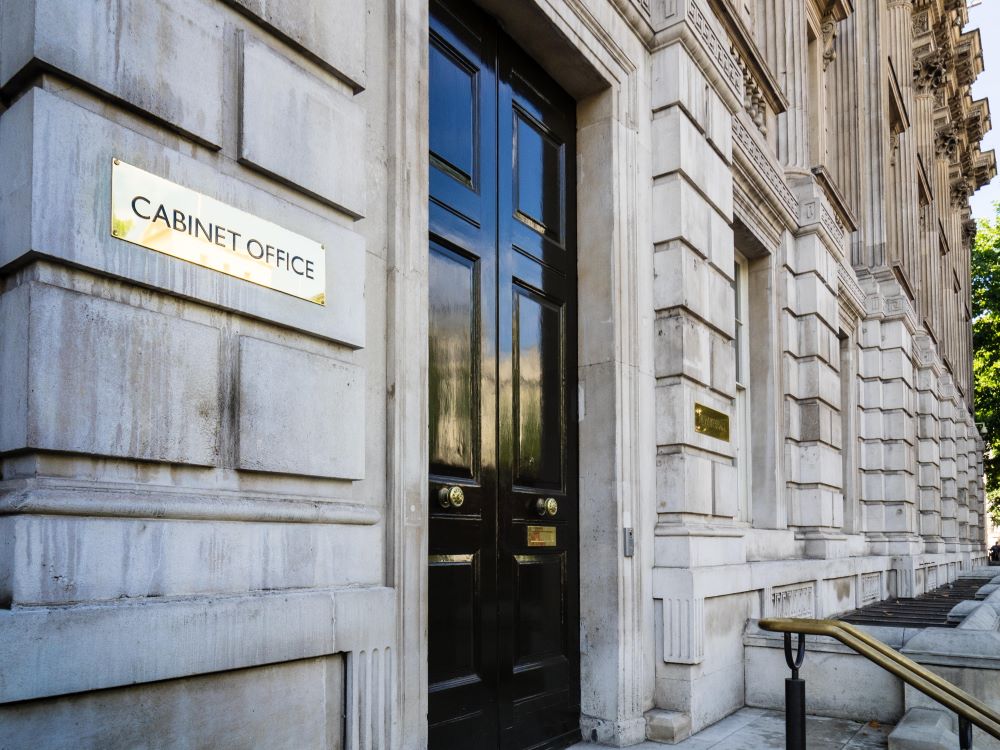 The handling of the policy was moved from DSIT to the Cabinet Office (Alamy)
Another major point of contention in the development of the policy is whether the tech will be sovereign. PoliticsHome understands that there is also recognition within government that the technology will need to be sovereign, but there is a debate over what exactly that means.
Many breathed a sigh of relief when the government said that the tech would be developed “in-house”. However, there are still questions over whether companies could be contracted to produce the scheme, or if expertise will instead be brought into the Cabinet Office.
The logistics of such a project are also seen as massive. Roa Powell, senior research fellow at the Institute for Public Policy Research, described it as “a huge infrastructure project to take on in-house”.
Morgan Wild, chief policy adviser at think tank Labour Together, shared this concern. “The British state has quite a low capacity at the moment. And its ability to get things done is weaker than it should be."
He added: “One response to that would be to continue to outsource responsibility to private contractors. But that would be a mistake.”
Whatever road the government decides to go down, public buy-in will be key.
Heloise Dunlop, a researcher at the Institute for Government, told PoliticsHome that the government “needs to win consent for this”.
“It’s interesting how much consensus there is among MPs about the challenges of digital ID," she said.
The challenge for the government in 2026 is therefore clear: “A consensus needs to be built both within Parliament and outside as well."
A Cabinet Office spokesperson said: "We’ve all been shopping and banking online for years, and many other countries already have successful schemes.
"Our new scheme will be inclusive, secure, and useful. It will give people more control over their data than they have now, and make public services easier to access and serve everyone better across the country."
