Tom Tugendhat: UK "Ending Up Like A Potemkin Power"
Tom Tugendhat MP (Photography by Tom Pilston)
12 min read
Former security minister Tom Tugendhat speaks to Noah Vickers about the state of the UK’s military, his bids for the Tory leadership and why Keir Starmer – and his own party – must get off TikTok
Tom Tugendhat is a free man. After five years chairing the Foreign Affairs Select Committee, followed by two as security minister under Liz Truss and then Rishi Sunak, the 52-year-old MP for Tonbridge tells The House he is “enjoying freedom”. Now an ordinary backbencher, he is “finally” able to speak his mind.
What did he find most frustrating about his time as a minister?
“Oh god, so much. It’s really hard to get things done in government. It’s harder still when, too often, people say ‘wait until after the election, wait until after the election’, and you keep going, ‘No, no, this needs to be done now.’”
Tugendhat points out that he was “very keen to set up an open-source intelligence service”, for example, which would have been the first of its kind in the West.
Plans for an ‘open-source intelligence hub’, announced by Sunak’s administration in a 2023 policy paper, would have seen investment “in human and technical capabilities, including AI and data science” to obtain and analyse publicly available data. Tugendhat said it could be used by British spies as a “powerful new tool for understanding our adversaries”, but by 2024’s election it remained undelivered.
“That would have been an essential thing to do – sadly, that was not supported,” he recalls, saying it was met with “the usual sort of No 10 waffle”.
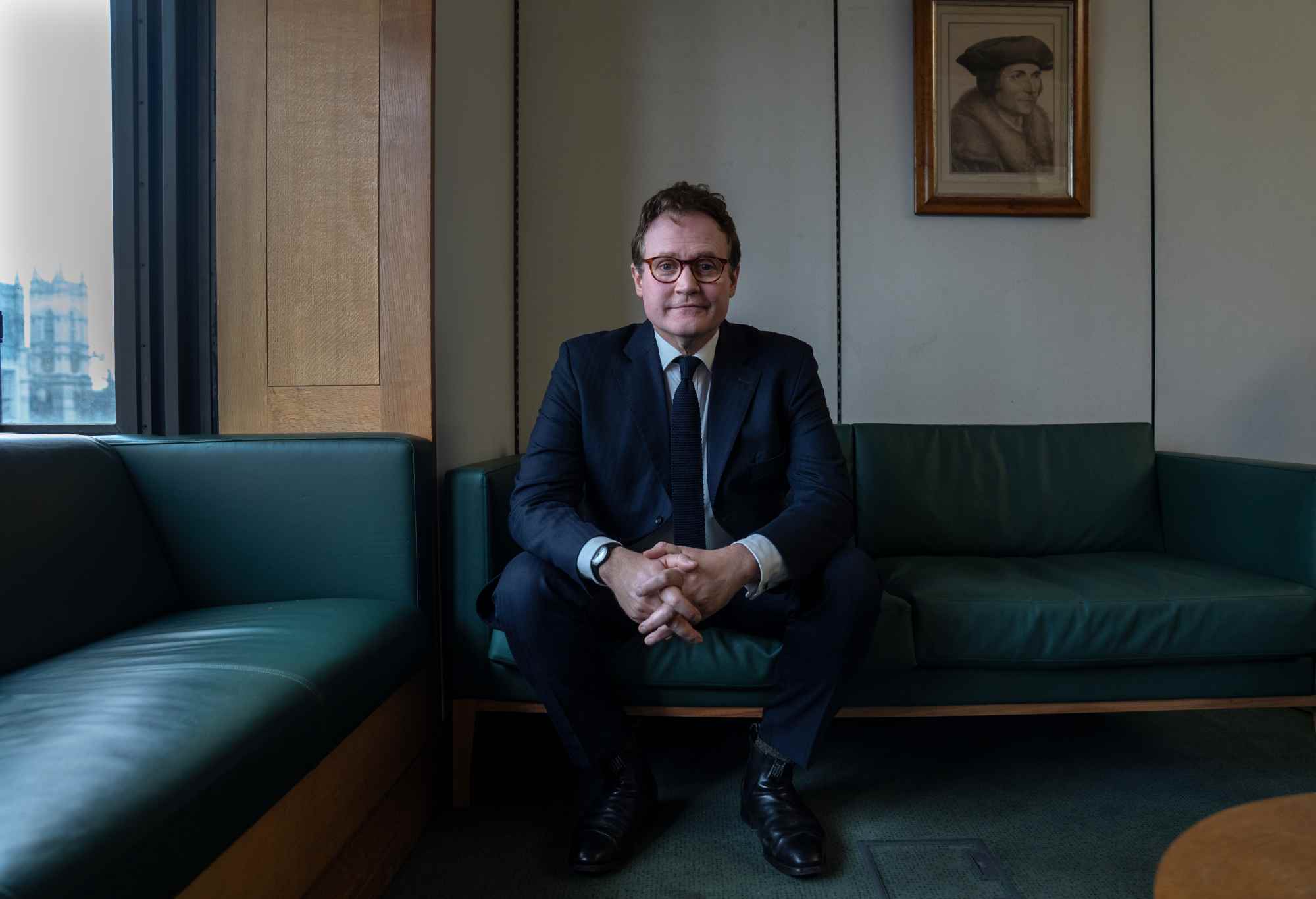 Tom Tugendhat MP (Photography by Tom Pilston)
A former soldier who served in Iraq and Afghanistan, most of his ire is aimed at the current government’s defence and security policies.
“This government has made, in reality, no extra commitment on defence spending,” he claims, “and it looks likely – in fact, it’s pretty certain – they’re going to have to cut the number of ships, aircraft and soldiers, because they’re going to have to [make] in-year savings in order to maintain things like the nuclear deterrents.
“What we’re actually seeing is defence cuts, but the government keeps saying they’re increasing defence. They’re not increasing defence – we’re going to see defence cuts this year; we will see defence cuts in the next two years. Frankly, it’s dishonest.”
He adds that “friends in the MoD” have told him “those papers are going up to the defence ministers saying, ‘Which one of these things do you want to cut? Because you’ve got to choose one, or two, or three.’”
Not only will this leave the UK more exposed, Tugendhat argues, but “it advertises very clearly that we are not serious”: “Countries like the United States or our allies think ‘you’re not a relevant partner’, and countries like Russia, which are hostile to us, think, ‘Oh great, we can bully you.’”
He adds that the increased presence of Russian ships in UK waters, including one believed to be mapping undersea infrastructure, does not inspire confidence in Britain being able to play a significant role in the security of Taiwan, as tensions over the island have escalated.
“Frankly, if we’re not even willing to invest in the security of our own waters, do you honestly think the Chinese are going to take us seriously over Taiwan? Of course not.
“So, we sent a carrier all the way around the world – fine. It had half the complement of aircraft it needed, and its fleet was made up of very few British ships.
“This isn’t serious. The problem is none of this is serious. We’re ending up like a Potemkin power, where we’re waving the flag and putting on the uniform and saying ‘rah rah us’, but the reality is there’s nothing behind it.
“We have an army that’s down at 70,000 [soldiers], we have a navy that’s got fewer ships… many of them, by the way, not operational. Yet we’re still wedded to a doctrine that sees us cutting steel rather than investing in drones.”
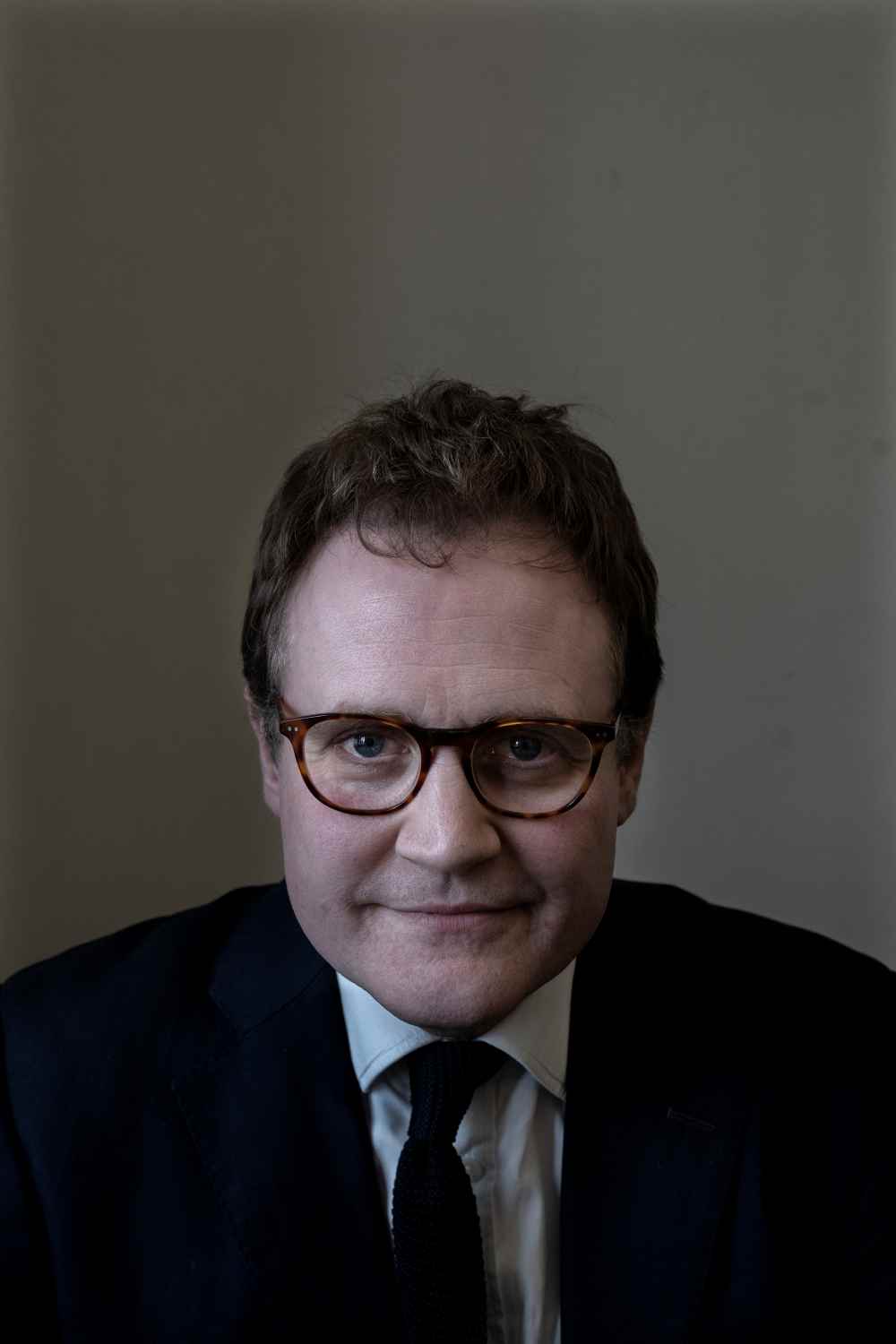 Tom Tugendhat MP (Photography by Tom Pilston)
Tugendhat entered Parliament in 2015, at the height of the so-called ‘golden era’ of UK-China relations. The MP says it is not “particularly useful to look back” at that period and observe with the benefit of hindsight that David Cameron and Theresa May should have anticipated the direction China would take under Xi Jinping’s leadership, including the rise of aggressive ‘wolf warrior’ diplomacy.
Yet he argues nonetheless that the Labour government “is now trying to operate the same policies” of that era. He is particularly scornful of the Chancellor’s January 2025 visit to China.
“Rachel Reeves just went to Beijing and came back with £600m of investment over five years. There are many, many companies that invest more than £120m a year in the UK, so actually what that was, was a very clear insult by China.
“It would have been more courteous to offer nothing. To offer £120m a year? That’s like throwing pennies at the floor and saying, ‘Pick them up’. They were treating us like beggars – and she responded in kind.”
Keir Starmer is now preparing to make the first visit to China of any UK prime minister since Theresa May.
“If he doesn’t go to Japan before going to Beijing, it will be a gross insult to our Japanese allies,” Tugendhat warns. “They are a G7 partner, they have stood with us in various different ways over many years, they’re a democracy and they’re a massive investor in the UK.
“If he doesn’t go to Tokyo after what the Chinese have been saying to the new Prime Minister of Japan – threatening to behead her – then it will be a gross insult to our Japanese partners.”
Within days of Starmer’s upcoming China visit, Communities Secretary Steve Reed is expected to grant permission for China’s proposed ‘mega’ embassy at Royal Mint Court, opposite the Tower of London. Tugendhat is one of the scheme’s most vociferous opponents, arguing it “poses serious risks to our national and economic security”.
Yet the project’s history stretches back several years into the last government. The site was sold to China in 2018, when then foreign secretary Boris Johnson welcomed it as “China’s largest overseas diplomatic investment”.
Asked whether he spoke with Johnson about it at the time, Tugendhat confesses that he “can’t remember who I spoke to at which point and when”, though he insists he and other Conservatives “raised many concerns over many years”.
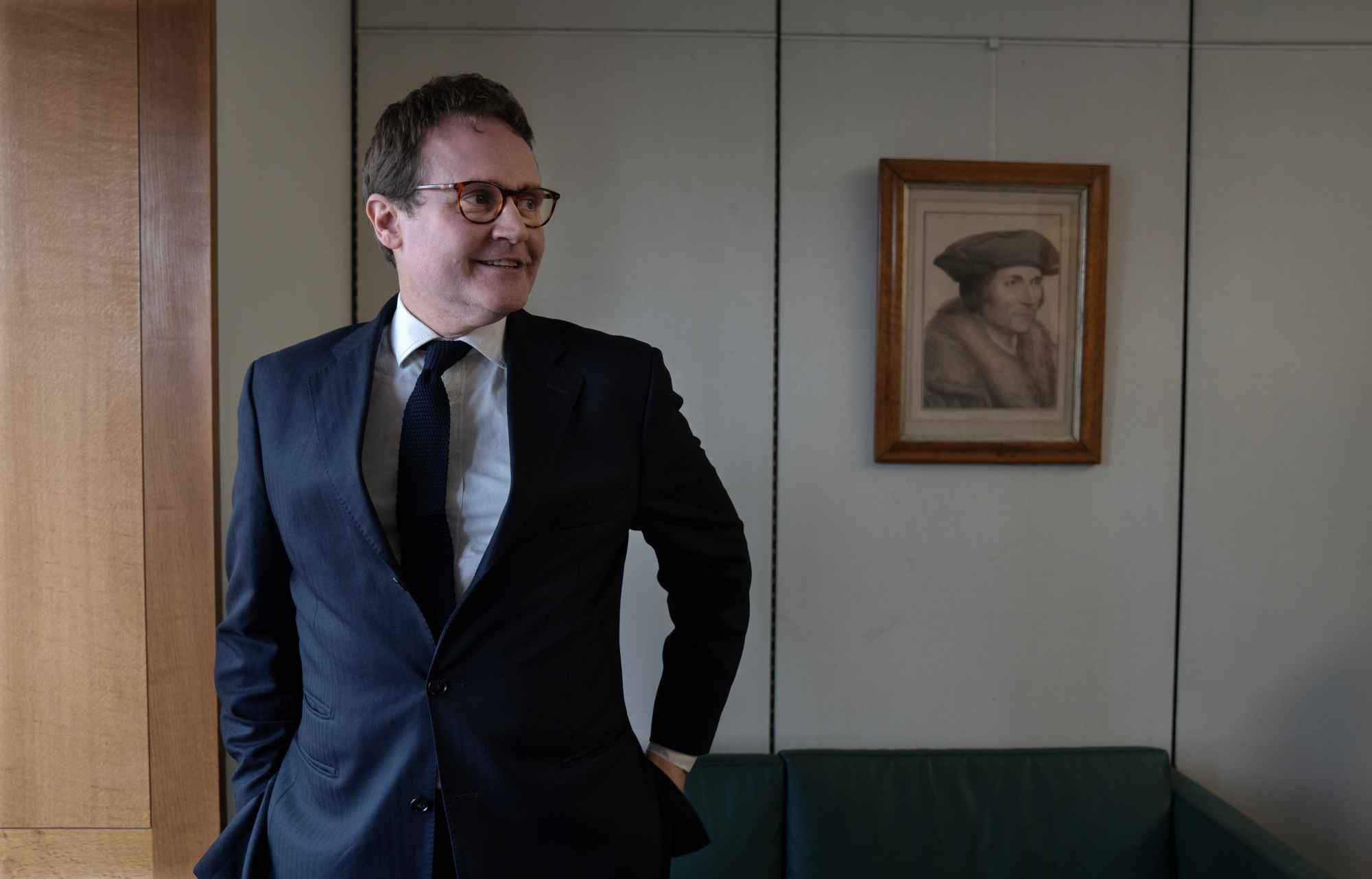 Tom Tugendhat MP (Photography by Tom Pilston)
Tugendhat is similarly worried about the growing dominance of TikTok. The app has more than 30m regular users across the UK – almost half the population – and these include the Prime Minister.
Despite the app being banned on most government devices for security reasons, Starmer launched his own TikTok account in December last year as part of Downing Street’s efforts at “reaching audiences where they are”.
“TikTok is a propaganda channel, let’s be clear,” says Tugendhat. “TikTok is edited by the Chinese Communist Party. You may say it’s not an editor in the same way as a newspaper. You’d be correct, it’s not an editor.
“It’s an algorithm which promotes or demotes areas of interest to it – and it’s all done through [parent company] ByteDance, through China, through an algorithm that is controlled by the CCP.
“Anything that you post on TikTok – as the Prime Minister now does – gives cover to Chinese propaganda. That’s what he’s doing. It’s like giving an op-ed in China Daily, or in Pravda in the 1980s.”
And what about the Conservative Party, which has amassed 150,000 followers on the app? “Yes, we shouldn’t do it either, actually,” he quickly concedes.
TikTok has denied accusations of disinformation and censorship, describing them as “scaremongering” and without evidence, and pointed out that other global firms have greater Chinese ownership.
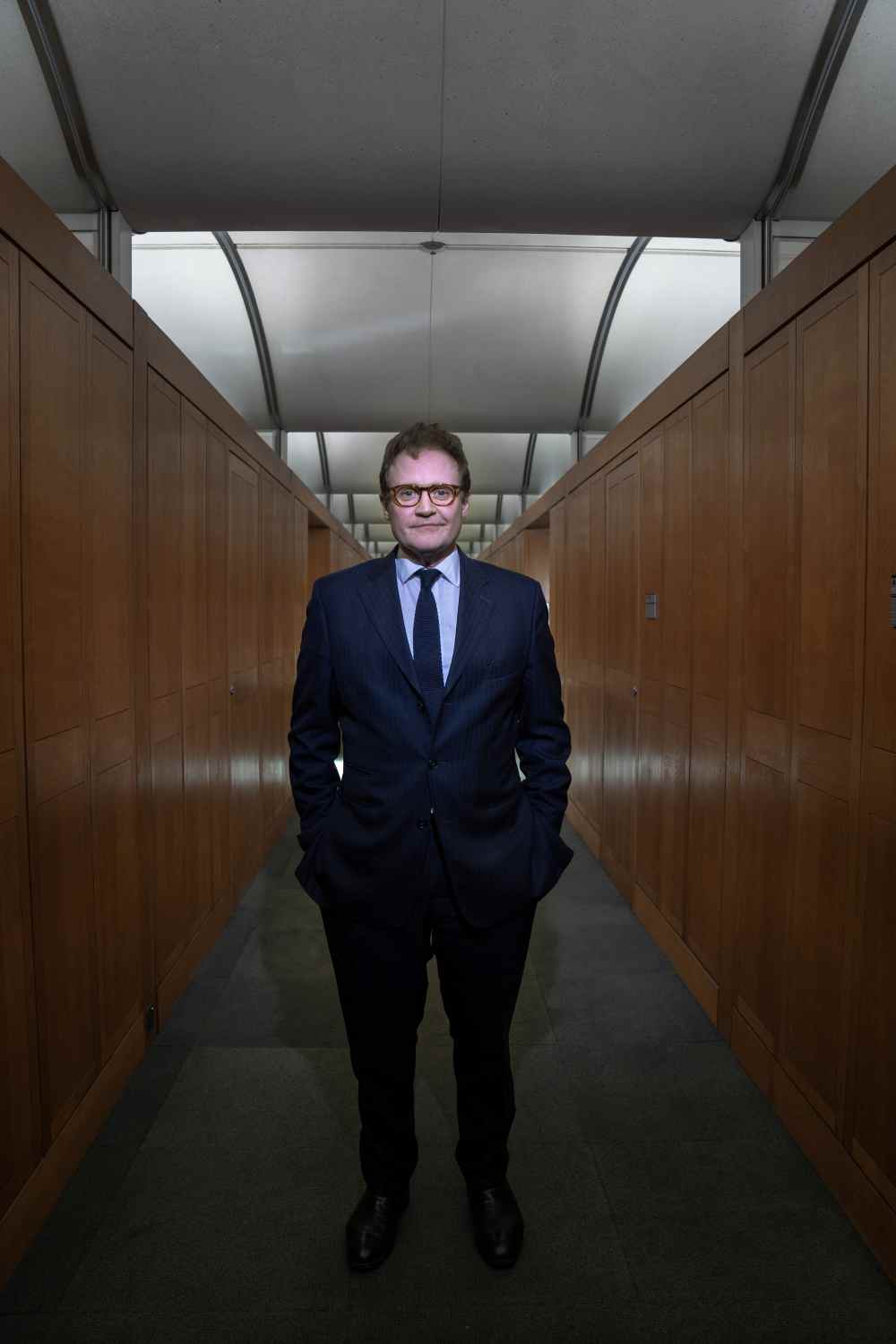 Tom Tugendhat MP (Photography by Tom Pilston)
Tugendhat was angered, too, by the government’s approach to the China spy case in which two men – including an ex-parliamentary researcher – were charged with passing politically sensitive information to a Chinese agent in December 2021 and February 2023. Both maintain their innocence and the prosecutions fell apart last autumn.
Writing for The Times in October, Tugendhat claimed the case’s collapse meant “either this government wanted the trial to fail, or it was too incompetent to make it succeed”. The Joint Committee on the National Security Strategy (JCNSS) said its subsequent inquiry did “not find evidence of a co-ordinated high-level effort to collapse the prosecution”.
One of the two accused worked for the China Research Group of Conservative MPs, co-founded by Tugendhat in 2020.
“It was a real shock,” says the MP, adding that it shows why it is “absolutely essential” for China to be placed on the enhanced tier of the UK’s Foreign Influence Registration Scheme (FIRS).
“If you want to find a needle in a haystack, first you need a haystack – and this government doesn’t even seem to want to find the haystack.”
Although the men deny the allegations and the prosecutions were dropped, did the experience leave him more careful in how he deals with people in his working life?
“No. I’ve always been pretty cautious,” Tugendhat replies, while acknowledging that the charges were “genuinely extraordinary” as they alleged “a level of aggression and confidence that the CCP has not formerly demonstrated in the UK”.
The JCNSS has warned that the case should not be characterised as “a one-off peculiarity created solely by outdated legislation” as “there are structural parallels in the National Security Act 2023 which will require careful handling to avoid comparable issues recurring”.
Tugendhat insists that the 2023 legislation, which he oversaw as a minister, will ensure future prosecutions do not collapse due to disagreement or lack of evidence over a country’s status as a national security threat.
He points out that, under the National Security Act, “any material assistance to a foreign intelligence service is a crime – it doesn’t require it to be a hostile foreign intelligence service, it just requires it to be a foreign intelligence service”.
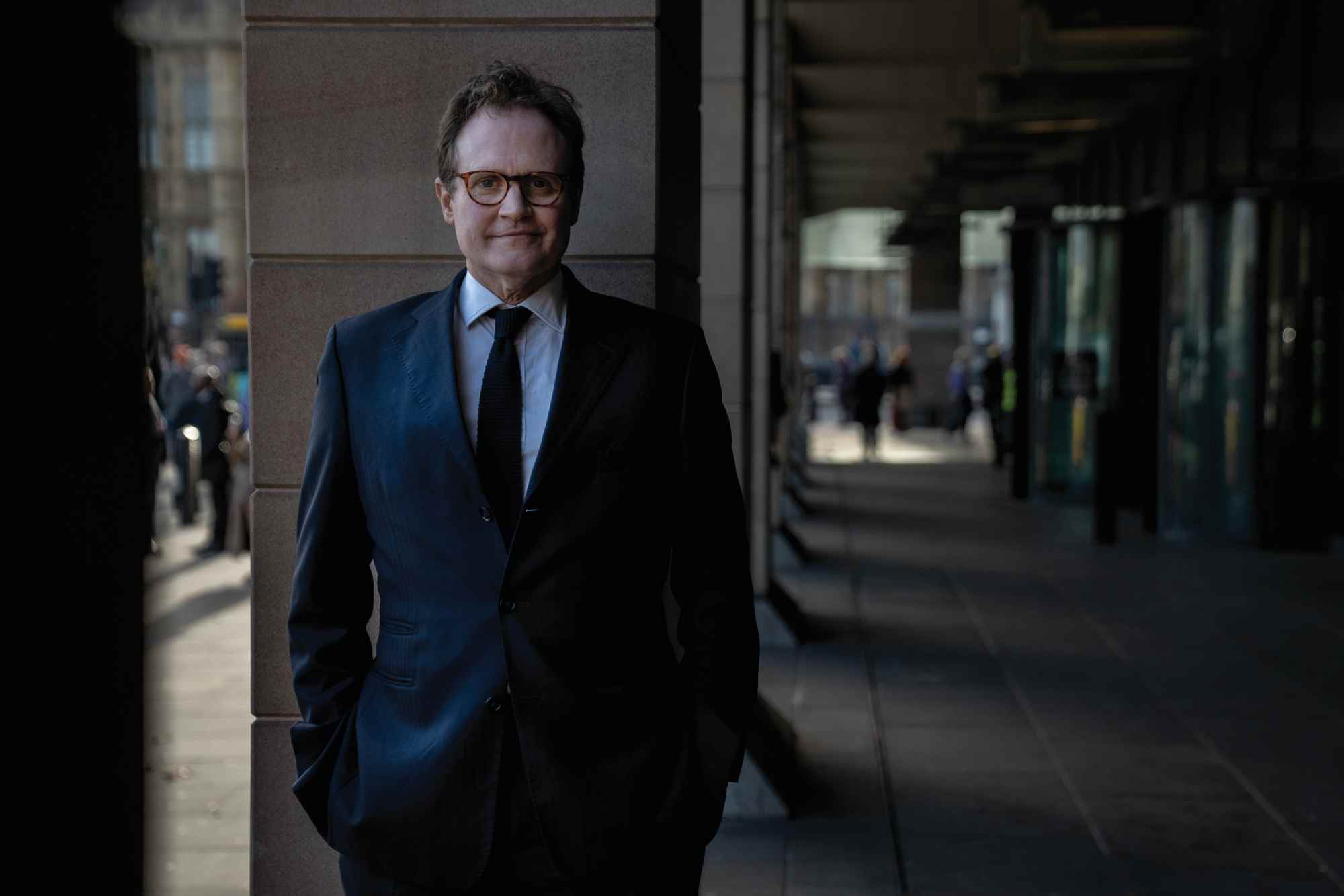 Tom Tugendhat MP (Photography by Tom Pilston)
Being a well-regarded figure among his colleagues, it seems odd to many that Tugendhat is not serving on the opposition frontbench.
After beating him in last year’s Conservative leadership race, he reveals that Kemi Badenoch did ask whether he would like to serve in her shadow cabinet, though a specific job was not discussed.
“She very kindly did [ask me], and I asked her for a bit of time to do other things,” he says.
“For the last eight years I’ve either been tied to speaking about foreign affairs, because I’ve been the Foreign Affairs Committee chair, or I’ve been completely silenced because you’re the security minister so you don’t comment on almost anything, because you’re keeping the King’s secrets.
“Now I’ve finally got time, I’m writing about the economy, I’m writing about energy. There’s a whole series of things I’m writing and speaking about, that I’ve wanted to speak about for a while and haven’t been able to.”
Would he like to return to the frontbench at some stage? “That would be up to her.”
It would also, surely, be up to him? “We’ll see. I haven’t made a decision, is the honest answer. I’m enjoying freedom, I really am. Kemi remains a very close friend, and I am not only completely supportive – I am very actively supporting her.”
We had this vast opportunity to reset the country... and what did we do? Nothing
Tugendhat ran for Tory leader in 2024 and made an earlier bid following Johnson’s resignation in 2022. What did he learn from those attempts?
“Not to do it a third time,” he laughs. “I really enjoyed it. You do it if you think you’ve got something to say and if you think your party’s going in the wrong direction.
“I did think we were going in the wrong direction in 2022 and I’m afraid nothing in the two years that followed convinced me I was wrong. I was concerned about the direction we might take in 2024, but I think Kemi’s doing a really good job actually.”
When The House interviewed Tugendhat in 2017, he said it would “be great” to be prime minister. Does he still think so?
“It’s not something that’s going to happen, so it’s not something I’ve given much thought to.” He pauses before mulling on his time as an MP since then.
“There are many different ways to shape politics. The frustrations of 2017 were particularly clear for all of us and the chaos that those Brexit years brought to all of us. A huge distraction, an enormous distraction – which meant there were so many things we didn’t do, and then the complete waste of time that was Covid.
“We had this vast opportunity to reset the country. We had the possibility of a domestic reset because of Covid, an international reset because of Brexit, and what did we do? Nothing. We restarted the country like nothing had ever changed. A complete wasted opportunity and that’s what led to the frustration of wanting to do it –”
He garbles his words in a rush at the end of that sentence, before adding: “Genuinely, I’m really impressed by what Kemi is setting out, the way she’s approaching it and the way she’s thinking about it. I think she’s going to do very, very well.”
