Consumer drones are taking over our skies, so we must balance risk and reward
October 2025: 'No Drone Zone' sign on Houses of Parliament gates | Image by: Alex Segre / Alamy
4 min read
We can learn lessons from overseas in understanding and responding to consumer drone risk
Hardly a day goes by without reports of drones – remotely or autonomously piloted aerial craft – featuring in the news cycle. While for many the word ‘drone’ evokes large reconnaissance and lethal striking instruments of contemporary war, small, off-the-shelf consumer devices have emerged as prominent figures in contemporary skies, both in and beyond the battlefield.
From high-street shops to online retailers, consumer drones are readily accessible and popularly purchased. They have emerged as tools regularly and routinely used by a growing range of state, non-state and citizen actors alike.
Alongside a commercial landscape animated by drones deployed to gather aerial imagery and transport items, consumer drones have also been embraced by public authorities. As Dr Mariela de Amstalden, professor Michael Lewis and I found in the first detailed investigation of local government drone use in England, local authorities are deploying drones for asset inspection, building control and enforcement work.
Similarly, at least 40 of the UK’s 48 police forces fly drones, with over 400 drones undertaking 40,000 flights a year. From aerial searches to pursuit support, rapidly deployable drones enable access to remote, inaccessible or dangerous, locations while lowering risks to officers. The Metropolitan police are presently trialling Drone as First Responder (DFR) – an operational concept that sees drones stationed at pre-designated urban locations and launched remotely from a police control room as soon as an incident report comes in.
Yet the police are also tasked with responding to the misuse of drones. While the majority of the over 500,000 drone flyers registered under the Civil Aviation Authority’s Drone and Model Aircraft Code fly responsibly, many will recall the repercussions of drones reportedly sighted at Gatwick airport in December 2018, prompting 33 hours of closure and the cancellation of over 1,000 flights. It is but one example of a spate of reported sightings prompting airport shutdowns around the world.
Residents living near prisons have likened the sound of regular contraband-laden drone incursions to a chainsaw overhead
Typifying a UK prison sector in crisis, criminals have also turned to drones to deliver contraband including drugs and phones into prisons. Between 2019 and 2023, a 770 per cent increase in prison incidents involving drones was reported. Residents living near prisons have likened these regular drone incursions to the sound of a chainsaw overhead.
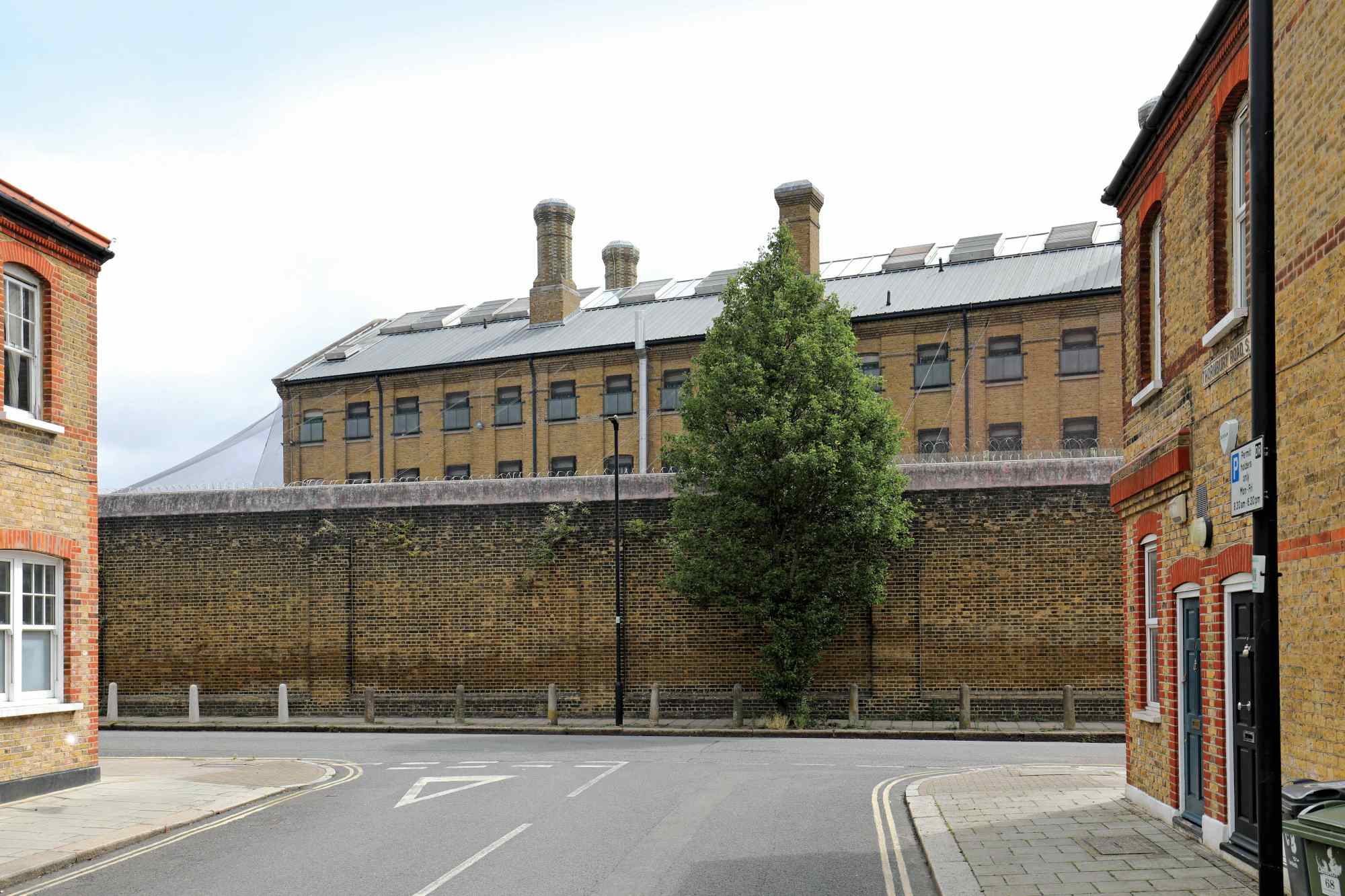 July 2025: Brixton Prison with visible drone-protection netting
Image by: Simon Turner / Alamy
As incident reports grow, attention to the security implications of drones continues. In 2024, new legislation establishing ‘no-fly zones’ within 400m of prisons in England and Wales came into effect, and the government is investing in counter-drone measures such as netting and reinforced windows.
There is a balance to be struck between legitimate drone use as permitted under the law, and the threats accompanying malleable drones subject to misuse by criminal and malicious actors. On the latter, there are lessons to be learned from the international landscape.
The Russia-Ukraine conflict is instructive. Examples such as ‘Spiderweb’ – a large-scale operation wherein Ukraine covertly smuggled more than 100 drones outfitted with explosives into Russian territory, only to remotely launch them from cargo trucks to attack an airbase – underscore the transformative battlefield capacities of consumer drones. Such events, alongside a series of suspected Russian incursions into EU and Nato member airspace, have prompted EU-led propositions for a ‘drone wall’ – a network of counter-measures to detect and intervene against malicious drones, stretching initially from the Baltic states to the Black Sea.
Consumer drones have also been used to target political elites – such as the 2018 drone assassination attempt on the Venezuelan president – and citizens alike, with a US man sentenced for using an explosive-laden drone to terrorise an ex-girlfriend.
From explicit statements from the US Federal Aviation Administration that “it is illegal to operate a drone with a dangerous weapon attached” to the 2025 executive order responding to the “intensified weaponisation” of drones, we can take lessons from overseas in understanding and responding to consumer drone risk.
Dr Anna Jackman is associate professor in human geography, University of Reading
