Tribute to Lord Desai: an aristocratic maths wizard, with an infectious smile and hair like Don King
Lord Desai: 10 July 1940 – 29 July 2025 | Image courtesy of UK Parliament
7 min read
A larger-than-life character, Meghnad Desai was impossible to ignore. I grieve the loss of my friend, professor of Marxist economics, secular socialist – and Bollywood aficionado
My heart grieved when I was told that Meghnad Desai had died. I was shocked because I considered him an eternal presence, who remains vivid in my mind still. I did not say goodbye to him; I never told him how much I respected him or how pleased I was to see him. So, forgive me if this obituary is personal but I am still grieving his loss.
Parliament is a very distinctive institution. I find it involves a lot of walking. Corridors, lobbies, Portcullis, the terrace. Lots of steps, as they say these days. And this involves walking past people that you know, regularly. We have all developed varying levels of skill in keeping moving but the true parliamentary virtuoso remains the one who arrives on time.
The reason I mention this is because it was impossible for me to walk past Lord Desai without stopping. And one of the many reasons I rarely arrived at the place I was going was because every time I saw him, I smiled, and that smile was green kryptonite to my direction; it immobilised me. I told myself many times that next time I saw him I would not smile and would walk past him with a stern sense of purpose, but people make too much of choice.
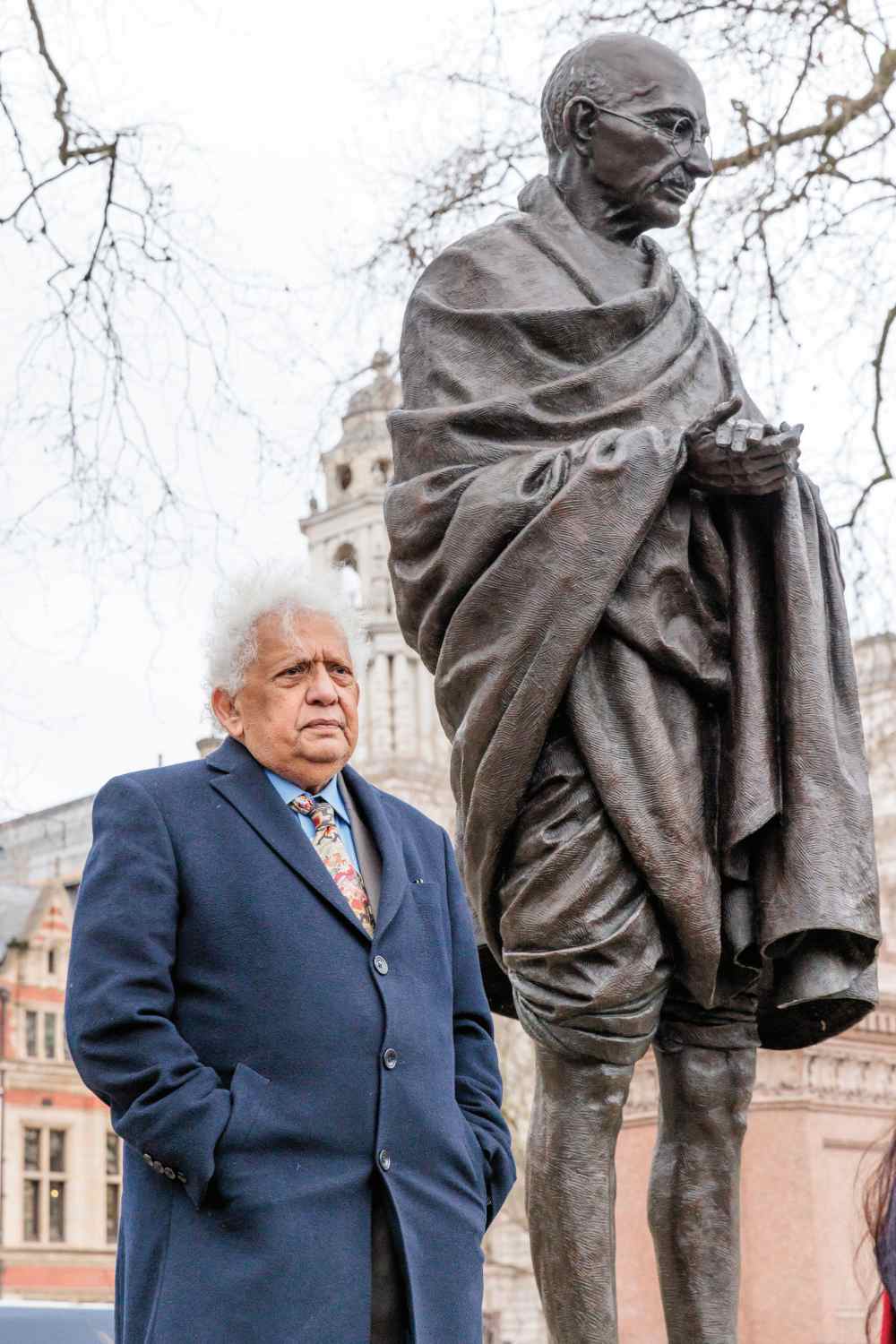 Lord Desai, 2014 | Image by: Alamy / Amanda Rose
And why was it that I smiled? Well, first of all, there was his hair. He had hair like Don King. He reminded me also of Clive Lloyd in his stature and grandeur. And then there were his shadowed dark alert eyes that locked with mine, but more intense were his eyebrows that spread wide with an unmistakable message of urgent importance. And then he would say, pointing his finger at me, “there’s something I’ve been meaning to talk to you about”, and by this stage my smile had become so wide that I was completely disabled.
I remember one of our last exchanges went like this. He looked at me intensely and said, “It’s not cricket. That white ball limited-over stuff is not cricket – it’s just baseball with too many fielders.” I was already convinced but he went further. “The essence of cricket is long periods of boredom punctuated by moments of intense excitement, that is what makes cricket unique and beautiful.” All I could say was, “You’re right, it’s not cricket,” and he would nod his head in agreement to that.
But it begged Lenin’s eternal question of “What is to be done?”. He had an unshakeable belief that no matter which party was in government or who was leading my party, I had a kind of unlimited access to the ‘highest levels’. I tried many times to tell him this was not true, but he looked at me with a “don’t try that false modesty crap with me” look and there was nothing to be done.
The ‘not cricket’ issue was dealt with easily by a published letter in the FT but other issues were less easily deflected. He was very disappointed in me for not doing more to promote his ideas at the ‘highest level’.
The three most important facts about a person are when they were born, where they were born and who their parents are. Meghnad Desai was born into a ruling class Hindu family in Gujarat in 1940. India declared independence when he was eight years old, by which time he had already completed primary school; by 17 he had graduated, and by 20 he had a PhD in economics from the University of Pennsylvania. I received my doctorate when I was 33. I asked him about this, and he said, “I was very good at maths. It was just easy to me, like reading. I was treated like a maths prince.” So, he was an aristocratic maths wizard who was being raised to fulfil the dreams of Gandhi, Nehru and the Congress Party to lift hundreds of millions of people out of poverty and the caste system towards citizenship and a dignified life.
The reason he gave me for leaving the Labour Party was that 'Corbyn doesn’t understand the first thing about Marx' and he was the only person to present that as the 'final straw'
I announced proudly to my father at about 15 that I was an atheist. He replied that I was a Jewish atheist and I was bound to meet Catholic and Protestant atheists and argue about what God they didn’t believe in. He was right about that, but he didn’t predict that I would meet a Hindu atheist who didn’t believe in many gods.
Lord Desai’s first sacred commitment was to that 1948 secular republic moment of India’s birth, to the dreams of his childhood. He spent a great deal of time and effort raising money for the Gandhi statue in Parliament Square. He even threatened to go on hunger strike until it was paid for. His doctorate was in development economics, in which he was a pioneer of econometrics using highly technical mathematical models. He was a developmental economist with a secular socialist orientation when all those things really meant something. Prosperity, science, education. He was a member of the India League (aka the1928 Club) that was committed to Indian independence between the wars, presided over by Harold Laski and Bertrand Russell. That gives us a clue of who he was and who he respected. The LSE was his natural telos; he was made a lecturer at 25 and for more than 40 years he led research into developmental economics. Founded by the Webbs, with Laski in control, it was made to measure. Professor Desai.
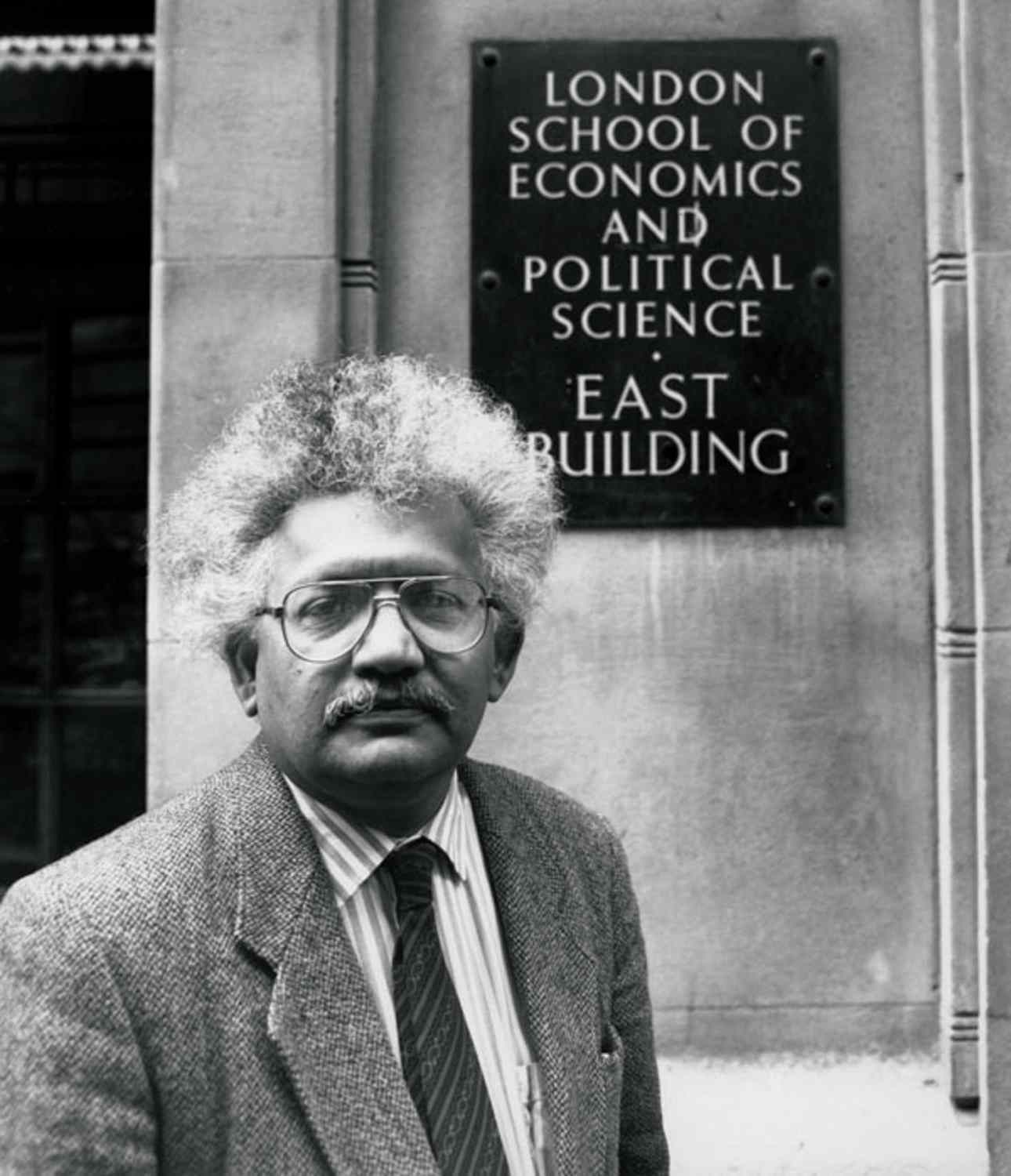 Professor Lord Desai, 2010 | Image by: Alamy / History collection 2016
Lord Desai’s second God was Marx’s economic theory. He wrote two books on Marxist economics and both are excellent. He viewed Marx as a developmental economist who wished to grow economic wealth in a way that benefited the poor. He was most interested in modernisation and prosperity. The reason he gave me for leaving the Labour Party was that “Corbyn doesn’t understand the first thing about Marx” and he was the only person to present that as the “final straw”.
He believed in books. “No one reads any more – it is tragic. Books are very important.” He was very concerned that I was not writing the book I was not writing which he thought was “very important”. He invited me to write it in his seaside house in Kerala “for as long as you like”. “I have a cook,” he said, throwing his hand one way. “I have servants,” he said waving his other hand backwards through the air. I never made it there, though – I knew that if I went, I would never write anything at all.
Bollywood was also a passion for him and he wrote books about that. I could see him starring in an extravaganza, top hat perched on top of his hair, a turquoise suit, a yellow shirt and an emerald-green waistcoat, with a cane and sparkling shoes, singing with a dancing cast of thousands, explaining Marx’s theory of surplus value in song. I suggested it to him, and he liked it and wanted to write it together. He liked the first line, “Capital is fungible, half ghost half animal”. But the dream dies with him. Ezra Pound and TS Eliot were quoted regularly. English language poetry was one of his great delights, Indian mythology another. So many Gods.
I never spoke to him on the phone or met outside the House. He never spoke of his family or asked after mine. And yet he gave me the most profound lessons on the Iraq War; “it could only benefit Iran”. On Pakistan: “it is a failed state not because it is Muslim but because it is Islamic”. On Gordon Brown, “why does he pretend to be an economist?”. Above all, I was always pleased to see him. And I smiled.
I may now arrive at the committee room on time, but each time I do, my heart will feel his loss.
Lord Glasman is a Labour peer
