Beyond regulation: a new culture for a new nuclear age
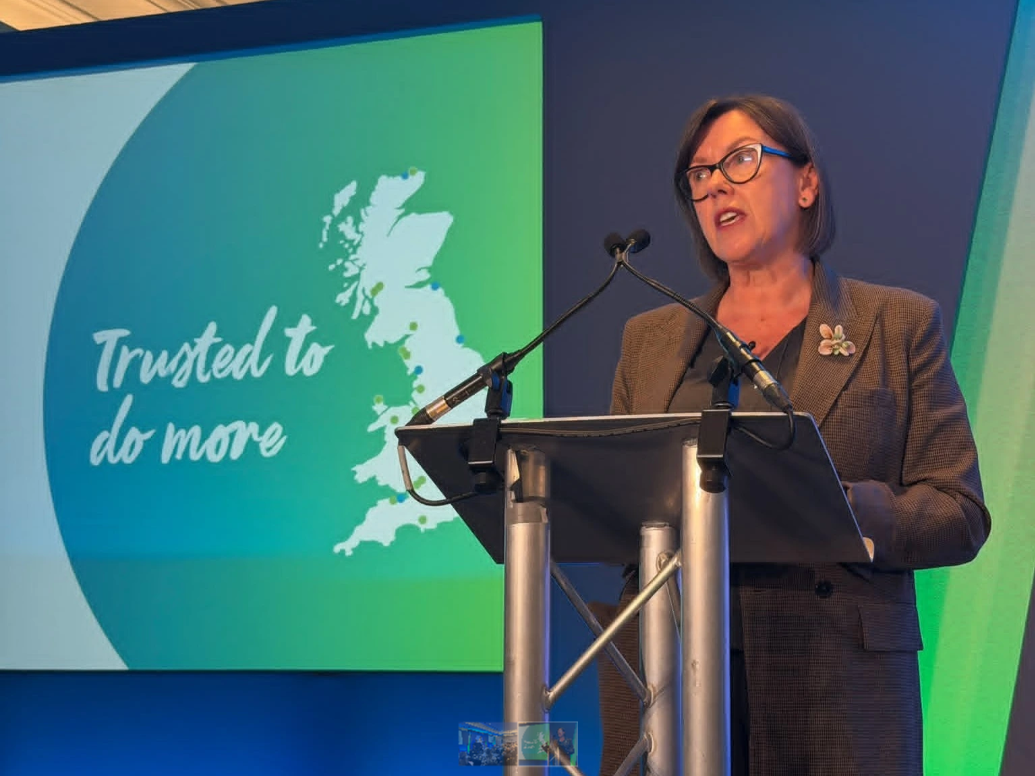
NDA Chief Executive, David Peattie, speaking at the NDA Stakeholder Summit in Manchester
As Britain steps into a new era of nuclear power, the Nuclear Decommissioning Authority (NDA) gathered sector leaders together in Manchester to explore how to turn regulatory reform into lasting cultural change that can deliver for the nation
Britain’s nuclear industry is on the threshold of a huge change. Late last year, John Fingleton published his Nuclear Regulatory Review. Its calls for a "radical reset" of nuclear regulation were accepted by government to create a system capable of delivering Britain's nuclear ambitions more quickly and affordably while not compromising the high safety standards that sector is renowned for.
However, if the nuclear industry is to play its part in delivering those wider ambitions, changing legislation and regulation are only one part of the picture. There is an industry-wide acknowledgement that the working culture within the sector has to evolve too.
That was the overriding message from senior figures from government, industry, and regulatory bodies who gathered in Manchester recently at a leadership event convened by the NDA.
"The opportunity created by the Nuclear Regulatory Review belongs to all of us,” NDA Chief Executive David Peattie told the event. “But we also know the challenge is difficult and regulatory change is only part of the answer. It's got to be matched by changes in behaviours, processes, governance, commercial arrangements and the approach to risk.”
Peattie was clear that delivering at greater scale and pace must go hand-in-hand with maintaining the industry’s hard-won reputation for safety. However, he argued that a more proportionate approach to risk can maintain those high standards while also delivering better value to taxpayers by reducing the lifetime cost of decommissioning.
Peattie’s message echoed the findings of the Fingleton Review. That landmark report concluded that the existing regulatory model and prevailing behaviours have too often acted as a brake on progress. Disproportionate risk aversion and a focus on process over outcomes have sometimes contributed to unnecessary cost, delay, and complexity.
There was little disagreement with that diagnosis in Manchester. The key question was, “What can we do differently in the future to accelerate delivery while retaining the sector’s strong safety record?”
Lee McDonough, Director General at the Department for Energy Security and Net Zero, described the review's conclusions as an opportunity to “think differently”. The choice, she argued, is not between safety and speed. It is about identifying where controls genuinely manage risk and where process and complexity have accumulated simply because that is “how things have always been done.”
 Lee McDonough, Director General at the Department for Energy Security and Net Zero, speaking at NDA Stakeholder Summit in Manchester
Addressing those processes, McDonough argued, requires more than new legislation.
“We can do all the legislation we want,” she said. “But if people don't actually get behind it, aren't really focusing on what the intent is, then it won't deliver the ambition to the level that we need."
Sizewell C Chief Executive Nigel Cann has spent decades in the industry. He reminded the event that there are valid reasons that a cautious, process-driven culture has developed over the years. He recalled a sector shaped by Three Mile Island, Chernobyl, the collapse of British Energy, and a period of poor operational performance. Greater process and control were part of the response.
However, he also acknowledged that a culture developed to address one set of problems is not necessarily suited to the challenges the industry faces today. That does not mean abandoning the standards built up over decades, but it does mean adopting a more agile approach that reflects where the industry is, not where it was.
"We don't want to be reckless, we're not going to cut corners, it's not a race to the bottom,” he said. “I believe it's really about curiosity over complexity. It's accountability over process. It's innovation over tradition."
Such a profound shift cannot be delivered by any one part of the sector alone. That shared responsibility was reflected in the range of organisations brought together by the NDA in Manchester. For Peattie, the opportunity created by the review is fundamentally about how those different parts work together as much as what happens within individual organisations.
“You will each have your own ambitions,” he said. “None of us can achieve this in isolation. So, we've got to work together.”
The regulators acknowledged that they will also need to work differently to support the wider cultural change that will accelerate innovation and delivery.
Newly installed Office for Nuclear Regulation Deputy Chief Inspector, Liv Thompson, set out work already underway to simplify its processes and guidance and challenge bureaucracy and complexity.
"We're not about weakening regulation, we're about strengthening the effectiveness of regulation and being proportionate, transparent, open to learning and open to doing things differently going forward," she said.
But Environment Agency Chief Executive Philip Duffy also offered an important reminder of what must be protected, pointing out that the cautious approach had resulted in a high level of public trust.
“The level of consent for nuclear in the UK is remarkably high,” he said. “And we got to that level fundamentally because from the 1950s onwards, we've taken environmental and safety standards incredibly seriously across this industry.”
The challenge is therefore not to dismantle the culture nuclear has built. It is to preserve its strengths while challenging the risk aversion, duplication, and complexity that can prevent effective delivery.
For the NDA, the task is both practical and strategic. Its decommissioning mission allows it to demonstrate that the new approach can work. Its foundational role across the nuclear lifecycle also gives it a specific responsibility to bring the sector together and help turn reform into lasting change.
Peattie had opened the event by recalling the work of Ernest Rutherford and James Chadwick at the nearby University of Manchester. More than a century ago, their curiosity and willingness to challenge established thinking helped lay the foundations for the nuclear age.
He returned to them as he considered what happens next.
"They did not wait for the answers," he reminded the leaders in the room. "They saw the opportunity, and they grabbed it, and they moved forward. They turned the mission into progress."
The challenge for today's nuclear sector is different. But the mindset required may be much the same.
