The Huge Challenges Facing Andy Burnham Between Now And Christmas
11 min read
The Autumn Budget was generally seen as a relatively uneventful affair, but Andy Burnham's government faces a series of major decisions and challenges between now and Christmas.
Delivering his first Budget on Wednesday, Chancellor John Healey said it would give people “breathing space”, as he announced a list of measures to address cost-of-living pressures. The Parliamentary Labour Party (PLP) was broadly pleased with the Budget, particularly energy support that Labour MPs believe can easily sell to voters on the doorstep, alongside packages supporting local infrastructure and devolution.
However, Healey repeatedly stressed that “global economic storms” were making this a difficult time for the government, pointing to the wars in Ukraine and the Middle East and the continued closure of shipping through the Strait of Hormuz, all contributing to high borrowing costs across the G7.
The Institute for Fiscal Studies think tank said the Budget failed to provide detail on how the government intends to fund several major areas of spending, including defence, social care, welfare and youth unemployment. It was a view shared by the Institute for Government, with economist Dan Haile writing for The House that the Budget "did not address many of the difficult questions the government faces, but it did bring them into sharper relief".
The government will therefore have to make “difficult decisions” at next year’s Spending Review to meet its fiscal rules, potentially leaving some departments facing real-terms cuts, Chief Secretary to the Treasury Emma Reynolds told The Rundown podcast.
And before then, a series of political challenges could test the new PM. Burnham entered Downing Street in the summer with considerable political capital, having defeated Reform UK at the Makerfield by-election and won the support of the overwhelming majority of Labour MPs. While that capital remains largely intact within his own party following the Budget, the coming months will offer an early indication of how he intends to start to spend it.
Welfare reforms
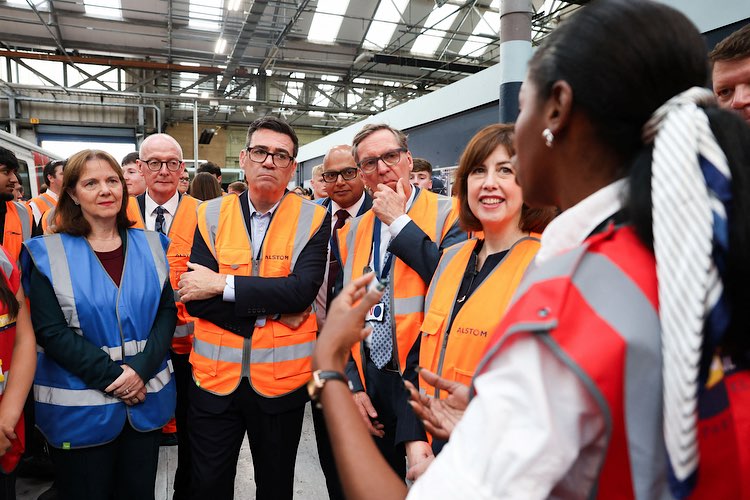 Alan Milburn accompanied the PM on a visit in the summer (Alamy)
Perhaps the most significant challenge ahead will be how the government chooses to tackle issues surrounding the welfare system, with the publication of Alan Milburn’s review into why so many 18 to 24-year-olds are not in education, employment or training (NEET) expected in November.
The review will be followed by a government white paper setting out how ministers intend to take forward many of Milburn’s recommendations.
A separate review by Social Security and Disability Minister Stephen Timms into the Personal Independence Payment (PIP) system is also expected to be published this autumn.
Harry Quilter-Pinner, executive director at the IPPR think tank, told PoliticsHome that there are three particularly challenging areas of welfare spending on which the government will need to provide greater clarity in the coming months: pensions, with Burnham already having announced reform of the pensions triple lock in his speech to Labour conference in September; youth unemployment, with more than a million young people currently outside the labour market; and the growing number of people claiming disability or long-term sickness benefits.
For Quilter-Pinner, reforming these areas will be crucial not only to tackling the welfare bill but also to establishing the political direction of the Labour Party under Burnham’s premiership.
“People don’t like people being stuck on benefits if they don't need to be; they think it's unfair," he said.
"They think it's a waste of talent and potential. If [the government] gets this right, it will take away a big attack line that they're currently facing from the right, which is that they are more than happy to put up your taxes, but they're not more than happy to ask people to work. They'll want to be able to show that is not the case.
"Over time there's been a story propagated that the left is for welfare, not for work, and I think they'll want to be clear that that's not the case.”
Ed Owen, interim chief executive of ThinkLabour, said he was optimistic that Burnham’s government would take a “sensible” approach to welfare reform.
Under Keir Starmer, the government's proposed welfare reforms were significantly watered down following a rebellion by Labour backbenchers.
“The way that welfare reform was put together by Keir was seen as driven by a Treasury-focused perspective about cutting money,” Owen said.
“This approach is a much more effective one, which is trying to establish a clearer strategic perspective for reform, which has at its core a sense of what a Labour view about welfare reform is, as the architects of the welfare state.”
Burnham's 10 Year Plan
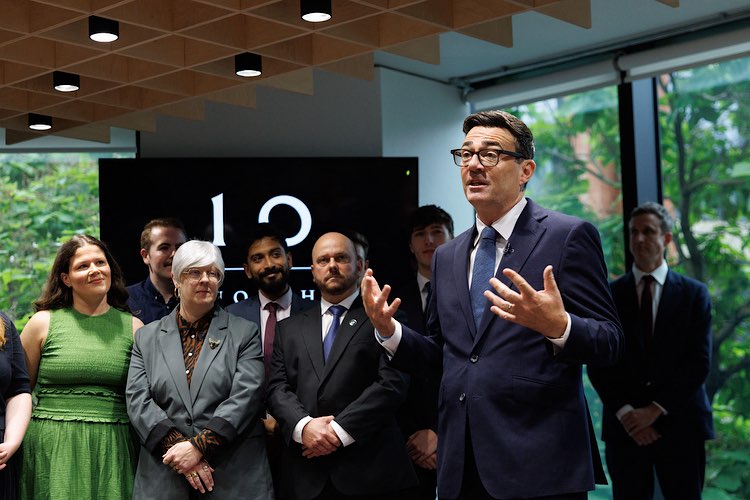 Andy Burnham addressed staff at the launch of No10 North in July (Alamy)
In December, the government will publish its 10 Year Plan, an overarching strategy document expected to set out Burnham’s long-term ambitions for the country.
The plan is expected to cover major structural reforms, including changes to Whitehall, council housebuilding, overhauling the energy system, reforming water utility regulation and devolving economic powers to the regions.
PoliticsHome understands that it will have three main strands: reform of the state and politics, including electoral reform, devolution and changes to the machinery of government; economic and industrial strategy; and social policy, covering areas such as education, welfare and crime. It is also likely to look at the information ecosystem and social infrastructure, addressing some of the more fundamental questions facing the country.
However, there is some scepticism among experts about the effectiveness of 10-year strategies. Previous governments have announced numerous sector-specific long-term plans, including Starmer’s 10 Year Health Plan for England, the Modern Industrial Strategy, the Strategic Defence Review, a series of clean energy and net-zero strategies, and the 10 Year Capital Plan for Health and Social Care.
Quilter-Pinner told PoliticsHome he had “worries” about the effectiveness of this approach.
“Either they become a vehicle for everyone to try and get their pet project put in there or their sector lobbied for, and it ends up being this kind of mishmash of small reforms… or they set out some bold intentions that sound great, but there's no delivery behind them," he said.
“Andy Burnham will want to avoid both of those scenarios. The reason why they're pursuing a 10-year plan is because of the critique that was levelled at Keir Starmer and quite a lot of mainstream parties on the left and right for quite a while now, which is that they don't stand for anything and stand for the status quo.”
Quilter-Pinner said he hoped the plan would contain ambitious, targeted proposals. While IPPR would be feeding into several aspects of the document, he said he wanted the prime minister “to say no to us on lots of things”.
“If he's doing that, he's prioritising the core things that he and the Labour Party think are important for the future of the country.”
UK-EU summit
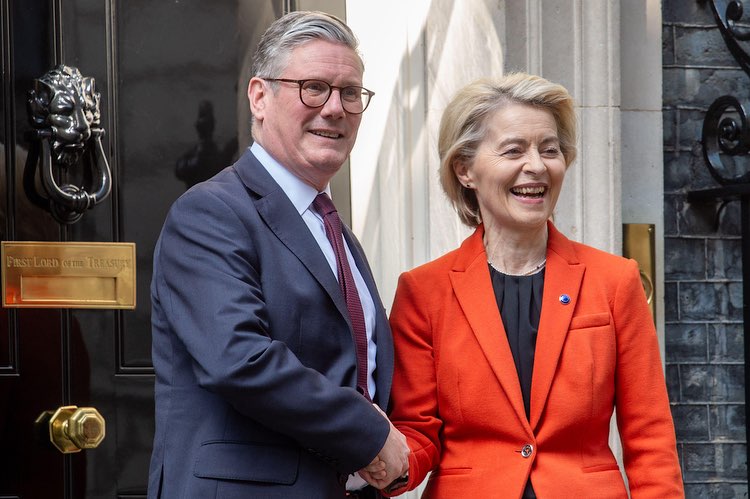 Former prime minister Keir Starmer made efforts to improve diplomatic ties with the EU, inviting President of the European Commission Ursula von der Leyen to Downing Street in 2025 (Alamy)
Burnham will also face challenges on the international stage. The second annual EU-UK Summit since the UK's withdrawal from the EU is due to take place in Brussels on 20 November 2026.
This summit has taken on greater significance in recent weeks after Burnham said he wanted to present the public with options for closer ties with the EU, including the option of rejoining.
Polling shows the public wants a close relationship with the bloc, and in-out surveys consistently find support for rejoining.
However, experts have warned that this polling is soft and that restarting a debate on Brexit comes with risks for the Prime Minister.
Anand Menon, Director of the UK in a Changing Europe think tank, recently told PoliticsHome that debates about the EU risk being "all-consuming" and distracting from the government's work in other areas. "What you don't want to be doing is talking about immigration... There is a potential danger that you rejuvenate Reform and Reform voters, because this is the issue they really care about," Menon said.
Migration reforms
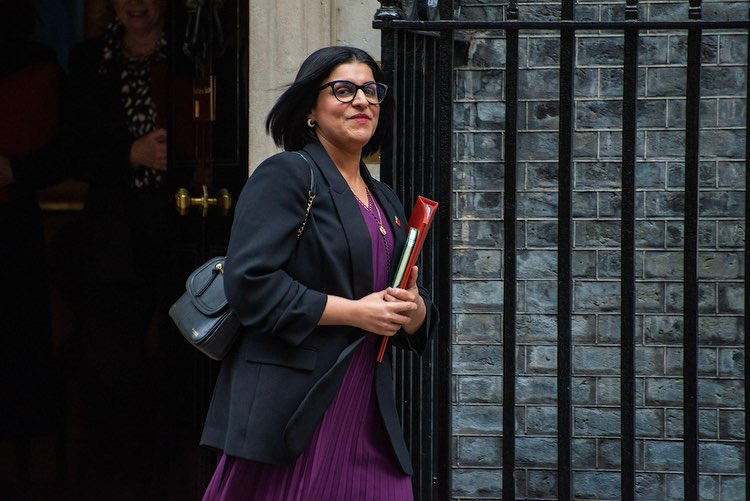 Shabana Mahmood's proposed changes to indefinite leave to remain have caused splits in the Cabinet (Alamy)
Home Secretary Shabana Mahmood is consulting on proposals to increase the qualifying period for foreign workers to obtain indefinite leave to remain (ILR) in the UK from five to 15 years. The changes would be backdated to apply to people who arrived from 2021 onwards.
Mahmood has previously suggested that the proposals could be softened by exempting care workers from the new rules.
The Home Office has not set a formal implementation date for the proposed changes to ILR and earned settlement. However, the Home Secretary previously indicated that an announcement or revised policy model could come this autumn, with implementation potentially delayed until 2027 or later depending on parliamentary debate and Cabinet negotiations.
The proposals have already exposed divisions within the Cabinet. Miatta Fahnbulleh, the Energy Secretary, repeatedly declined to endorse the plans in media interviews last week, after appearing to criticise them in a post on her Peckham constituency website which has since been deleted.
The final shape of the reforms could prove divisive both within the Cabinet and across the Parliamentary Labour Party.
To drill or not to drill
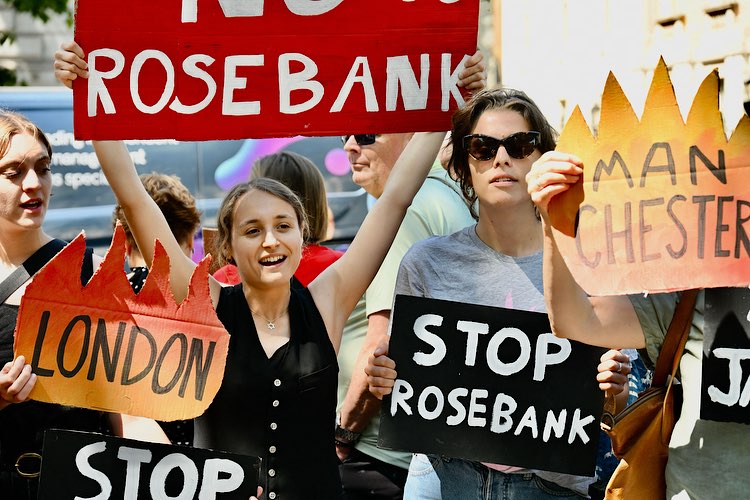 Environmental activists have held protests to try to persuade the government against approving drilling at the Rosebank oilfield (Alamy)
There are also political divisions over the government's forthcoming decision on whether to approve drilling at the Rosebank oilfield.
Fahnbulleh is reportedly leaning towards rejecting the project, having already granted permission for the smaller Jackdaw gasfield. Healey, however, supports approving the Rosebank licence.
Multiple Labour MPs told PoliticsHome they believe that Rosebank could prove the most contentious decision for the Burnham government in the coming weeks, and one MP said that the tensions over government energy policy are "not going away" anytime soon.
Quilter-Pinner said approval would prove controversial, while rejecting it could help the government strike a balance following its decision to approve Jackdaw.
“They've done enough to show that they’re pragmatic, that they care about and will do anything they can to do lower energy bills, that they're not some kind of eco warrior party.”
Those opposed to approving production at Rosebank say it would be a significantly bigger polluter than Jackdaw, and stress that the oil would be exported overseas, rather than used to supply homes and businesses in the UK.
Tightening rules on political donations
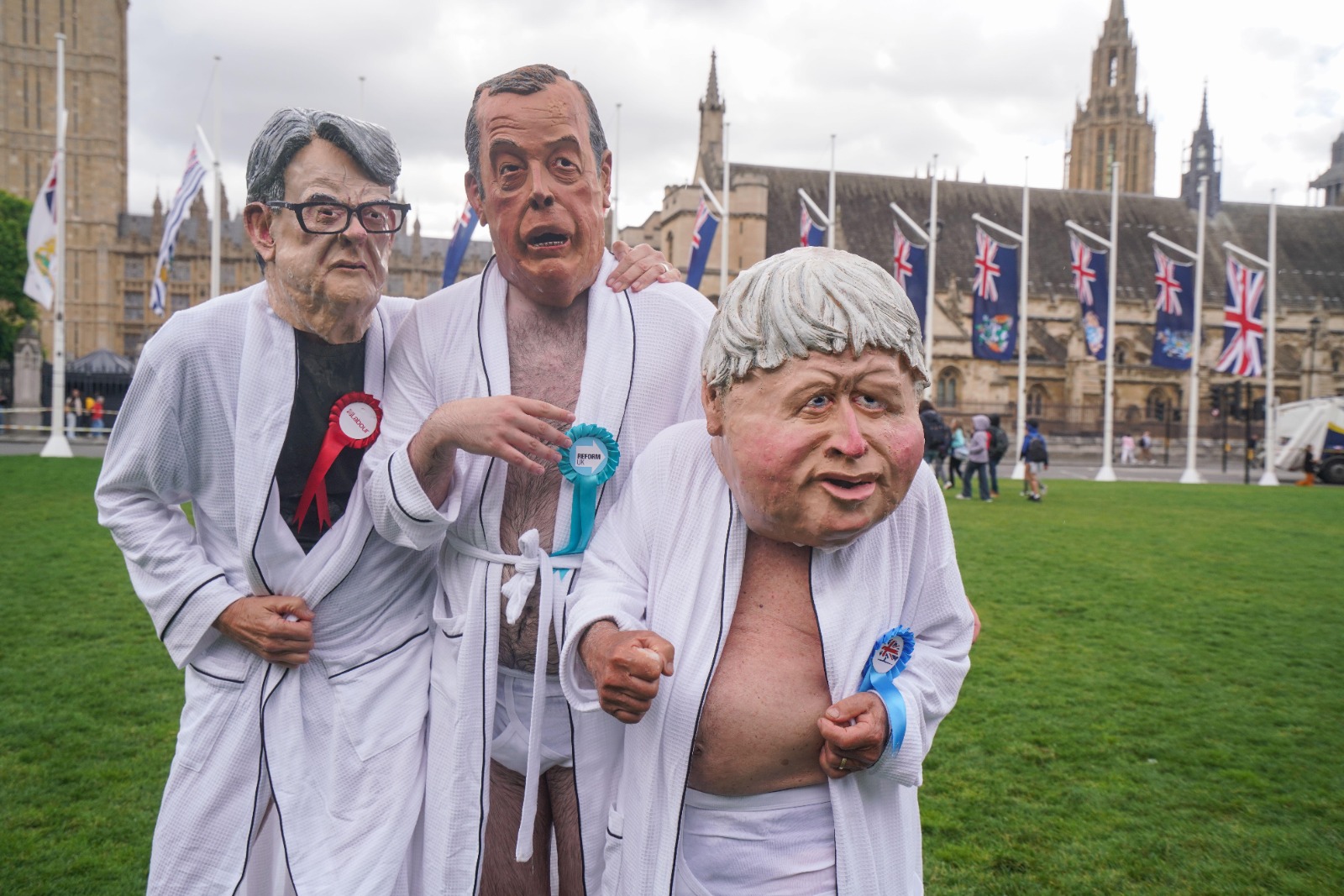 Protesters wearing masks depicting Peter Mandelson, Nigel Farage and Boris Johnson calling for caps on political donations in Westminster (Alamy)
Burnham’s government has pledged to “tackle the issue of mega-donors in UK politics” as soon as possible.
However, Labour MPs have urged the government to move faster and harder after Reform received two donations totalling £72m from cryptocurrency billionaires Ben Delo and Christopher Harborne in September.
Burnham has so far not gone as far as implementing an annual donations cap, despite expressing support for one in the past, partly due to Labour-supporting unions opposing the move. However, he will likely come under pressure to do so in the coming weeks from backbench Labour MPs.
A taskforce set up by the government in September to examine the influence of mega donations is well underway, and PoliticsHome understands that ministers could announce new steps before Christmas.
General election speculation
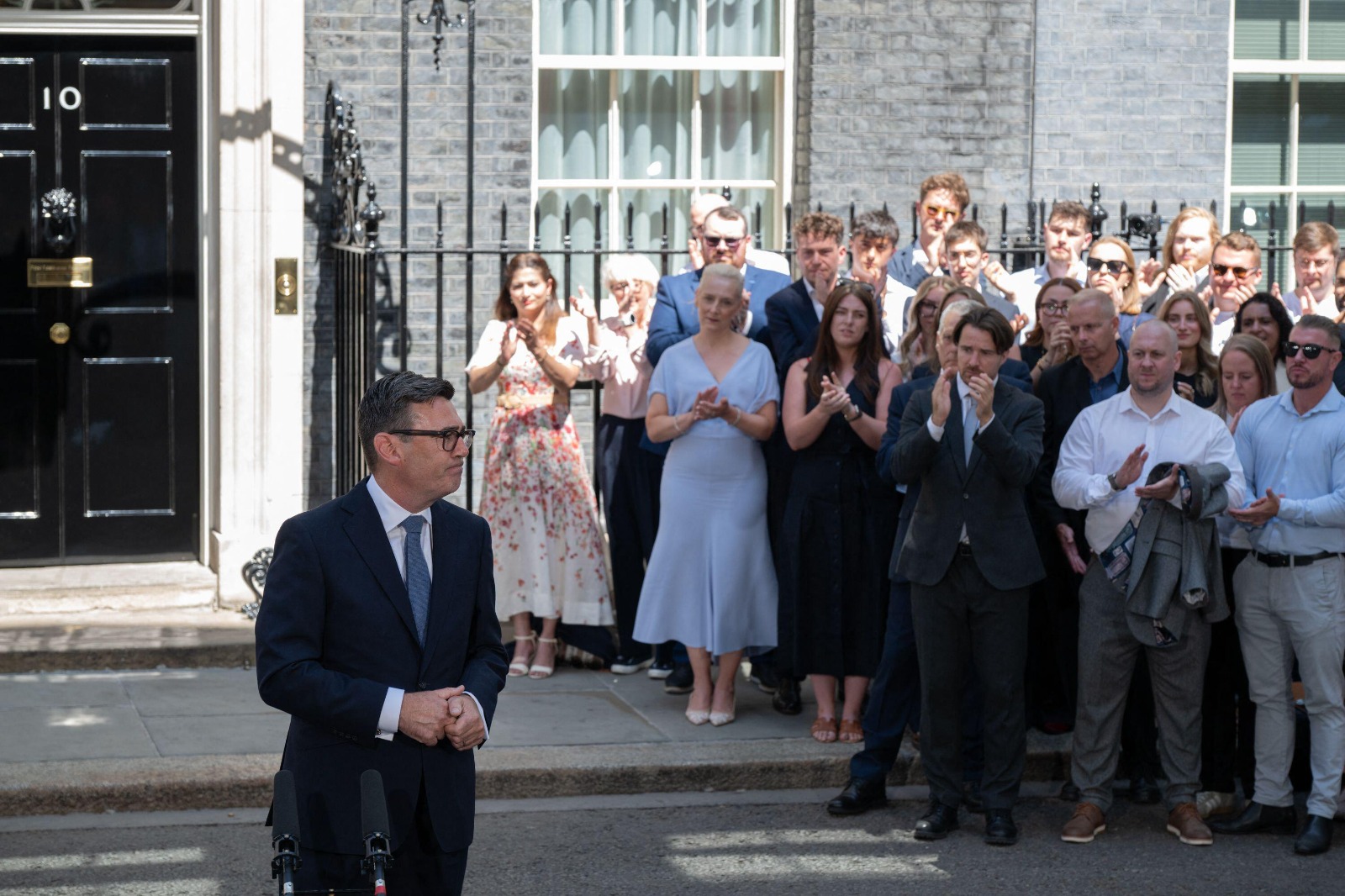 Labour's polling has improved markedly since Burnham replaced Starmer (Alamy)
As Burnham navigates this period, there will likely be continued speculation that he could be tempted to call an early general election.
Some observers interpreted this week's Budget as a sign that a snap poll is coming, pointing to the lack of clarity in several major policy areas as evidence that the PM first wants to secure a fresh mandate before tackling them.
The Times reported this week that the Liberal Democrats are preparing for the possibility of a 10 December poll.
Burnham has repeatedly denied that an early election is planned and this week ruled one out in the next 12 months.
Labour's polling has improved significantly since Burnham replaced Starmer in No 10 in July. PoliticsHome reported that Labour had extended its lead to eight percentage points in a new Ipsos poll, putting the party on 32 per cent. Kemi Badenoch’s Conservatives were its closest rivals on 24 per cent, with Nigel Farage’s Reform UK in third place on 20 per cent.
Whether Labour can maintain that lead through the political challenges ahead, however, remains to be seen.
