Council Tax Is Highest In Some Of The Country's Poorest Areas, Analysis Shows
Council tax reform has long been seen as something previous governments have wanted to kick down the road (Alamy)
6 min read
Labour MPs have warned that council tax is “driving poverty” as new analysis shows that some of the most deprived areas of the country are paying the highest rates.
While wholesale council tax reform does not seem to be on the table for the Budget later this month, there have been growing calls for the government to redesign what critics say is an outdated and unfair system.
The Telegraph recently reported that Chancellor Rachel Reeves is “said to be looking at” doubling council tax on the million homes in bands G and H in England — but without a revaluation of properties. PoliticsHome analysis over the weekend showed that doing so would create extreme disparities in how owners of expensive homes are taxed.
Under the current system, the rate of council tax is determined by valuations carried out in April 1991. As a result, the rate paid by many households is no longer in step with the actual value of their properties.
Now, PoliticsHome analysis has found that households in some of the most deprived areas in the country are paying a much higher rate of council tax than those in less deprived areas.
In Burnley, Hartlepool and Durham, residents pay around two per cent of the value of the property they live in per year, compared with those in Wandsworth, Kensington and Chelsea and Westminster who pay around 0.1 per cent.
When comparing these figures with the latest deprivation figures published at the end of October, the analysis revealed a strong relationship: the more deprived a local authority, the higher its council tax as a percentage of house prices.
Alongside Burnley, Hartlepool and Durham, Blackpool, Pendle, Hyndburn and Kingston upon Hull all scored high with both council tax rates and deprivation.
Labour MP for Normanton and Hemsworth, Jon Trickett, said the analysis shows that council tax is "throwing up huge issues for deprived communities” and is "not a socially just system at the moment".
One individual who used to work in the Treasury told PoliticsHome there has “always been an interest in tackling” council tax within the department, explaining that “the longer it's been out of date, the more the current system lacks advantage”.
However, they added that as the years pass, the more complicated any reform becomes.
“The longer council tax doesn't get revalued, the harder it gets to revalue it. You get stuck in the doom loop.”
Labour backbenchers are also concerned that the issue has to be grasped by the government if it hopes to address the high costs of living and rebalance the economy.
Jonathan Brash MP, who chairs the All-Party Parliamentary Group on council tax reform, said the disparities affecting places like his Hartlepool constituency are "insane".
“It’s hammering communities. It's really devastating for family finances. The proportion of disposable income that goes towards council tax is far higher," he said, describing the current regime as a "tax on deprivation".
He added: “I’ve spoken to ministers several times on this issue. There is an understanding of the problem. They get it, they recognise it, they acknowledge it."
Jonathan Hinder, MP for Pendle and Clitheroe, told PoliticsHome he had also had discussions with ministers about the issue and they are "listening", adding "they're not shutting it down."
Asked if the current system is pushing people into poverty, Hinder said: "It's definitely a part of it."
Luke Akehurst, the Labour MP for North Durham, told PoliticsHome that the council tax system "was constructed in a way that systematically disadvantages the most deprived local authorities".
He added that those who live in authorities that are most in need of collecting income for statutory services face a "double whammy".
Most council spending goes on adult social care and addressing homelessness.
While there are concerns that any reform would produce losers as well as winners, Hinder said that changing the system for the better could be a way to improve some of the public's finances by the end of the Parliament.
"We can think about this as actually a massive political win, if we can reduce council tax for people who are in the poorest areas."
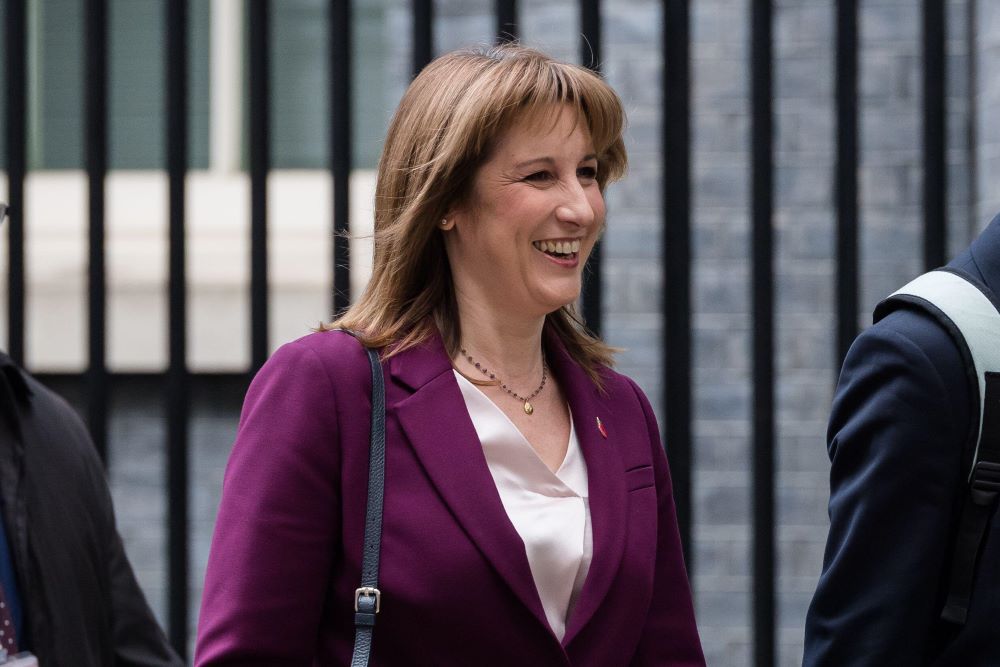 Chancellor Rachel Reeves will deliver her Autumn Budget at the end of Novemeber (Alamy)
Sarah Smith, the Labour MP for Hyndburn, said there is no single strategy or silver bullet to tackle poverty, and addressing council tax is something that "could be thrown into the mix".
While Smith is not convinced that the government needs to take on that reform now, and there are a number of other levers it can pull, she said that there is an argument to be made that "if you actually did want to see something happen within this term, you probably do need to be starting reasonably soon on it."
One Labour MP who wished to remain anonymous told PoliticsHome that they did not believe the government currently has the bandwidth or political capital to do anything as dramatic as overhauling council tax.
Andrew Dixon, chair of organisation Fairer Share, which campaigns for council tax to be replaced by a proportional property tax system, said Westminster politics is still haunted by former prime minister Margaret Thatcher's extremely unpopular poll tax. The reform prompted riots and played a key part in her resignation from Downing Street.
"The fear of bold reform has held us back for too long," said Dixon.
“The current system turns council tax into a kind of reverse wealth tax — the less you have, the more you pay," adding that tackling the issue is "absolutely central" to the government's missions of lowering poverty and improving standards of living.
Speaking to PoliticsHome, associate director at the Institute for Government think tank, Stuart Hoddinott, said: “This analysis shows that those in some of the most deprived parts of the country bear some of the greatest burdens when it comes to council tax.
“The government has an opportunity to redress some of that unfairness with long overdue rebasing of the council tax system”
Hoddinott said that the current system is “regressive and outdated and therefore in urgent need of reform”.
However, he admitted that reform on this scale is a “horrible” political challenge, as "it will require the government to make very difficult decisions about distribution of funding and some councils will inevitably end up feeling hard done by.”
A Treasury spokesperson told PoliticsHome: “The Chancellor has set out the context for the Budget, recognising global and long-term economic challenges.
"It will continue to build the strong foundations to secure Britain’s future and on the priorities of the British people - cutting waiting lists, cutting national debt and cutting the cost of living.”
