Culture Clash – Lisa Nandy On Keeping Hope Alive
Lisa Nandy | Image by: Tom Pilston
13 min read
Critics say Lisa Nandy should spend more time meeting stakeholders in her brief, but the Culture Secretary tells Francis Elliott she’s fighting for the government to give hope to the most vulnerable. Photography by Tom Pilston
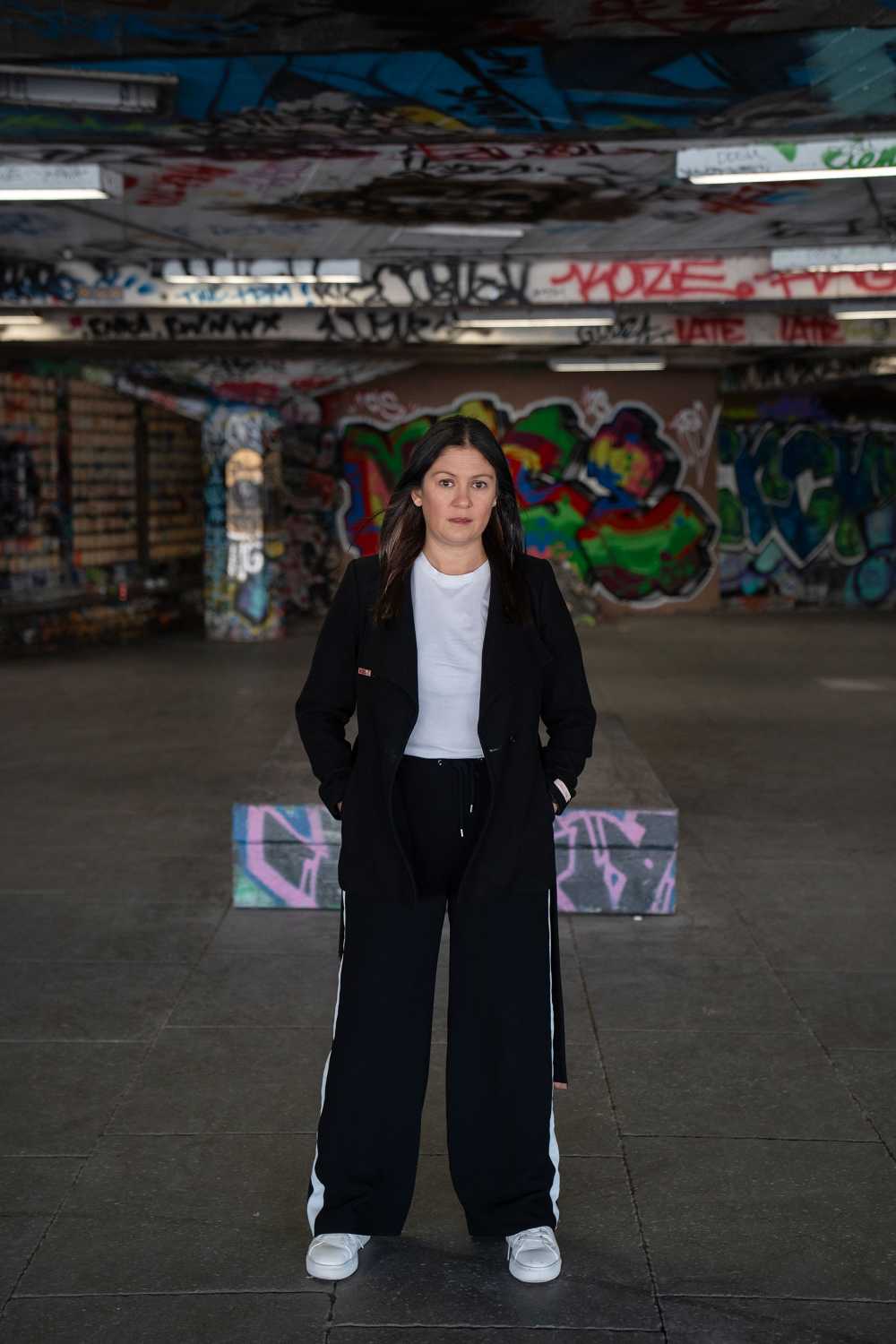
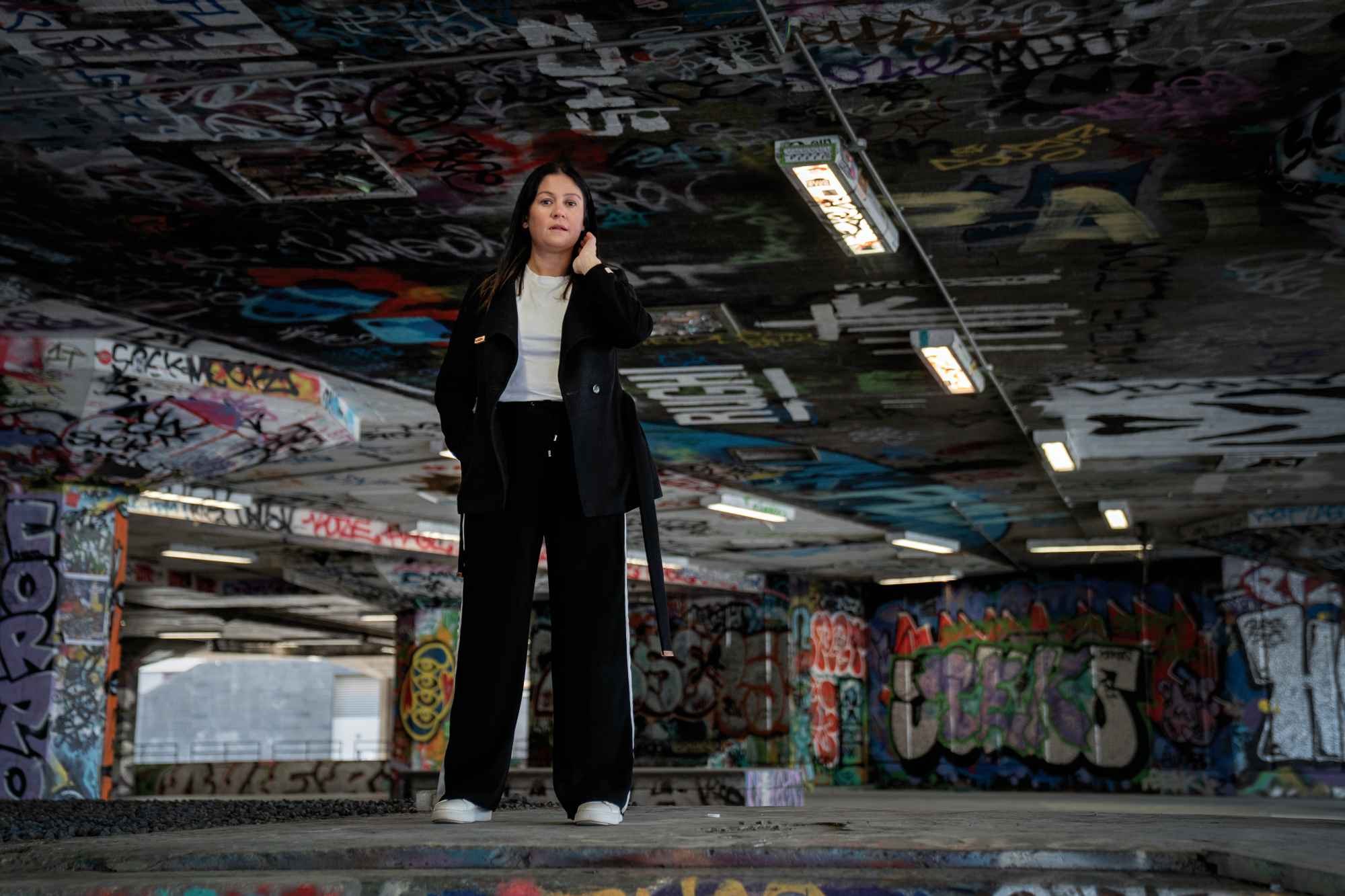
Lisa Nandy arrives – a little late – trailing a gaggle of arty bigwigs, the remnants of her previous meeting making the most of their facetime. Our rendezvous is the South Bank – not its arts centre but the skate park, the graffitied grotto claimed by counter-culture rather than the temples of establishment culture above.
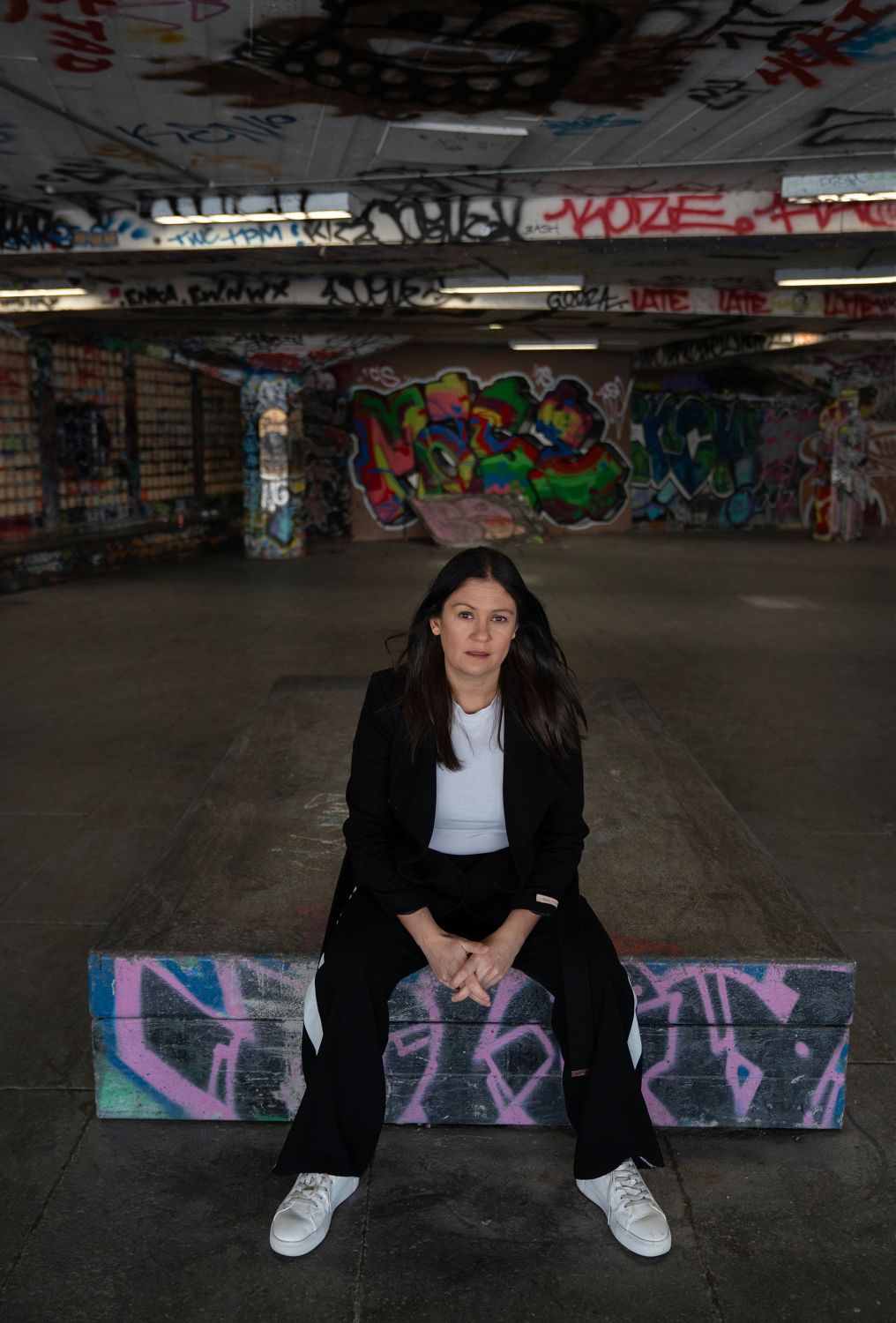 Lisa Nandy | Image by: Tom Pilston
Her father, the academic Dipak Nandy, was on the board of the National Theatre in the 1990s, but teenage Lisa was more stoked doing nollies in the basement area next door. This is a place of happy memories.
Someone has even brought along a skateboard for the photoshoot. Are we really about to be treated to a recreation of Steve Buscemi’s “How do you do, fellow kids?”, the 30 Rock meme? No, the 46-year-old is too canny for that. The point has been made anyway – the Culture Secretary is down with the youth, not upstairs in the posh seats.
Nandy’s critics accuse her of failing to put in the hours and refusing to engage with “stakeholders”. Friends retort they are snobs who dislike her efforts to upend a Department of Culture, Media and Sport (DCMS) agenda stuck on a London-centric elitist default. Not caring as much about the cello as about good youth clubs, they say, is not the same thing as not caring.
There’s no doubt that Nandy prefers Wigan to London, and that while talking about her brief she is most energised when it touches on the role sport and culture can play in enriching young lives.
She took the “difficult decision” to cancel the National Citizen Service within weeks of taking office, she said, because David Cameron’s legacy programme had become “largely a four-week programme for middle-class children”. Instead, she “found the young people who had been at the sharp end of the last 15 years” and “put them in charge”: “They wrote the plan and we backed it with £500m to build a new generation of youth clubs and youth workers.”
Another early move was to make it a condition of funding for grassroots facilities that girls get equal access to the best time slots. Too often, a new pitch would be built “and then you’d find that the girls were either playing at nine o’clock at night or not at all”, she explains.
Nandy says she is also leaning on the Premier League to allow better access to stadia often reserved for men’s teams. “I’ve been very clear about the message that sends a girl. I’ve been very clear: girls and women belong on every pitch that they choose to play on, and I include Premier League [pitches].” She adds that she has been having some “difficult conversations” with football’s elite clubs.
 Lisa Nandy | Image by: Tom Pilston
Fluent, personable, self-aware; Nandy is one of Labour’s best communicators. She gives clear (if sometimes salty) answers to questions from across her brief and beyond. So, why does she think people are so disappointed in this Labour government?
“The sense I get from home and all around the country is that people want us to succeed, they need us to succeed, but it’s been so hard for so long that people are running out of – it’s not patience because there is a real recognition that things can’t be solved overnight – they are running out of hope.”
But isn’t it the government’s job to give people hope? A short pause. “Sort of fair,” she replies slowly. “Sort of fuck off.”
“Because we are doing that every single day – that’s what drives me,” she continues. “We’re not thinking about the people who made it. We’re not thinking about ourselves. We’re thinking about the others. Keir said to me a few months ago, that’s who we’re here for. We’re here for the ones who haven’t made it, for who life is so hard.
“If there’s a failure of this government, it is because we haven’t worn our heart on our sleeve, and we haven’t gone out and shown people that we have skin in the game. That this matters as much to us as it matters to them, that is our lives, our family and our communities and we will always fight for them no matter who tries to stop us.”
Allies say the robustness of that response should be understood in the context of a long, sometimes lonely, battle to listen to and act on the concerns of voters, particularly those she thinks are losing hope. On Brexit, the Wigan MP stuck her neck out, urging her fellow Labour MPs to pay attention to what they were being told by their constituents, not tell them they were wrong. On Jeremy Corbyn, she resisted those begging her to challenge him, understanding the futility of telling Labour members they had made a mistake. When the job did become free in 2020, she fell short, however, coming third behind Starmer and Rebecca Long-Bailey.
 Lisa Nandy | Image by: Tom Pilston
Starmer has kept her in his team ever since, and reports of her demise have proved as premature as routine. With the centre of gravity of this administration shifting towards the soft left, Nandy must hope to do better than just survive.
Does she think Starmer’s government is better without Morgan McSweeney? “I’m not going to trash Morgan. I’ve known him since I was 21 and he was our organiser in Hammersmith. I think he’s extremely talented and works hard. Advisers advise and it’s the ministers who must take responsibility to make the administration a success. We wanted it, we fought for it, we asked for it and will relish the fight to make it happen.”
McSweeney and Nandy worked closely during the Corbyn years, including through the Labour Together group. The outfit has become embroiled in scandal in recent months after it emerged that Josh Simons, a subsequent director of Labour Together, commissioned public affairs firm APCO to investigate the “sourcing, funding and origins” of a newspaper article about its donations. Simons was forced to resign as a minister over the affair while continuing to protest that he did nothing wrong. Without naming him directly, Nandy makes clear her disgust.
“We set up Labour Together to try and hold the labour movement together during what was an incredibly factional and angry time. And I think we were reasonably successful at doing that.
“It was then turned into a faction that behaved in ways that the full extent of which is now only being fully known, led by people, frankly, who… did not have the moral centre that you would expect. And I’m appalled by that, but I left… for that reason.”
“I’ll support [Andy Burnham] in whatever he wants to do... I would have voted to allow him to stand, as Lucy [Powell] did”
She also makes clear that she disagrees with Starmer’s decision to prevent Andy Burnham from standing as Labour’s candidate at the recent Gorton and Denton by-election, which was then won by the Greens. Would she back him if he wanted to go for another seat?
“He’s a friend of mine. He’s my mayor, and he was my neighbouring MP for seven years. I think he’s a huge asset to the party. And I’ve said before, I’ll say again, I’ll support him in whatever he wants to do.”
She adds: “I think it is right that members are allowed to make their own choices about who they want to be their candidates in elections – I’ve always thought that right. And while I respect the views of colleagues on the National Executive Committee, I… had I been sitting in that seat – is that what you’re asking me, what I would have voted? – yeah, I would have voted to allow him to stand, as Lucy [Powell] did.”
“I do understand the argument that he’s the mayor of Greater Manchester, and he’s a very good mayor, and he’s got a term to see out.” But Labour members, she says, “deserve to be in the driving seat of their own lives, and it offends me when people are not, and I think that goes for our members as much as everybody else”.
For all the Westminster intrigue, the Culture Secretary has big decisions on her desk, not least the renewal of the BBC’s Charter, which must secure its future in a rapidly changing media market and amid rapidly increasing rates of licence fee evasion. An option in the green paper published just before Christmas was to allow the BBC to offer premium services behind a paywall. A recent comment from the corporation’s head of sport that the BBC does not need rights to major events to stay relevant has led to speculation about a premium sports tier.
Nandy is not a fan of the idea. The shift from traditional television to today’s more messy media space where “people are sitting in silos, having separate conversations and where fact and polemic are blurred” makes all the more precious spaces of genuine civic exchange and renewal, she says.
 Lisa Nandy | Image by: Tom Pilston
For the same reason, Nandy says she is passionate about reviving local newspapers. For critics, however, a new local media strategy launched last week shows the Culture Secretary is better at diagnosis than prescription. They point out that just £12m has been set aside to revive what she claim is one of two anchors of civic life.
More attention will be given to the other, the BBC. “The BBC is one of the few civic spaces we have in this country and one of the most important.”
“If you believe as I do that one of the greatest strengths of the BBC is its ability to unite the nation... I think you’ve got to be cautious about the use of subscriptions and paywalls”
Citing last year’s coverage of the 80th anniversary of VE Day, she says: “There was a moment [when] everything stopped, everybody stopped and put down what they were doing, we came together with a shared experience. Now I think sports is one of those shared experiences and the BBC is second to none in the way that they do it. So, I would be cautious about saying the BBC doesn’t need sport and sport doesn’t need the BBC.”
“It’s absolutely right that we explore subscriptions but if you believe as I do that one of the greatest strengths of the BBC is its ability to unite the nation that has found multiple ways to divide itself,” she adds, “then I think you’ve got to be cautious about the use of subscriptions and paywalls.”
She acknowledges that ever-rising rates or licence fee evasion – and declining consumption by younger people who “see it as a subscription they don’t use” – represent a huge threat.
In its response to the green paper, the BBC suggested the fee – which will hit £180 a year from April – could be reduced if more people paid, and it urged the government to explore technical solutions to ensure compliance, such as verification tools.
The problem, says Nandy, is that such tools to compel payment only work for those who access the BBC services through internet-streamed connections. Cutting off households that can’t afford broadband – the most vulnerable – is politically impossible. She agrees, however, that this ought not inhibit the introduction of new ways of enforcing compliance where possible.
“You can actually do it for some people now… and I think there’s a very strong argument for that. That’s one of the things that we’re looking at through the charter view – it’s just about mitigating against [harm to] that small group of people who use linear terrestrial television.”
Nandy has just triumphed in an internal battle over whether AI companies should be allowed to train their AI tools on British creative content without first securing the agreement of the artists. Proposed changes to copyright laws have been shelved until further notice.
“Eighteen months ago, we tried to start a conversation with the creative industries and with tech companies, where we set out that opt out was our preferred option. That was a mistake, and we heard loud and clear through the consultation that that was not the right approach. And so, we have listened and responded, and Liz [Kendall] and I are working in lockstep on this.”
She adds: “We think there’s enormous potential in AI. We want to unlock the potential, as do the creative industries… But copyright law in this country is based on one very fundamental principle, which is that people should own their own work. Now we’re a Labour government, and that is a fundamental principle and a hill on which we will die.”
What does she think of those who say nation states ought to show a sense of humility when it comes to tech firms? “That sounds like an AI – did you get that from AI?” she replies. No, it was in fact her Cabinet colleague Peter Kyle, now the Business Secretary, speaking in November 2024. “Don’t write that I thought Peter was AI!” she says. “No, I don’t agree with that… I think governments are elected on behalf of people to defend their interests.”
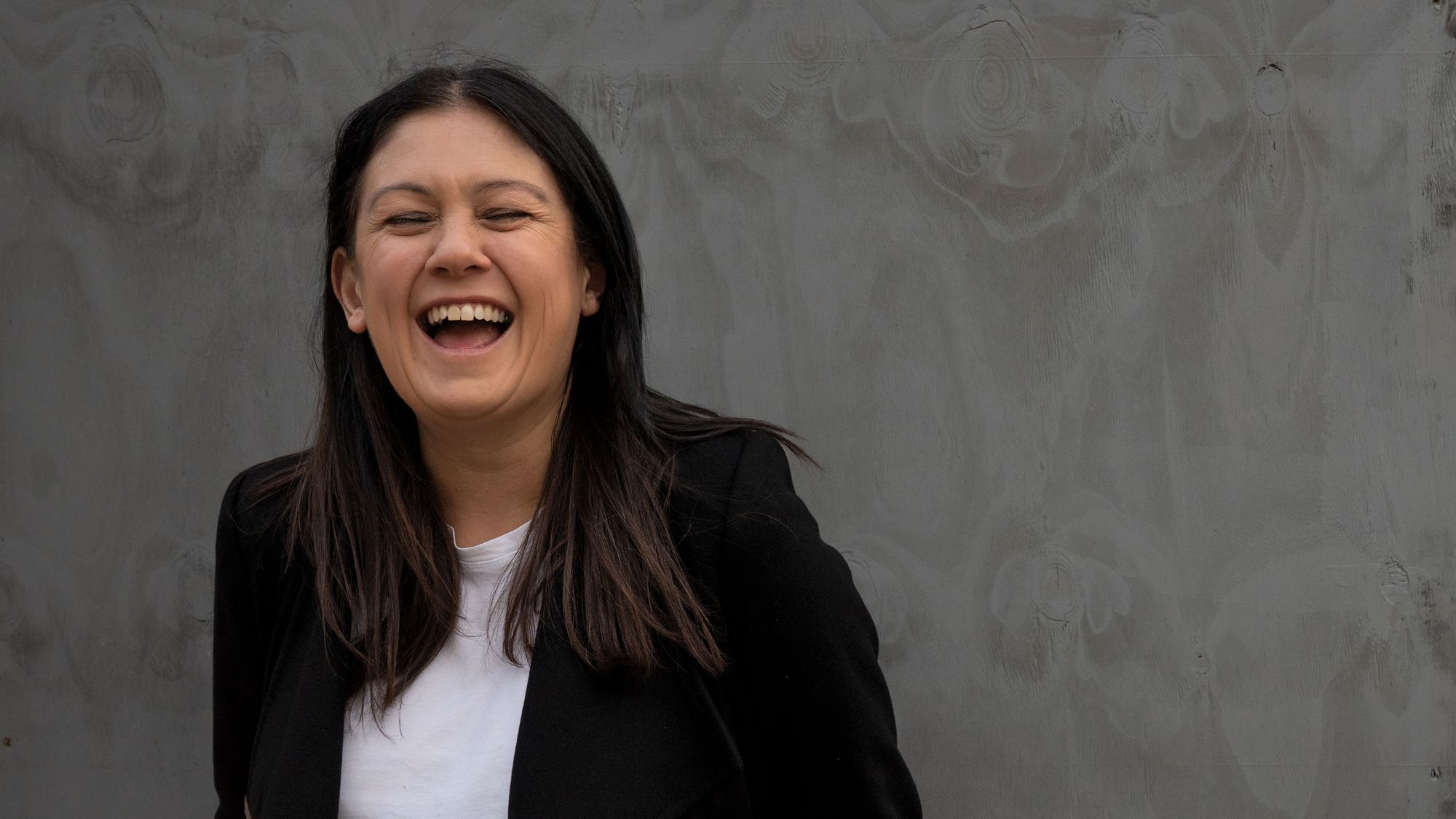 Lisa Nandy | Image by: Tom Pilston
Nandy is at her most self-reflective when talking about her early efforts with McSweeney on a project she thought was uniting Labour’s families made fractious under Corbyn.
“One of the things about me is that my dad was an immigrant to this country and he said – I think it was an Eric Hobsbawm phrase – that [as an immigrant] you always see things at a slight tangent to the world. It gives you an ability to step back and have a perspective.
“You think about my family – my grandad was a Liberal MP and... my dad is a Marxist. We come from all sorts of political traditions, and we’re stronger for it. My political hinterland is in ideas and testing of ideas and challenge, and the country needs that. So, I am non-factional to my core, and I think the country really needs that.”
