The Winners And Losers In Andy Burnham's First Set Of Ministerial Appointments
Prime Minister Andy Burnham arrives to host his first Cabinet meeting at 10 Downing Street, 21 July 2026 (PA Images / Alamy)
10 min read
Andy Burnham has delighted many of his supporters and largely dismayed Starmerites with the Cabinet and wider frontbench appointments made in his first week as Prime Minister.
Friends and supporters of Burnham have secured top jobs over recent days, while those closest to Keir Starmer have been jettisoned.
“When you take the lid off Labour factionalism, you can’t put it back on. They are storing up problems for the future,” warned one Starmer loyalist source. “This is far from a clean slate.”
Defenders of Burnham’s approach to ministerial appointments have stressed that he sold himself as a departure from the last leadership, which inevitably means making significant changes to the team.
They also point out that the retention of Emma Reynolds and Pat McFadden, among others, shows the Prime Minister has not shunned the Labour right.
Below Cabinet level, in the hires announced later in the week, Starmerites and non-Burnhamites have done better. Josh MacAlister and Jake Richards are among those who have held on to their ministerial jobs. The decision to make Dan Tomlinson a minister for growth is notable and a win for the Labour Growth Group.
On the Labour left, there is disappointment that Ed Miliband was not made chancellor and a view that John Healey’s appointment ends any chance of the Burnham premiership representing bold change as they see it. No Socialist Campaign Group MPs have been picked for roles so far.
The soft left are delighted, meanwhile, by their dominance in the new Cabinet – which has done much to reverse Starmer’s September 2025 reshuffle.
THE WINNERS
The Makerfield crew
Louise Haigh, who is now First Secretary of State and Chancellor of the Duchy of Lancaster, and Anneliese Midgley, the new Chief Whip (The House reported in early June that she was interested in this position), were the two Labour MPs who ran Burnham’s Makerfield by-election bid as the political leads. In managing the campaign day-to-day, the pair established themselves as integral to the Burnham operation and have been promoted accordingly.
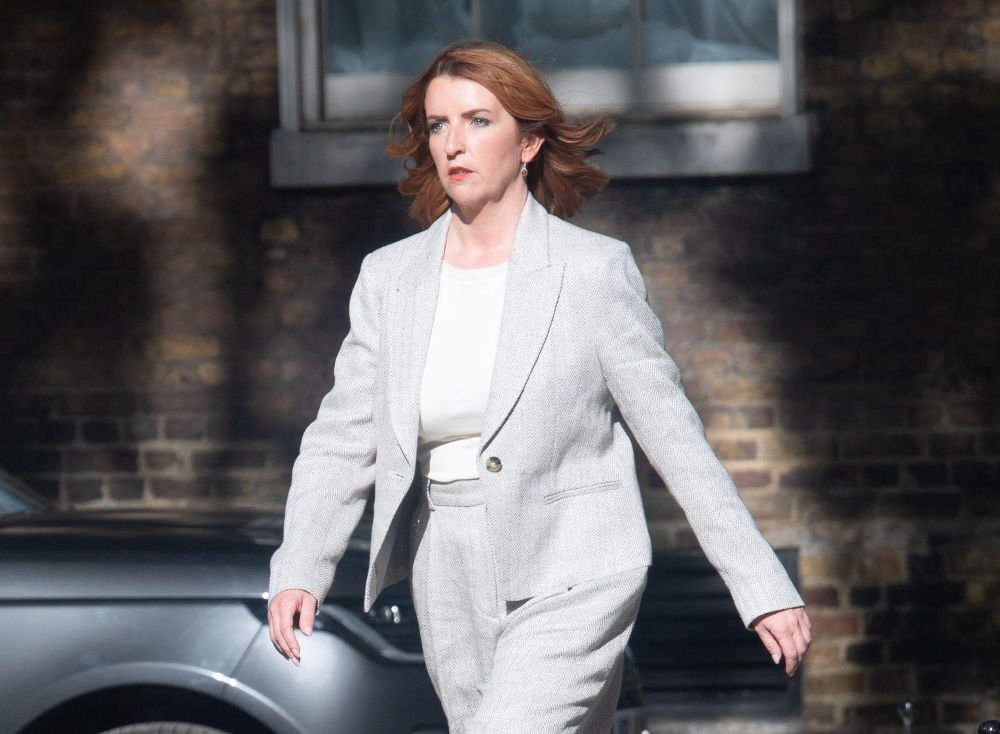 Burnham ally Lou Haigh will play a lead role in Burnham's expanded No 10 operation (Alamy)
Miatta Fahnbulleh, meanwhile, led on policy for Burnham, working from the South during the by-election in preparation for government – which came sooner than Burnham allies expected. Although she was thought to be interested in becoming housing secretary, she will instead head up the Department for Energy Security and Net Zero, having worked as a minister there until Starmer’s September reshuffle.
And despite being energy secretary at the time, Miliband also played a role in the Makerfield by-election, even advising on the minute details of how the campaign was run according to Labour sources. Ultimately, after much briefing and counter-briefing, he did not secure the coveted role of chancellor but did nab a ‘great office of state’ by being appointed the new Foreign Secretary.
Other Burnham allies
Heidi Alexander is among the survivors of Starmer’s Cabinet, remaining as Transport Secretary. It comes as little surprise considering she is a longtime supporter of Burnham’s leadership ambitions, having nominated him for the post on all three of his bids – in 2010, 2015 and 2026. She was also understood to have told Starmer to set a timetable for his departure.
Lisa Nandy, Burnham’s Wigan neighbour who called on the party to allow him to run as a parliamentary candidate, has again defied critics by staying in post as Culture Secretary, while Lucy Powell – the only officer on Labour’s ruling body to vote in favour of permitting Burnham to stand in Gorton and Denton – has been brought back to the Cabinet as Education Secretary. Angela Rayner is another ally who was always expected to make a return and has done so, going back to her old job of Housing Secretary.
Less well-known is former Unison official Alex Norris, the new Justice Secretary who represents a Nottingham seat but is originally from Altrincham. He was expected to be rewarded after being seen to have handled a tricky brief well in the Home Office, where he handled illegal migration – but it also helps that he is close to a tight-knit circle of people around Burnham. He is seen as a “people person” who, accordingly, has been given another difficult job where those skills will come into play.
Starmer rebels
Like Heidi Alexander, Yvette Cooper and Shabana Mahmood are known to have made clear to Starmer that his time was up. All three have stayed in Cabinet.
Anas Sarwar, who as Scottish Labour leader publicly called on Starmer to go, is leaving his post in Holyrood to enter the Lords and become a trade minister.
Streeting and Healey, meanwhile, both resigned in Starmer’s final weeks, representing big blows to his authority – particularly in the case of the former defence secretary. Healey’s damning verdict on the ex-PM being “unable” and the Treasury “unwilling” to sufficiently increase defence spending was a final nail in the coffin for the Starmer era.
Vicky Foxcroft, who quit as a whip last year amid the welfare rebellion, has returned as a DCMS minister.
Losers of the September 2025 reshuffle
Many of the notable moves in the infamous September 2025 reshuffle triggered by Rayner’s resignation – now back in her old Cabinet job – have been reversed by Burnham.
The top-level sackings at the time were Powell and Ian Murray; the former is the new Education Secretary while the latter (who was ultimately demoted rather than removed completely, following an outcry) has stayed under Burnham as a minister of state in DCMS.
Aside from Powell, it was notable that Jonathan Reynolds was also moved from business and trade secretary to chief whip in a switch that baffled Westminster. Under Burnham, he has been returned to his former position, to which he is widely thought to be far better-suited, and will lead a “beefed up” DBT.
In the ministerial ranks, Rayner ally Justin Madders was the most noteworthy sacking, being removed as employment rights minister. He has now returned as a transport minister.
Rayner ally Jim McMahon, similarly, was a local government minister until his September sacking, and will now return to the department.
The North West
The North of England has done well under Burnham – and the North West especially so. Powell, Rayner, Reynolds, Nandy, Midgley and Angela Eagle all hail from Burnham’s region. This is up from just two Cabinet members from the North West under Starmer. See the changes mapped out on PoliticsHome.
The Co-operative Party
Labour’s sister outfit, the affiliated Co-operative Party, has much to celebrate under Burnham, who is himself the first ever officially Co-op Prime Minister.
Reynolds will be able to put Co-op priorities into action as head of the bolstered Department of Business, Innovation, Science and Trade. Fahnbulleh will have the same opportunity to do so in Desnz, building on Miliband’s ‘Local Power Plan’ developed in conjunction with Co-op.
The appointments of Co-op MPs Norris (husband of Emma Foody, a whip who was Co-op assistant general secretary before entering Parliament) and Powell are wins too. Douglas Alexander, who remains in Cabinet, is also Co-op.
While Rayner is not officially a Labour and Co-op MP, she is often regarded as “spiritually” Co-op in that she has worked with the affiliate and is particularly sympathetic to its aims.
With peers Baroness Smith also reappointed, a quarter of all ministers attending Cabinet under Burnham are Co-op, and there are 22 Co-op ministers in total across 15 departments – a historic high.
Below Cabinet level, Co-op wins include Florence Eshalomi, who is leaving her Housing Committee chair role to go straight into MHCLG at ministerial level, Kirsty McNeill, promoted from junior Scottish minister to minister of state at the Foreign Office, Kate Dearden, bumped up from parliamentary under-secretary to become a minister of state at DBIST, and McMahon who has made a return to MHCLG. Luke Pollard, Stephen Doughty and Lord Coaker have also been reappointed.
Trade unions
There is some apprehension from those trade unions that lobby against net-zero over Fahnbulleh replacing Miliband as Energy Secretary – as a strong ally of his and an enthusiastic backer of decarbonisation, she is not generally expected to be less radical than her predecessor on the subject.
But unions have done well, overall, with Rayner, Midgley and Haigh in key roles and union-friendly Reynolds in DBIST.
The whips’ office, led by Midgley, is particularly good news for the unions, complete with GMB’s Laurence Turner and Usdaw’s Michael Wheeler being picked.
There was a call from the Prospect union last month for continuity around the government’s work on employment rights, with Mike Clancy writing for The House: “The Employment Rights Bill, as it once was, started with Angela Rayner, Jonathan Reynolds and Justin Madders in charge but was passed under Peter Kyle and Kate Dearden.
“That personnel change caused delays, and I hope the new Prime Minister will reflect carefully on how they deliver continuity to this vital area of work. Minister Dearden in particular has skilfully conducted the various discussions needed to progress the consultation process.”
Dearden, formerly of Community union, now has a ‘future of work’ brief in the same department.
THE LOSERS
Starmer allies
The most notable losers from Burnham’s appointments are, of course, allies of Starmer, from David Lammy, Rachel Reeves, Darren Jones, Steve Reed and Jo Stevens being removed from Cabinet to Lord Hermer, Nick Thomas-Symonds and Baroness Chapman leaving as ministers who attended Cabinet.
Bridget Phillipson, who despite being briefed against during the Starmer era was kept in place by him as PM, was heavily demoted – losing her education brief and being left with the women and equalities role only, albeit remaining in Cabinet. A source said Burnham’s team were surprised she accepted the downgrade.
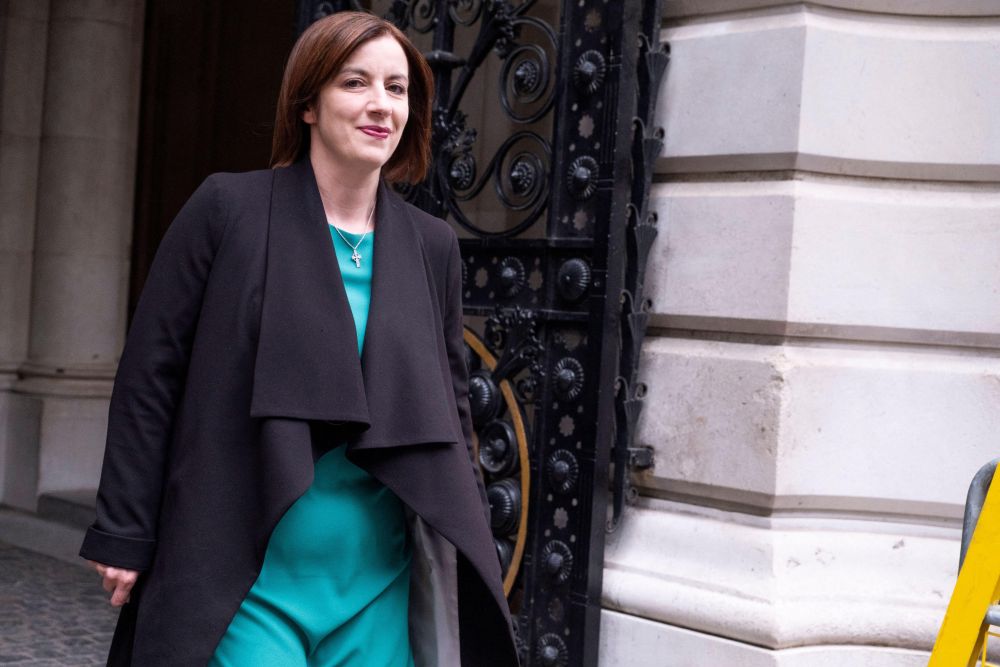 There was upset among Starmer loyalists that Burnham removed the education brief from Bridget Phillipson (Alamy)
Neither Dan Jarvis nor James Murray, who stepped up to Cabinet roles when John Healey resigned as defence secretary and Streeting as health secretary, have been kept in Cabinet – though both have become ministers again.
Chris Ward, a former Starmer staffer before becoming an MP and perhaps his closest ally in the Parliamentary Labour Party, has left government as expected.
The Socialist Campaign Group
On the other end of the Labour Party’s factional spectrum, the Socialist Campaign Group and other MPs on the Corbynite or ‘hard’ left are deeply disappointed – and some angry – to have been completely overlooked for ministerial roles. This is despite many having backed Burnham’s return and nominated him for the leadership.
“A lot of people are very unhappy,” one Labour left MP said. “So much for using all talents.” Although pleased about the cost of living policies announced, they added: “Everyone knows politics is brutal but this is just a big two fingers up to people.”
Londoners
Streeting and Fahnbulleh are the only full Cabinet members representing London seats under Burnham, whereas Starmer’s Cabinet had himself, Reed, Murray and David Lammy. The new PM does have Ellie Reeves and Matthew Pennycook as ministers attending Cabinet, however.
This shift away from London is defended by Burnham allies as a shift towards being more representative of the country.
YOU WIN SOME, YOU LOSE SOME
Blairites
Blairite Cabinet members Peter Kyle and Liz Kendall have both been sacked. The picture is mixed, however. McFadden remains Work and Pensions Secretary. Reynolds has been moved from Defra to become Chief Secretary to the Treasury. Streeting stays too, of course, though he is a unique case.
Among non-Cabinet ministers, some have been kept on – Baroness (Jacqui) Smith and Georgia Gould remain in post, and Alison McGovern has been moved sideways to health, for example – while others, like Sharon Hodgson, have not.
