Inside Andy Burnham's Plan To Change Britain's Voting System
Andy Burnham announced a national commission on electoral reform in September (Alamy)
11 min read
Andy Burnham has opened the door to electoral reform 15 years after voters said no. Matilda Martin and Harriet Symonds look into plans to set up a national commission and how the issue looks set to split the Parliamentary Labour Party.
Burnham, not content with restarting the conversation over the UK’s relations with the EU, will within months begin an even more divisive debate: how we elect our politicians.
The House can reveal that government has been quietly drawing up its plans for a national commission on electoral reform. Its launch is pencilled in for before Christmas, but insiders concede it may get pushed into the new year.
The responsibility sits with the Ministry of Housing, Communities and Local Government (MHCLG), but No 10 has so far been closely involved. The department is also currently focusing on other priorities, including delivering on the pledge to offer all those who need it a route out of rough sleeping.
Burnham’s own views on electoral reform are clear. He is a convert to replacing first-past-the-post (FPTP) with proportional representation (PR). In 2021, he wrote on X that he had “come round” to the idea and now supports all UK elections to be changed to a PR system.
When it comes to PR, there are several options that a commission could opt for: Single Transferable Vote, Additional Member System, Proportional List systems, and variants of each – with different strengths and weaknesses.
However, since the announcement, it has quickly become clear that Labour MPs, ministers included, are far from united on moving away from FPTP – the system under which Labour, under Keir Starmer, won its landslide majority in 2024.
The House understands that Louise Haigh, Deputy PM and Burnham’s close ally, has concerns about shifting to PR.
The commission will be under the jurisdiction of Secretary of State for Housing Angela Rayner, whose long-held views against shifting to PR make her position somewhat awkward.
In 2022, Rayner said she was a “first-past-the-post girl” who was “yet to be convinced by PR”, telling The News Agents podcast that it could allow extremist parties such as the British National Party (BNP) to win House of Commons seats.
However, The House understands that the main driver behind her concerns at the time lay in the importance of the constituency link, with some saying that Rayner is now coming around to the idea.
John Healey, now Chancellor, campaigned against electoral reform when voters were asked to approve the alternative vote system in a 2011 referendum, describing it as “perverse”.
There are also those in Cabinet who share Burnham’s desire for electoral reform.
Ed Miliband, now Foreign Secretary, was a strong proponent of electoral reform during the 2011 referendum campaign.
Culture Secretary Lisa Nandy has also previously said that she favours proportional representation voting systems but would like every constituency to have an MP.
Several Labour MPs who recently became ministers were among those who, as backbenchers, signed an amendment to the Representation of the People Bill calling for a national commission. Signatories included now-Energy Secretary Miatta Fahnbulleh, communities minister Florence Eshalomi and the Prime Minister’s parliamentary private secretary and close ally Jo Platt. It was ruled out of scope in September.
We should think very carefully about introducing any legislation nationally on electoral reform
Backbench opposition to reform is largely centred on why the government wants to spend so much political capital, time and energy on this issue when there are many other priorities that they say should take precedence.
“To prioritise electoral reform over improving public services and our economy is complete navel-gazing. It is a distraction from the real problems facing this country,” a Labour MP said.
With such a large parliamentary party, many backbench MPs also fear they would lose out under PR. Speculation about an early election next year has only heightened those concerns.
It is likely for this reason that the government wants the commission to be as non-partisan as possible. Those familiar with the planning say the commission needs to have cross-party buy-in and those selected to sit on the commission must not be party-affiliated, ruffling as few feathers as possible among MPs wary of reform.
Government figures also say that commissioners cannot be seen to have been in favour of a particular voting system in the past; otherwise it could be used to discredit the credibility of the commission.
Government is currently on the hunt for a chair that fits this brief and could hold the limelight, likely someone akin to Alan Milburn, who is currently leading on the review into the Neets crisis.
One name that has been floated is elections expert professor John Curtice. Speaking to The House, Curtice denies the rumours, saying he had “not heard a dicky bird”.
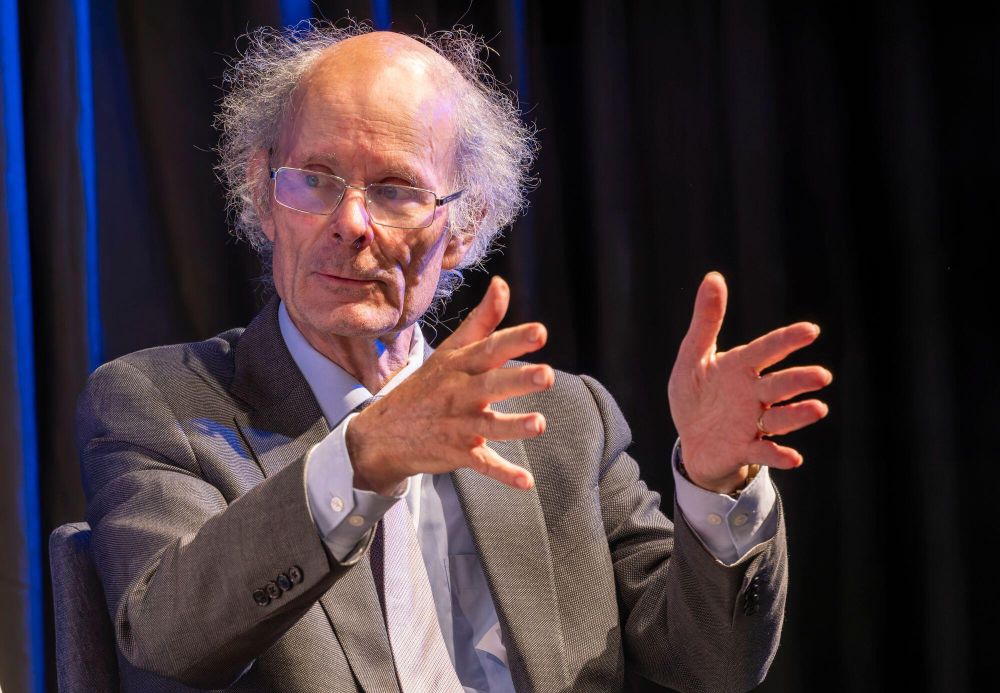 Leading pollster Sir John Curtice said he had "not heard a dicky bird" in response to speculation that he could lead the electoral reform national comission (Alamy)
In 2025, the All-Party Parliamentary Group (APPG) for Fair Elections published its proposals for a national commission with its own terms of reference. It is understood that the government is looking closely at this blueprint.
The House understands that the government is keen that the importance of maintaining some sort of constituency link is contained within the commission’s terms of reference, as concern over this has turned many MPs off reform in the past.
Henry Tufnell, the Labour MP for Mid and South Pembrokeshire, tells The House that his experience of PR in Wales has made him more opposed to changing Westminster’s voting system.
“I saw on the doorstep ahead of the Welsh elections how democratic accountability can be lost under proportional representation and the broken link between the electorate and the representative. We should think very carefully about introducing any legislation nationally on electoral reform.”
Even some Labour MPs who are pro proportional representation agree this would be important: “I think culturally that would be very difficult for most people in Britain to accept that they didn’t really have a named local MP any more,” one long-time supporter of PR tells The House.
Curtice argues that true PR will ultimately require a change at constituency level, even if that means multi-member constituencies.
“You just cannot have a systematic relationship between votes and seats at the national level if you are going to have single-member constituencies. That is just an inevitable trade-off.”
Such a move might seem alien, but there is hope in government that the proposals enacted as a result of the commission will increase public confidence in the system, increasing political engagement and turnout in elections, something that has been on a downward trajectory for many years, falling from more than 80 per cent in 1950 to less than 60 per cent in 2024.
FPTP has faced increasing scrutiny in recent years, particularly since 2024, with the emergence of a multi-party system and an increasingly fractured electorate. Campaigners point to increasing evidence that the system, which was designed when the majority of votes went to two main parties, is out of date and not fit for the modern political landscape.
In the 1950s, it was common for more than 90 per cent of voters to vote for either the Labour or Conservative parties. Over the years, this has fallen to less than 60 per cent. At the same time, public apathy and loss of trust in politicians have increased.
Getting the public on board is seen as crucial to the commission’s success. The House understands that No 10 wants there to be a deliberative element, through which the public can be consulted.
Jess Sargeant, director of policy at Demos, is clear that with MPs across all parties still deeply split on the issue, it will be important to “bring together citizens and parliamentarians to deliberate on the options for electoral reform”.
Sargeant worries that failing to do so could result in a real disconnect. “The danger is a process that wins public trust and then loses Parliament. There is a real and present risk that the well-thought-through, carefully balanced conclusions of a citizens assembly could be torpedoed by opaque political negotiations once that process has concluded.”
I think culturally that would be very difficult for most people in Britain to accept that they didn’t really have a named local MP any more
An attempt to keep the commission independent may also allow Burnham to avoid pressures from his own split Cabinet on this issue.
Neal Lawson, the long-standing director of the pressure group Compass and co-founder of the Labour group Mainstream, previously told PoliticsHome that some senior ministers would seek to prevent reform.
“Some people in the Cabinet who are very opposed to it, who are old-school tribal, adversarial Labour – they will try and do whatever they can to try and kick PR into the long grass.”
Asked by The House if some Cabinet ministers could try to shift the conversation onto supplementary voting, not PR, Lawson says: “It’s around. It’s definitely alive. And the advantage of SV or alternative vote is that it doesn’t require any boundary changes… So it’s an easy thing to do, and it really damages Reform.”
Lawson gives a word of warning: “I hope Andy is firm enough on it… he keeps saying it’s got to be proportional. That’s a requirement. Anything less than that is not a gamechanger, and could make it worse.”
While some have suggested that the Treasury might be wary of a move to PR as it might spook the markets, director of the UCL Constitution Unit Alan Renwick tells The House that it is true that “some studies have suggested that public spending and budget deficits tend to be higher in systems with PR because of the need to keep all of the parts of a coalition happy”.
However, he adds that “not all studies support that conclusion, and any effects are fairly small”.
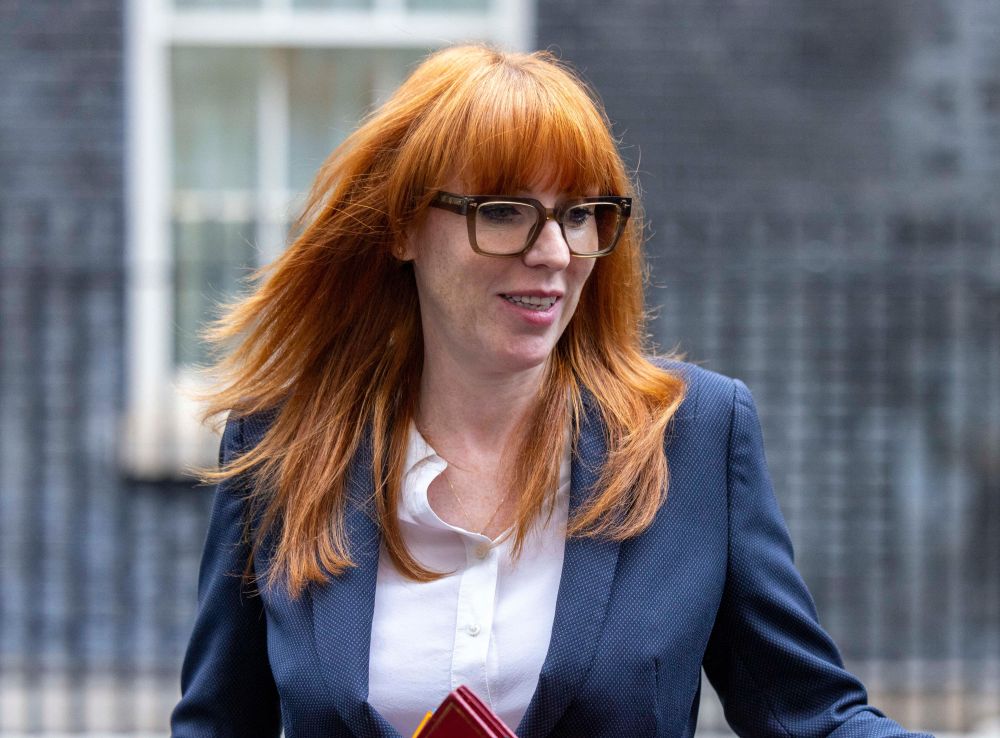 Angela Rayner is believed by some to be warming to electoral reform after describing herself as a "first-past-the-post girl" in 2022 (Alamy)
Those against PR say that changing the voting system would weaken the party’s electoral position, forcing the governing party into unnecessary and divisive coalitions.
The question of how Labour would build a coalition government in a hung Parliament scenario has been complicated by Burnham’s refusal to work with the Green Party, after it passed a controversial motion describing Zionism as racism at its conference.
A Labour MP who supports getting rid of FPTP admitted that “the prospect of having to rely on Ed Davey, or even worse the Greens, to get stuff through almost makes me physically sick”.
Rob Ford, professor of political science at the University of Manchester, tells The House that “one of the underestimated elements in all of this is that most electoral reforms are going to involve quite a lot of disruption to constituency boundaries, and boundary changes are always a fraught process”.
He adds that incumbent MPs not wanting to see their seats change is a “completely natural political reaction. You’ve spent many years cultivating a personal link with your constituency. You don’t want that completely disrupted.”
To allay concerns from some quarters, The House understands that the government is keen that the commission will be seen as a chance to review whether the current system is fit for purpose, meaning parliamentarians will be able to make the case to the commission that FPTP is in fact robust.
The first job of the commission will be to ask: is the system working? Campaigners want the government to get this right: such opportunities for electoral reform in the UK tend to come once in a generation.
While the Jenkins Commission of 1997 recommended a reform to the electoral voting system, the report was later shelved by Tony Blair, with a referendum on the change not emerging until 2011 under the Conservative-Lib Dem coalition. However, Burnham himself – who was Labour’s local election campaign co-ordinator at the time – argued that Conservative PM David Cameron had “outmanoeuvred” Nick Clegg on the issue by holding the referendum on the same day as Scottish, Welsh and council polls. Burnham said at the time that Labour would not help the yes campaign, instead focusing on the other votes.
The 2011 referendum returned a majority no vote, with Matthew Elliott, who would later run the Vote Leave campaign of 2016, cutting his teeth on the challenge. One infamous campaign pictured a sick baby that appeared to be in intensive care with the line “she needs a new cardiac facility, not an alternative voting system”.
While Burnham has said that Labour will contest the next election with a manifesto commitment to change the electoral system “so that everyone’s vote counts and everyone’s voice is heard”, the question of whether this will also result in a referendum on the subject is very much unanswered.
However, Burnham may have no choice if he cannot find unity among his MPs to include the commission’s findings in the next manifesto. Ultimately, the future of the UK’s democracy hangs in the balance, dependent on a soon-to-be-elected chair and their commissioners. The outcome could change the face of the UK and its politics forever.
