Former Prison Governor Ian Acheson: The Public Is Right To Be Outraged By Early Release Schemes
11 min read
In a searing critique, former prison governor Ian Acheson says the public is right to be outraged by early release schemes and overcrowding is being used to cover up entrenched administrative and political failure
Prison overcrowding is a major issue because it hampers movement, reduces the time offenders can spend outside their cells, interferes with work and education, complicates resource allocation, and makes control much harder to enforce. At the same time, it has turned into a generic excuse used by the Ministry of Justice (MoJ) to explain almost every failure. Whether it is soaring violence, rife drug use, staff shortages, inadequate intelligence, bad management systems or managerial decline, overcrowding is rolled out as the culprit. It has become a convenient substitute for examining whether prisons are being properly managed and run.
That’s a harder truth. A cultural decay exists within the boss class of HM Prison and Probation Service (HMPPS), the last true hermit kingdom in public administration. It shows in their helpless response to a downward slide, and in their readiness to regard basic failure as inevitable, whether a prison is overcrowded or not. The most dangerous failures among our jails are not caused by a lack of cell space. Often, the system rewards the apparatchik who fails upwards because he or she has become skilled in progressive abstractions, rather than the kind of leader who prioritises order, safety, high standards and a purposeful regime.
The public debate has become distorted since ministers have spoken of a capacity crisis.
Reference is made to the tainted Tory legacy, and the only solution proposed is to grant earlier release. The more realistic option – building, staffing, and managing a prison establishment to handle the number of prisoners imposed by the courts’ penalties – has been continually postponed. The most recent official figure available indicates that there were 87,111 people in prison in England and Wales on 14 September 2026. The operational capacity is 88,986, which means the national headroom is 1,875 places.
The global figure by itself does not give the full picture. Prison places are not all the same.
Remand prisoners must be kept within a reasonable distance of the court. High-risk prisoners need high-security jails. Sex offenders must be protected against exploitation and violence. Women, young adults, people with serious mental illness, people with disabilities, prisoners who are subject to gang separation, and terrorists who need confinement all require special types of accommodation. Governors deal with these restrictions every day, but they are not visible when looking at the total number of prisoners.
The most recent population forecasts from the MoJ give the central figure as 100,600 prisoners by March 2030, the range being between 98,000 and 103,600. The department recognises that there is a great deal of uncertainty involved, since its figures are based on assumptions regarding police activity, charging rates, court throughput, sentencing patterns, recalls, policy changes and the speed at which cases progress through the justice system.
Forecasts are needed for the purpose of planning and should not be regarded as definitive proof of a fundamental change in the meaning of sentences.
Even though we are certainly running short of space, the MoJ’s 2024 forecasts predicted 89,100 prisoners by September 2025. The actual total was 87,465. The later central estimate for September 2026 was about 2,100 fewer than the similar forecast that had been made a year before. The ministry explained a large part of this change as being due to policy adjustments, including the greater use of the Home Detention Curfew and the reforms regarding fixed-term recall for some people who are serving shorter sentences.
Those changes make a point that ministers would prefer to avoid. Population projections can change sharply because policy changes sharply. They are models, not destiny. A state that has underbuilt its way out of a capacity problem for more than a decade should not use an uncertain future number as a reason to beg ministers to normalise the early release of thousands of risky prisoners.
That building failure is well-documented. The National Audit Office (NAO) stated that the government’s commitment in 2021 to provide 20,000 extra prison places was unrealistic and had not been given sufficient priority. By September 2024, the HMPPS had delivered 6,518 of these places. The NAO believed that the full number of 20,000 would not be achieved until 2031, which is about five years later than planned.
This is the major failure in public policy. Successive governments have increased policing, introduced tougher sentencing laws, allowed court delays to become longer, and accepted a large number of recall cases – yet they have not built the physical infrastructure needed to accommodate the inevitable increase in prison numbers.
Labour has promised to provide 14,000 new places by 2031 and says it has committed up to £7bn over 2024-25 to 2029-30. This commitment is essential and must be implemented swiftly, with progress to be assessed by the number of prison gates that open to reveal safe, staffed and fully functioning establishments inside. Let’s have no more nonsense spouted by the Justice Secretary Alex Norris on converting laundries. Fatuous press releases, planning applications or artistic impressions can’t securely hold prisoners.
Building cell space is often dismissed as a simplistic law-and-order response. It is an acceptance of responsibility. A state that investigates crime, prosecutes people and asks courts to impose custodial sentences must provide sufficient capacity to enforce the outcome.
Custody should be proportionate. It should be reserved for cases where it is necessary. It cannot be turned into a provisional arrangement whose duration depends on the MoJ’s construction record.
The government’s other option is now becoming more and more chaotic. Emergency release was launched in 2024. The Sentencing Act has altered the automatic release dates for a large number of prisoners who are serving standard determinate sentences. According to the new legislation, individuals who were previously due to be released after 40 or 50 per cent of their sentence can now be released after one third; similarly, those who would have had to serve two thirds can now be released at halfway. The aim of the scheme had been to free up space, but it instead caused a public outcry.
Families, victims’ representatives, and former police colleagues raised alarm when it emerged that two men convicted of the manslaughter of PC Andrew Harper could become eligible for earlier release. Harper was killed in 2019 while investigating the theft of a quad bike. The campaign surrounding his case brought home a simple political fact: the public does not experience early release as a neutral technical adjustment. It sees people convicted in serious and notorious cases leaving prison earlier because the state has not built enough places. One million people signed a petition to show their anger at justice by logistics, not just deserts.
The response was a familiar Whitehall exercise in retrospective exemption. The policy was paused. Ministers reviewed it. They excluded those convicted of unlawful killing, including manslaughter. They added exclusions for death by dangerous driving, indecent assault, historic child-sex offences and causing or allowing a child’s death.
A cultural decay exists within the boss class of HM Prison and Probation Service, the last true hermit kingdom in public administration
The eligibility group reduced from an estimated 6,000 to around 5,000 prisoners. The start date was delayed. Further supervision and protections for victims were promised. Sci-fi magic bracelets for geo-fencing would save us all.
Each individual exclusion here may be defensible. The cumulative result is policy made in public, case by case, only after the consequences become visible and politically embarrassing.
It is a salami-sliced attempt to retain the capacity savings while avoiding the politically intolerable cases. The government is discovering that there is no clean line between the prisoner it is comfortable releasing early and the prisoner whose earlier release will rightly trouble the public.
This matters because the public is at odds with the administrative state on this question. Most people understand that not every offender belongs in prison. Most accept that individual release decisions must be based on risk, progress and law. They understand the value of credible rehabilitation. They also understand that a sentence imposed in open court should carry meaning.
The public sees the contradiction. Ministers promise action on crime, victims are promised confidence in justice, police are expected to make more arrests and courts are urged to deal with cases more quickly. The same state then says that sentences must be cut short because the accommodation has not been built. It is impossible to spin that as an enlightened penal settlement. It looks like a failure to plan and two fingers to victims.
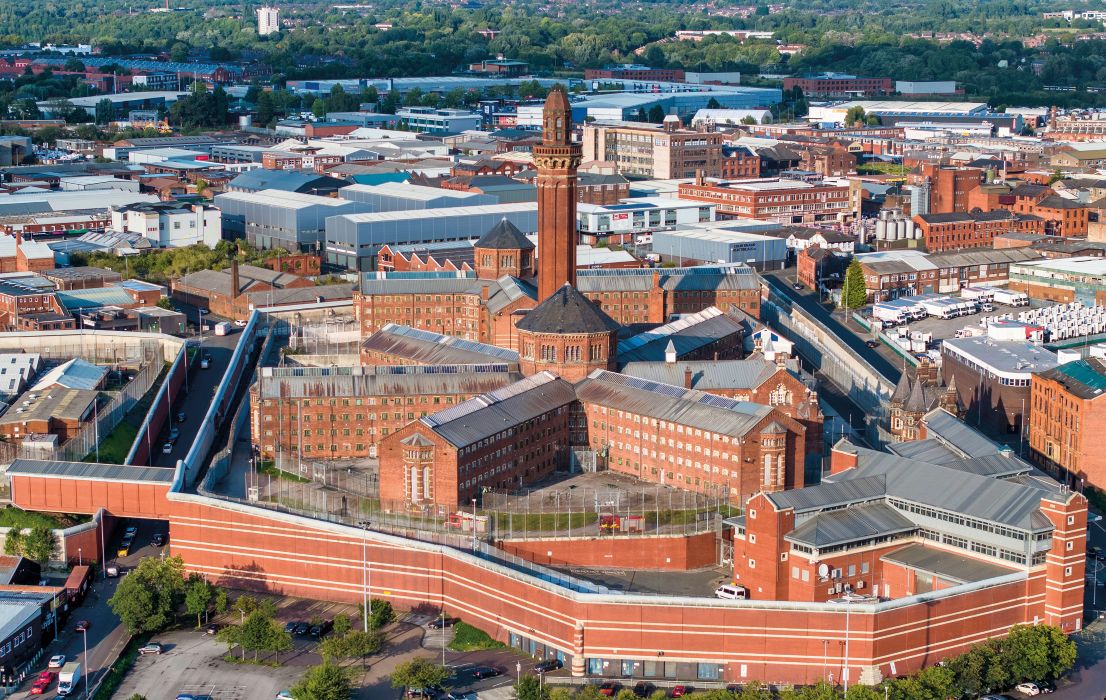 HMP Manchester
Early release also transfers pressure into a knackered probation service still damaged by years of ideological vandalism, excessive workloads, staff turnover and lethal public protection failures. An offender released earlier than a judge has said they should be locked up needs a credible licence plan, stable accommodation, access to treatment and medication, help into work, and a probation practitioner with sufficient time to assess and manage risk. None of this is remotely in place now, let alone in the coming months as dangerous offenders flood the streets. The police have been crystal clear – managing this additional risk will denude everyday cover, which is hardly flush with capacity as it is.
Recall to custody has become a major driver of population pressure because it shows a system that’s unable to manage instability outside prison: licence breaches, genuine risk, homelessness, addiction, fractured supervision and deficient support.
There are responsible ways to reduce the number of people in prison. Short sentences which involve detention must be used with care. The practice of remand should be subjected to stricter discipline. Non-violent acquisitive offenders in prison because of a drug addiction are a medical problem, not a criminal justice one. The courts need other options than custody which they can rely on. But these reforms need investment, urgency, imagination and competent delivery. And they need public confidence, which is tanking. But they do not make prison capacity optional.
The condition of the estate explains why building and leadership must be addressed together.
In 2024-25, 24.8 per cent of prisoners were held in crowded accommodation. The methodology has changed, so historic comparisons require care. The current figure still means roughly one prisoner in four shares accommodation designed for fewer offenders.
Large parts of the existing estate lie empty because of a failure to recruit and retain staff.
Here’s why: In 2025-26, prisoner-on-prisoner assaults stood at 244 per 1,000 prisoners.
Assaults on staff stood at 113 per 1,000. There were 812 self-harm incidents per 1,000 prisoners and 67 self-inflicted deaths. Drugs, debt, intimidation and violence are harder to control in a crowded system. But they also flourish where leadership is weak, staff are traumatised, and prisoners have nothing to do except wait for the next drone drug delivery.
The workforce situation tells the tale. In March 2026, 21,984 prison staff were employed at Band 3 to 5 levels, down from 22,716 the previous year and fewer than the 23,590 recorded in March 2024. Average sickness absence for front line staff reached an unsustainable 13 working days in the 2025-26 period. The service cannot get to stability just by speeding up the process of shovelling offenders through the gates early.
In 2025-26, 14 prisons were assessed by the MoJ as being ‘of serious concern’ and 25 as being of ‘concern.’ That’s 39 out of 120 establishments requiring great improvement. Many of those jails hold some of the scariest people in Britain. There are good prisons and outstanding staff. There are also too many establishments where the basics of safety, decency, control and purposeful activity are unreliable or completely defunct.
The answer is clear to me. Britain needs a national capacity crisis taskforce led by genuine experts, not retread mandarins and clueless ministers. It needs a genuine operational buffer.
It needs officers recruited, retained and confident to restore order which is foundational to everything hopeful. It needs senior leaders judged openly on safety, order, staff confidence, regime delivery and rehabilitation outcomes. It needs a rebuilt probation service before large-scale early release becomes a normal practice.
Early release may occasionally be necessary. It can’t become a substitute for building a system capable of carrying out the sentences that courts impose. The public is entitled to expect more than an omnicircus of duff projections, panicked exemptions and emergency sticking plasters. It is entitled to a prison system that is properly led, adequately built and worthy of public trust.
