Groundbreakers: Meet The Pioneering Female MPs
Baroness Shephard, Baroness Nuicholson, Caroline Spelman
10 min read
A new collection of the testimonies of pioneering female MPs amounts to an important social history of how they met – and mastered – the challenges they faced, including blatant sexism from their male colleagues
For the last few months, I have been part of a small team of female journalists ensuring the personal testimonies of pioneering female parliamentarians are secured for posterity.
The accounts of this group, which include some of the most well-known and long-standing politicians of the age, amount to a fascinating social history as they relate the start of their political journeys.
These women probably thought that winning an election gave them full access to the “Westminster Club”, only to discover that a whole new set of battles lay ahead.
We hear from Helene Hayman, who went on to become the first female lord speaker of the house, about how a very senior female minister reported her to the police for taking her three-week-old baby into one of the Lady Members’ Rooms, calling him a “stranger”. She even learned that the chief doorkeeper had been given instructions on how much force he was allowed to use if Helene tried to take her baby into the Chamber.
The testimonies are awash with injustices and reports of overt sexism. Gillian Shephard recounts how, upon becoming the first female Treasury minister, she was firmly told how unimportant her role would be, as the “important work” and policy-making would be done by senior officials and the chancellor. As an aside, she was also informed that there were no women’s ministerial restrooms.
Harriet Harman was told she didn’t know how to be a proper MP when she dared to raise the issue of childcare in PMQs to Margaret Thatcher. Caroline Spelman, meanwhile, heard a remark as she was sworn in as an MP that she should be at home with her children.
Here we quote their recollections of the start of their political journeys, with some entering Parliament when women were still not included in the cabinet. They speak of the challenges – but also their achievements, like helping bring in the minimum wage, Sure Start, the 2010 Equality Act, the Gangmasters Act, health service reforms, important international environmental advances, flexible working and same-sex marriage. (The italicised sentence that follows their names is a précis of their achievements.)
Working closely with Jackie Ashley, and Deborah McGurran and the Churchill Archives Centre at the University of Cambridge, we have made an independent film, entitled Groundbreakers. It has been released on the Lucy Cavendish College YouTube channel, where Jackie Ashley was a former president.
Baroness Harman, Labour
Equality for all, challenging misogyny and making Parliament more representative
“Sometimes people were outright hostile, shouting across the Chamber that I was a stupid cow. In my first Prime Minister’s Questions to Margaret Thatcher, I raised the question of childcare as we we’re coming up to the school holidays, and a lot of women were working, and school holidays are very difficult.
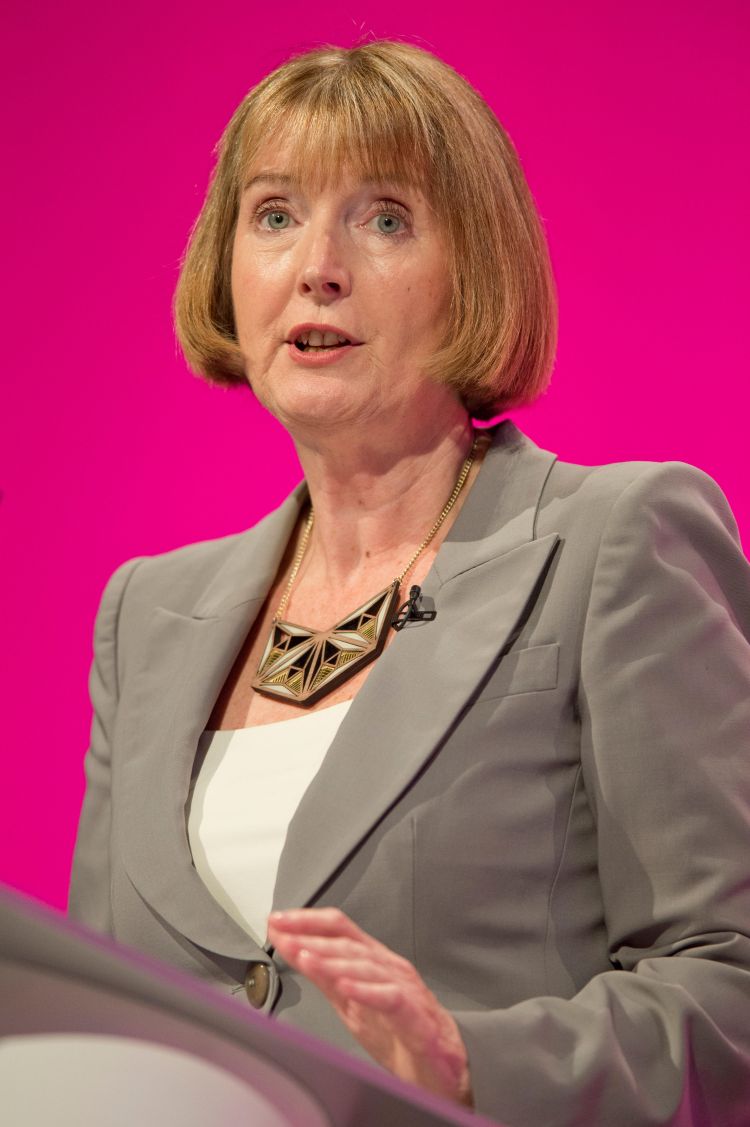 Harriet Harman, 2014
“There was literally sort of jeering not only from the other side at the Tory side, but from our side as well, on the basis that I really didn’t know what being in Parliament was about.
“There was an editorial in the Daily Mirror denouncing me for not knowing what questions I should be asking.”
Baroness Hayman, Labour
From the Baby of the House to lord speaker of the House of Lords
“I was once reported to the police by a fellow parliamentarian, for having the baby in one of the Lady Members’ Rooms because he was a stranger. Three weeks old. The only thing I was ever told they had discussed, because the chief doorkeeper told me, was that if ever I tried to bring the baby into the Chamber, how much force he was entitled to use to stop me entering the Chamber.”
Anne Campbell, Labour
Using technology to help with social issues and benefit mothers
“When I first came into Parliament, it was a pretty hostile environment, actually. It felt more like a public school than almost anything else. I mean, there was tobacco smoke everywhere.
“I think one of the things that I did try to change was the importance of science to the economy. The person who listened to me was Gordon Brown, who took it up.
“I was the first MP to have a website, yes.”
Baroness Beckett, Labour
Breaking barriers to assume high offices of state and minimum wage reforms
“I was appointed foreign secretary of state in 2006 in Tony Blair’s government, the first woman to hold that high office. When I became shadow chief secretary in 1989, I was the only other woman apart from Margaret Thatcher who had been shadow chief secretary. I suppose perhaps I was the second woman to hold one of the great offices of state. I have been fortunate.”
Baroness Nicholson, Conservative
Breaking conventions, campaigning for Europe, fighting for international immunisation against Polio, and trying to protect Iraqi marshlands
“I have a lot of experience in Parliament, and I come from a very, very long line of parliamentarians on all sides of the family, but I am the first lady parliamentarian. I stood for Parliament because having spent my childhood supporting all the men in the family – and I mean a very big family, so all sorts of uncles, cousins, brothers-in-law, fathers and everything – I realised I didn’t agree with them. If I was out door-knocking, I had to agree with them. So, I concluded when I was about 14 or 15 that I would wait until my father retired and not do anything before that.”
Baroness Armstrong, Labour
Fighting for social justice and the excluded in society and reforms to tuition fees
“I was elected in 1987 and I come from the North East of England. Clearly, the Abortion Act had been passed in 1967, so that was well entrenched, as it were, by the time I became a Member of Parliament in 1987. However, there were attempts to roll back and there was cross-party organisation among women and in those parliaments to make sure that we didn’t roll back.
“And I clearly supported the right of women to choose. So, I would always have that as an issue going through my Commons career.”
Baroness Bottomley, Conservative
Being a woman in the cabinet and steering through health service reforms in the face of opposition
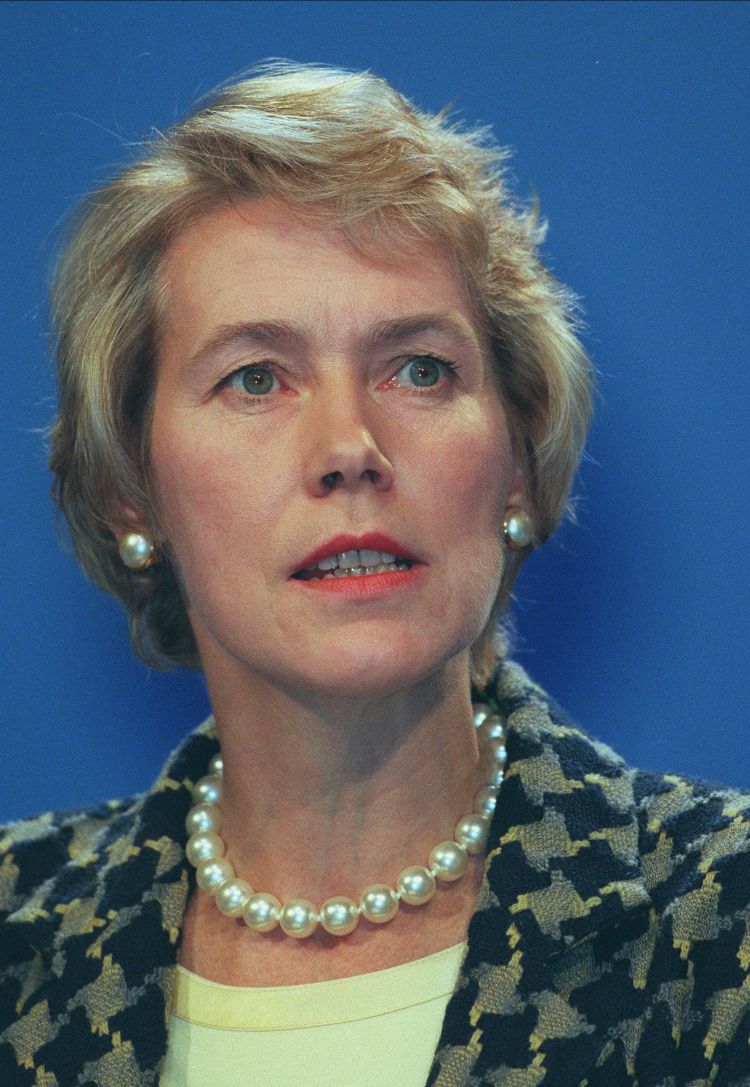 Virginia Bottomley, 1996
“The media painted me as an English rose figure, but I can be an absolute battle axe. So, this English rose picture, I mean, whatever I look like, I’m a tough old boot. And my daughter used to say, ‘Mum, they don’t know whether you’re a battle axe or a bimbo. I think you’re both.’
“I say this to people, as women, as a head-hunter, you get awful, patronising comments but the thing is: don’t get mad, get ahead.”
Baroness Shephard, Conservative
The Gang Labourers Act and fighting against modern day slavery
“A senior Treasury official, a man of enormous overweening importance, of course, but he was only one of four or five Treasury knights, as we called them, came into my office and said, ‘Yes, Mrs Shephard, you are the first woman Treasury minister we’ve had but I want to explain to you how unimportant in the Treasury junior ministers are. Really, you’re about signing things and all of the policy, to be honest, is done with us the senior officials and the chancellor. I hope you enjoy your time here. By the way, there is no women ministers’ lavatory.’ So, I said, ‘I don’t think that will worry me at all. I shall be very happy to use the women’s Treasury staff lavatory should I need it’.
“He left the room. I must say, I was taken aback. How extraordinary. So, I did find in the Treasury for the first time that sort of approach.”
Baroness Jenkin, Conservative
Getting more Conservative women into Parliament and setting up W2W
“So, after the 2005 election, when we made no progress before the A-list system of selecting women, I was asked to go on Woman’s Hour, which was quite intimidating in itself.
“The researcher came into the green room, and I think there was a comedian on after me. And she said to this other person, ‘You’re on after a piece about women in the Conservative Party, so that won’t take long’. And they sniggered and I felt extremely uncomfortable.
“So, we launched Women2Win in November 2005, just two weeks ahead of David Cameron becoming leader of the Conservative Party.”
Baroness Morris, Labour
Winning a marginal seat and helping some of the students she taught get a start in life
“Birmingham Yardley was a Conservative-held seat. It was a three-way marginal.
“When you look further in the Parliamentary Labour Party to see who had come in on the basis of having won a safe seat, they were men, not women. That really struck me at the time.
“I know that’s changed now. I think we were the last intake perhaps to whom that was the case.”
Baroness Hodge, Labour
Fighting the BNP and introducing with others Sure Start and flexible working
“The 1997 intake of Labour women did change Parliament. We cared about issues that matter for women. So, you’d never have had the childcare strategy, you’d never have had Sure Start. You’d never have had improvements in maternity leave, maternity pay. There’s one improvement I would look back on that I think really transformed women’s lives in the community. That was the right to request flexible working.
“I think it’s been more successful than I ever thought.”
Dame Caroline Spelman, Conservative
Using her role as agricultural minister to put sustainable development goals on the international agenda
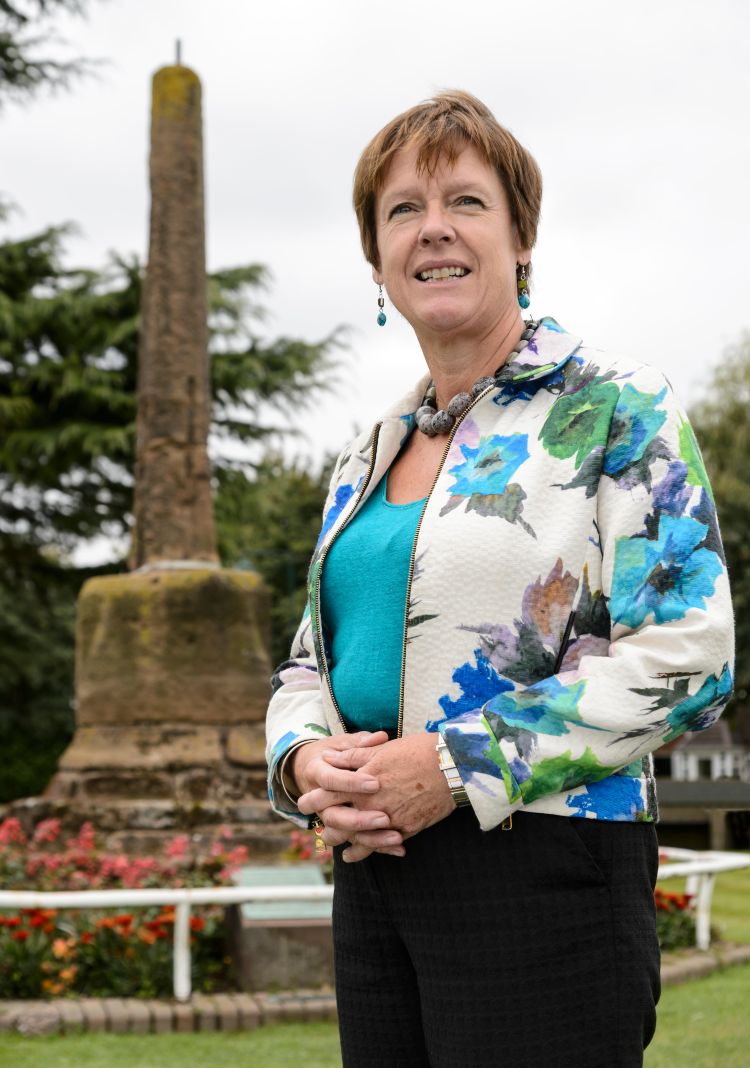 Caroline Spelman, 2015
“When I came into Parliament in 1997, the Conservatives had been defeated. One of my male colleagues said it was how he imagined the aftermath of the First World War. You know, when so many people had been lost in battle that... it was a regrouping of the remnant of the army at Westminster.
“The misogyny took some quite harsh forms. I remember the very day that I was signing up, you have to sign your name and then you swear in. And somebody who should be nameless was standing behind me and said, ‘What do you even think you’re doing here? You should be at home looking after your children’.”
Baroness Kramer, Liberal Democrat
Improving transport in London, supporting electric vehicles and working with others on new gay marriage laws
“You are a public figure. When I was an MP, when I sat down on the bus, invariably someone would sit next to me with a set of queries.
“When my husband died, people brought casework to the funeral because they thought, I won’t be holding a surgery that week and that their issue was so important it needed to be drawn immediately to my attention. I can tell you it shocked the vicar.
“I have great admiration for one of my colleagues, Lynne Featherstone, without whom equal marriage would not have happened.
“Now there is something to go away and put on your tombstone.”
