"It Was Just A Beautiful Time": A Night Out With Anneliese Midgley In Liverpool
Anneliese Midgley in Liverpool growing up
10 min read
“We overused the smoke machine man, to just make everyone look attractive. And we would always think about the lights and the dance floor set up. It was just a beautiful time.”
Elected last year, Labour MP for Knowsley and former DJ Anneliese Midgley is reminiscing on her days running club nights in Liverpool. It’s recess, and the MP has invited The House for a trip down memory lane. Or in other words, a night out.
After a last minute rejig of plans – many of the late-night spots Midgley had planned to visit don’t open late on Tuesdays – our first stop is The Vines, a recently done up Victorian pub behind Liverpool Lime Street station.
Settling down with pints – it’s a double gin and tonic but “don’t let them pour the tonic in” for Midgley – the MP says that unlike Liverpool, where the late-night scene is booming, London’s is on the decline.
“When I’m in Soho now I feel like I’m being shunted around all the time,” she says.
“It’s like, ‘We’re shutting this bit. Get over there. Get outside. You’re not allowed outside. Come inside. Now you have to have a plastic glass.’ It’s like, fucking hell, chill out! Do you know what I mean?”
Now 49, Midgley grew up in Cantril Farm, a housing estate in Knowsley. Built in the 1960s, Cantril Farm rehoused around 15,000 people from slum clearances in inner-city Liverpool after the war.
Me and Bob had our first kiss when Michael Portillo lost his seat
Cantril Farm was, and still is, Midgley says, a “forgotten” part of the country “neglected by the state”. Her childhood was tough, with food often in short supply. “There were times when there would literally be a tin of beans in the fridge, and that is all we had,” she says. “The community would pull together, or I’d go to my nan’s for tea.”
But her family’s fortunes changed when her father Brian got a job at the Halewood Ford factory, which the government of Harold Wilson, then MP for Huyton, helped bring to the area. “It was a secure, well-paid, unionised job,” she says. “That gave us a really firm footing and a firm foundation on which our lives could be built.”
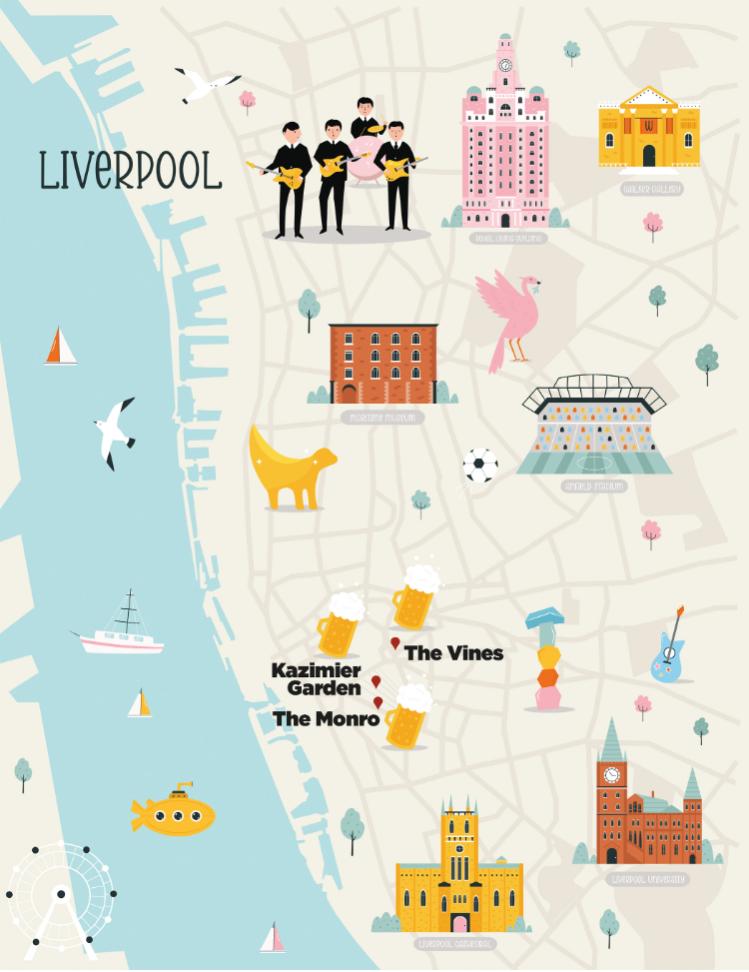 Map of Liverpool
With her father’s new job, the family had enough money to buy a house and moved to Penny Lane in Allerton. At the age of 40, her mother Jacqueline was able to retrain as a social worker.
Midgley also secured a Saturday shift in The Beatles Shop. Obsessed with the band, she fondly remembers waiting for Paul McCartney outside Liverpool’s Philharmonic Hall, where the four were practicing, to get her vinyl signed.
“Paul was lovely. Linda was lovely. The whole of his entourage were really lovely,” she says. “It must have been around Easter, because he bought us all cream eggs.”
Finding out Midgley worked in The Beatles Shop, McCartney sent her tickets to his show, and the afterparty.
“There was nothing in it for him to gain,” she says. “He was just like, ‘These are two working class girls. They can’t afford to come to the show. I’m gonna sort them out.’”
Liverpool’s thriving music scene was a welcome distraction from the struggles the city’s working-class were facing. Between 1972 and 1982, Liverpool’s manufacturing sector shrunk by 50 per cent, with more than 80,000 jobs lost. Already in decline, the city’s deindustrialisation accelerated under Margaret Thatcher.
Midgley recalls fights constantly breaking out in the Town Hall, and the rise of ultra-left wing group Militant.
“I clearly remember queues for the job centre going out of the door and down the street, people not being able to get that work,” she says.
“Politics wasn’t something that was on a TV screen or something that you learned in a lecture room or from reading a book. It was living and breathing in our streets.”
With a swift downing of drinks, we’re off into the city. Stop two is Kazimier Garden on Seel Street, or ‘The Kaz’ to locals.
“The Kaz Garden is just a weird and wonderful, amazing, unique place,” says the MP. Midgley would come here in the noughties for regular club nights in The Kazimier Club, the inside venue that has since closed down.
“It was so friendly to talk to anyone, you’d amass three times more friends at the end of the night, because it was a weekly thing,” says ‘Irish Adrian’, a friend of Midgley’s we have picked up inside.
It was around this time Midgley met her “soulmate” Bob Stanley, member of indie pop group Saint Etienne. After Stanley DJ’d at Midgley’s 21st birthday party at Heebie Jeebies on Seel Street, the pair’s romance blossomed at a 1997 general election result party.
“Me and Bob had our first kiss when [former Conservative MP] Michael Portillo lost his seat,” she says. “A couple of years ago I met Michael Portillo at [Labour peer and former justice secretary] Charlie Falconer’s 70th birthday party. We were sat on the same table and I was like, ‘I’ve got a story to tell you’.” Though Midgley and Stanley are now divorced, she says they are “still best mates”.
Midgley continued DJing after moving to London. She also worked in a second-hand record shop, wrote for music papers and did press for bands, most notably Pulp.
But witnessing mass job losses first-hand, while reaping the benefits from her father’s unionised job, paved the way into a career in trade unionism. Starting out as a Unison shop steward, Midgley worked her way up and became political director of trade union Unite.
“Having those values instilled into me: equality, dignity and solidarity, really made me get into my soul in terms of how you do your life,” she says. “So, absolutely, the unions – no way would I be here without them.”
“I say that the unions are like my second family, and it was them that bought me from the council estate to the parliamentary estate,” she adds. “It was that nurturing and that training that got me there.”
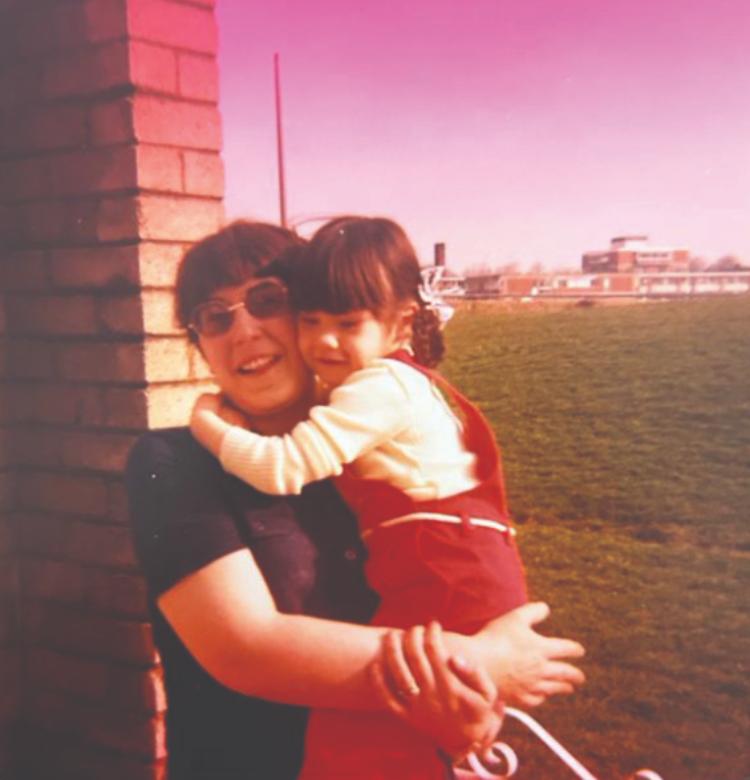 Midgley with her mother in Cantril Farm
Midgley went on to work for Ken Livingstone when he was mayor of London. She also worked on Jeremy Corbyn’s 2015 leadership campaign, then as political adviser to the Trades Union Congress general secretary Paul Nowak from 2022. She has also advised Keir Starmer and Angela Rayner.
What was it like, working for Corbyn, Rayner and Starmer?
Starmer is “a very determined and focused person who wants to get things done and delivered”, she says. Rayner is very human and warm: “She treats everyone with so much respect.”
After a loaded pause when considering Corbyn, she settles diplomatically on: “Jeremy would want constant discussion, so he would get different people in all of the time and things would be a rolling discussion, and that’s how he would come to make his decisions.”
Elected last year, Midgley says she was the brains behind Labour’s Employment Rights Bill – the legislation championed by Angela Rayner in government; now thrown into doubt by her departure.
“I played a big part in this bill, because I worked for Keir and suggested that we do this in the first place,” she says. “Obviously the last Labour government did the minimum wage, which was transformative. But this does a lot more in terms of addressing the world of work today.”
The legislation gets to the heart of Labour’s purpose as a party, says Midgley: “If the Labour government isn’t there to make working people’s lives better… then what is it for?”
But with Labour appearing to tack towards the right under Starmer and Chancellor Rachel Reeves, many on the left are asking the same question. Adding to the disquiet, Reform UK has driven a series of wedges between Labour and its traditional working-class voters – as evidenced by Nigel Farage’s quick trip to Scunthorpe to express solidarity with British Steel workers when the plant was threatened with closure.
With union membership decreasing, and Rayner no longer in government, is Midgley concerned that traditional working-class Labour voters may be lost irrevocably to Farage?
 Midgley DJing in Heebie Jeebies
“Where was he in the voting lobby for the Employment Rights Bill?” she asks fiercely. “He was voting against it, and he would sell our NHS for a dollar and a dime given half the chance. He’s in hock with Putin and Trump.”
But Reform continue to surge in the polls. It was a Farage-filled summer, with the party’s leader repeatedly claiming his party has the only viable solutions to the small boats crisis, and they have already enjoyed a high-profile MP defection this autumn.
Is Midgley, in one of Labour’s safest seats, seeing constituents flock to Reform?
“I think that we’ve had a challenging first year,” she says heavily. “People in Knowsley were really desperate for a Labour government, and they haven’t begun to see the change fast enough.”
While immigration is dominating headlines, Labour continues to wrangle with high levels of school absenteeism, an overcrowding crisis in prisons and a mounting benefits bill – all under challenging economic headwinds.
In the face of such difficulties, Midgley has been thinking about what her political hero Harold Wilson would do today. The former PM would be working with businesses to create apprenticeships, she thinks. He would anger at the monopolisation of water companies, but embrace AI – as “the only human institution which rejects progress is the cemetery”, she quotes him saying.
Just as Starmer is turning to Tony Blair for inspiration, has she encouraged the PM to embrace Wilsonism?
“I used to speak to Keir about it early on. I do badger ministers about it when I get the chance,” she says. “Maybe that is something that, now I’m a little bit more settled, I should look at.”
We’re onto our third and final stop – The Monro on Duke Street. Like The Vines, The Monro has been brought back to glory by elusive Liverpudlian podcast host Rob Gutmann, who has pumped money into several venues around the city.
The area throws up more memories for Midgley – from hosting Monte Carlo club nights on Mondays, Beat Room nights on Wednesdays and Liquidation nights on Saturdays.
Though she is now back in Liverpool, Midgley says she will not be reviving her DJing days.
“My offers up to this point have been with Stella Creasy and Ali McGovern for the Fabians at party conference,” she says. “I’m like, no thanks.”
Celebrated in Liverpool’s clubbing and trade union scenes, what does Midgley want to achieve in Parliament?
“Being the MP for Knowsley is more than enough for me,” she says, but points to certain problems to fix. For instance, there is currently no A-level provision in Midgley’s constituency.
Knowsley also has the highest rate of femicide in the country. Then, of course, there is the matter of creating and protecting jobs.
“I want to think: ‘What is my equivalent of Harold Wilson’s Ford factory?’,” she says. “To quote Wilson again, I am optimistic. I’m really optimistic about the Labour government and the changes they could make. But he’s like, ‘I’m an optimist who carries a raincoat’, and that’s how I feel as well.”
As an IPA haze descends over the evening, The House takes its leave from Midgley, who remains in The Monro – to entertain and be entertained in her home city.
