Labour MP Warns Government Against Rushing "Grand Vision" Of Transition To Net Zero
Labour MP Henry Tufnell said there is huge potential in the UK to develop a domestic supply chain in floating offshore wind (Fergus Franks)
7 min read
Labour MP Henry Tufnell has warned against the government moving too quickly on the clean energy transition and leaving communities behind, after Prime Minister Keir Starmer told the COP30 summit that the race for green jobs "cannot wait".
At the COP30 summit in Brazil on Thursday, Starmer said that the “consensus is gone” on the global mission to tackle climate change, but that the UK government was standing firm in its commitment to the "race for green jobs".
The PM said that some were “arguing this isn’t the time to act and saying tackling climate change can wait”.
“But my question is this: Can energy security wait too?” he continued.
“Can billpayers wait? Can we win the race for green jobs and investment by going slow? Of course not.”
Backbench Labour MP Tufnell, on the other hand, is wary of the government’s determination to move quickly on the transition to clean energy.
The government aims to meet Britain’s electricity demand with energy from clean sources by 2030. Currently, only 61 per cent of British electricity comes from clean sources. Energy Secretary Ed Miliband shows few signs of reconsidering this target, despite industry figures warning that the timeline looks unrealistic.
In an interview with PoliticsHome, Tufnell warned that the “grand vision” of the 2030 target would be meaningless unless the Labour government could bring the public on board with the transition and prevent Reform winning the next general election. As a Labour MP in Wales, Tufnell will also be acutely aware of the threat from Nigel Farage's party in the Welsh Senedd elections next year.
“To do this [meet the 2030 target] is requiring a massive feat in terms of the timelines,” he said.
“What you don't want to happen is to set it all up for 2030, and you have these plans that flow out from it, but you lose the 2029 election to Reform, Reform comes in, and then they just scrap all the plans.
“You've spent four years formulating plans, you have these grand visions, but if fundamentally you lose the argument because decarbonisation has come to mean de-industrialisation, you're not going to take the public with you.”
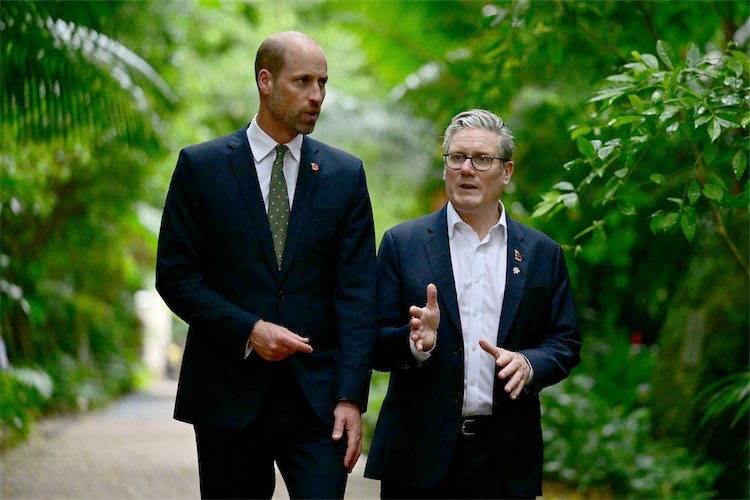 The Prince of Wales and Prime Minister Keir Starmer in Brazil for the COP30 summit (Alamy)
While Tufnell insisted he believes the transition to clean energy will be vital in both protecting the environment and creating economic opportunities in the UK, he does not want the government to move too fast and leave people and communities behind in the race to abandon oil and gas.
“I'm not massively concerned with artificial targets,” he said.
“I'm more concerned with how we have cheaper bills and good, well-paid jobs across the country and in communities like mine. The Clean Power mission is a fantastic mission. It will fundamentally change our economy. It can really propel us into capturing these future jobs, these future technologies, but we've got to do it in the right way so that we can maximise our benefit as a country.”
As a member of the Labour Growth Group – which mostly consists of pro-Starmer 2024-intake Labour MPs – Tufnell is a somewhat unlikely Labour rebel.
The 33-year-old MP for Mid and South Pembrokeshire has not been afraid to speak out against his government's policies since he was elected last year. He was the third Labour MP to publicly oppose Chancellor Rachel Reeves' decision to impose an inheritance tax rate of 20 per cent on agricultural property worth more than £1m. Tufnell comes from a line of wealthy landowners himself, though he is not set to inherit his own family's farm.
He also joined the rebellion of backbench MPs against the proposed reforms to Personal Independence Payments (PIP) for disabled people earlier this year, before voting with the government once the bill was watered down.
"These are inherently more vulnerable people, and I'm not prepared as a Labour MP to walk them off a cliff in a cost-cutting exercise," he told the 'What's Left' podcast in July.
If you go at complete speed, you will end up offshoring a lot of these jobs
In the summer, Tufnell – who chairs the Commission for Carbon Competitiveness – wrote a letter to the government calling for net zero levies to be urgently eased to save jobs in the oil and gas sectors.
With one oil refinery still operating in his constituency, the MP is adamant that oil and gas have a “critical role to play as part of our energy mix in the context of net zero”.
“I don't think people talk about that enough,” he said.
Having won a small majority of 1,878 in the general election, Tufnell appeared to feel most passionate when speaking about the risks of worsening poverty in his constituency.
If the government does not approach the transition to clean energy in the right way, he fears communities could be destroyed at the same level as former mining towns during and after the premiership of former Conservative prime minister Margaret Thatcher.
“My constituency is a classic example of the potential of that happening,” he said.
“It's scary at the moment, because we had six oil refineries in this country, now we only have four, and that's happened in 18 months.”
The Grangemouth oil refinery in Scotland stopped processing crude oil in April, after a century of operation. The Lindsey Oil Refinery in North Lincolnshire has shut down after its owner, Prax Group, went into administration in June and no buyer was found for the site.
Tufnell added that British manufacturing as a whole was “really under threat”, with high energy prices being a “huge part of that”.
“DESNZ [the Department for Energy, Security, and Net Zero], are very focused on bringing down that cost, coming up with solutions for these industries,” he said.
“But they do face a very difficult landscape.”
Does Tufnell believe the government is successfully landing the message with the public that net zero does not have to come with a cost to jobs?
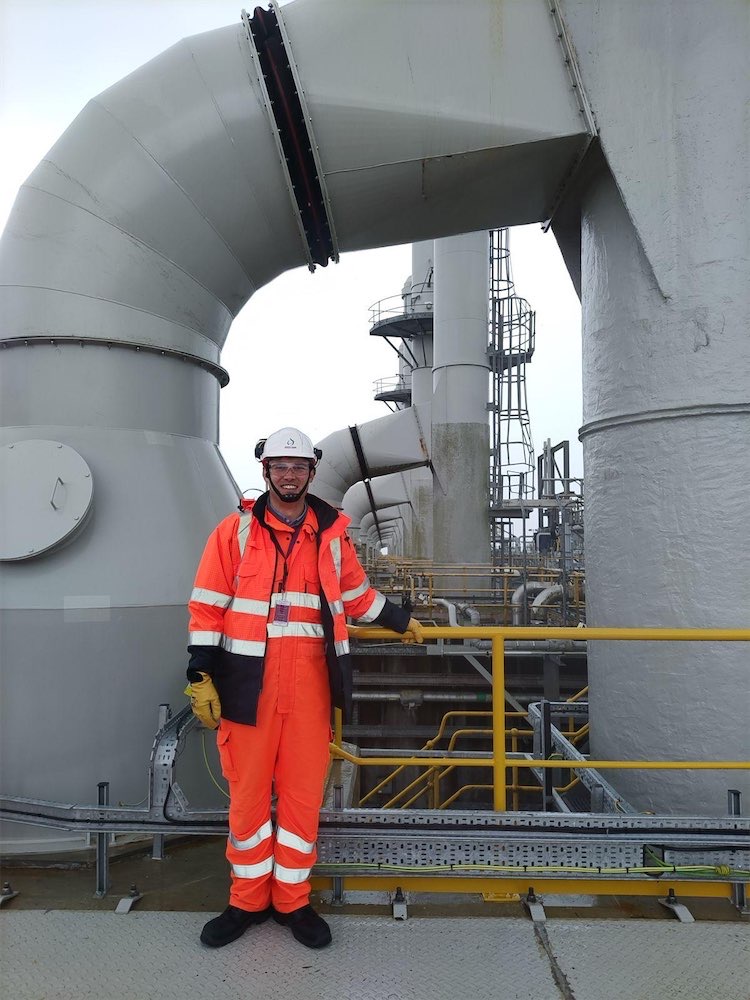 Labour MP Henry Tufnell is concerned that moving too quickly on the clean energy transition could cost jobs and worsen poverty (Henry Tufnell)
“It's not landing with the public, because if we use refineries as an example, the public is seeing refineries closed across the country,” he said.
"So it's difficult to match up the rhetoric with what's happening on the ground, like in Port Talbot [the steelworks furnaces which shut down last year]. You worry that there's a more systemic problem going on.”
Tufnell said that the oil refinery in his constituency created around 500 direct jobs, alongside around 500 more indirectly, contributing significantly to the wider Welsh economy: “They’re good, well-paid jobs.”
The MPs’ fear is that if the energy transition is pursued too quickly, the skills and the different elements of the supply chain needed in the renewable energy sector will be sourced from abroad. While workers in the oil and gas sector do have transferable skills for the renewable energy sector, he argued it will take time to ensure that transition is possible for British workers.
“Floating offshore wind is a fantastic example of what's possible in the renewable space,” he said.
“We have the potential to have a competitive advantage in Western Europe in terms of that development. The difficulty with moving at real speed and pace in the context is that you can end up losing the ability to land some of the domestic supply chain in this country.
“If you go at complete speed, you will end up offshoring a lot of these jobs, and you'll simply drag it in from South Korea or Spain or China… because at the moment it takes time to build up a supply chain. It takes time to have that transition.”
Tufnell warned that if further oil refineries are shut down, the UK will "lose that skills base".
“You will have just an increase in the levels of poverty in the country, and you will not have a just transition," he continued.
"There will be no transition because there won't be any jobs, and it will end in real poverty. That's my fear, that is what keeps me awake at night.”
