SEND Is Shaping Up To Be One Of The Labour Government's Biggest Headaches in 2026
MPs are entering the New Year “with bated breath” (Alamy)
6 min read
How to solve the deepening crisis in the special educational needs and disabilities (SEND) system is a question that has bedevilled successive governments for years.
It is shaping up to be one of the biggest challenges facing the Labour government in 2026, with ministers planning to publish long-awaited proposals for reforming the system.
SEND has grown as a talking point in Westminster as pressure on the system nationwide has become heavier. MPs say there has been a rise in constituents raising the issue with them, as councils under financial pressure struggle to meet rising demand.
The scale of the challenge, combined with strong Labour MP views on how to address it, is why it might just be the most difficult task facing Education Secretary Bridget Phillipson.
One Labour MP, who is by no means a rebel, predicted it would be the first "spat" for Prime Minister Keir Starmer and his cabinet to deal with in 2026.
Plans to reform the system were originally promised in the summer of 2025. However, as PoliticsHome revealed at the time, publication was pushed back amid concerns within government over a potential backlash akin to the Labour rebellion that forced Starmer to abandon planned welfare cuts earlier this year.
PoliticsHome understands that while the Department for Education (DfE) and the Treasury had settled on a funding settlement for SEND reforms earlier this year, the welfare rebellion forced the government to look again at what it was preparing to put before Labour MPs.
The state of play
Under the current system, pupils requiring extra support can be issued an Education, Health and Care Plan (EHCP), a legal document that identifies the specific needs and sets out tailored support.
Since 2018, the number of pupils with EHCPs has increased by almost 80 per cent, while funding to deliver the service has failed to keep pace.
While there is widespread agreement that the system is unsustainable and needs reform, there is no clear consensus on what the changes should look like, and there is concern among many Labour MPs that reforms coming in 2026 could mean less support for some pupils.
The DFE sparked alarm among parents and campaigners over the summer after its strategic adviser on SEND said that the government was considering whether EHCPs were the right approach, without setting out what system could potentially replace them.
Since then, the government has been keen to regain control of the narrative.
Education minister Georgia Gould told MPs earlier this year that there would always be a legal right to additional support for pupils with SEND. MPs will have to wait for the White Paper for the details, however. It is expected to be published early next year.
Strong comms will be "essential"
Baroness Mary Bousted, a Labour peer and former education union general secretary, said it was essential that the government communicates SEND reforms effectively to the public.
A lack of effective media strategy has been one of the biggest criticisms of the Labour government during its year-and-a-half in power, including from senior Labour figures themselves.
Getting it right on SEND will be “essential for the government to be able to reassure parents of children who have EHCPs or who are on SEND support that any revised system will care for those children and meet their needs”, Bousted told PoliticsHome.
“It will be difficult, and it will be tough”, Bousted later added on the reforms more widely, “but I don't think it's impossible.”
Just last month, the DfE was seemingly caught unawares after modelling published by the Office for Budget Responsibility (OBR) said that the government decision to take responsibility for SEND costs from local authorities would result in a 4.9 per cent real-terms hit to per pupil spending in mainstream schools.
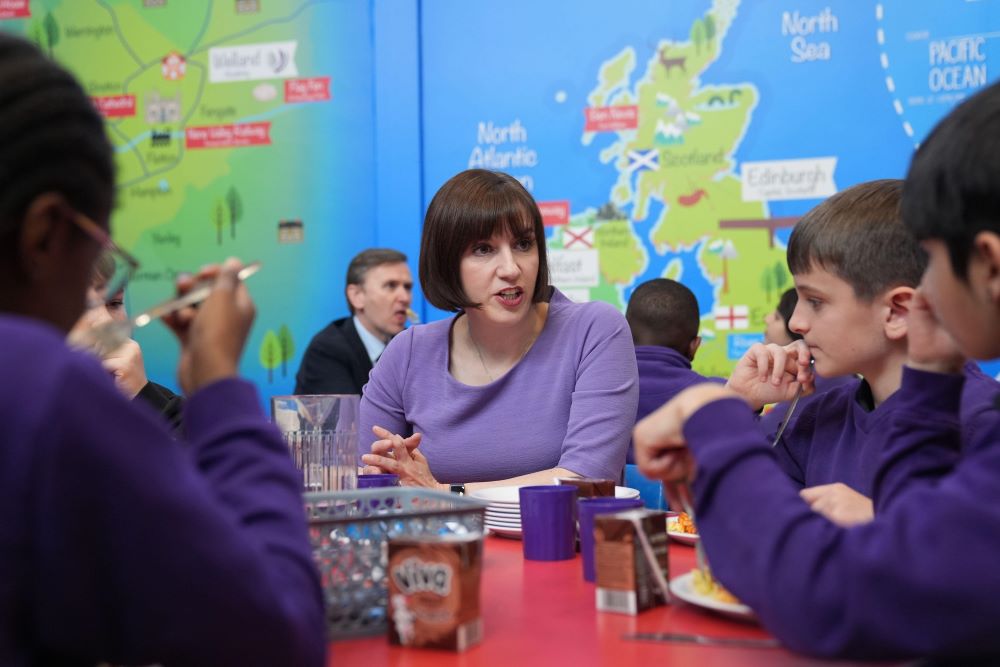 Bridget Phillipson labelled the OBR as "misleading" (Alamy)
The suggestion, published alongside the Budget last month, caused anger in the DfE. PoliticsHome obtained a private note sent to Labour MPs by Phillipson, which called the OBR claim “misleading”. The Education Secretary sought to reassure MPs that the costs were set to be absorbed across government as a whole, not just by the education budget.
Helen Hayes, Labour MP and chair of the Education Select Committee, told PoliticsHome that the government “has to think about what it is proposing, and whether the measures will build trust and confidence [in parents and carers].
“If the answer is no, then they will have to think again.”
MPs draw their red lines
While MPs are waiting to see the details of the government's proposals, some have already made it clear that they will not accept any reduction in support for SEND pupils.
Ian Lavery, the Labour MP for Blyth and Ashington, who is on the left of the party, said “it isn’t rocket science”.
“SEND provision is failing hundreds of thousands of mostly young people in the country, and people who are the most in need. Any reduction in support for individuals and their families is a no-go," he told PoliticsHome.
Lavery added: “The bottom line is cuts. Government support has got to continue for these children, as well as a restructuring of the assessment process.
“People are waiting with bated breath on this one.”
One Labour MP who wished to speak anonymously told PoliticsHome that they worried when the conversation turned to efficiencies, “because it normally creates more work for teachers”.
“And if this is the case, we could get another junior doctor's situation if there is not the funding and resources to go with cuts,” they added, referring to the decision by resident doctors in the British Medical Association to extend NHS strikes over the Christmas period.
Keen to avoid another backbench rebellion, the government has made a clear effort to engage with Labour MPs on SEND reforms. PoliticsHome reported in July that Phillipson was leading an operation to engage Labour backbenchers over the plans, with one supportive Labour MP saying "lessons have been learned” from the welfare rebellion.
However, Labour MPs make the point that while engagement is one thing, the substance of the reforms is another.
Labour MP Ben Goldsborough, who is a member of the All-Party Parliamentary Group on SEND, told PoliticsHome: “I will have the same red lines over SEND reform as over PIP [Personal Independence Payment]. It should not be about saving money.”
It is a tightrope that the government is trying to walk — how to solve a problem that is creating unsustainable financial pressures without making any reforms appear as a cost-cutting exercise.
Goldsborough is also concerned that fear within government over how reform will be received is also a factor: “There are several decisions that have been kicked into the long grass. I am worried this may be the case with SEND, whereby decisions need to be taken, and political expediency is trumping that.”
