Why Is Social Care Such A Thorny Issue For UK Prime Ministers?
Andy Burnham said he wants to bring in "substantial change" to reform social care (Alamy)
7 min read
With Andy Burnham expected to make a major speech on social care this week, PoliticsHome looks at why it has been such a difficult issue for successive governments to grip.
The Prime Minister told the BBC’s Laura Kuenssberg on Sunday that he will put “whatever political capital” he has into fixing social care and doesn’t want to leave office without bringing in “substantial change.” He said the NHS will “collapse” without social care reform.
Successive governments have pledged to fix the social care crisis, but have failed. So why is it such a difficult problem to solve?
Why is social care such a big problem?
The term social care describes support for adults with care and support needs. In England, it is arranged by local authorities, and some people receive state support to help pay for it.
Pressure has been building on the UK adult social care system for decades.
The UK's population is ageing steadily, with around 19 per cent of people – approximately 12.7m – now aged 65 or over, driven by rising life expectancy and lower birth rates. As the population ages, demand for adult social care continues to grow, increasing pressure on local councils, which are responsible for providing state-funded care.
According to the King’s Fund, care home provider fees paid by councils rose in real terms by an average of 3.6 per cent to £1,823 a week for working-age adults in 2024/25 compared to 2023/24, while fees for care for older people and homecare fees also rose by more than three per cent. An additional 30,000 people received publicly funded long-term care in 2024/25 than in the previous year, amounting to a 3 per cent rise. Total spending on social care by local authorities increased by 4.1 per cent to reach £34.5bn.
The UK adult social care sector also faces a chronic workforce crisis driven by tens of thousands of unfilled vacancies, uncompetitive pay, high staff burnout, and tightening international recruitment rules. Care England figures show that social care workers earn significantly less than equivalent roles in the NHS, averaging roughly £7,617 less per year.
This has also led to increased pressure on NHS hospitals and services, with patients taking up hospital bed space when it is impossible to secure social care for them.
The Times reported on Saturday that Burnham’s pledge to overhaul care so it “operates on the NHS principle” is unlikely to cover the daily living costs of a care home such as food and accommodation. According to the Health Foundation think tank, a comprehensive care system which could cover food and accommodation would cost £18.5bn a year by 2035-36.
Even avid supporters of reforming the care system accept that it would be very expensive, particularly at a time when departments already face limited budgets, adding to the difficult nature of the issue.
How have governments attempted to fix social care?
Many previous government attempts to reform social care have been abandoned.
Economist Andrew Dilnot was commissioned by the coalition government in 2010 to look at how to protect the public from the risk of sky-high care bills. Dilnot proposed capping individuals' lifetime care costs. While accepting the principle, the government went on to repeatedly delay implementation of the proposal before it was eventually abandoned.
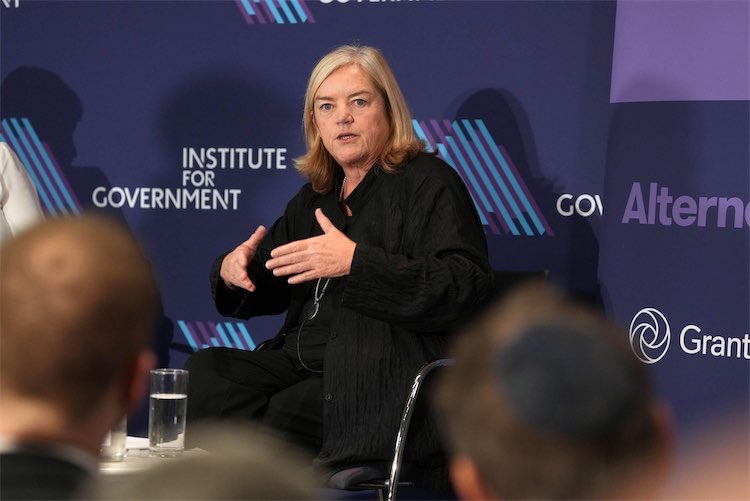 Baroness Louise Casey is leading a government commission on reforming the social care system (Alamy)
Former Tory prime minister Theresa May included in her manifesto a proposal to raise the asset threshold – the amount of personal wealth protected from paying for care – from £23,250 to £100,000. Under her proposal, the value of your home would also count when working out whether you could afford to pay for care if you were receiving it at home, which meant many more homeowners could end up paying for their own care, with money recovered from the sale of their house after they died if they couldn't pay immediately.
It was quickly criticised by her political opponents and labelled the ‘dementia tax’ as it was seen to disproportionately affect people with conditions like Alzheimer’s disease. It was dropped by May in the run-up to the 2017 general election.
In July 2019, May's successor, Boris Johnson, stated on the steps of Downing Street that he had a clear plan to fix the social care crisis "once and for all". He proposed introducing the Health and Social Care Levy through higher National Insurance, before later abandoning both the levy and much of the wider reform package. However, when a Health and Social Care Levy was introduced in September 2021, a large proportion went towards tackling the massive NHS backlog caused by the COVID-19 pandemic rather than fundamental reform of the social care system.
The Keir Starmer Labour government commissioned Baroness Louise Casey in 2025 to review how adult social care should operate and how it should be funded. In a speech earlier this year, Casey called for a national "moment of reckoning" similar to the 1948 Beveridge reforms which established the NHS.
The longer-term final report is expected in 2028, but Burnham has indicated he wants recommendations much sooner. Former health secretary Wes Streeting also suggested on Sunday morning that it could be brought forward to report earlier.
What could Burnham do to reform social care?
The most ambitious proposal to fundamentally reform social care would be establishing a National Care Service to operate much more like the NHS, with care becoming progressively free at the point of need.
While it does not have a dedicated National Care Service, Scotland has already implemented a free-at-the-point-of-need system for some forms of social care, but it does not include accommodation, food and everyday living costs, which are still subject to means testing. The Health Foundation estimates that implementing a similar system in England would cost £7.5bn a year by 2036.
A more incremental approach would focus first on improving workforce pay and conditions, integrating health and social care more closely, expanding short-term care to speed hospital discharge, and increasing support for local authorities while delaying the biggest funding decisions.
A cap on individuals' lifetime care costs, as proposed by Dilnot, could be another solution.
The government could also raise the threshold for means-tested social care support. At the moment, people in England can be eligible for local authority financial support in a residential care home if the value of all their assets is less than £23,250.
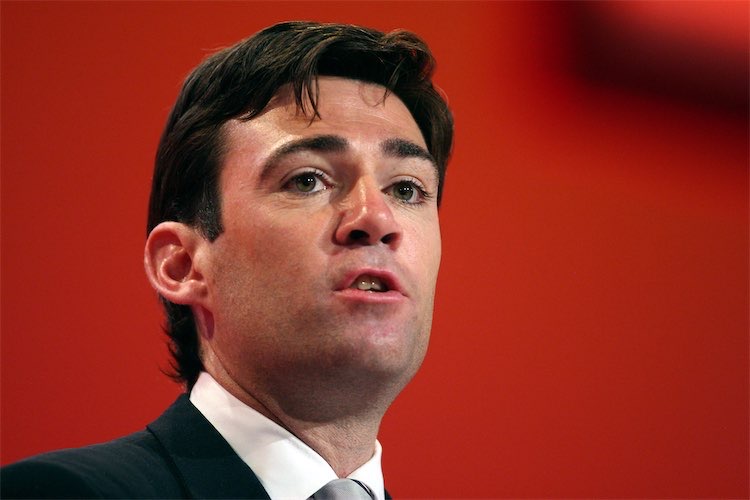 Andy Burnham served as health secretary between 2009 and 2010 (Alamy)
As health secretary under Gordon Brown in 2010, Burnham previously argued that dedicated funding may ultimately be needed and backed the introduction of a 10 per cent levy on estates to pay for a universal National Care Service. Downing Street confirmed on Monday that such a tax was among the options Burnham is now considering to fund his plans.
What have the other parties said?
Conservative Party leader Kemi Badenoch has said she agrees that the care system needs reform, but warned that it cannot be funded through tax rises. She has written to Burnham urging the new PM to look at spending cuts elsewhere to pay for his plans.
Reform UK Treasury spokesman Robert Jenrick said the party would fiercely oppose any form of what he described as a 'death tax' via a levy on estates, arguing it would unfairly raid people's life savings and far exceed current inheritance tax thresholds.
Lib Dem leader Ed Davey has long described social care reform as one of his top priorities, having been a carer himself for many years. He recently reaffirmed his support for cross-party talks on the issue, and ahead of the 2024 general election, the Lib Dems said they would deliver free personal care through an additional £2.7bn invested in social care by 2028-29 above existing social care plans.
The Green Party pledged an extra £20bn per year into adult social care, paid for through taxes on the super-wealthy, including a one per cent wealth tax on assets over £10m and two per cent on assets over £1bn.
