TUC Head Urges Government To Reject Choice Between Defence Spending And Public Services
Paul Nowak, general secretary of the Trades Union Congress, addressing a rally in 2023 (Alamy)
6 min read
Paul Nowak, general secretary of the Trades Union Congress (TUC), has urged the government to “reject the right-wing argument” that it must choose between increasing defence spending and investing in public services.
Speaking ahead of the TUC conference that begins on Sunday, Nowak told PoliticsHome: “We should fundamentally reject the right-wing argument that somehow it is a choice between investing in our national and collective security, and investing in our schools and hospitals and infrastructure. I just reject that choice out of hand.”
Andy Burnham told MPs at Prime Minister’s Questions on Wednesday: "Yes, we do everything to support our national security, but it can't come at the expense of social security."
Although the Prime Minister restated the government's commitment to defence as "absolute”, his comments were criticised by the Conservatives, who accused him of “prioritising the ballooning benefits bill over our national security”.
The TUC passed a “Wages not weapons” motion at its conference last year, which opposed immediate rises in defence spending and noted that “in the current political context, ever-higher expenditure on arms will inevitably mean less money for our education, health, and councils, and the green transition”.
Asked whether he had since been lobbying the government not to increase defence spend, Nowak replied: “That wasn't what we agreed last year, and I, the TUC, we are not going to campaign on ‘this is the right level of spending on defence’. I'm not a defence expert.”
Trade unions including the University and College Union (UCU), which proposed the motion at TUC last year, would like to see a clearer position against government increases to military budgets.
UCU general secretary Jo Grady said: “TUC policy is clear and we will be looking to reaffirm that this year via the unions movement’s democratic processes. We would then expect the TUC to fully support the democratic will of the movement.”
In a wide-ranging interview, Nowak – who is from Merseyside – welcomed Burnham as Prime Minister, joking: “I'm always keen to see Evertonians in positions of power… We're finally getting the recognition on the international stage that we deserve.”
He said that under Keir Starmer’s leadership trade unions had a “sense” of “being managed as political stakeholders” by the government, but with Burnham at the helm he hoped “unions feel that this is a government that sees them as legitimate partners”.
Nowak warned Burnham against calling a general election before the Employment Rights Act changes are implemented, however.
The union leader described himself as “pretty agnostic” about the possibility of an early snap election, but added: “Do I think that the public is champing at the bit for another general election? I really don’t...
“It'll be down to Andy Burnham as Prime Minister and his government to think, 'Have we got enough room for manoeuvre within the manifesto commitments that we've got?'
“I certainly think on things like employment rights, for example, there is still a huge amount of unfinished business, and what I wouldn’t want to see is that business remaining unfinished because we had an early general election.”
Nowak said he wanted the Employment Rights Act to be implemented “further and faster”, flagging that “the first big test for the government” will be on guaranteed hours for workers.
“It would be an absolute travesty if we ended up in the situation where people, for example, on nine-hour contracts are excluded from the scope of the guaranteed hours provision,” he said.
“There will be some employers who are just addicted to one-sided flexibility… and they are going to fight tooth and nail against proper right-guaranteed hours. I think the Prime Minister's got to be prepared to face them down.”
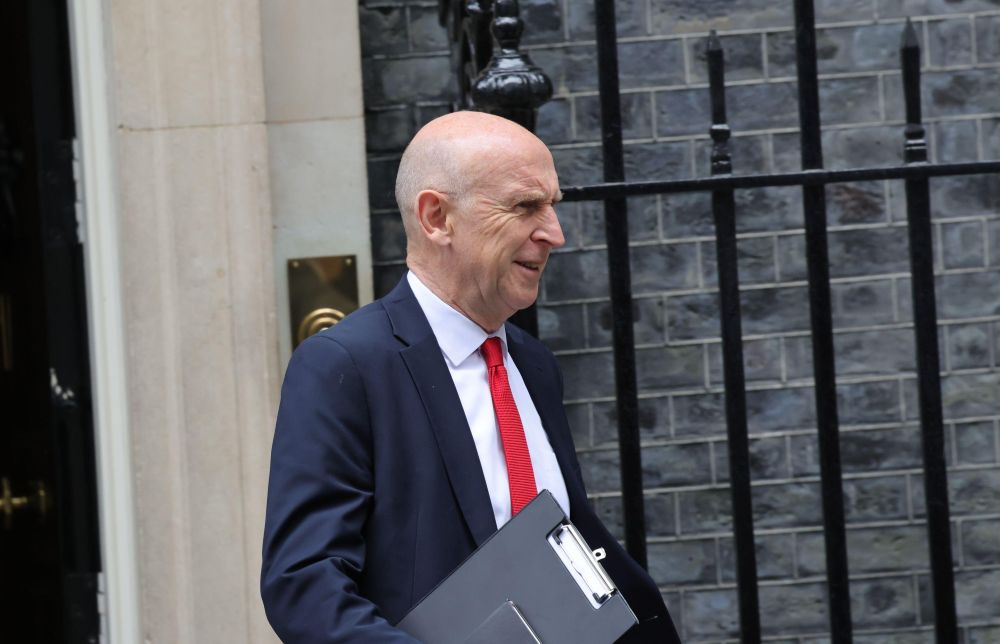 Novak wants Chancellor John Healey to reform the OBR, describing the independent watchdog as a "tool of austerity" (Alamy)
The TUC general secretary said the other “unfinished business” included “the biggest wave of public sector insourcing”, “the fair pay agreement in social care” and “the school support staff negotiating body”.
He added that the unions are “serious about Employment Rights Act Two” – the demand for a second instalment of the workers’ rights legislation already passed – which he specified should include measures on corporate governance.
“It's bizarre that 19 European countries have some sort of provision for workers on boards, but we don’t,” he said.
Speaking to PoliticsHome, Nowak also urged Chancellor John Healey ahead of the Budget to give himself “more flexibility to invest in our infrastructure and in public services because we are desperately going to need it”.
The TUC head advised that the bank surcharge should be increased, saying: “If you put it up to 35 per cent – which is the level the Tories put the windfall tax on the energy companies at the height of the energy price spikes – that generates £60bn over the next four years.”
While refusing to “prejudge” the upcoming TUC conference debate on changing the fiscal rules, he called on the government to reform the Office for Budget Responsibility (OBR), describing the watchdog as being “established by George Osborne as a tool of austerity”.
“I want the remit of the OBR reviewed. I think at the moment it's acting as a brake on growth rather than a driver of growth,” he said.
Nowak also criticised the National Wealth Fund’s aim to break even by 2031, saying: “Infrastructure investments don't pay off in three or four years, or even five years, or sometimes 10 years… You've got to take a much longer-term view.”
And he said the government should ensure that when it takes a stake in a company through GB Energy or the National Wealth Fund, it is counted as a public sector asset – enabling more investment.
The TUC general secretary backed further action on the water industry, including putting Thames Water into special administration.
“Why the hell are we rewarding big outsourcing companies with hundreds of millions of pounds in dividends each and every year when they are failing to deliver our basic public services?” Nowak asked.
“I think especially Thames Water should be placed into a special administrative regime. I am absolutely convinced that that not a single pound of taxpayers' money or bill payers' money should be spent on rewarding Thames water shareholders and senior management for continued failure.
“You've got to put in place safeguards for the taxpayer, you've got to put in place safeguards for the people reliant on Thames Water services, and you've got to put in safeguards for the workforce as well because there's big issues about pensions and pay. But I don't think anyone thinks that we should bail them out with another single pound.”
New Environment Secretary Angela Eagle recently said the move would be more complicated than assumed by some activists, saying: “Whatever people think of Thames at the moment, it isn’t technically insolvent.”
