Doctor wellbeing is patient safety – now Parliament must act
Dr Simon Opher MP, Dr Peter Prinsley MP, and Ben Coleman MP. Photo credit: Ashley Coombes, Epic Scotland
Alison Hardie, Head of Public Affairs and Strategic Communications
| Medical and Dental Defence Union of Scotland
Doctors are human, yet the NHS often expects them to be invincible. When their wellbeing is pushed to breaking point, the consequences are felt by the patients they care for.
Doctors are making high-stakes decisions every day, often while exhausted, over stretched and under sustained pressure.
Yet the system still assumes they can absorb whatever comes their way and continue to perform at their best.
That assumption is increasingly out of step with reality, and a growing number of doctors are reaching the limits of what they can safely sustain.
A workforce in crisis
A third of doctors admitted that system pressures in the NHS had led them to cry at work in a survey conducted by the Medical and Dental Defence Union of Scotland (MDDUS). Of that group, half reported they didn’t have access to a private space to recover and more than two-thirds said they believed that the stigma attached to admitting vulnerability at work stopped them asking for support.
These findings expose a system placing doctors under levels of pressure that are difficult to sustain safely. That impact is not confined to the workforce, it is felt by patients too. Fatigue and pressure affect how clearly doctors can think, how effectively they communicate and how consistently care is delivered – all of which have direct consequences for patients.
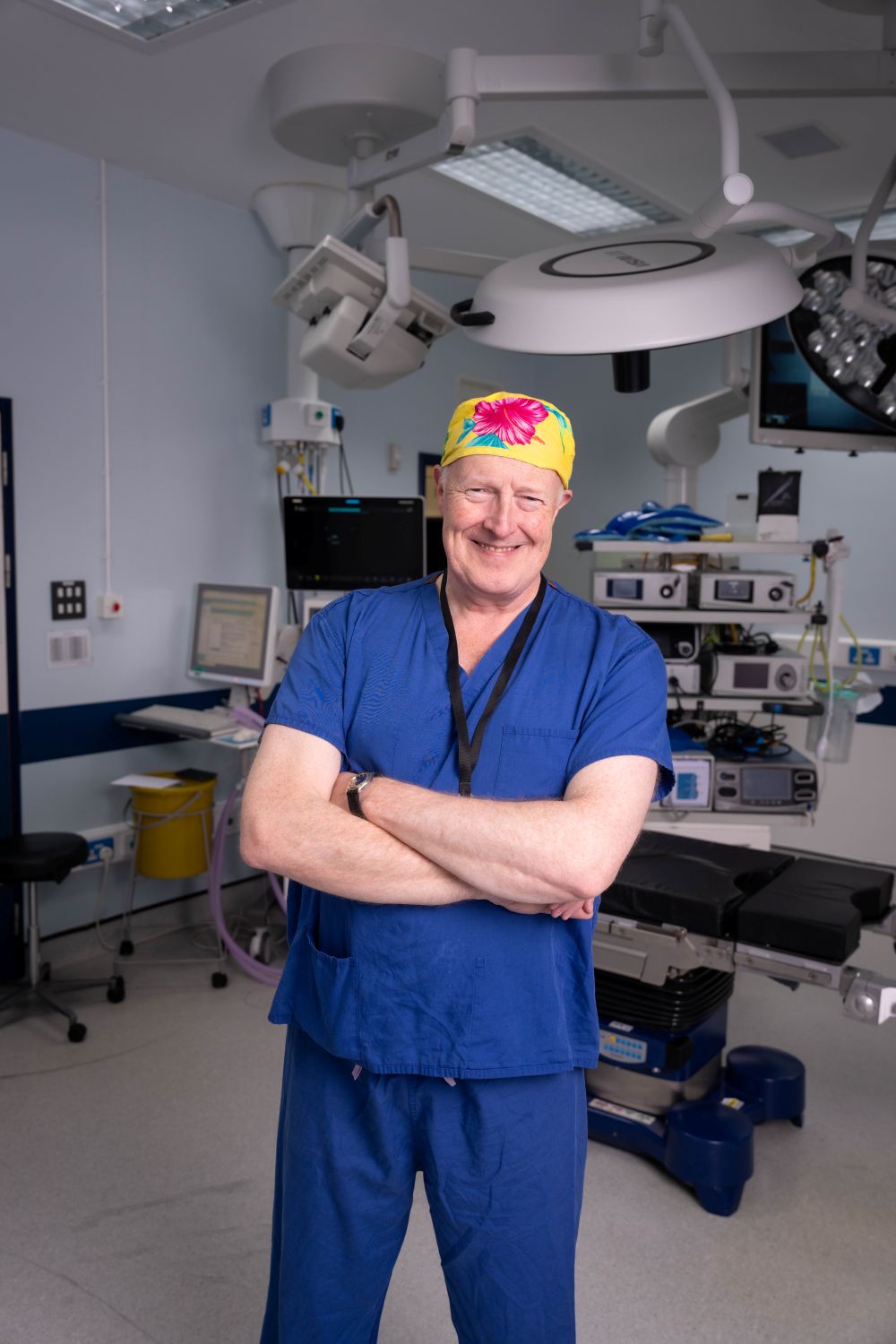 Ken McCune, consultant
vascular surgeon
Photo credit: Ashley Coombes,
Epic Scotland
Safety first
Many doctors are now working in conditions that not only erode morale, but their cognitive function as well. For a safety-critical profession like medicine, where every decision matters, fatigue poses a serious risk to patients.
In aviation, rest time is a recognised safeguard. Medicine should be no different. Expecting doctors to make consistent, high-quality decisions while exhausted is neither realistic nor safe. Martin Bromiley, who founded the Clinical Human Factors Group following the death of his wife in hospital, has highlighted that even highly skilled healthcare professionals will make mistakes in poorly designed systems.
Fatigue, stress and other symptoms of burnout all affect how doctors think and how they communicate. Our survey last year found that seven in ten GPs struggle to empathise with patients when exhausted. Almost half (44 per cent) said they worried this could make their care unsafe.
What needs to change
On 2 March, we launched our independent expert report, Wellbeing by Design, at the House of Commons. Written by an expert group of healthcare leaders, clinicians and educators, the report starts from a simple premise: the wellbeing of doctors is a patient safety issue.
 Chris Kenny, chief executive of MDDUS, and Dr Peter Prinsley MP
Photo credit: Ashley Coombes, Epic Scotland
Addressing this issue requires structural change in how healthcare is organised and delivered. That means safe workloads, predictable rotas and protected time for reflection and professional development. When these are in place the right culture follows. Doctors are then more able to speak up and learn from their experiences, including when things go wrong, without the fear of stigma.
NHS Practitioner Health, which provides mental health support for NHS health and care staff, has seen more than 35,000 patients since it was founded in 2008.
The GMC state that doctors must regularly reflect on their standards of practice and the care they provide. The GMC also has guidance on how to approach reflection – but doctors’ working environment, with its lack of both time and space, makes that almost impossible for many.
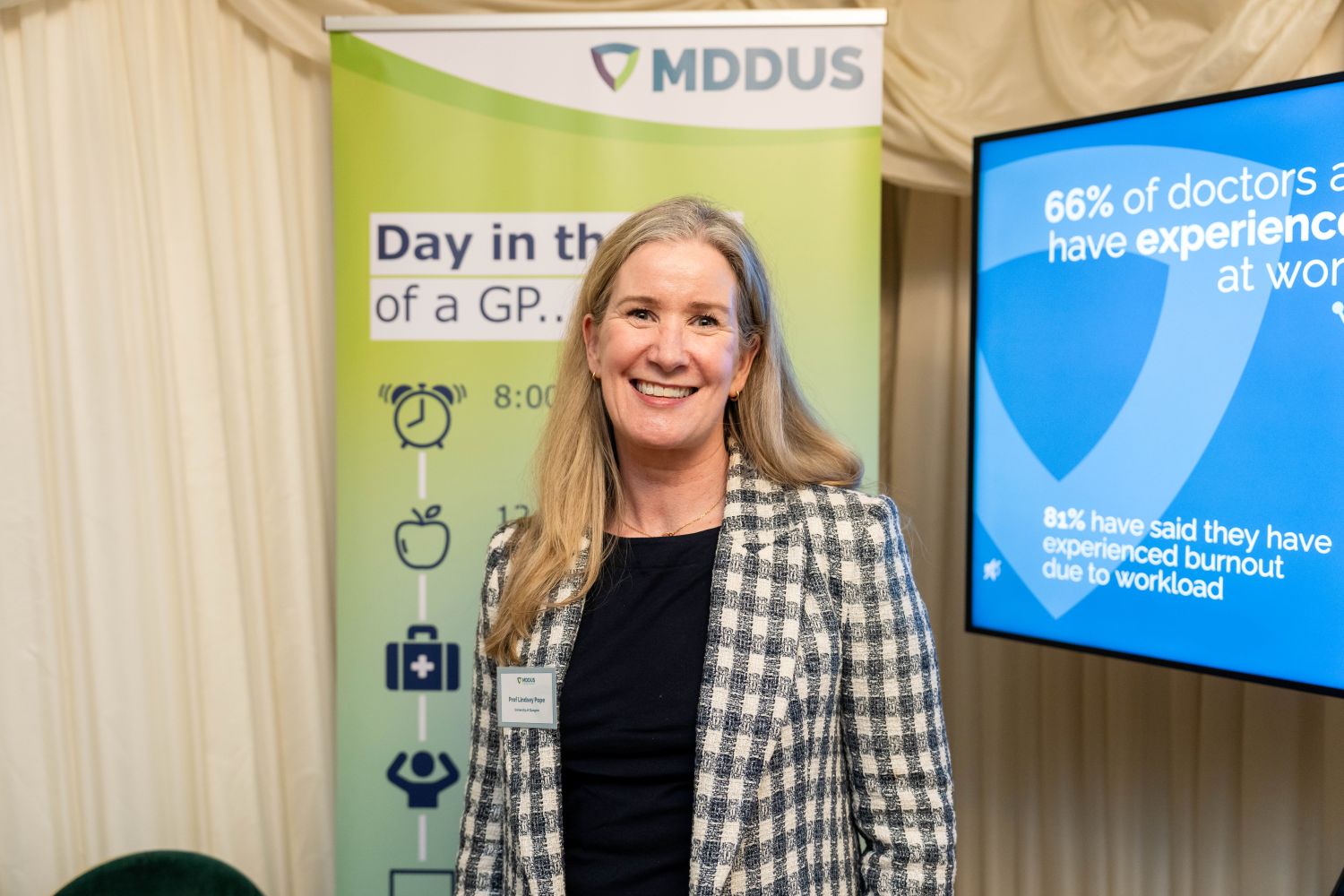 Professor Lindsey Pope
Photo credit: Ashley Coombes, Epic Scotland
This is why the healthcare service needs structural reform. As MDDUS member and GP, Professor Lindsey Pope says: “This isn’t about individual doctors; it’s about how we create a system that makes it safer for us to practise as doctors, but also safer for our patients to be cared for.”
Other countries have already recognised the importance of staffing resilience and built-in recovery time, and have acted on this. In New Zealand, protections such as paid indemnity, protected study leave, meals provided at work, and relief staff to cover sickness absence are written into doctors’ contracts. These measures demonstrate that workforce wellbeing can be built into the system when it’s treated as a structural requirement.
The evidence in Wellbeing by Design comes from Scotland, but the underlying pressures it exposes are shared across the United Kingdom. The link between doctor wellbeing and patient safety does not change at the border.
A healthcare system that relies on exhausted clinicians is one that is operating with avoidable risk. The question is no longer whether this matters, but how long it can be allowed to continue.
Sources
