Two years to DRS: counting down to a generational opportunity
Two years from now, in October 2027, the Deposit Return Scheme (DRS) will launch across the UK – a milestone in tackling litter, boosting recycling, and helping consumers see value where they once saw waste.
After years of delay, the countdown is on. As someone who has spent nearly a decade working in sustainability and external affairs – and more recently, a day pedalling behind a litter collector through Britain’s backroads – I’ve seen both the urgency of the problem and the promise of the solution.
A journey that reframed the opportunity
Not long ago, I joined Damien Gabet and Trash Free Trails on a leg of their 22-day “LuCrusade” cycle across the UK. Damien’s mission was simple: expose the scale of single-use waste and inspire change.
I’d done my fair share of litter-picking before, but riding those forty miles from Huntingdon to Harlow gave me a whole new perspective. Quiet lanes became litter hotspots. A-roads turned into rivers of packaging waste. We found twenty identical drinks cans tossed along one single kilometre – someone’s daily ritual of discard.
Trash Free Trails suggests the scale of the problem reflects widespread disconnection – not laziness, but a signal of indifference towards nature and community. It reminded me that behaviour change isn’t achieved by preaching; it’s achieved by making the right action the easy, valuable one. And that’s what a DRS does.
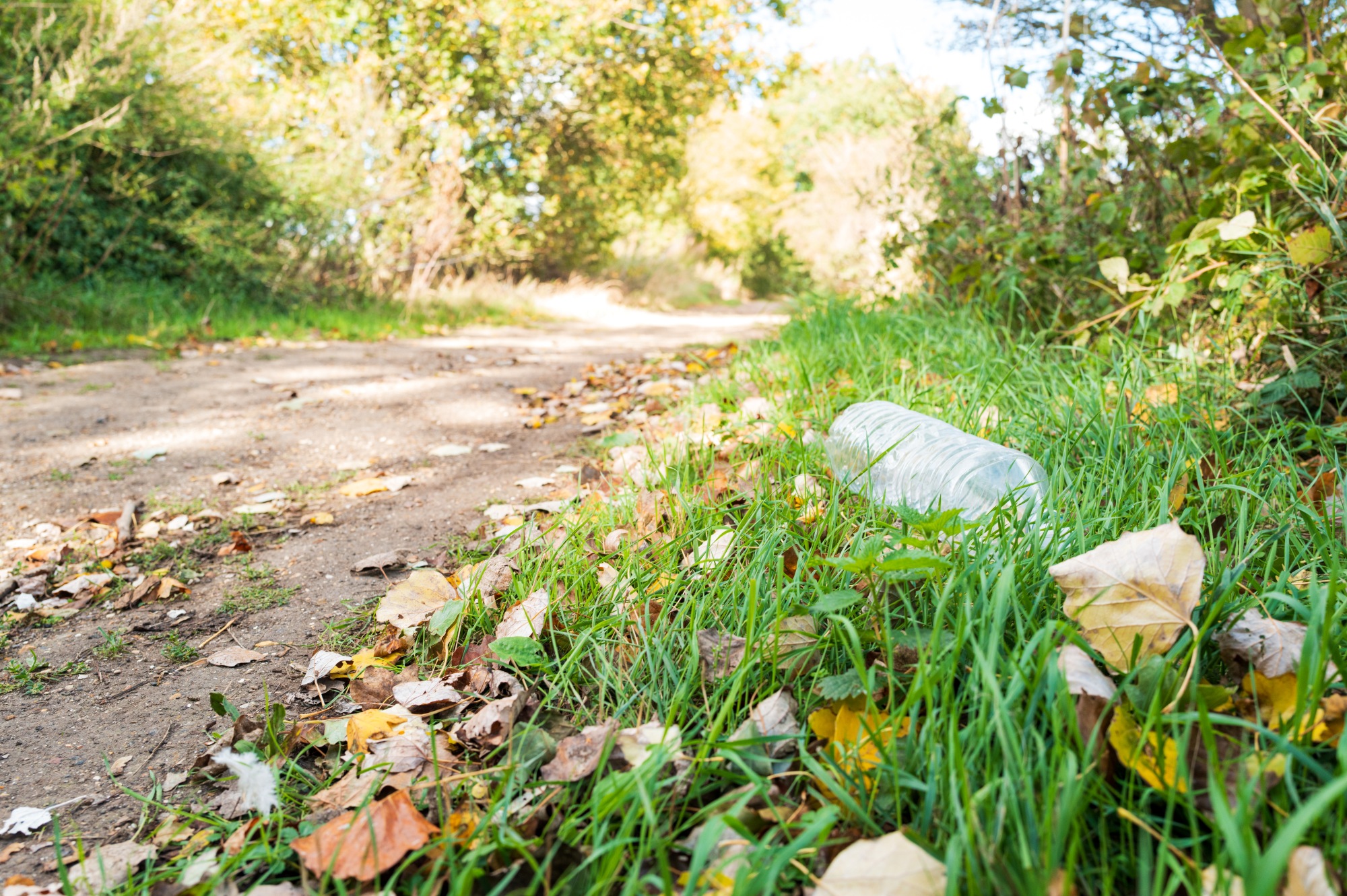 Quiet lanes across the UK have become litter hotspots
Why Deposit Return Schemes matter
DRS isn’t an abstract policy. It’s a practical mechanism that changes behaviour. Add a small deposit to a bottle or can, and suddenly what was once waste becomes worth returning.
With a DRS in place, those cans on that country road will carry a 20p deposit.1 That’s £4 in one kilometre. Multiply that across thousands of habitual litterers and you begin to see the power of economic nudge: people act for “the money”, and our communities and environment win as a result.
The benefits ripple wider than the behavioural change: cleaner streams of recycled PET, a more stable domestic supply chain, the creation of over 3,000 new green jobs, and over £1bn in private investment. All from one simple act – returning what we used to throw away.
At Suntory Beverage & Food GB&I, our ambition is clear: 100 per cent sustainable packaging by 2030. We’ve invested heavily to get there – £11m to make our packaging more circular and spending tens of millions annually on recycled PET, paying an 80 per cent premium over virgin plastic.
But even the most sustainable packaging system depends on getting those bottles back. DRS is the missing link. It closes the loop, capturing clean, high-quality material to go back into our bottles, and supports the path to net-zero.
That’s why we’ve already committed £4m in internal preparations and £45m to help set up the UK DRS. This is not small change – but it’s the kind of investment that only happens when business has clarity and confidence in the future.
Learning fast – and keeping it simple
Other countries have shown it works. Ireland’s scheme has seen nearly 2bn containers returned in 18 months. Behaviour changed almost overnight. Research we commissioned showed consumers move through a simple cycle: surprise, review, reset. Within weeks, returning bottles becomes second nature.2
The UK brings its own unique complexity – multiple devolved governments, a bigger market, and millions more consumers. That’s why we need one UK-wide scheme, without divergence that could confuse consumers and businesses.
The current plan for a unified system across England, Scotland and Northern Ireland is welcome, but Wales’s intention to go it alone risks fragmentation.
The UK government must also resist the temptation to add VAT on unredeemed deposits – a tax on its own landmark environmental programme that would drain as much as £250m a year from the scheme for no gain. That money should instead be funding the infrastructure, communications and campaigns that will make the DRS succeed.
Two years to get it right
October 2027 might feel distant, but for a transformation program of this scale, it’s alarmingly close. Between now and then, the UK government must support the delivery of DRS by:
- Working with the Welsh government to ensure one UK-wide interoperable scheme. It should be simple and focused on PET and cans first. Complex reuse requirements for glass must wait until the scheme is established and successful.
- Ruling out VAT on unredeemed deposits, keeping crucial funds within the scheme to support its success.
For once, we have the rare alignment of public support, industry commitment and government ambition. What we need now is clarity and unity – one coherent scheme, one timeline, one goal, supported across all governments and departments.
If ministers provide that certainty, the UK can deliver a DRS that cuts waste, strengthens recycling and builds public trust that environmental progress is possible through practical action.
Two years to go. The wheels are turning. Let’s make sure this journey – like that 40-mile ride – ends with cleaner roadsides, circular bottles, and a country pedalling firmly towards positive impact.
- Estimated deposit level, to be confirmed.
- suntorybeverageandfood-europe.com/dyn/_assets/_pdfs/en-GB/gbi/sbf_gbi_drs_whitepaper_final.pdf
