Lord Nash: Tories Should Not Rule Out Reform Deal Before Next Election
10 min read
Conservative peer Lord Nash speaks to Matilda Martin about his successful bid to persuade the government to ban social media for children, plus why he thinks the Tories should not rule out an arrangement with Reform before the next general election
Every night at 7pm on the dot, Lord Nash follows his own self-imposed technology ban. The Conservative peer switches off his phone, puts it in a different room “and that’s it”.
Some may see this as an impressive display of self-control but the former education minister thinks it’s a no-brainer: “Well, it’s obvious, isn’t it? It’s just distracting. All the evidence is quite clear if you’re looking at the blue light late, you won’t sleep as well as you would. The best thing you can do in an evening is go out with some friends, have a few drinks.”
“I don’t advertise that,” he adds, quickly offering alternative pastimes for youngsters now denied TikTok, “or read a book, watch some telly, wind down rather than get hyped up looking at the flashing screen.”
Nash not only limits his screen time; he does not have social media and does not use WhatsApp. The peer is credited by many for forcing the government’s hand on banning social media access for under-16s.
Outgoing Prime Minister Keir Starmer may claim the ban as part of his legacy but the 77-year-old Tory was pivotal in forcing the change. It was his cross-party amendment to the Children’s Wellbeing and Schools Bill in January that showed the depth of parliamentary support for a ban. In the face of growing support from Labour MPs, Starmer – initially resistant – announced a consultation, before later fully backing the measure.
Its genesis might be a textbook example of an effective Lords, but the peer presents his success as the culmination of a collaborative effort just at the moment the time had finally come for the cause.
“One of the big triggers was my amendment, yes, but one of them,” he stresses, “and I’ve arrived on this scene later than a lot of other people that had been working away at this for many years. But it came together.”
He adds: “As one of my hereditary colleagues said, ‘John, you seem to have caught the wind’, and it went from there.”
But Nash thinks the tide was already moving in that direction. After co-founding the charity Future with his wife Caroline Nash, in 2008 it was appointed by the Labour government to sponsor Future Academies, a multi-academy trust with 11 schools across London and Hertfordshire.
Like many in Parliament, Nash engaged with Jonathan Haidt’s work on the subject, first attending a talk by the social psychologist. “I bought his book, and then I bought another thousand copies of his book, and gave them to all the staff in my multi-academy trust.”
Thanks to his involvement with schools, Nash says it was obvious to him just how distracting devices can be.
“They’re arriving at school tired, some of them not even turning up, and there’s been a lot of cyberbullying on social media.”
The government’s proposals for a social media ban include restrictions on specific platforms for under-16s, including Snapchat, TikTok, YouTube, Instagram, Facebook and X, but also restrictions on gaming services, live-streaming platforms and stranger communication.
Nash is also confident that likely PM-in-waiting Andy Burnham – one of the first prominent Labour politicians to voice support for a ban – will take this seriously.
Is there anywhere Nash would like to see Burnham go further? The peer is keen that the government ensures any approach is a “level-playing field”, so that tech companies “don’t try and run rings around Ofcom”. Ultimately, Nash would like to see a curfew on the ability of older teenagers to ‘infinite scroll’ at night.
Does the peer see tech companies attempting to ‘run rings’ around government? He thinks these giants can see the direction of travel, pointing to a new Ofcom chair who has indicated a bolder approach, and the hypothetical possibility of advertisers pulling out of the platforms.
What about government’s presence on these platforms? Would he like to see departments taking a stronger line on this?
“People generally, and politicians, spend far too much time in the immediate world of being on Twitter or X. Politics has become too immediate and too playing to the audience, minute by minute, and getting ahead of the story.”
Nash believes this reality has been exacerbated by social media. But does he think politics can function without it?
“Well, there’s politics, and there’s running the country,” Nash observes, “and they’re two totally different things.”
“You can’t run the country if you’re spending your time ‘Twittering’,” he adds.
While Nash’s social media campaign is a good example of the role of the Lords in policymaking, Burnham has radical reform of the Chamber in his sights. The former Manchester mayor told PoliticsHome last month that he would support early change to the House of Lords, including downsizing it.
“Maybe it could be smaller,” Nash says, before reminiscing on the views of his younger self. “I wrote my university entrance paper on reform of the House of Lords, more than 50 years ago.”
He cannot remember his exact argument but thinks it was along the lines of: “It’s absolutely scandalous we have an appointed second Chamber and we should have an elected second Chamber.”
But now Nash thinks that would be a “big mistake”.
“I took five Acts of Parliament through the Lords as a minister, and I saw at close range how forensically they analyse legislation line by line to check that it will actually work, which the Commons don’t do anymore, because they’re all busy sort of Twittering, and it works. It really does.”
Nash also has thoughts on Burnham’s recently announced No 10 North.
The peer believes “bringing more industry and jobs to the regions” is long overdue, but argues that the model of government needs to be redesigned “very fundamentally”. Ultimately, he feels a No 10 North cannot merely be moving civil servants up North or hiring a load of new civil servants in the region.
Whatever proposals Burnham brings to the table, he will be inheriting a Labour government that is floundering in the polls less than three years out from a general election and just two years after winning a massive majority.
“If we get a situation where the Tories and Reform have a majority between them, then we’d be daft not to work together”
The last two years have not been kind to the Conservatives either. The party faced an angry electorate in July 2024, and has struggled to regain popularity since.
However, a renewed optimism in recent months – despite a bruising at the local elections in May – has spoken of a Tory revival.
Nash is one of those more optimistic individuals: “There is a revival happening and Kemi is doing a great job. She’s thoughtful, she has a guiding star, clearly she’s principled, and that’s very important in politics.”
He adds: “You’ve had far too many prime ministers who want to be prime minister because they want to be prime minister, not because they have a great policy agenda they want to deliver for the country.”
The House asks if there is anyone in particular Nash has in mind with that latter statement. “Quite a few,” the peer laughs, “but I won’t name any.”
While Badenoch initially had a tough gig, Nash says, she has managed to “completely change the party and she’s taken time to develop policies thoroughly”.
The peer also has his own ideas about how the running of the state can be transformed. Earlier this year, he announced the Centre for Government Reform alongside Lord Agnew. The organisation will aim to recruit experience from outside politics and prepare them “to reform and run the British state properly”.
Nash describes the work Reform UK has done in reforming the machinery of the state as “good stuff”, noting this is something the Tories are also working on. Does Nash think the Tories are becoming more confident as Reform fails to build on the momentum it enjoyed last year?
“I think so,” Nash begins, before adding: “I mean, I like Farage, and I like a lot of what he’s achieved.” He claims that Tory and Reform policies are “pretty similar”, differing only on a few aspects.
“But whoever’s going to run the country in three years’ time has got to have a good, in my view, bench of people from outside the Whitehall bubble, to help them deliver the change.”
Nash did not take the traditional route to becoming a minister. He has never been an MP and was brought into his ministerial role in 2013 through the House of Lords. He started his working life as a barrister before moving into finance and co-founding a private equity firm.
As schools minister, Nash says he dealt with a lot of MPs, but he was surprised by their experience, or as he sees it, lack thereof.
It is something he also experienced first-hand: “When I became a minister, you’re just chucked in the deep end. It’s like first day at school – sink or swim, see how he does – which is terribly amateur.” He adds that the Centre for Government Reform would be willing to work with any party that wants help.
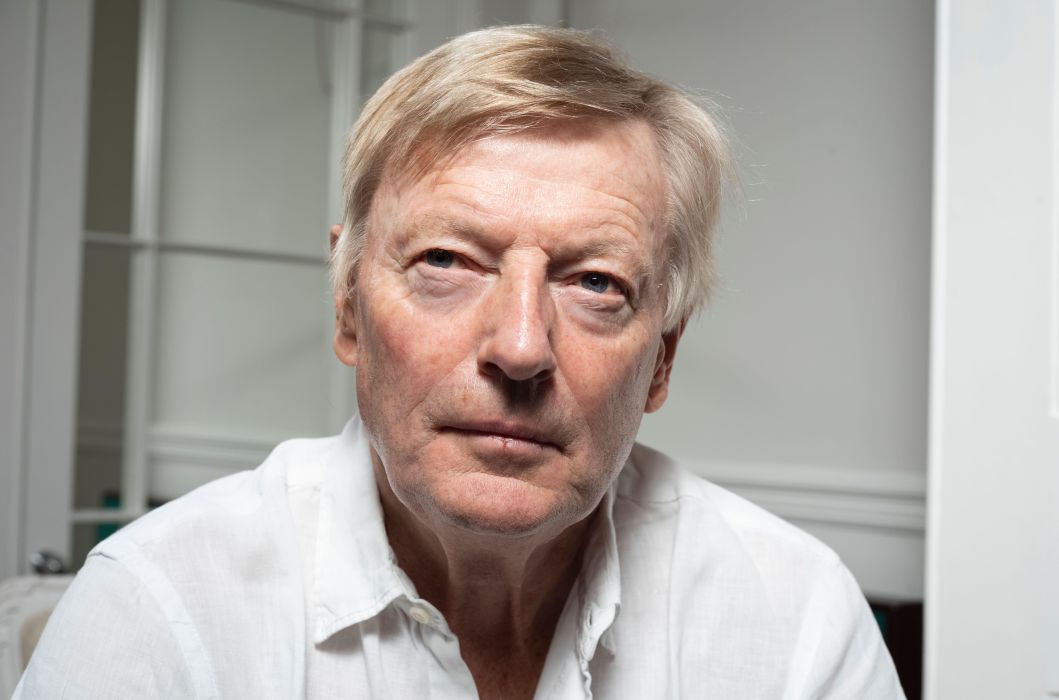 Lord Nash (Alamy)
Nash is clearly not averse to Reform UK. Was he ever tempted to defect?
“N-,” he pauses. “Umm, no. I mean, I’m not saying it would never happen, but at the moment I’m...”
He changes tack: “My politics are slightly sort of eclectic. On education, I’d say I was a bit of a socialist, actually, but I’m very happy to help Reform.
“I’m not on any dark agenda, as a sort of Tory Trojan horse. I like a lot of their policies, and I like the fact that they are clearly prepared to be very radical, which is what we need, and I believe the Tories are too, so – as I did with social media – I’m happy to work with all parties to get stuff done.
“I’m not really a politician. I’m a businessman who got asked, because I was involved in academies, to be a schools minister.”
That’s not a firm ‘no’ to ever joining Reform then. What does Nash think about the idea of a Tory-Reform coalition?
“I can understand why at this stage, three years out, they’re going to say no. But when the dog sees the rabbit, let’s see,” he says.
“Certainly, if we get a situation where the Tories and Reform have a majority between them, then we’d be daft not to work together.
“If we have a situation where it becomes crashingly obvious from the voting a while out that some kind of arrangement a year out from the election or whatever... is going to make sure that we have a government, what people call right-wing, what I would call in many cases just common sense, then it’s definitely something that should be considered.”
Nash does not believe this is something that can be done “last minute” as that would see numerous prospective candidates being shafted.
“In certain circumstances, it would be daft to not come together if the alternative is to let in the opposition.”
Nash is speaking to The House the week after an unprecedented heatwave, and a week before another bout of hot weather, when conversations about maximum temperatures in workplaces – including schools – are bound to occur once again.
Does he think schools should have maximum temperatures? “Not really, no... We’ve become a little too risk-averse and protective. A bit of hardship is not a bad thing, and toughens people up a bit.”
