Andy Burnham: The Makerfield Campaign, The Aftermath And His Prep For Government
Andy Burnham in Ashton-in-Makerfield, 9 June 2026 (AP Photo/Jon Super/Alamy)
13 min read
Andy Burnham supporters are increasingly optimistic about Makerfield. Sienna Rodgers explores what comes after the by-election
Visitors to the Makerfield constituency are met with “a sea of turquoise”, in Nigel Farage’s own words, as Reform UK voters proudly bear their allegiance in the form of posters, garden stakes and even custom-made flags.
And yet, with the caveat that things can change quickly and they are taking nothing for granted, Labour activists and those around Andy Burnham are increasingly confident of winning the tricky by-election. They cite the poor performance of Reform’s candidate Robert Kenyon on the BBC’s Question Time as a key factor; some also report that Farage’s reaction to police failure in the Henry Nowak murder, in which he called for “pure cold rage”, has motivated the Burnham vote.
Burnham backers have concluded that there is now a “shy Andy vote”, just as there was a shy Reform one in the local elections, with supportive voters saying they are too nervous to put up Labour posters in their windows. The lack of visibility does not reflect the strength of the anti-Reform vote, according to Labour sources, and Burnham’s personal appeal is helping to coalesce that group behind him.
Labour door-knockers are nervous too, however. They are being warned by organisers that Restore Britain activists – who are easily identifiable on the ground, as they wear dark blue polo shirts and baseball hats featuring their party’s name – are equipped with smart glasses that record interactions.
Canvassers for Burnham have been told not to engage properly with ‘antis’ on the doorstep either, as too often they have doorbells that record videos, which could be used against the activists online. ‘Persuasion’ conversations are thus limited to those who are truly undecided, making tech’s impact on party activism an interesting subplot. Burnham himself spends much of his time door-knocking ‘don’t knows’.
In the Labour canvassing script seen by The House, door-knockers are instructed to say they are “out campaigning for Andy Burnham” (rather than the party). Non-voters are asked why they don’t vote, told about Burnham’s local record and asked, “Could Andy earn your vote?”. Voters classified as ‘against’ are asked only which party they plan to support, then thanked for their time – “Do not engage in arguments,” the sheet orders.
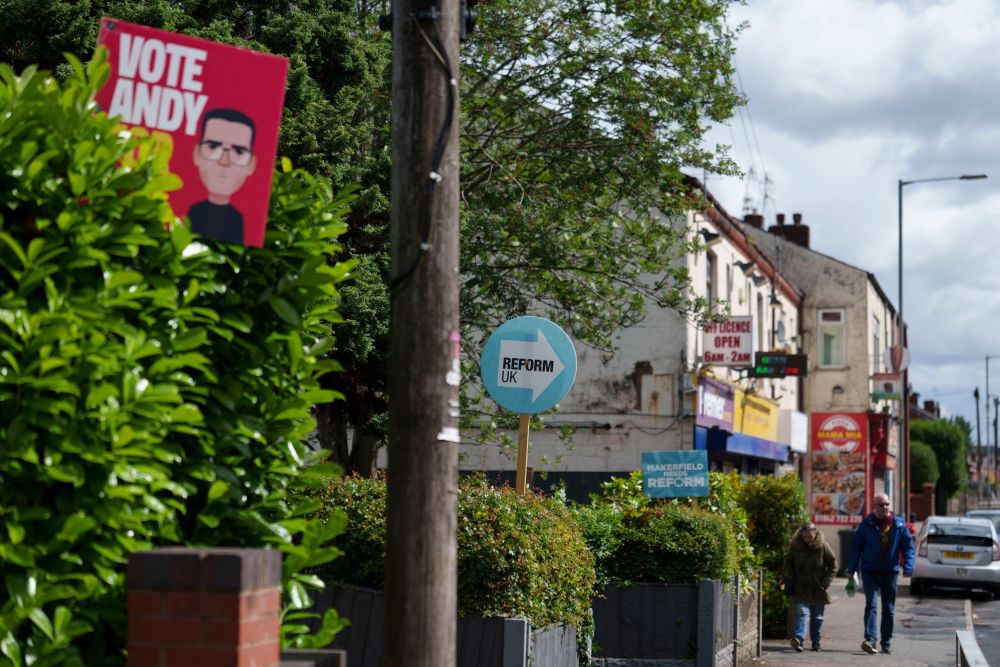 Makerfield by-election (Alamy)
For ‘don’t knows’, the canvasser asks on a scale of one to 10 how likely the voter is to back Labour and whether they are considering a different party. The “rebuttal lines” for those who could back Reform lead with the statement that Farage’s party would “make the NHS into an insurance-based system if they get into power, and that really scares me”. Verbally, organisers have also told activists to highlight that Kenyon “is a sexist” and to point them towards Question Time. Those leaning towards the Greens, Lib Dems or Tories are all told that the by-election is “a two-horse race between Labour and Reform” and that “a vote for them risks letting Reform win through the middle”.
Activists are also given rebuttal lines on arguments that may arise on the doorstep: grooming gangs (“He called for a national inquiry before it was politically convenient to do so”); the Clean Air Zone (“The Boris Johnson government forced 10 councils to consider clean air zones”, and it is no longer needed thanks to the Bee Network of buses); Makerfield as a “stepping stone to No 10” (“Andy is not getting ahead of himself”), Brexit (“Andy respects the Brexit vote”).
Most notably, on immigration, canvassers are told to say that “Andy supports reducing net migration” and he believes “it is right to pursue root and branch reform”. Allies of Shabana Mahmood are confident that she would be kept as Home Secretary by a Burnham premiership and her reforms would hardly be watered down, if at all.
What comes next
If Burnham does win Makerfield on 18 June, what follows? He has been clear about his intention to enter any Labour leadership contest, but the details – process and timeline – remain murky.
The hindrance to a swift challenge is the Greater Manchester mayoral by-election that his election to Parliament would trigger. Nobody can be both a mayor with police and crime commissioner powers – as Burnham is – and an MP at the same time, according to the law. Legislation also requires that the by-election be held within 35 working days of a vacancy, which means Thursday, 30 July is being eyed as the likely date.
While views in Parliament differ, the Manchester side of Burnham’s circle have argued that it would not be viable for him to kick off a contest before the mayoral by-election is complete. “He’ll be heavily invested in it, and it’s his responsibility to help with that,” says one such source.
“All roads lead to conference – whether coronation or contest, it ends there”
There is no guarantee that Labour will be able to hold onto the mayoralty. It is “going to be awful”, says another insider, particularly as it would be the third major by-election in the same region within a few months. The widely held assumption is that Manchester city council leader Bev Craig would be the candidate; without Burnham’s remarkable personal appeal to overcome the unpopularity of Labour’s brand, it is expected to be a very tough fight against Reform.
Government has already quickly put into effect a change in voting system for mayoralties back to a preferential one, after the Conservatives swapped it to first-past-the-post in 2022. Labour sources say they hope this will allow Labour to get the second preferences of Lib Dems, Greens and even Tories who want to block Reform.
The Greens are confident, however, that the mayoral contest will be their party versus Reform – more like Gorton and Denton than Makerfield. They base their view on the local election results and polling that suggests Labour voters are more willing to vote Green to block Reform than the other way around. “Andy Burnham won’t be on the ballot, but the record of Labour failures – in particular on housing – will be,” says a Green source.
So, there are no comfortable options for Burnham. Either he risks entering the fray with a mayoral loss under his belt, or he is blamed during a leadership election for diverting party resources and attentions when the biggest-ever by-election is taking place.
If July is indeed ruled out, August is next: the summer month over which Parliament does not sit, and Constituency Labour Parties typically do not meet, making both the MP and CLP nomination stages of any leadership contest difficult. Processes could be digitised, so nothing is impossible, but why would Keir Starmer’s operation and the current Labour general secretary facilitate a quick challenge?
That would leave September. Burnham supporters like the idea of him being crowned at conference, but that takes place less than four weeks after Parliament’s return from recess. The last deputy leadership election suggests that seven weeks – possibly six at a push – is the speediest timeline for the internal election according to Labour rules.
“All roads lead to conference – whether coronation or contest, it ends there,” an insider predicts, yet one pro-Burnham MP says Christmas may be a more realistic timeline for a new resident at No 10.
However, the instability under the present leadership – particularly acute after John Healey’s resignation as defence secretary – has cast further doubt on whether a longer timeline is viable. Senior figures think Burnham must move almost immediately after a Makerfield win and suggest Downing Street’s bunker operation is increasingly delusional. And there is, of course, the possibility that declared leadership contender Wes Streeting – or another hopeful – could force the situation quickly.
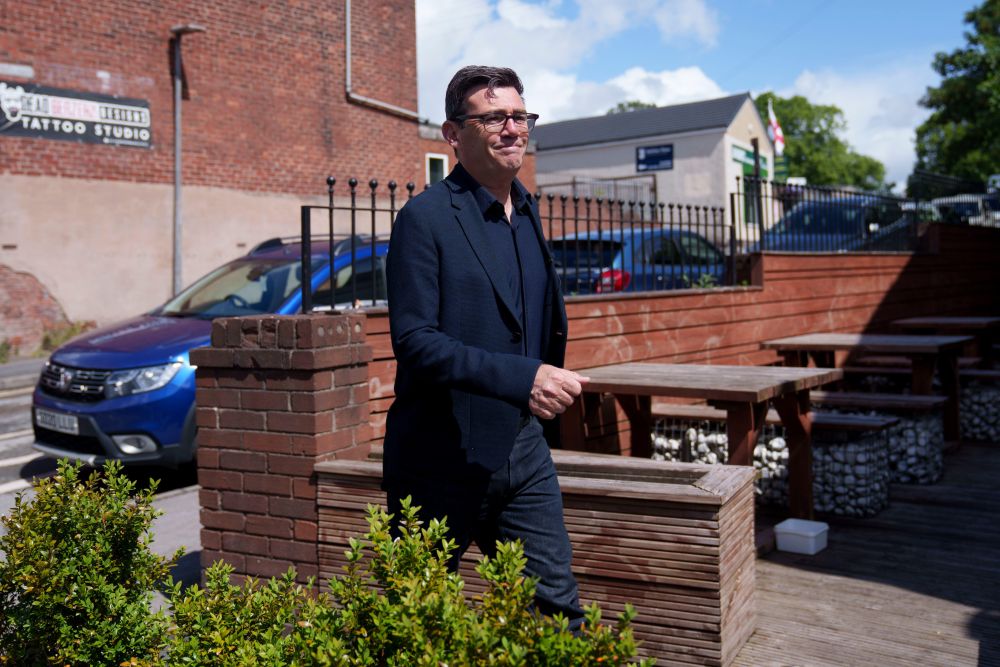 Andy Burnham (Alamy)
While neither the Burnhamites nor Starmerites believe the former health secretary has the numbers unless Starmer stands aside, sources close to Streeting insist he does. He chose not to challenge in May, they explain, because doing so before Burnham had a chance to run for Parliament would have been a poor start to the battle in the eyes of too many MPs and members. Streeting’s nominations would reach three figures once a contest actually began, claims one MP backer.
The Prime Minister has insisted that he will fight, fight, fight – even willing to stand in a contest against Burnham, who would win decisively in a head-to-head according to polls of Labour members. The leadership, as one minister puts it, is “gearing up for a fight” and looking for “signs of disloyalty”. It has been reported that ministers would have to step down if they wanted to publicly back Burnham. A Starmerite MP tells The House that the Starmer operation is expecting further resignations on 19 June and has already drawn up lists of replacement options for those thought likely to quit.
If Starmer is still intent on running even after Healey quitting, and Burnham succeeds in Makerfield, the PM has two options, a frontbencher says: declare that rivals must “put up or shut up”, John Major-style, or hope to slow it all down and buy himself more time. “Well done on winning the by-election – now we must all get to work on the next by-election” with the implicit “…which your actions have triggered” is considered the more likely of the two.
One argument that has been advanced by Starmerites is that the May 2027 elections are set to be a dreadful set for Labour, given that the areas were last contested in 2023 – a particularly good year for the party – and Reform has not had a go at them yet. “You’re basically guaranteed four-figure losses for us and four-figure gains for Reform,” a Starmer backer said, suggesting therefore: “Let Keir lead us through those and allow him to bow out, having done three years in No 10.” Yet, put to them later that the crisis around defence spending makes this option far less tenable, they reply: “Indeed.”
While nobody in the Burnham camp who spoke to The House is willing to wait a year, some do believe that a degree of delay would be good – allowing for more prep, which could only be helpful to Burnham.
Preparing for government
Burnham’s focus has had to be on Makerfield, but those around him have been putting in the hours to prepare for No 10.
Ministers who have despaired over Starmer’s leadership but not, so far, made a move to assist in his downfall are anxious about what a Burnham premiership will mean – both for their own careers and the functioning of government. “My God, am I worried… The unseriousness of it. I think he really is a flip-flopper,” says one. Fearful that Burnham cannot make difficult decisions, they speculate he could be “Keir on steroids” but with better comms. Burnham’s recent comments on Waspi compensation have only deepened that anxiety.
The Labour left are worried too. “They need to be a lot bolder,” says a supportive Labour MP. “What he tried to do in Manchester on the Clean Air Zone, but then had to row back on because it was so disliked, is exactly the sort of stuff that he will need to do at a national level.”
The job of Burnham’s team is to address such concerns. They have already requested notes from serving ministers on their work, which has been taken as a sign of competence. And Burnham allies are a fairly broad church – the MPs closest to him, led by Louise Haigh and Anneliese Midgley, are even said to be taking a warm and constructive approach to Streeting’s camp. This breadth comes with internal tensions, however.
“He can do things on welfare that others can’t”
Alongside the Westminster/Manchester divide, there is the ‘Tribune/Mainstream’ split, with most core supporters being either members of the centre-left Tribune group of MPs or the new Labour left member organisation Mainstream.
There is a worry among members of the latter that they have been sidelined. When Neal Lawson, of Mainstream and older organisation Compass, spoke at a recent conference about beating Reform with a “progressive majority”, he was slapped down by a senior source in Burnham’s campaign team. “This is nothing to do with Andy’s campaign, it is a Compass project that does not represent Andy,” they told HuffPost UK. A Mainstream source says the discussion was not centred on electoral pacts but merely the sharing of ideas between progressive parties.
Meanwhile, Josh Simons, the MP who gave up his seat for Burnham, has been described as first racking his brain to define Starmerism over at Labour Together and now doing the same for Burnhamism. Those involved in Mainstream say it has done the “heavy lifting” on policy. But it is Miatta Fahnbulleh, the former energy minister and close ally of Ed Miliband, who now holds the pen. Another soft left rising star from the 2024 intake, Yuan Yang, is understood to be feeding in.
There is much speculation over potential appointments by Burnham, should he gain power. The left side of Burnham’s camp would like to see a “clear out” on the frontbenches and figures such as Clive Lewis given jobs to ensure a radical approach to, say, the water industry. Others value some continuity.
Miliband is seen as a likely candidate for chancellor – while still serving as Energy Secretary, sources say he is involved in the minutiae of the Makerfield campaign – but this is not regarded as certain by all. More centrist voices, who prefer Streeting or even Pat McFadden, warn that lobby hacks would hate the move and it could become a distraction.
Haigh is tipped for a major post linked to the economy or industry, such as chief secretary to the Treasury, business or energy secretary. While one source tells The House Midgley has her eye on the Whips’ Office, The New Statesman has suggested that the trade union whisperer could be political secretary in No 10. It is said Angela Rayner could return to her previous roles of deputy prime minister and local government secretary.
Downing Street hires are thought likely to include current chief of staff and confidant Kevin Lee, mayoral deputy Kate Green who has also been mooted as a potential No 10 chief of staff, and Simons, plus a range of ‘soft left’ staffers such as former Lisa Nandy aides Luke Francis (a potential director of political strategy) and Jade Azim, Co-operative Party assistant general secretary Caitlin Prowle and ex-Unite worker Jenny Killin. Also part of the younger crowd are Abby Tomlinson of ‘Milifandom’ fame and left-wing podcaster Ali Milani, both managing digital output in Makerfield.
From the Mainstream/Compass camp, ex-MP Jon Cruddas and young organiser Luke Hurst are key players as well as Lawson. An experienced figure further towards the centre-left could be former Labour chief operating officer John Lehal, who helped run Burnham’s 2015 leadership bid and has been spotted on the campaign trail.
There is no obvious pick for director of comms, though more junior posts are expected to be filled by people such as Miliband aide Grace Pritchard and former Sue Gray staffer Donjeta Miftari. On policy, Mat Lawrence of the Common Wealth think tank, Labour Growth Group director Mark McVitie and IPPR’s Zoe Billingham are all expected to wield influence.
Burnham’s popularity is such that some insiders believe he should frontload painful decisions while he still has the support, rather than hand out goodies at the start. The Starmer government did try the former approach, however, and it didn’t land well. “He can do things on welfare that others can’t,” a Blue Labour-aligned figure says hopefully. Whether Burnham would have the political will to do so remains to be seen.
