Ed Davey Urges His MPs To Become Knotweed – But Frustrations Grow Over '72 By-Elections' Strategy
Illustration by Tracy Worrall
8 min read
Steady in the polls, its largest ever parliamentary party following the most successful election, mostly untroubled by scandal or rancour – so, just what is the matter with the Liberal Democrats? Ben Gartside and Francis Elliott report
It is not hard to find a Lib Dem MP privately disobliging about their leader, Ed Davey, and critical of the way he is piloting the party through the Parliament. An argument over its political strategy, rumbling for months, looks set to break out in public as the party debates its approach at its annual conference in Brighton.
And although it would be a mistake to overstate the severity of any factional splits, the party’s MPs are further divided on issues of ideology as well as tactics.
Debates over Europe, housebuilding, digital ID, social issues and matters of conscience – and what the party’s message should be to Reform-minded voters outside England’s South East – all rumble on, largely behind closed doors.
But the greatest and most fundamental divide concerns the increasingly pressing question of how the party best defends, and even increases, its showing at an election that could come much sooner than 2029.
At a private briefing for the bulging 2024 intake following the last election, Davey urged his MPs to reclaim for themselves with pride the comparison, intended as an insult, made by their opponents: to become Japanese knotweed. They should, he said, send their roots down so far into the ground to become as impossible to eradicate as the notorious invasive alien.
It was a neat joke – and entrenching incumbency advantages has long been the Lib Dems’ speciality – but it’s starting to wear a little thin among some colleagues.
“It’s the 72 by-elections strategy,” says one Lib Dem MP of Davey’s approach to fighting the next election. The leader’s calculation is that it must do nothing to risk the support of those that lent their votes in 2024. The trouble is that this group is a highly heterodox one.
The party’s lack of national profile, its absence from many of the most pressing national debates and its paucity of vivid policy prescription is best understood not as a bug but a feature of the Davey approach. Vagueness at a national level is designed to give as much flexibility for MPs to tailor campaigns to constituencies with different profiles of voters.
While in aggregate the party could be said, like Labour, to have hugely benefited from an anti-Tory vote, the component parts of that bloc vary from seat to seat – albeit drawn largely from the same economic demographic.
PJ Stock, a research analyst at Survation, says the party’s performance in 2024 was driven by affluent voters.
“The 2024 Lib Dem voter is the classic ‘blue wall’ profile: middle-class, degree-educated and comfortably off, living in the southern shires, who backed remain. The Lib Dems’ 2024 seats were won by assembling an anti-Conservative vote, which could leave them vulnerable to some progressive voters going to the Greens while small-c conservative voters return to the Tories.”
But while leakage from the Lib Dems to Greens is happening, securing the so-called soft Tories is a far greater electoral imperative.
“The Greens and Lib Dems draw from the same social class and education bracket but appeal to very different age groups and are split by region. They overlap in a narrow band of younger graduate remain voters but diverge once past that age group,” Stock explains.
“Lib Dem to Green movement has picked up slightly since [Zack] Polanski took over; however, this is a small voter flow out of an already small group. Once you account for the size of each party’s 2024 vote, the Greens are taking close to four times as much from Labour as they are from the Lib Dems.
“The Lib Dems’ bigger problem is not the Greens at all but the Conservatives. More of the Lib Dems’ 2024 voters now say they would vote Conservative than say they would vote Green.”
So, Davey’s overriding imperative is to not give former Tory voters a reason to return to the fold. That explains why he has fallen largely silent on Palestine, for example, to the chagrin of some on the left. And it explains the extraordinary number of votes at Westminster where Lib Dem are whipped to abstain – some 30 per cent.
“It is as if sometimes we are scared of our own voters,” observes a senior party figure. “The debate is around whether they are as likely to take fright as some think if we were a bit bolder.”
The fear is that the Lib Dems cannot count again on voters being as motivated as they were to vote against the Conservatives or to keep out Reform UK. Instead, say critics of the current strategy, it had better start giving people reason to vote for the Lib Dems.
Among Lib Dem MPs prepared to take a public stance is Tom Gordon, the party’s MP for Harrogate and Knaresborough. He quoted Davey’s own 2020 leadership victory speech when expressing his displeasure at the May local election results.
“It’s really frustrating when you hear the party leadership and Ed Davey talk about being the antidote to Reform. In places like Wakefield, where Reform has beaten us, we need a better message. We’re seeing stunts about how ‘Labour and the Tories need to wake up and smell the coffee’. Quite frankly, so do the Liberal Democrats.”
It’s as if sometimes we are scared of our own voters
The safety-first strategy is chafing party discipline. The sacking of Christine Jardine, the Scottish MP who spent eight consecutive years on the party’s frontbench, prompted the most serious outbreak of dissent. She was removed last year for refusing to abstain on a Conservative motion to review access to benefits for foreign nationals and those with mental health issues.
Eight colleagues joined Jardine in her vote against the Tory motion, and over 100 activists wrote a letter to the party to express their displeasure at the decision to abstain.
In the South West, meanwhile, a group of five MPs from Devon and Cornwall ignored a whip to abstain on government plans for a higher level of stamp duty on second homes – a particularly important constituency issue.
Underlying the split on strategy are differences between MPs expert at hyper-local politics, often ex-councillors, and those who became MPs after high-flying careers. Charlie Maynard and Calum Miller represent neighbouring constituencies in Oxfordshire that illustrate the point: Maynard is a long-term campaigner and former district councillor; Miller worked in Downing Street as a private secretary to former cabinet secretary Gus O’Donnell.
Others long for the party to reclaim its identity as a party of liberalism that defends the citizen from state overreach. Some were appalled at how long the Lib Dems seemed to take to come out in full-throated opposition to digital ID, for example. The issue showed the dangers, critics say, of becoming unmoored from fundamental principles in the pursuit of maximising potential appeal.
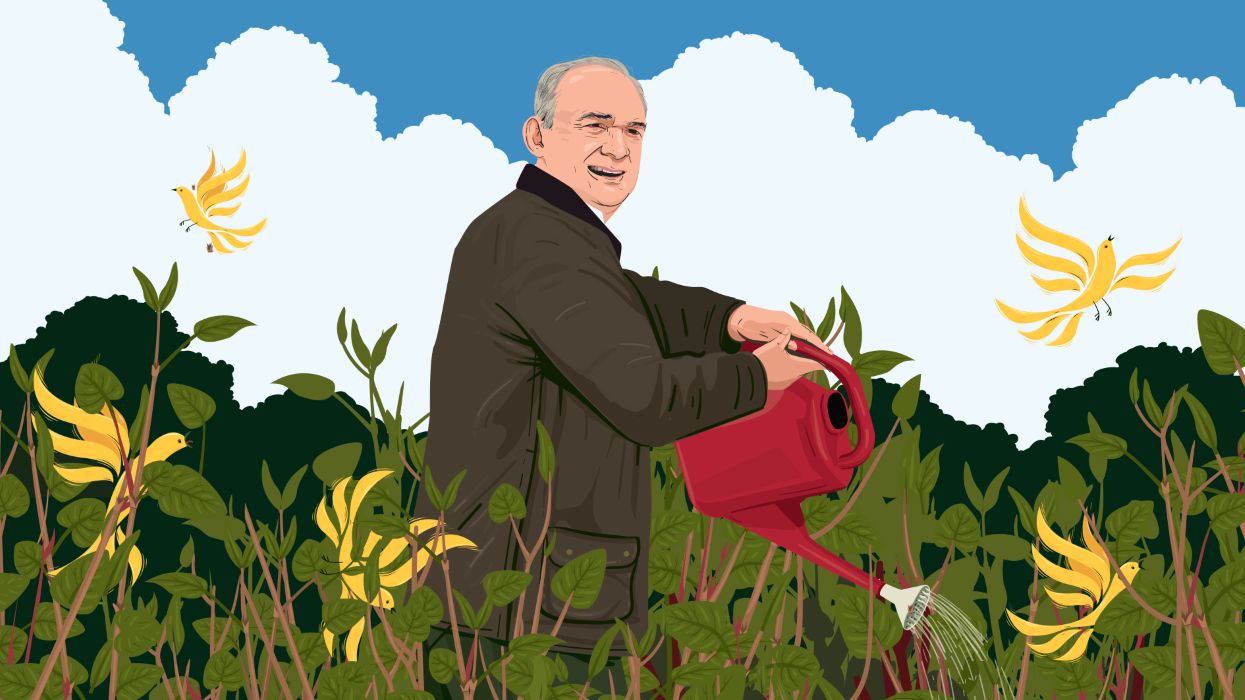 Illustration by Tracy Worrall
Some ascribe Davey’s caution to the trauma of suffering the rejection of voters at the 2015 election. “There are a lot of people, including Ed, who are so tied to the Coalition and the aftermath of it that their main concern is avoiding any future wipeout,” says a former senior staffer.
Supporters of the strategy have quickly found promotion up the party since being elected in 2024. Lisa Smart, the MP for Hazel Grove, has found herself a key vocal ally to Davey, taking the rare step of publicly defending the leader, who promoted her to help devise party strategy last year.
She told PoliticsHome earlier this year: “Ed is the most popular party leader in the country and the strongest voice in Parliament when it comes to standing up to Donald Trump or building closer ties with Europe.
“Of course, we have a big bit of work to do coming up with bold new policies as we get closer to the next election, and I’m really proud of all my Liberal Democrat colleagues working hard to do that.”
Insiders expect the party’s economic offer – whether to focus on growth, in a bid to win over younger voters, or resilience, thus prioritising existing older voters – to be a key fault line in discussions, with the policy subject to delays going through the party apparatus. Any new tax to pay for overhauling social care is likely to dismay those who fear the party is skewing too old.
Tensions over national housebuilding targets could also resurface. Younger MPs, including Bobby Dean and Josh Babarinde (recently elected as the party’s president), want the party to do more to signal it is on the side of families trying to get on the housing ladder.
Some persist in opposing local developments even as they espouse national ambitions, however. Manuela Perteghella, Lib Dem MP for Stratford-on-Avon, told her local paper she wasn’t sure “if we need all these houses”, for example.
Perteghella – who says she became politically active after finding she was ineligible to vote in the 2016 referendum because she was not a British citizen at the time – is also named by colleagues as one of the party’s MPs most motivated by the issue of the EU.
Davey has so far resisted pressure to go further than committing the party to work to ensure the UK returns to the single market and customs union. Some anticipate tensions in the future between the party’s liberal roots and the compromises that may be necessary to rejoin a union of more statist political traditions on continental Europe.
With the party’s strategy explicitly on the agenda at its conference in Brighton, these debates are about to break into the open.
