After Gaza: How Muslim Independents Are Reshaping The Political Map
Bradford Independent councillors are anticipating big gains at the next set of local elections in May
7 min read
Anger over Gaza saw the election of four new independent MPs last year. Labour is hoping that the ceasefire will help it recover support in Muslim communities. Tom Scotson visits Bradford to explore political dynamics changing because of more than just Palestine
Keir Starmer said it was a “relief to the world” that a ceasefire in Gaza has been agreed. It was, surely, particularly a relief to him and other Labour figures fretting about the electoral impact of the conflict.
At the time of writing, the agreement looks fragile and multiple questions about its implementation keep the issue at the top of the news agenda. But, for now, the killing has abated, and hope remains that Donald Trump is right when he says the war is over.
Sixteen months ago, Gaza propelled four candidates to Westminster standing as Independents but on a pledge to oppose Israel’s war. Among the Labour candidates they defeated was the party’s campaign chief Jonathan Ashworth. Wes Streeting, Shabana Mahmood and Jess Phillips were hundreds of votes away from losing their seats due to the anti-war protest vote.
In Bradford West – which has the second largest Muslim population in the UK – Labour MP Naz Shah clung onto her seat by 707 votes, after three Independents saved her political career by running against one another.
But ominously for the party, all 90 seats on Bradford council are up for grabs in 2026, with Labour at risk of losing political control.
Has the ceasefire changed the political dynamics in Bradford and similar constituencies with a strong independent challenge? Shah is cautiously optimistic and believes the government’s hardening attitude towards Israel and focus on employment rights will bear fruit with her voters.
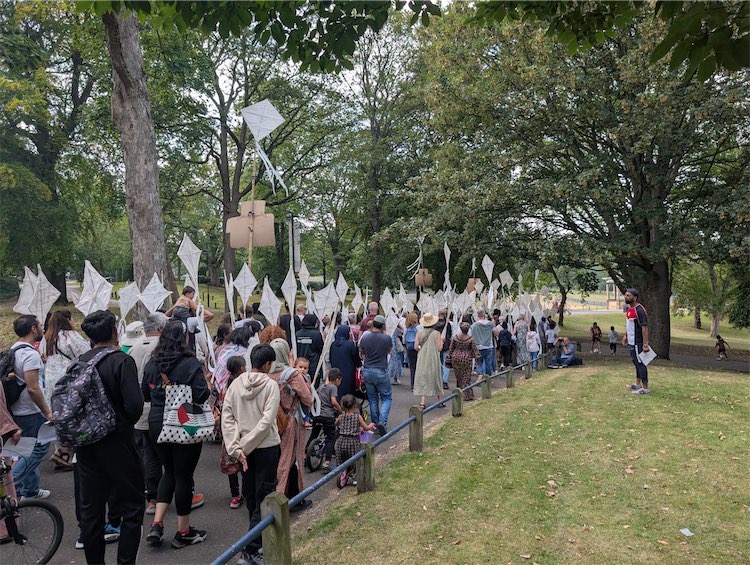 An anti-war march takes place on a sunny afternoon in Bradford, as the ceasefire between Israel-Hamas remains shaky
“We had a government who was challenging the ICC [the International Criminal Court, which has issued a series of rulings against the Israeli government]. This government dropped that and actually respects international law.
“We had a government… that was not looking at any sanctions against Israeli ministers or the West Bank. That government was nowhere near recognition.” Now, she emphasises, “Britain recognises Palestine”.
Shah acknowledges “more needs to be done” by the UK government in the Middle East but insists government policy would not have changed under a Conservative government or – “God forbid” – a Reform UK administration.
If the ceasefire holds, one factor that may aggravate Muslim communities is the appointment of former prime minister Tony Blair to Trump’s Gaza ‘Board of Peace’, reviving memories of the Iraq War.
Some senior Labour MPs profess to be unconcerned. “Although I can see the potential downsides, the importance of peace is paramount,” says one. “If Tony wants to turn up with ostrich feathers in his hat, I don’t care, as long as it works.”
Shah, however, is wary of the optics and electoral implications for her seat. “We’ve got to recognise Blair’s role… We can’t pretend it didn’t happen – Iraq happened. The instability of the Middle East came from those decisions. Millions died. It’s not just my constituents who have got those concerns, including myself – others have as well, including Gulf states.”
To assess the mood on the ground, The House accepted an invitation to accompany two Independent councillors on a tour of the Yorkshire city earlier in the autumn before the ceasefire was announced.
Talat Sajawal, the leader of Bradford Independents, and his colleague Noor Elahi, are candid that Gaza is the galvanising force behind their movement.
“It’s like everything’s gone out of the window,” Sajawal says in a dimly lit sports hall he helps run. “I mean you’re a reporter in the UK – how would you like to be a reporter in Gaza? You wouldn’t, because your life is in danger.”
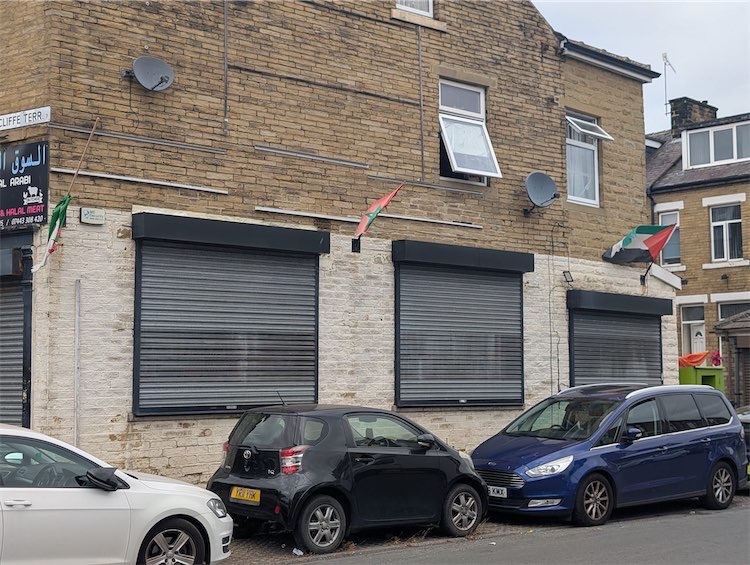 Palestinian flags continue to flutter from shop windows and terraced homes in the city
As we prepare to drive through the city in Sajawal’s Ford Galaxy, the pair remain bullish about their prospects. “It’s a movement that seems to be growing and growing and growing all the time.”
The Palestinian cause is woven into the fabric of Bradford’s streets, from flags hanging in terraced windows, to women stopping traffic to collect donations for Gaza.
For the Independents to succeed, Labour’s handling of the Middle East and disaffection with the political class will need to be at the forefront of voters’ minds.
Yet voters in Bradford share many of the same concerns as those in the white-working class areas of the red wall – that they are being left behind by globalisation.
This fact becomes stark as we walk around Cartwright Hall, a building dedicated to the eponymous businessman who invented the power loom, with the textile industry once employing 70,000 people in the early 20th century.
Now the city has more empty shops than nearly every other city in the UK, according to the think tank Centre for Cities. Its research suggests almost one in five shops are vacant, the second highest in the country.
Ishtiaq Ahmed, a former Respect Party councillor under George Galloway, now represents the Bradford Independents. “I think dynamics have changed since then in terms of the younger voters,” he says.
He tells The House that generation after generation has “traditionally and historically” supported Labour on the basis it represents “working-class values”. But since Keir Starmer became leader, he has felt there has been a fundamental shift in the area away from Labour.
Ahmed claims this frustration is felt by voters of all faiths and ethnicities. People like Tony, a café owner in Lister Park and a former Labour voter, who says the party’s position on Palestine and its inability to connect with its own voters has driven him away.
As we drink coffee and eat a slice of pizza in the sun, he says the council’s failure to reopen the lake’s jetty – which drives 50 per cent of his trade – has badly hit takings. There are many such examples held by former Labour voters who are increasingly disillusioned with both main parties.
Standing outside a dilapidated terraced house plagued with rats, Independent councillor Rizwan Saleem says the local mosque is routinely flooded every winter with no solution in sight, while the Labour council is “on the verge of bankruptcy” – having been given a cash injection of £127.1m to ease its financial crisis.
“People are very disillusioned with mainstream politics, especially in Bradford. A Labour-led council that was on the verge of bankruptcy, that’s borrowed millions and millions and millions.” He adds: “They’ve completely failed Bradford.”
Some Westminster figures are resigning themselves to the fact that defeat in the May elections within inner cities with large Muslim populations is inevitable. But local figures are holding on to the hope that they can persuade disaffected voters to come back into the fold by showing them their track-record of delivery.
Labour’s Susan Hinchcliffe, leader of Bradford council, tells The House there are several Independents being “opportunistic on Gaza”. She believes not only has Labour brought investment into the city, but it has done “far more to raise the issue of Gaza than Independents”.
“People need to believe in people who want the best for their place,” she says. “There are plenty of populist parties out there who want votes for being negative. When you speak to people they see positive change in Bradford. And in partnership with a Labour government, I feel we are turning a corner.”
As the ceasefire in the Middle East hangs in the balance, and domestic concerns reclaim the public’s attention, the momentum behind Independent candidates may begin to fade.
Yet it seems that discontent stretches beyond Labour’s approach to the Middle East. Starmer may welcome Trump’s peace deal, but unless the deeper roots of globalisation and economic malaise are addressed, he may not reap any Gaza peace dividend.
