Josh Babarinde: The Liberal Democrats Must Step Up Our Engagement With 12-Year-Olds
Josh Babarinde is running to be the Liberal Democrats' next party president (The House)
10 min read
Josh Babarinde makes no bones about his ambitions, but can he escape the curse of the ‘rising star’ and go all the way? Zoe Crowther spends a day with the Lib Dems’ justice spokesman to hear his pitch
On a hot day in the depths of summer recess, The House accompanies Josh Babarinde – Liberal Democrat MP for Eastbourne and the party’s justice spokesperson – to Lewes Crown Court to sit in on a criminal trial. The courtroom is dilapidated, with peeling wallpaper and whirring fans partially drowning out the voices of the lawyers and the defendant.
For Babarinde, this is emblematic of a “broken” justice system, hobbled by “tired” and “outdated” attitudes and institutions. According to the Eastbourne MP, who is campaigning to become the next Lib Dem party president, a relentlessly forward-facing approach is needed to fight against both crime and populism. And that means ruthlessly targeting the young.
“A key thing that I’m advocating for is to step up our engagement with younger voters,” he explains, particularly as the next general election will be the first where 16 and 17-year-olds have the right to vote.
“Right now, they are 12 and 13, and it’s really important that we are talking to them via messages that align with what they want to see in our country and what they want to see from our politics, and via the relevant forums and media as well.”
The likes of Reform are already doing a substantial amount of engagement with younger voters... we need to make sure our counter-offer is right there
YouGov polling in August showed the Lib Dems leading with younger voters aged 18 to 24, when they had previously trailed behind Labour and the Green Party.
Babarinde, 32, believes the party strategy should therefore include “diversifying” how they reach people and the technology that they use. Reform and the Labour government itself are fishing in the same waters.
“If we are not ambitious about that, we know who will be,” he warns. “The likes of Reform are already doing a substantial amount of engagement with younger voters, and those young people who are set to be voting next time around, and we need to make sure our counter-offer is right there.”
Babarinde’s previous career as a youth worker was focused on working with young people to find an alternative path to crime and gang violence, and he founded an award-winning social enterprise to employ young ex-offenders to repair smartphones.
Now taking up these issues in Parliament, Babarinde describes youth services as having been “cut to the bone” by local councils, leaving many young people without specialist support and “at a loose end without access to opportunities to pursue more fulfilling futures”. He accuses the government of failing to provide a “satisfactory” answer to how it will properly fund local authorities to be able to get this work off the ground again.
According to Unison research, more than two-thirds of council-funded youth centres were closed in England between 2010 and 2024, initiated by the Tory-Lib Dem Coalition government under David Cameron and Nick Clegg.
Lib Dem politicians Lord (Tom) McNally and then-MP Simon Hughes were both justice ministers during the Coalition years, and Lib Dem MP Lynne (now Baroness) Featherstone was a Home Office minister for equalities and crime prevention – all holding collective ministerial responsibility over the wider cuts carried out by the Coalition government.
Our court estate is long outdated, not only in style, but in substance
Pressed on whether he is disappointed in his party’s legacy on austerity, Babarinde deflects. “I was a teenager when the Coalition took office, but what I do know, speaking to folks who were around at the time, is that the Liberal Democrats fought the Conservatives in government every single day,” he says.
“In our communities, we have stood up against the Conservatives and that has seen us win a lot of support from the public and become the largest third party in 100 years.”
Having won a record number of MPs, Babarinde now wants the Lib Dems to develop justice policies that can be delivered and that reflect their values.
As he waits to enter the courtroom to watch a trial, he is quiet and reflective, telling The House he is keen to see how witnesses are treated by the defence lawyers. When a sexual offence trial wraps up earlier than expected, Babarinde asks for more details about what happened with the case.
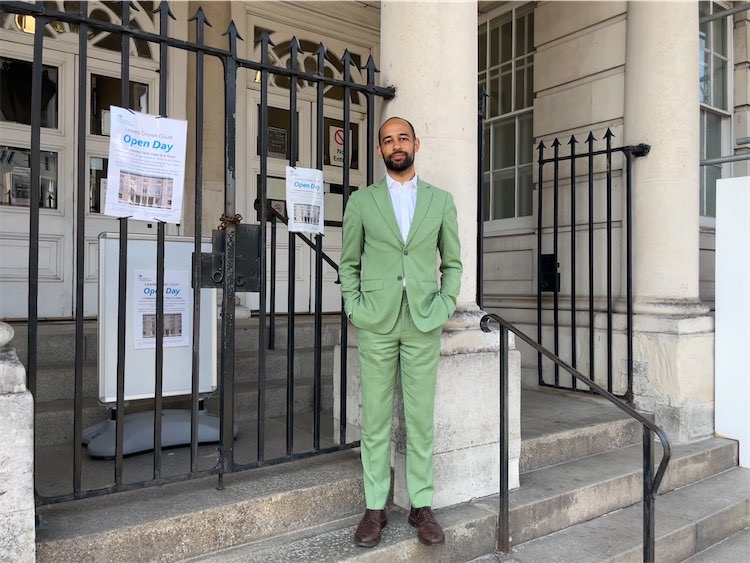 Josh Babarinde said he felt courts can be an "oppressive" space for witnesses and victims (The House)
Waiting for another trial to begin, he says he is concerned that witnesses and victims should not feel they are in an “oppressive” space. “We need to ensure that our courtrooms aren’t reminiscent of something out of a court drama from some time ago,” he says later.
“Our court estate is long outdated, not only in style, but in substance: the acoustics were awful; the ventilation was awful. These aren’t things that make for effective justice.”
The trial also exemplified the delays currently experienced across the justice system, with the alleged offence having occurred in 2023.
“The victims have been waiting two years for justice – that’s far too long,” Babarinde says. “The defendant giving evidence couldn’t remember a number of key details, and we know that the longer that you have to wait for a case, the more chance there is of witnesses not being able to offer up the details they may have been able to do if the case was heard sooner.”
While Babarinde says he has respect for some Labour ministers – particularly Alex Davies-Jones, the victims minister – he wants more assurances from the government on his campaign to create a specific set of domestic abuse aggravated offences in the law.
The government has agreed to adopt key measures in Babarinde’s Private Members’ Bill and close the loophole whereby some domestic abusers are currently released early. Although this is likely to be included in the government’s sentencing bill, expected this autumn, Babarinde tells The House he will keep his version of the bill going until he gets further clarity on how it will operate.
The Lib Dem MP says he believes this government has mostly been “firefighting to try to mop up the mess” left by the Tories, but he wants to see more investment in reducing the occurrence of criminals in the first place and creating more capacity in prisons. According to the Lib Dems, this would be paid for via taxes on tech giants, online gambling, and by improving UK-EU trade links, though the leadership has openly admitted it is still working on the party’s long-term economic plans.
Liberal Democrats are coming out fighting in many Labour areas
While Babarinde does not get drawn on potential gaps in Lib Dem policy, he emphasises the need for the party to “communicate exactly what impact that is going to have on people’s lives”. That, he believes, is where the Lib Dems can distinguish themselves from both Labour and Reform.
Reform continues to surge in the polls, which Babarinde says is due to its ability to “capitalise on fear” and “shout from the rooftops about what they think is wrong”.
“But where are the solutions, really? A lot of voters are going to struggle to have time for what they’re offering.”
He recognises, however, the depth of public dissatisfaction. A More in Common survey in January found that public support for the death penalty for certain crimes in the UK had risen from 50 to 55 per cent since 2023. Babarinde, who opposes capital punishment, thinks this is because voters are “frustrated with the criminal justice system that isn’t working”.
This sense of widespread public disillusionment has sparked a wider debate within the Lib Dems themselves. MPs and activists have suggested the party needs to borrow some of Reform’s tactics to appeal to discontented voters, with MP Bobby Dean recently telling PoliticsHome that Reform was “breaking the consensus” and he would like to see the Lib Dems “be positioned in a similar way”.
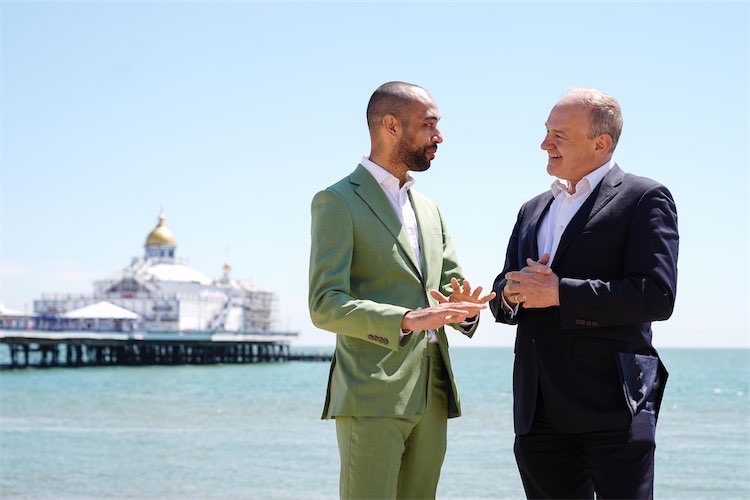 Josh Babarinde is widely seen as a potential future candidate to replace Ed Davey as Lib Dem leader (Alamy)
For Babarinde, that approach feeds directly into his pitch for the party presidency: positioning the Lib Dems as a credible alternative for disillusioned young Labour voters, unhappy with the direction of the government. “Liberal Democrats are coming out fighting in many Labour areas,” he insists. “I’m talking about on the local government level too, which is so often overlooked and very wrongly so.”
He praises the approach of another Liberal Democrat rising star, councillor Carl Cashman – recently dubbed the “UK’s sexiest politician” – who leads the party’s group in opposition on Liverpool city council and has previously said that the Lib Dems “aren’t just here for the leafy suburbs”.
Babarinde says he will help campaign with the Lib Dem team in Liverpool to “take the fight to Labour” ahead of next year’s local elections – “you don’t get much more ‘Red Wall’ than that” – and points out that the party is making in-roads in London’s Camden council (Keir Starmer’s patch) too.
Babarinde is speaking to The House in the affluent town centre of Lewes, which Lib Dem MP James MacCleary won from the Tories last year. It is the very antithesis of the ‘Red Wall’ areas that Babarinde wants to start targeting.
It’s the job of Liberal Democrats to be the first and last line of defence against populism in this country
Babarinde’s proposed strategic shift hints at some level of disagreement within the party. A source close to Ed Davey said that the idea the party was going to start targeting Labour voters was “all talk”, and that the strategy would continue to be hammering the Tories in their ‘Blue Wall’ heartlands.
And yet Babarinde is insistent that his party must be “bold” about their values, at a time when the “rise of populism in our country is clear”. “We’ve got a major role to play in not just the political future of the country, but the future of this country full stop,” he says. “The Conservatives have become a pound shop Reform party, and all too often, the Labour Party is failing to stand up to that. It’s the job of Liberal Democrats to be the first and last line of defence against populism in this country.”
If defeating populism is his primary mission, would Babarinde strike up an electoral pact with Labour if the Tories and Reform were to join forces in the future? “Voters decide what the balance of the parliament is, but agreements do happen,” he says. “Politicians at the time have got to read the room… We’re not in the room at this stage.”
Babarinde is champing at the bit to “be in the room” once and for all. At the time of our interview, official nominations had not yet opened for the Lib Dem party presidential contest but Babarinde had already launched his campaign – the only person who had done so.
He makes no bones about his ambitions to be the future leader of the Lib Dems (or even prime minister) one day. “If you asked my old school teachers, they’d say: ‘Josh, I thought you were going to be president of the United States when you were five’.”
