Life Is A Cabaret: Liberal Democrat MP Paul Kohler In His Underground Burlesque Bar
Liberal Democrat MP Paul Kohler at the entrance of his Covent Garden cabaret bar, CellarDoor (Photography by Tom Pilston)
11 min read
Liberal Democrat MP Paul Kohler meets Sophie Church and Sienna Rodgers in his Covent Garden cabaret bar, where they talk about running a business, meeting Nigel Farage and the violent attack he endured
The night Paul Kohler was attacked in his home and nearly died began ordinarily. His daughter and her boyfriend were at the top of the house, his three other daughters were out, and he and his wife Sam were playing cards downstairs. Then came a knock at the door. Kohler went to answer.
Four men rushed into the house and beat Kohler to the ground. He lay in a heap at the foot of the stairs, trying to protect the route to the first floor. Two of the attackers made it upstairs, where they found Sam, who was made to lie down with her face covered.
The other two were bringing a heavy oak door down on Kohler’s head. “Where’s the money?” they demanded. The door was brought down again. He had no answer for them.
Just as the weight of the door was going to hit Kohler a third time, which he believes would have killed him, police officers arrived. His daughter had managed to call 999. Disobeying orders to wait for backup, an officer ran in and threw himself at the perpetrator.
“Those two coppers saved my life,” the Liberal Democrat MP for Wimbledon tells The House a decade on.
Kohler suffered a fractured eye socket and jawbone, broken nose and extensive loss of blood; his entire bruised face was black and blue, and required reconstructive surgery. He suspects the gang had simply carried out orders on the wrong house.
“It was an awful moment, but it changed my life for the better. That’s just a duality and a contradiction you have to accept.”
He met with one of the perpetrators in prison, which helped with forgiveness, and has been an advocate of restorative justice ever since. But it was as much the reaction to his story as the traumatic event itself that spurred Kohler into politics and ultimately led to him running for Parliament last year.
“I really felt my narrative had been stolen from me”
“The idea that I moved to politics just to fight for justice is hugely simplistic. I got very angry,” he explains. His attackers were Polish, and Nigel Farage, then Ukip leader, used Kohler’s story – which was covered widely by the press – to campaign for Brexit.
“I really felt my narrative had been stolen from me. The Daily Mail were doing that too,” Kohler says. “It turned into an anti-EU, anti-Polish, anti-immigrant, ‘Englishman’s Castle beaten up by these foreign thugs’ [story].”
Meanwhile, a “weird” far-right group had posted a mock ‘interview’ with Kohler online in which he appeared to criticise “the Poles”. This was found by left-wing activists, who emailed all the activists and students at SOAS – where Kohler was teaching at the time – to tell them he had given this interview. “I felt really angry at the left for assuming I would have done that,” he recalls.
The House has joined Kohler at an unusual setting for an interview with an MP: we are in CellarDoor, the club on the Strand he has owned since 2006. The sign outside promises a “naughty night of cabaret and burlesque”.
All leather, velvet and mirrors, with Oscar Wilde-themed cocktails, the small underground space used to be a gentleman’s public loo. The council had tried to fill it with concrete until Kohler intervened and took on the project, which must host live music every night as part of its licence. We sip our drinks, sitting on bar stools atop lip-shaped cushions. “Cabaret is not what you see in Las Vegas. Cabaret, historically, is in your face,” the MP enthuses.
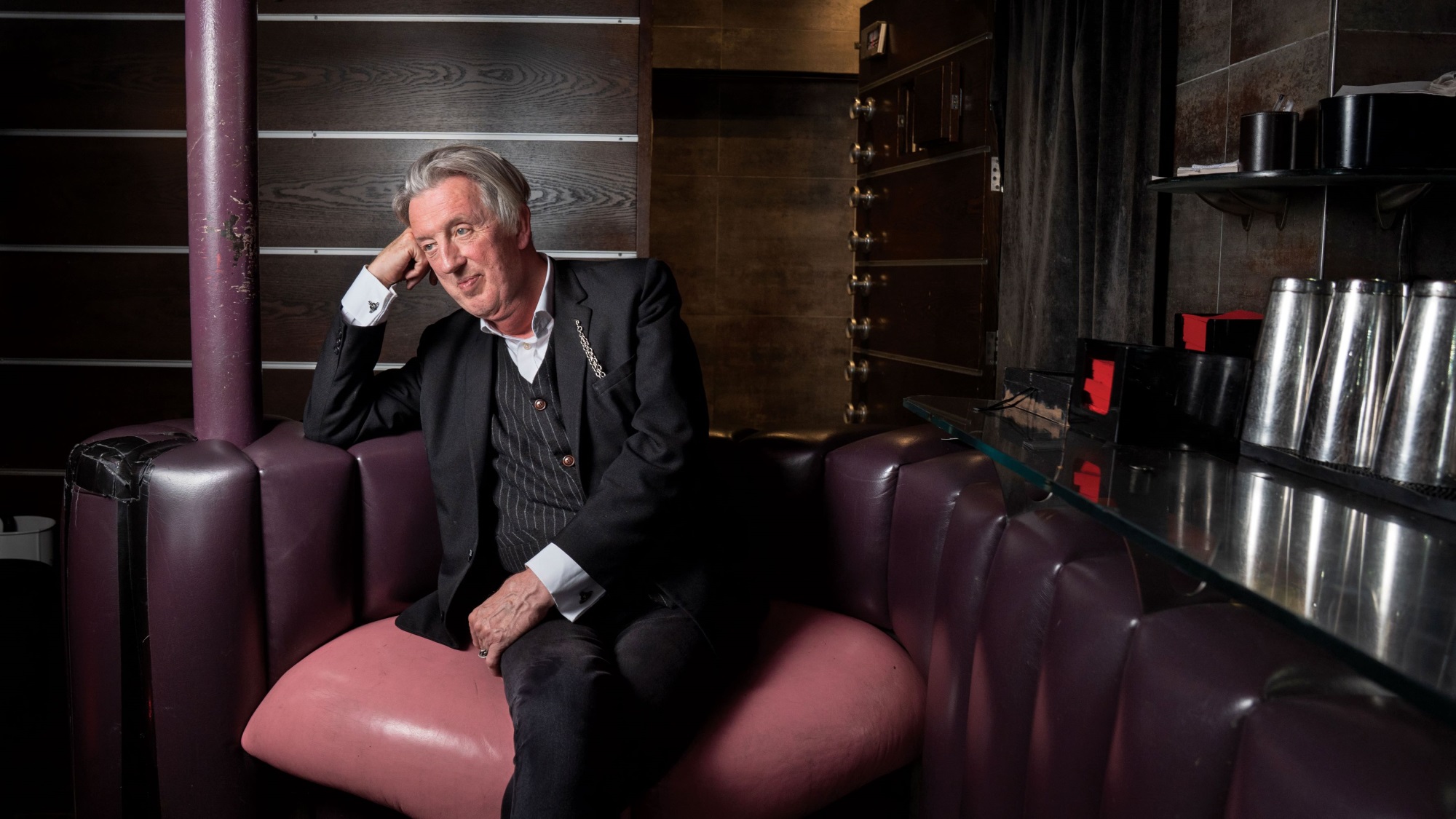 Paul Kohler in his bar, CellarDoor (Photography by Tom Pilston)
Dressed in a pinstripe suit, silver pocket chain, spotted socks and Vivienne Westwood cufflinks, Kohler cuts an eccentric figure. He reveals that he created this look specifically for the Commons and is disappointed that his MP colleagues don’t generally make similar efforts.
“I’m surprised we don’t dress for the performance a bit more,” he says, before conceding: “That might be a question of me being superficial. Maybe the better argument is it’s not what you look like, it’s the substance of what you’re saying, which is obviously true.”
Kohler was raised in London’s East End by working-class parents. His mother, a secretary at a shipping company, secured a job for his father at the same company, where he slowly rose to become managing director.
Looking slightly abashed, Kohler reveals the “corny” fact he was the youngest member of Mensa as a teen. His parents were able to send him to a “modest” private school, giving him a confidence he did not know he had. Old habits die hard, however, as he adds: “I don’t like talking about myself – I’m not a show-off!”
He went on to gain eight A-levels and began a maths degree at the University of Birmingham. Yet having fallen for punk music, he soon dropped out to focus on his own outfit: the Gotham City Swing Band.
“I’m not a muso,” he admits. “I do love music, but I’m not one of these people who can give you the discography of everyone. Really what I like is showbiz. Punk was very much the show; glam rock was the show. We were a new wave band, but we had pyrotechnics, we had everything, and we often got thrown off the stage.”
He recounts playing the Newcastle Ballrooms, now NX Newcastle, on a heavy metal night. The crowd were not expecting “lots of people in make-up, flouncing around the stage”. The band was pelted with beer-filled plastic cups and after a couple of songs, sensing they were unwelcome, ran off the stage.
Kohler returned to academia, completing a law degree at Cambridge, but found an outlet for his flamboyant side as organiser of the university’s lavish May Ball.
“Running a May Ball is all about theatrics,” he says. “They’re quite over the top, quite excessive, and there’s an air of middle-class elitism about them.”
Unsure of what to do next, he ended up at the Law Commission, where he met his future wife. He then fell into teaching, holding roles at University College London and Oxford before becoming head of SOAS School of Law.
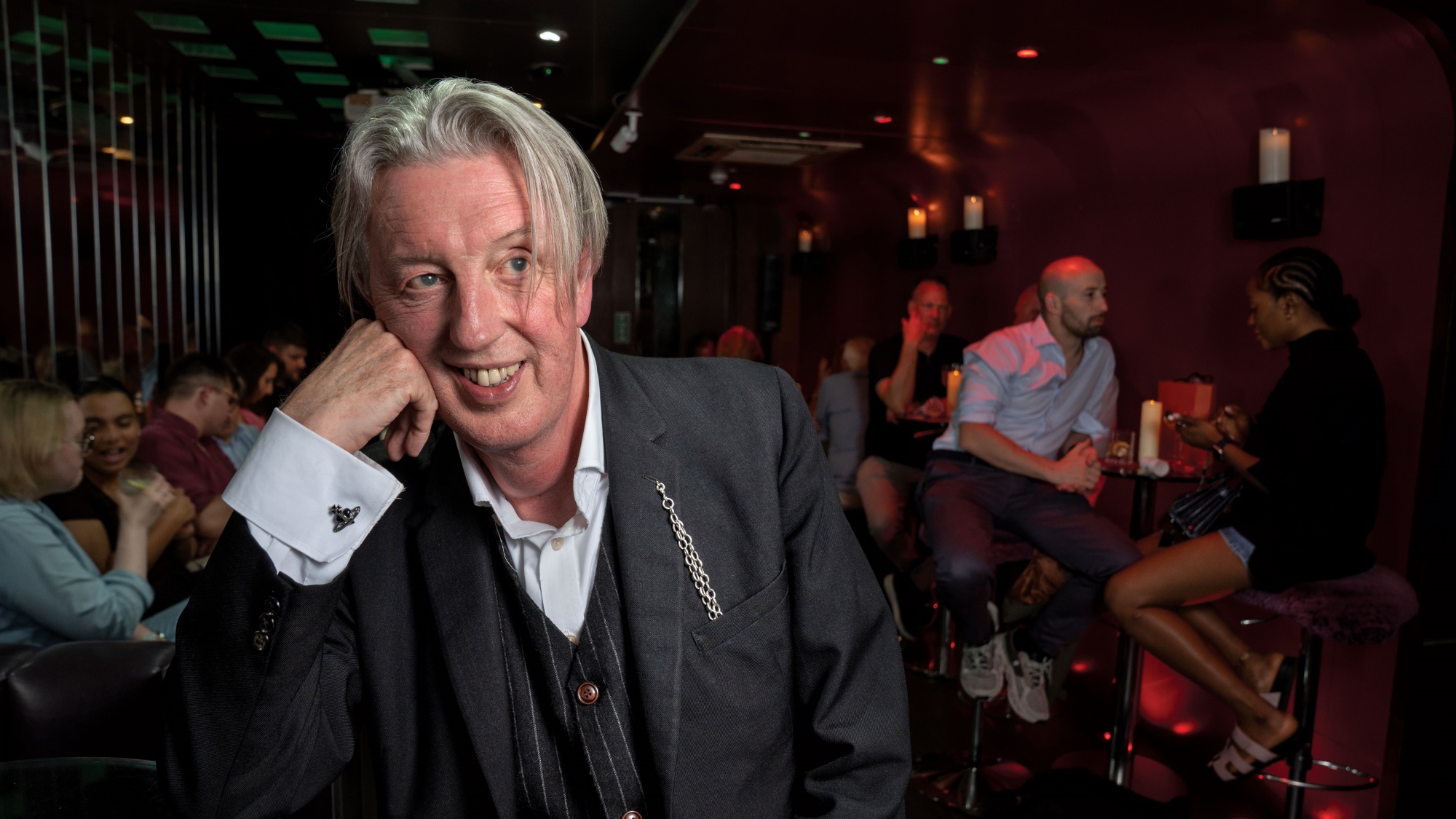 Paul Kohler (Photography by Tom Pilston)
Kohler was an “armchair member” of the Labour Party, going to party meetings with his best friend of 40 years, Jim Dickson, who entered Parliament at the same time and is now Labour MP for Dartford. Kohler quit Labour over the Iraq war, then joined again later, but says he was never particularly active and was put off when Jeremy Corbyn became leader.
Kohler disliked the influx of Socialist Workers Party members he saw joining Labour at the time. At SOAS he also found himself opposed to the culture of no-platforming that had spread across British universities.
He recalls his fellow academic, Eric Heinze, holding a session on Palestine to which an Israeli ambassador, who was “very articulate, pretty hardcore and obnoxious”, had been invited. While most colleagues were outside protesting the ambassador’s invitation, Kohler was the only academic inside, quizzing him as hard as he was able.
“That attitude shocked me, and drove me mad,” he says. “I loathe no-platforming.” Kohler endorses a maximalist view of free speech. “There are limits, of course there are limits, but you don’t expand those limits, you keep them as limited as one can while preserving order.”
“There’s always a danger in underestimating the Tories – I wouldn’t write them off”
Although Kohler voted for the Online Safety Act, he is sceptical about how it will work in practice. “Any nine-year-old knows how to make a VPN – it’s ridiculous,” he says. “This age verification is nonsense.”
At the time of writing, the Liberal Democrats have yet to take a firm position on the Online Safety Act. Does Kohler agree with some of his fellow Lib Dem MPs who think the party needs to stop whipping to abstain and instead take a bolder approach in the voting lobbies?
“It’s tough with Lib Dems,” he says carefully. “There are a range of opinions on many things. Leadership is not about just forcing people a lot of the time; it’s trying to create a consensus.”
While the Tories are still finding their feet after a dismal election, Kohler says the Lib Dems are “well aware” of the Conservative Party’s strength as an election machine.
“There’s always a danger in underestimating the Tories – I wouldn’t write them off,” he warns. “There are bits of evidence: whilst Reform won a ward from them in Bromley [recently], the Tories won a seat from the Greens on the same day in Rutland with a 20 per cent increase in their vote. Never underestimate the Tories. They’ve not been the most successful political party in the world for over 200 years by a fluke.”
Kohler is now enjoying cross-party work on the Home Affairs Select Committee. He heaps praise on a fellow member, Conservative MP Robbie Moore, who he describes as a “real Brexiteer” but also a “damned good politician” who has been consistent in exposing failures on grooming gangs.
The Lib Dem MP is also campaigning to increase the use of restorative justice, including at Prime Minister’s Questions (PMQs). Is he having much luck?
“Keir was very positive at PMQs,” he says. Kolher met with Lord Timpson, whose background was helping former prisoners into work, and reports that the prisons minister was “really receptive”. But he adds: “Have I seen much movement since? No.”
Kohler feels let down by the government’s recent Sentencing Review, carried out by David Gauke, the former Tory justice secretary known for his liberal views. The report makes no mention of restorative justice, and Justice Secretary Shabana Mahmood has focused on building more prisons.
“I’m disappointed that there’s this narrative that prison places must go up,” says Kohler. “I’m not soft on crime. But we all know we imprison too many people, and the wrong people. We have to have a grown-up approach to that. All the evidence says that if you increase prison places, you just increase numbers of prisoners.”
Kohler’s own attackers received sentences of 13 years each for the two who admitted aggravated burglary, and 16 years each for the pair also convicted of grievous bodily harm with intent. He has said he took little pleasure in seeing them jailed, and benefited greatly from the approach that allowed him, his wife and their daughter to talk directly to one of the perpetrators. “The beauty of restorative justice is it puts the victim at the heart of the process,” he explains.
Alas, the MP says he is getting “absolutely nowhere” with his campaign because on crime there is “a great fear of the Daily Mail” among ministers. But has he had the chance to set the record straight with Farage, with whom he now shares the green benches, for using Kohler’s story to his own ends all those years ago?
“I thought about doing it in Parliament in a speech, but he’s never there!” Kohler laughs. But the pair have interacted – for a purpose his colleagues, he jokily admits, have “barely forgiven him”: Kohler asked for Farage’s autograph.
“My father-in-law, bless him, is now dying in a care home,” he explains. “He’s been a Tory Brexiteer all his life and loves Nigel Farage.”
This prompted Kohler to approach the Reform leader in the Commons.
“Look, despite my best efforts, my father-in-law adores you. Will you sign a coaster I can give him for Christmas?” he asked Farage. Charming as ever, the party leader naturally agreed and shook his hand.
“It made my father-in-law’s day,” Kohler says, adding of Farage: “I disagree with everything he says, but he’s a brilliant politician.” The Lib Dem MP wonders whether his move was wise, as a politician, and concludes: “Probably not.” But the story is refreshingly human.
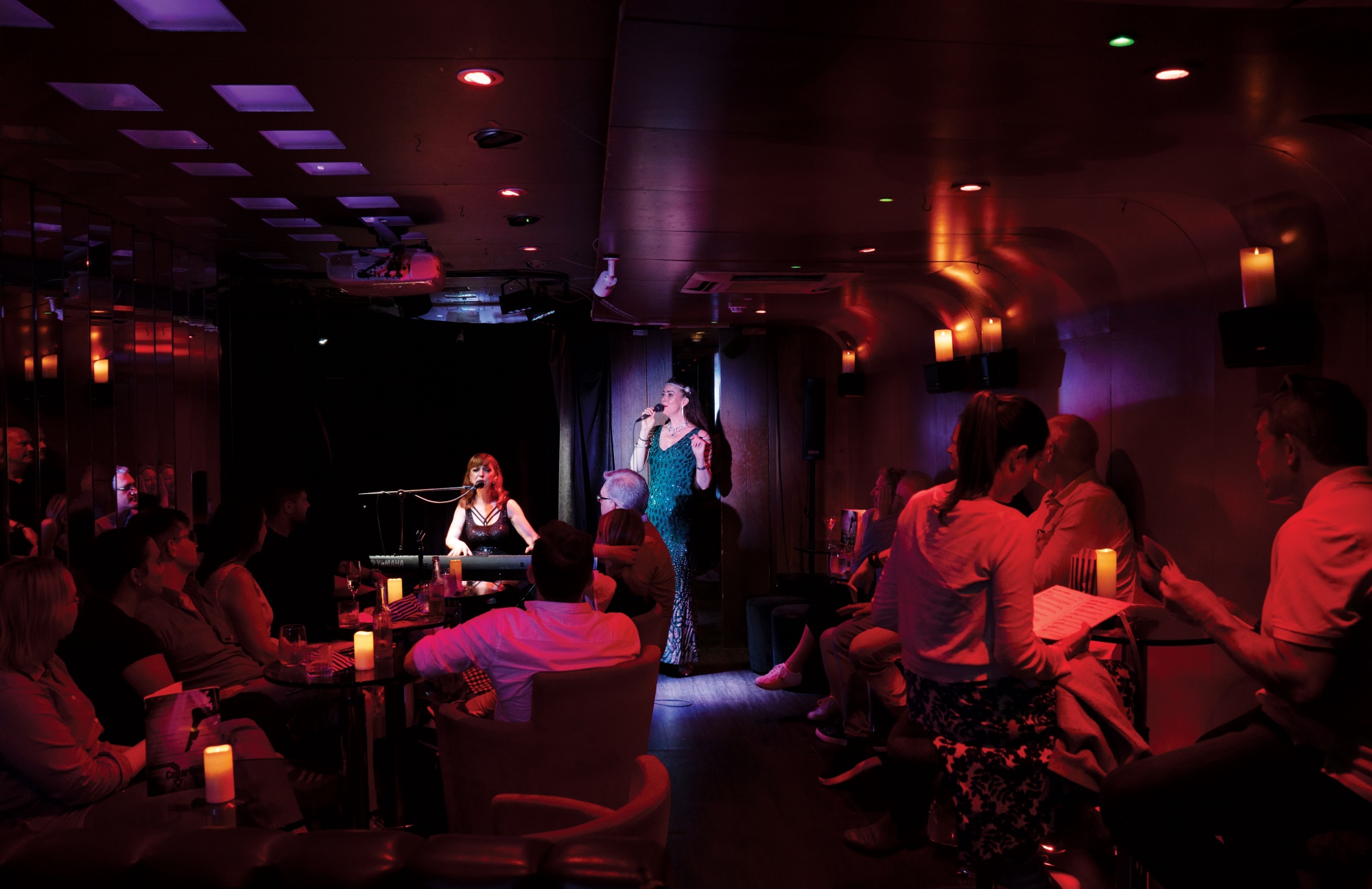 Bouncy's Boudoir at CellarDoor (Photography by Tom Pilston)
Back at CellarDoor, Kohler explains that times are “tougher than they’ve ever been” for a night-time venue like this one – even more so than the 2008 crisis – as people work increasingly from home and costs have risen.
He is particularly annoyed by Labour’s decision to reduce the employers’ National Insurance threshold to £5,000 a year, which brought his part-time staff into scope. “Rachel Reeves isn’t a bad person, but it was a subtle accounting trick that didn’t understand the reality of running a small business.”
Kohler recalls how people used to come in from work on a Thursday, whereas the bar now relies on late-night customers, so there is no steady influx. “We won’t get busy now until 10pm tonight, because people are watching their money more,” he says.
Once the interview comes to a close, Kohler’s booking for the night, cabaret act Bouncy’s Boudoir, takes to the stage and tables fill up with punters wandering in from London’s theatre district above. As audience participation begins, The House makes its excuses and leaves.
