Mel Stride: Let's Bring The 80s Back With A More Popular Capitalism
Shadow chancellor Mel Stride MP (Photography by Louise Haywood-Schiefer)
9 min read
Shadow chancellor Mel Stride tells Noah Vickers about reforming the welfare system, why the Tories are sticking with the triple lock and Rachel Reeves’ rental licence blunder
On the wall of Mel Stride’s office, in direct view of his desk, is a portrait of the late Lord Lawson.
“He and Margaret Thatcher broadly did the kind of thing that we need to do now with our country,” the shadow chancellor says, “which is to get on top of a lot of its problems, including indebtedness and the deficit.
“Then, in the right sequence – in their case they had to get on top of inflation of course – to start bringing taxes down. Nigel Lawson was very important in that respect. He didn’t do it on day one – they had to wait until they’d got the sequencing right.”
Stride dubs this approach “responsible radicalism”, a remedy he argues is desperately needed following years of anaemic economic growth in the long tail of the 2008 financial crisis.
The 64-year-old MP for Central Devon is clear that the next Conservative government will have to be bolder than the last when it comes to supply-side reforms.
“What I think would be radically different would be getting into a position where we address things like planning, and the things that are getting in the way of building things on time and on budget,” he says.
“Why is it that you have a super-fast railway built by the Chinese between Beijing and Shanghai in three years, and yet HS2 has a £100m bat tunnel?”
Bringing energy costs down is another essential ingredient in Stride’s prescription: “You cannot have a high growth economy based on energy costs that are four or five times the Americans’ and Canadians’.”
He adds: “The final thing we’ve got to do is get back to something that we had a bit of in the 1980s, which is a more popular capitalism, more of an entrepreneurial vibe to the economy, which is something we’re looking at very carefully.”
The House meets Stride in the week after his opposite number, Chancellor Rachel Reeves, had been making headlines for her failure to obtain a rental licence for her family home.
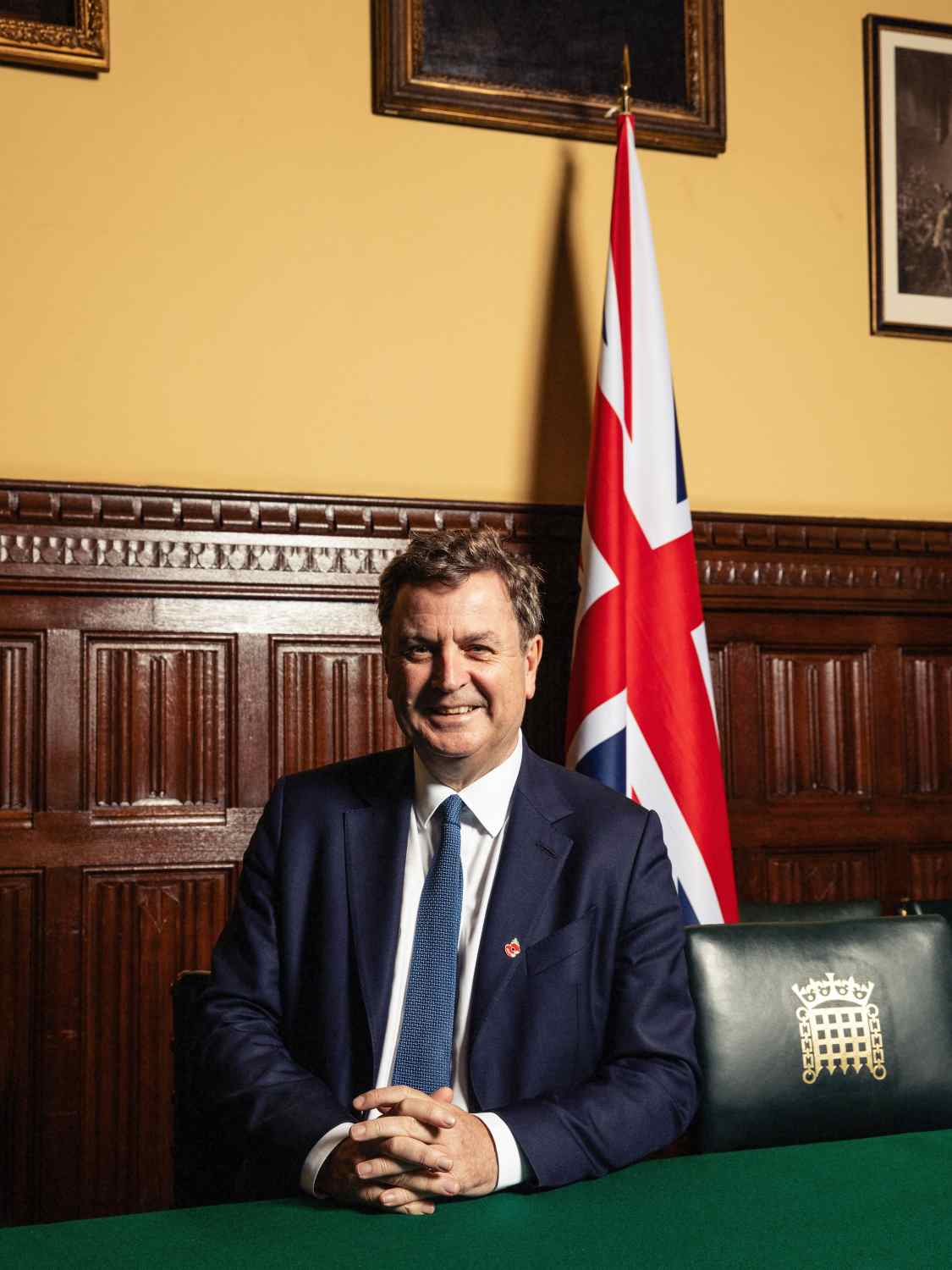 Shadow chancellor Mel Stride MP (Photography by Louise Haywood-Schiefer)
The morning after the story broke, Stride appeared on BBC Breakfast saying that Prime Minister Keir Starmer “should be concluding her position is untenable”.
Yet just one day later, his party leader, Kemi Badenoch, wrote in The Telegraph: “I don’t think Reeves – or anyone for that matter – should go for a minor accidental infraction such as this”.
Did Stride find the incident a more severe breach of the rules than his boss?
“I think where I was, was that there were questions still remaining over the initial exchange of letters between the Prime Minister and her, relating to the fact that she had campaigned on that issue [of introducing rental licences in her Leeds constituency] and so on.
“Where we are is quite clear – which is where Kemi is – is that what has happened has happened. What matters with the Chancellor now is that she focuses on getting the economy right.”
He adds that if Reeves were to break Labour’s manifesto by raising taxes on workers in her upcoming budget, her position would become untenable.
Would Stride have resigned if it had been he who had failed to pay that rental licence?
“I’m not going to get into speculation about different scenarios and things. I’ve explained the situation and the thinking around that.”
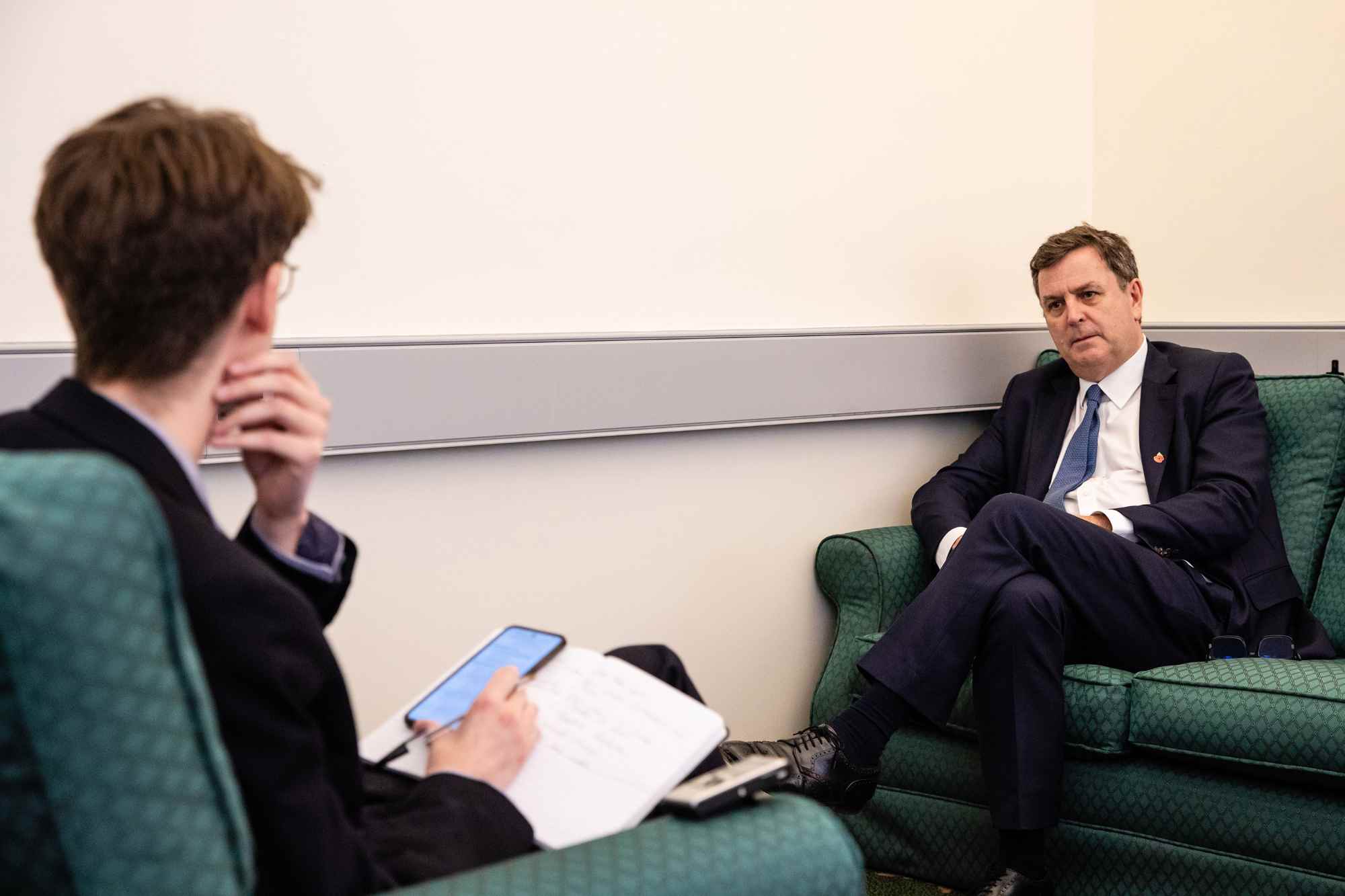 Shadow chancellor Mel Stride MP (Photography by Louise Haywood-Schiefer)
Asked whether he is someone who can honestly say he has 100 per cent followed the rules at all times, both inside and outside Parliament, he does not initially give a clear answer.
“Well, I don’t think this is one of those hypothetical conversations that I really want to go into. You’re asking about all sorts of what ifs and maybes and so on… I think we do generally, in our lives, attempt to do that [follow the rules], of course.”
He adds that he is “not aware of” any skeletons that could fall out of the closet in the future.
You do have to question whether repeat cash payments are the right approach [for PIP]
Under the last government, Stride served as work and pensions secretary, where he pursued reforms to the disability benefits system.
In the weeks immediately prior to last year’s general election being called, Stride’s department had published a green paper exploring alternatives to the cash transfer system for personal independence payments (PIP), including the potential use of vouchers to cover specific costs.
Would Stride want to see the next Conservative government adopt a voucher-led system?
“We’d need to have a look more closely at that, but I think PIP is a benefit which is very blunt; very poorly targeted,” he says.
“What I mean by that is that it is a cash payment, and in some cases that can be in respect of people who may need a relatively simple appliance – a grabrail to get into the bath, or whatever it may be – which in turn may actually be available elsewhere; the local NHS or other routes.
“I think you do have to question whether repeat cash payments are the right approach there. The other thing is, I think there is this issue about whether those payments are right to make just simply as cash, or whether it would be better actually to provide some level of additional treatment for those people with those kinds of conditions.”
 Shadow chancellor Mel Stride MP (Photography by Louise Haywood-Schiefer)
Cutting government spending by £47bn, including £23bn from the welfare bill alone, emerged as a key pledge at October’s Conservative Party Conference. According to Badenoch, Labour has “given up trying to get the government to live within its means”.
But if living within our means is so important, how can Stride defend keeping the state pension triple lock, which grows less affordable each year?
“People too readily forget where we were as a country with our pensioners under the last Labour government,” he says. “We had the fourth-highest level of pensioner poverty in Europe and I think the triple lock was very important as part of that approach to getting pensioner poverty down.
“It also has to be borne in mind that pensioners are not able to readily adjust and change their economic circumstances in the way that other people are. Finding a new job or changing roles in existing employment is not typically something that’s available to pensioners. So we do have a duty to stand by them and we’re very clear where we are on the triple lock.”
During his time in government, Stride admitted that the triple lock was not “sustainable” in “the very, very long term”. By that, he says he meant “a number of decades”.
Is there no prospect then of the Conservatives making any tweak to the triple lock formula, to reduce the rate at which pension costs are rising each year?
“We remain committed to the triple lock,” is all Stride will say in response.
 Shadow chancellor Mel Stride MP (Photography by Louise Haywood-Schiefer)
Earlier this year, the shadow chancellor gave a speech in which he criticised former PM Liz Truss for having “put at risk the very stability which Conservatives had always said must be carefully protected”.
Without explicitly naming her or her mini-budget, he acknowledged that “what happened in the autumn of 2022” damaged the Conservative Party’s “credibility” on the economy in a way “not so easily undone”.
While he stops short of saying that voters have now forgiven the Tories for that mini-budget, he does argue that the party is “getting a level of engagement” from the electorate “in a way that clearly, on the day of that general election, was not there”.
Over the last six months the Conservatives have consistently polled below the level of their vote share at the 2024 election, but Stride points out that the party also remains more trusted than any other on handling the economy.
Despite her premiership being the shortest-lived in history, parts of Truss’ agenda have gone on to become Tory Party policy, including the promise to take the UK out of the European Convention on Human Rights and to return the appointment of judges to the Lord Chancellor.
Stride indicates, however, that he would not want to see the Conservatives pursue the changes she is arguing for when it comes to the Office for Budget Responsibility (OBR) and the Bank of England. Truss has called for the former to be abolished and the latter to be stripped of its mandate to independently set interest rates, with the power instead placed in “political hands”.
While the party has not yet formalised its policy on those areas, Stride makes a “general observation” that the OBR “plays a very important role” in providing independent forecasts and scoring the government’s fiscal interventions. The Bank of England’s independence, he suggests, is similarly important.
“If it wasn’t the Bank of England [setting interest rates], it was the government, I think there would be probably a risk premium priced into gilt yields and what we would be paying on our debt,” he says.
The only certainty in politics today is great uncertainty
To win the next election, the Conservatives will have to win back at least some of the voters who have deserted them for Reform UK. At a conference fringe event, Stride admitted it would be useful for the Tories if the Labour government succeeded in stopping small boats crossing the English Channel. “We’re not going outflank Reform very easily on that issue. If it was off the table, it would be deeply helpful”, he said.
Stride, who is against doing any electoral deal with Reform, tells The House there is a “vacuum” between a “demonstrably failing” Labour Party and a Conservative Party which is still “finding its feet” after a historic election defeat. While Nigel Farage’s party is currently occupying that vacuum, presenting itself as a “none of the above” option, Stride says it is far from clear that Reform will claim victory in 2029.
“I think the only certainty in politics today is great uncertainty,” he cautions. “It’s a multi-party system overlaying first-past-the-post.
“We see it around the world, as well as our own shores. We see parties come and go, [parties which] appear to, in our history, be about to break the mould and then they don’t.
“We saw that in the early 1980s when the SDP actually souffléd at over 50 per cent of the vote, which is much higher in the polls than where Reform are at the moment. They went into the 1983 election and got 23 seats. These things can move around – and they’ve never been so volatile.”
