Nick Timothy: Breaking Our Promise On Controlled Immigration Was Disgusting
Nick Timothy (Photography by Dinendra Haria)
9 min read
Sienna Rodgers meets Nick Timothy, the former chief of staff to Theresa May who is now a Conservative MP and whip. They talk culture wars, free speech and the future of the Tories
The embattled chief of staff to a robotic and weakened prime minister faces calls from MPs to go, amid widespread criticism of the party’s strategic direction and the leader’s personal judgment. Sound familiar?
This is the situation Nick Timothy found himself in after the 2017 general election saw the Conservative Party unexpectedly lose its majority. As the top adviser to Theresa May at the time and a co-author of the failed manifesto, despite not running the campaign, Timothy was blamed by many for the result and had to resign.
Speaking to The House in his small parliamentary office today, Timothy has taken “a vow of silence” on the past but nonetheless offers a gentle defence of Keir Starmer’s right-hand man Morgan McSweeney, whom he has never met.
“That job inevitably involves people briefing against you, and presupposing things about you and the advice you’re giving,” he says with the authority of personal experience. “It’s no wonder that life expectancy in those jobs is quite short.”
“There’s too much focus on single staffers in that way. In reality, the decision-maker is the prime minister, and yes, they get some advice, but the focus really ought to be on the people who are accountable,” he adds.
To further indulge the comparison, while McSweeney is associated with Blue Labour, Timothy has been described as a Red Tory – both combine social conservatism with a left-wing approach to the economy (albeit to different degrees).
“I’m not sure I’ve ever really accepted a lot of the labels that are put on me. I would say that the things I’ve attempted to stand for still reflect my view of the world. But obviously, as time goes on, you think more, you read more, you learn more,” the MP says. “I’m not the same person I was eight years ago, but a lot of my beliefs come from the same place, which is a real conservatism.”
He believes the economy requires “full-spectrum reform” and, like Blue Labour, specifically wants to see Britain re-industrialise, producing and exporting more. Interventionist? Maybe – he favours the term “strategic state”, which he argues means also a smaller one if it is to be successful.
“We’re a long way away from power at the moment, but it’s really important you don’t waste the years you have in opposition”
Timothy, whose Aston Villa cup sits on his desk, doubtlessly had his politics shaped by his Birmingham roots. The 45-year-old was born in the manufacturing city to a school secretary and a steelworker. From an all-boys grammar, he studied politics at Sheffield and went on to the Conservative Research Department. Next came policy and finance, before a return to Tory world as a Home Office spad to Theresa May and later New Schools Network director.
After working on May’s 2016 leadership campaign, he was appointed No 10 joint chief of staff with Fiona Hill, but this ended badly less than 12 months later given the snap election result. As an intellectual figure in the party, he spent the intervening years writing columns, working as a consultant and more, before replacing Matt Hancock as MP for West Suffolk at the last election.
His book Remaking One Nation, published in 2020, set out the argument that the liberal extremes of both economic and cultural liberalism must be rejected. His backbench work – rather than his focus as a shadow energy minister – seems to emphasise the latter, with campaigns for free speech and against an Islamophobia definition. But Timothy insists that both must be addressed.
Fixing them simultaneously is “more than twice as hard as fixing one”, he says. “It would certainly be much better if we could reach a point of broad consensus on some of these issues of culture and identity… because culture, I think, is more divisive.”
“We are in a culture war, and I don’t think anybody really wants us to be in a culture war because they’re very difficult to climb out of,” Timothy continues. And the war must go on: as a conservative, he cannot accept “intellectual changes that lead to a culture where people think it’s okay to celebrate somebody’s murder”.
This is a reference to the murder of right-wing campaigner Charlie Kirk and how some on the left celebrated his death. Shortly before our interview, a video of one such status-seeking social media influencer popped up on my phone: a rant about “inherently violent” politics, ending with the call to “kill them alllll”, followed by TikTok’s chirpy end of video jingle.
So, how to climb out of the culture war? Essentially, Timothy’s answer is they can’t go over it, they can’t go under it, they’ve got to go through it: the conservatives must win the argument. And this is what the Tories should spend their time in the wilderness doing.
“We’re a long way away from power at the moment, but it’s really important you don’t waste the years you have in opposition. If you look at the government, they’re an example of a party that did waste their years in opposition,” Timothy warns.
“If you take, for example, the logic of educated people celebrating political violence, somebody’s murder. They’re not just doing it because they’re unpleasant people or they’ve become so hyper-partisan that it’s just okay.
“There’s actually an intellectual context to it, which is about the critical theories that have become really mainstream in universities. They’re not taught in a very direct way, but their logic is then repeated in the media, in schools. It basically says that discourse itself is oppressive,” he explains.
“If you believe that discourse is oppressive, if you believe that words are violence, then violence is an adequate response to words. That is appalling.”
“The way our time in government ended, and in particular the way the promise of controlled and vastly reduced immigration was broken... was absolutely disgusting”
After Kirk’s murder, some on the right argued that their opponents contributed to the violence that ended his life by calling him, for example, a Nazi. But those same people said words are not violence. So, does Timothy, as a defender of free speech, believe it is important we can use the words, but the words themselves are not important?
“My view is that it’s obviously very unpleasant, and dumb, and probably self-defeating for the people using this kind of language to call their opponents a ‘Nazi’ and a ‘fascist’ all the time… But I still think it misses the point to say calling somebody a fascist is something that led to somebody else pulling the trigger,” he replies.
“I am much more concerned about this worldview which says it’s OK to respond to language and opinion and political positions with violence. That seems much more important to me than using over-the-top language. Churchill called Labour the ‘Gestapo’ in the 1945 election. Everyone thought that it was very distasteful, but it didn’t lead to anyone trying to assassinate Clement Attlee.”
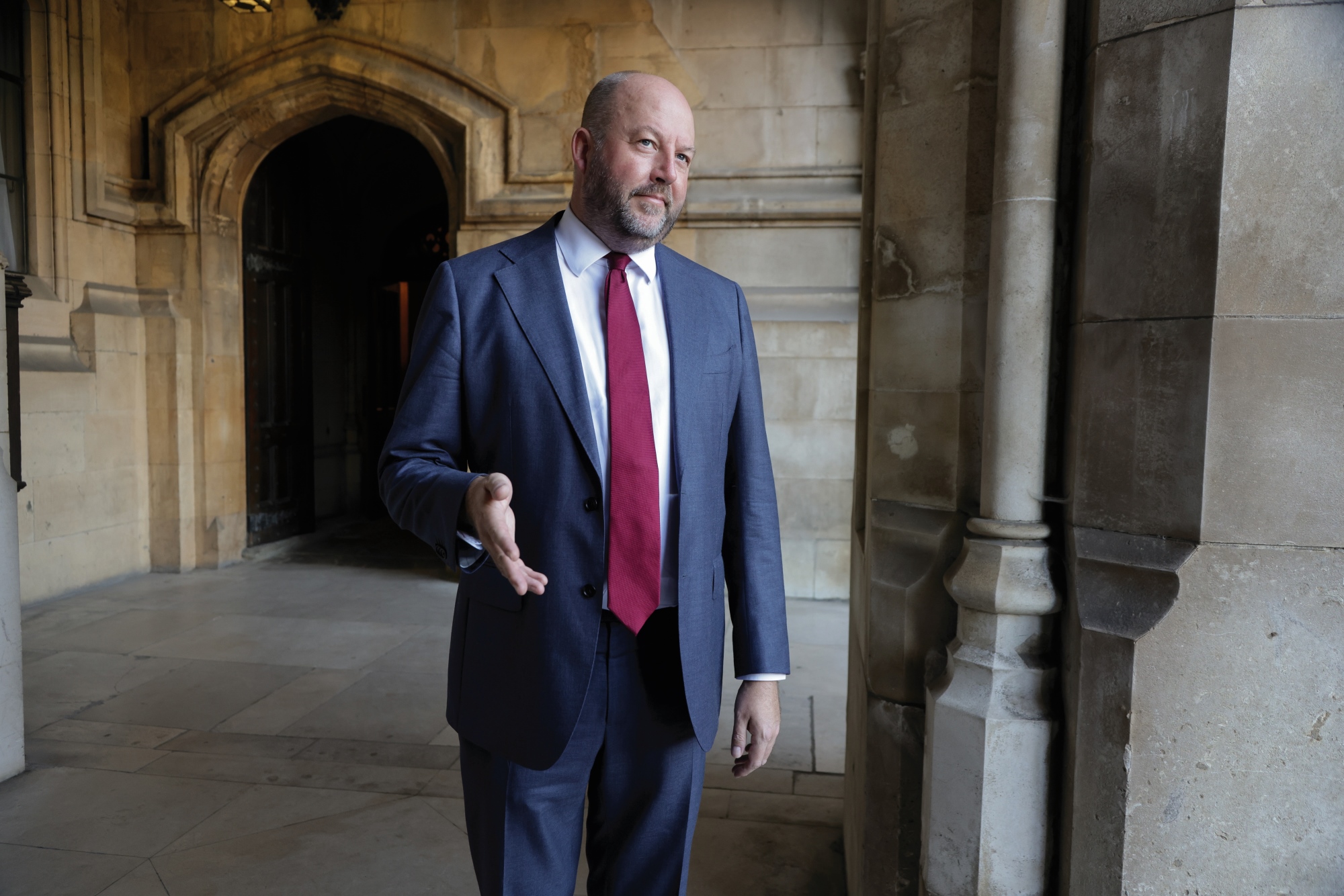 Nick Timothy (Photography by Dinendra Haria)
In June, Timothy introduced the Freedom of Expression (Religion or Belief System) Bill, to clarify that the Public Order Act 2023 should not apply to criticism of religions or religious people’s beliefs.
It came after a man who burned a copy of the Quran and shouted insults about Islam outside the Turkish consulate in London, Hamit Coskun, was found guilty of a religiously aggravated public order offence. His actions had offended two separate men who responded by violently attacking him.
“The way the Public Order Act is being used is undoubtedly a backdoor blasphemy law. The people who are responsible for enforcing our law have said so,” Timothy tells The House.
Coskun was originally charged by the Crown Prosecution Service with harassing the “religious institution of Islam”, before this was amended. Later, the sentencing judge said his behaviour was “highly provocative”, as shown by the reaction of the two men who assaulted him.
“Do I want to go around burning Qurans, or advocate that anybody should burn Qurans? Of course I don’t. But I don’t think it’s right that out of a sense of intimidation, and I do believe that that’s the heart of all of this… we are effectively enforcing a blasphemy law using legislation that was never intended for that purpose,” says Timothy.
The MP is also known to support banning the burqa. So, he is asserting in that case that the upside of social cohesion – resulting from a ban – trumps the downside of limiting freedom of expression. But with publicly burning the Quran, which one could argue damages social cohesion, free speech wins. Is he, in reality, advocating for limits on Islam?
“No, that’s not what it is,” the MP replies. Clarifying that he is “not a free speech absolutist” and “a conservative, not a liberal”, he adds: “On the burqa, I think it’s a different question. Social trust is hugely, hugely important. A society in which growing numbers of people cover their faces, and you don’t know who they are, and they’re choosing to effectively cut themselves off from society, is awful.”
Timothy calls for “a broader conversation about what it means to be a Muslim in modern Britain and in western countries”.
As the conversation turns instead to what it means to be a Tory in modern Britain, he declares: “The post-Blair consensus is done, and the country is crying out for something new.” The MP describes the “challenge” for his party as “not to become a vehicle for political and social despair”, hinting that this is the role played by Reform UK.
Does he believe the Conservative Party will survive?
“The way our time in government ended, and in particular the way the promise of controlled and vastly reduced immigration was broken – and broken deliberately because it was a policy choice, not a mistake – was absolutely disgusting. I think we’re lucky to still survive that, and to have survived that.
“Having survived that, we have an opportunity to show people that we understand why the country wanted us gone, why people were so angry with us, why certain decisions were taken, and why certain mistakes were made – and that, having understood those things, we can be different.”
Can the party’s relationship with voters ever be salvaged after such a terrible betrayal? After all, Reform UK – unencumbered by such baggage – is raring to go. There is a danger that as they work to rebuild trust, the Conservatives are replaced in the meantime – he must hope that is not the case?
“Well, hope is not a strategy. Reform’s success is the symptom of our failure, and the biggest task for us is to change ourselves.”
As The House leaves Timothy’s office, the news comes in that sitting MP Danny Kruger has defected to Reform. Others are expected to follow. It falls to Timothy and his like to staunch the flow.
