Britain rejoining the EU is more plausible than you might think
5 min read
One of the enduring lessons of politics is that public opinion often moves faster than conventional wisdom.
Ahead of the recent US midterms, polling pointed towards a much stronger Democratic performance than many commentators expected. The numbers pointed one way. Pundits were more cautious.
Something similar may now be happening with Britain's relationship with the European Union.
For years, the assumption in British politics has been that Brexit settled the European question for a generation. Yet Ipsos research published last month found that 56 per cent of Britons would vote for the UK to apply to rejoin the EU if a referendum were held tomorrow, compared with 30 per cent who would vote to stay out. Among likely referendum voters, support rises to 63 per cent.
The important question is why.
Part of the answer is that Brexit is now being judged as a lived experience rather than an idea. Research Ipsos conducted earlier this year found that 54 per cent of Britons now believe Brexit was the wrong decision, while 52 per cent regard it as more of a failure than a success. Today Brexit, not Remain, is the incumbent.
It is also worth remembering that while the Leave victory in 2016 was decisive, it was ultimately narrow: 52 per cent voted to leave, and 48 per cent voted to remain. A vote to rejoin therefore requires only a modest shift in public opinion from where Britain stood a decade ago.
The world of 2026 is also very different to 2016. Then, debates about sovereignty, democratic control and immigration dominated political discussion. Whilst those issues still matter, economic uncertainty, international instability and national security concerns now feature prominently too. And our research shows majorities believe rejoining would benefit both Britain's long-term economy and national security.
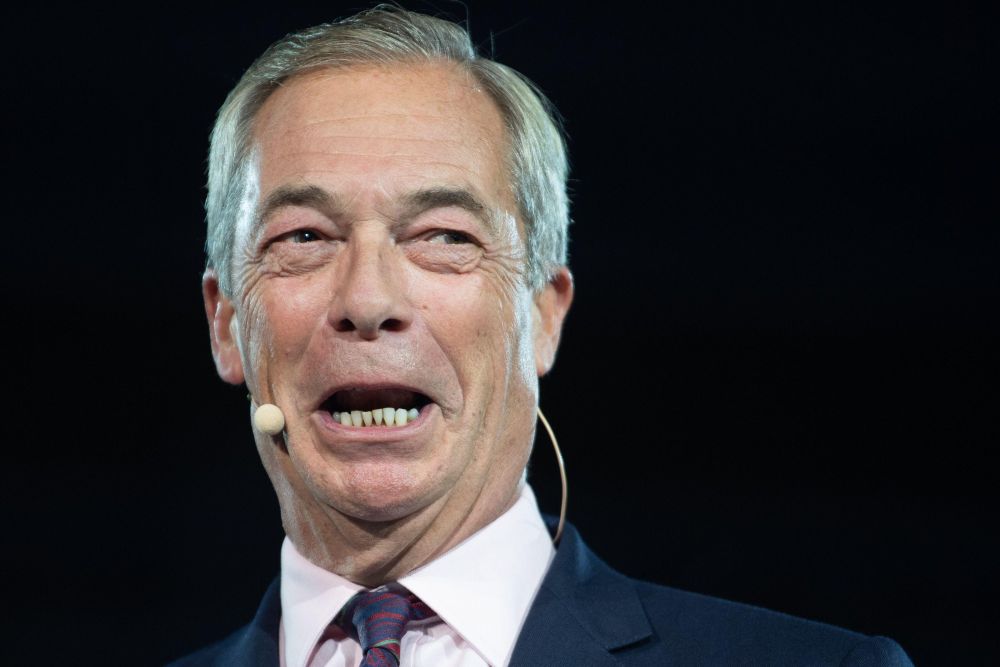 Reform UK leader Nigel Farage recently said Andy Burnham's EU push "might just have given me the biggest boost in my career I’ve ever had" (Alamy)
Ipsos research conducted across Britain, France and Germany earlier this year also suggests a significant shift in how Europeans see one another.
In Britain, 43 per cent now say Britain's interests are aligned with those of the EU, up from 29 per cent in 2022. Six in ten Britons also support a closer UK-EU security and defence relationship. Similar trends can be seen in France and Germany, where an increasing minority view the UK and EU as sharing common interests, particularly on questions of trade, defence and security – though flashpoints around immigration and fishing remain.
The politics of Europe domestically could be changing too. Andy Burnham's comments about wanting Britain to rejoin the EU in his lifetime reflect where much of the centre-left electorate is. Support for joining is strongest among younger voters and supporters of Labour, the Lib Dems and Greens. If Burnham’s goal is to unite progressive voters behind him at the next general election, Europe increasingly looks more like an opportunity than a threat.
If Britain does rejoin the European Union in the next decade, we will not be able to say we were not warned.
Pro-EU sentiment is conditional, however. While a majority of Britons believe rejoining would improve Britain's economy and national security, only a quarter think it would improve Britain's ability to make decisions in its own best interests, and the public remains unconvinced over its impact on immigration, public services and political stability.
Ipsos research with King's College London and UK in a Changing Europe highlights some of the challenges facing the pro-EU side. Whilst a majority of Britons (53 per cent) would accept EU citizens being allowed to live and work in Britain in return for improved access to the Single Market, 52 per cent still prioritise having total control over immigration, even if that means a more limited relationship with Europe.
In other words, concerns about sovereignty and immigration have not disappeared. Indeed, immigration remains the number one issue on our monthly Ipsos Issues Index.
That means how any future campaign is framed will matter enormously. So too will the wider European political environment. A victory for Marine Le Pen in next year's French presidential election, for example, could alter the debate significantly.
There is also a risk that reopening the debate is seen as a distraction from issues voters care about most, such as the economy, immigration, the cost of living and the NHS. Any successful rejoin campaign would need to show how Europe helps address those concerns.
But none of these challenges mean a majority would oppose the UK rejoining the EU.
Ten years on from Brexit, Britain appears to see Europe differently. Europe appears to see Britain differently. And both appear to see the wider world differently too.
Nearly six in ten Britons now say they would vote to rejoin the EU, while more people view Brexit as a failure than a success. Taken together, those are difficult trends to ignore and would be a strong starting point for any rejoin campaign.
Ahead of the recent US midterms, many observers looked at polling that challenged their assumptions and chose not to believe it. If Britain does rejoin the European Union in the next decade, we will not be able to say we were not warned. The evidence has been there all along.
Keiran Pedley is director of politics at Ipsos
