Labour has its work cut out avoiding a rural wipeout
3 min read
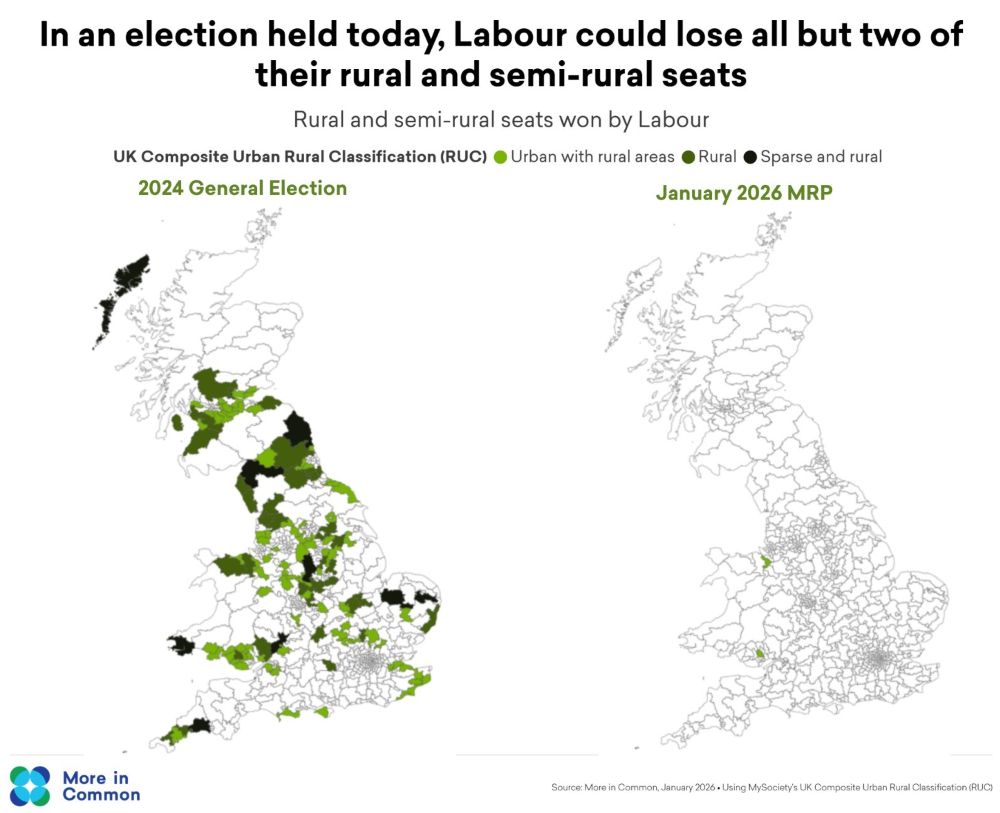
A general election held tomorrow could see Labour win zero rural constituencies. Why has the British countryside fallen out so badly with Keir Starmer's party?
With rebellions from rural MPs, a U-turn over farmers’ inheritance tax and a ban on trail hunting, the countryside has become the battleground for many of the Labour government’s recent rows.
Rural Britain is not Labour’s heartland, but it has long been part of the party’s story. While we tend to trace Labour’s roots to mines, mills and cities, one of its founding traditions was organised agricultural labour. The National Union of Agricultural Workers was affiliated with Labour from the early twentieth century. Over time, shifting class politics and Labour’s growing focus on its industrial heritage helped produce the Tory shires we imagine today.
In the 2024 general election, rural areas nonetheless formed a core part of Labour’s electoral coalition. Labour won 135 rural or semi-rural seats — nearly a third of its parliamentary force. This included semi-urban, post-industrial constituencies such as in the Welsh valleys, but also wild, sparsely populated seats stretching from Norfolk to Cornwall, Pembrokeshire and Northumberland.
Fast forward to today, and Labour risks being all but wiped out in rural areas. More in Common’s latest MRP suggests that, in a general election held tomorrow, the party would win just two semi-rural seats, and not a single fully rural constituency.
At the same time, Reform UK has made advances across the map. It leads comfortably among village and town-dwellers, while also gaining ground in cities. Labour’s retreat into city centres has been matched by Reform’s formidable advance into the territories historically held by the two main parties.
So what caused the British countryside to fall out with Labour?
It is unlikely that countryside sports were decisive. While the proposed ban on trail hunting has sparked a vocal backlash, around half of rural voters support the ban, compared to only a quarter who oppose it.
In most of their priorities, rural voters are not too different from the country as a whole. Shortly before the general election, More in Common polled voters in the 50 most “highly rural” constituencies. Asked what issues would decide their vote, the cost of living and the NHS topped the list, just as they did nationally. Rural voters wanted action on the economy and public services, and they feel they haven’t yet seen it.
In focus groups, these rural voters tell us about the everyday issues they face: unreliable buses that make it hard to reach town or a GP, terrible roads filled with potholes, and more visible local crime. Those living in villages are much more likely than average to say that their local roads, services and shops are in decline. Half of rural Britons believe the Labour government cares more about people in cities than those in the countryside.
For many, the decision to impose inheritance tax on farmers was symbolic of this disregard for rural Britain. In a Lincolnshire focus group held just days before Reform UK’s Andrea Jenkyns won the mayoral election in May, participants described the policy as evidence that the government was “out of touch”. Seven in ten rural Britons said that the decision reflected badly on the Labour government.
Labour’s Christmas Eve U-turn is likely to be welcomed; more than two-thirds of rural voters say reversing the policy was the right decision. Although — much like the Winter Fuel Allowance — it’s possible that the policy will leave a lasting impact. It will likely take real progress on the government’s key promises on the cost of living, the NHS and migration, as well as local improvements in rural areas, to mend Labour’s relationship with the countryside.
Louis O'Geran is Senior Associate at More in Common.
