The Green Party Is Rethinking Its Strategy For The Burnham Era
Zack Polanski's Green Party is at risk of losing voters back to the Labour Party with Andy Burnham as PM (Alamy)
10 min read
As the Green Party embarks on a media blitz to challenge Andy Burnham ahead of his arrival in Downing Street, an internal strategic debate is intensifying over what his premiership means for the party's future.
After months of benefiting from disillusionment with Keir Starmer's Labour Party, Green figures are now grappling with a new political landscape. Burnham is viewed as a more formidable communicator who is potentially more capable of winning back progressive voters while also occupying some of the political territory the Greens have started to claim since Zack Polanski became leader last year.
That has prompted a wider discussion inside the party about everything from electoral strategy to political messaging, and even how the Greens define themselves in an increasingly fragmented five-party system.
According to research by Thinks Insight & Strategy for PoliticsHome earlier this month, Burnham will put Labour in a stronger position to win back voters it risks losing to Polanski's Greens.
Professor Rob Ford, Professor of Political Science at the University of Manchester, agreed that Green voters are some of the "lowest hanging fruit" available to Labour under Burnham.
"They're the lost Labour voters who are most likely to say they're still open to voting Labour," he said.
"They're most likely to say that the reasons that they shifted away from Labour are that the party's got too right-wing and they don't like Keir Starmer, and they also give Andy Burnham very positive approval ratings. If you're Zack Polanski or a Green activist, that's bad news for you."
A senior Green Party source agreed that Burnham presents a new challenge.
"We need to review our political strategy in light of Burnham, and part of the reason for that is we don't yet know which version of Burnham is going to turn up," they said.
"If it will be a Blairite prime minister… He's also had a very different approach as Manchester mayor, and what he will look like in practice is a big question."
The source added that the Greens could not assume the political conditions that fuelled their recent rise would continue.
"The path and the space the party has been in in the last few months is not necessarily going to be the same as it's going to be in the next couple of years," they continued.
One of the biggest questions now facing the party is whether its electoral strategy should evolve.
The Greens' existing 'target to win' approach focuses activists and resources on constituencies where the party believes it has a realistic chance of victory under first-past-the-post, rather than spreading campaign efforts evenly across the country.
The success of that strategy has largely been built around Labour-facing urban seats, but some figures inside the party are questioning whether Reform's rise means those priorities should change.
The senior Green source said there was an "ongoing discussion" about where the party should focus under Burnham.
"Any party will be recalibrating where it's at, and there are big decisions for the party to make around where it focuses the next general election,” they said.
“So there's a debate over whether the party focuses largely on urban seats that would otherwise be Labour, or also focuses on seats that would otherwise be Reform.
"There's a lot of concern in the party that we have got to play our role in stopping Reform, rather than the target seats that would otherwise be Labour. Otherwise, we're not part of the solution of avoiding the huge risks of a Farage-led government."
However, an official Green Party source insisted the debate should not be seen as an either-or choice.
"The Greens are performing well in elections in urban areas and also smaller towns,” they said.
“We are performing well in Reform-facing seats like Hastings and Kettering. Reform and Green voters both want change; both are fed up with the status quo. We are and will be making our case in both Labour and Reform-facing areas on why the Greens' version of change is the one most likely to deliver real change. Policies such as rent controls, wealth taxes and public ownership are popular with Labour and Reform voters."
They added that Green and Reform voters had both had enough of the “status quo” and “the super-rich getting ever richer”.
“On the substance of these issues, Burnham looks like he's more likely to keep things broadly the same, with better comms," they said.
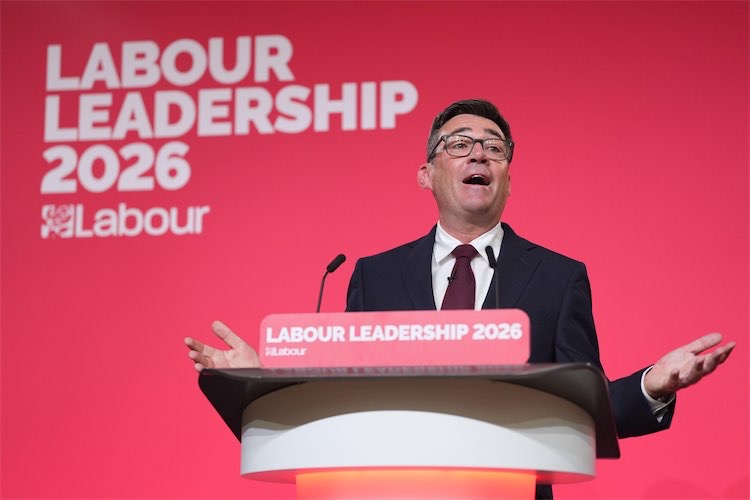 Andy Burnham was confirmed as the new leader of the Labour Party on Friday and will enter Downing Street as prime minister on Monday (Alamy)
The challenge is not simply deciding which constituencies to target, but whether the party can sustain a national message while fighting very different opponents. Several figures described a tension between emphasising pro-migrant and multicultural politics in Labour-facing cities while leaning more heavily into anti-establishment arguments in seats where Reform is the principal challenger.
Although the national headquarters decides where campaign resources are allocated, local parties retain considerable freedom over campaigning tactics, cross-party deals and power-sharing.
Ford believes prioritising Reform-facing seats alongside Labour-facing target seats would be a “borderline delusional strategy” and an “act of electoral self-harm”.
"The Greens have actually been gifted in 2024, much like the Lib Dems were after the 2019 result, a really obvious electoral map,” he said.
“There are 40 seats where the Greens start in second place, which means there are 40 constituencies where they can start campaigning on day one of a general election campaign, saying if you don't like the incumbent MP, we're the most viable local alternative.
"Every single seat is currently held by a Labour MP, and most of them look quite similar to each other. They're mostly city-centre urban seats. They're mostly young. They're mostly ethnically diverse.”
The Greens plan to use Burnham's first weeks in office to draw political dividing lines with Labour and challenge him over issues including rent controls, wealth taxation, public ownership and arms exports to Israel.
According to an internal Green Party memo seen by The New Statesman, the party plans to specifically target Shabana Mahmood if she is appointed as Burnham's chancellor next week, accusing her of “fiscal constraint and economic orthodoxy” while also taking aim at her controversial immigration reforms.
Sources close to former Green Party leader Caroline Lucas reject any suggestion that the party has shifted away from its environmentalist roots and more towards the left under Polanski. Instead, they argue that the party has always had a left-wing policy agenda, and its evolution in tone over the years has been strategic.
During Lucas's most recent stint as party co-leader alongside Jonathan Bartley between 2016 and 2018, the emphasis was on gradually building credibility while Labour under Jeremy Corbyn occupied much of the radical left-wing political space. Under the leadership of Siân Berry, and later Carla Denyer and Ramsay, the focus increasingly shifted towards identifying winnable parliamentary seats and maximising representation at Westminster.
The arrival of former Labour members, campaigners and staff to the Green camp during Starmer's premiership has accelerated that process. Party sources credit those arrivals with bringing valuable campaign experience that the Greens previously lacked. However, some also worry that Labour's political culture does not always translate easily to a party that has traditionally built itself from local government upwards.
One senior source warned against narrowing the party's appeal with more former Corbynites joining the Green Party each month.
"The traditional Green style is one that can have wide appeal, and it's really important that the party does not create a narrow box for itself that's just the ex-Corbynites, but that can have an appeal to a wide electorate,” they said.
Another senior Green figure said the debate was not about left versus right, but that the “genuine tension” in the party was about political strategy and to what extent the Greens should be thinking strategically about tactical voting and preparing for a progressive alliance with other left-leaning parties, including Labour.
They said there was a “degree of naivety” in the Green Party when it comes to electoral politics.
"There are a lot of people not understanding that we're in new territory with a five-party system under first past the post,” they continued.
“People are voting tactically more than ever. People don't go out and vote simply on the basis of politics and policies; they vote for who they believe can win, or who will keep out the people they really don't want to see win.”
Party figures distinguish between formal electoral pacts (where parties agree not to run against each other in certain seats), which remain deeply unpopular inside the party, and a broader progressive alliance which could include parties working together after elections in councils, agreeing on common policy goals, or parties signalling they are open to governing together if the numbers allow.
The Greens began exploring electoral pacts with Labour during the Corbyn years, but were refused. They later struck an electoral agreement with the Liberal Democrats in 2019.
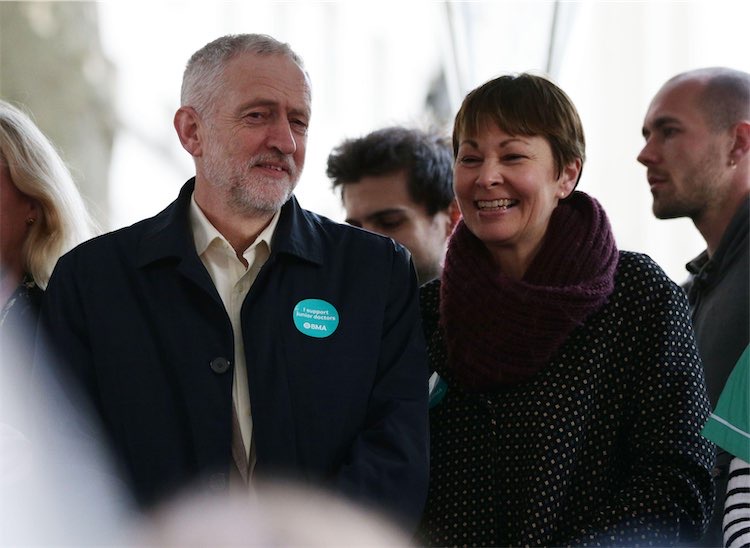 Caroline Lucas approached Jeremy Corbyn to propose an electoral alliance between the Greens and Labour ahead of 2017 general election, but was refused (Alamy)
Another Green figure reflected on earlier attempts to work with Labour, saying that if Corbyn had agreed to do a deal with the Greens in 2017, “we might well have seen a Labour-led progressive government” and “wouldn't have had the 10 years of disaster that we had”.
“But Jeremy just didn't want to do it, and [then-Lib Dem leader] Tim Farron, at the time, who we met with, didn't want to do it either, which was heartbreaking."
There was considerable appetite among Green councillors for cross-party deals following the local elections in May this year.
Green Party councillor James McAsh has become the leader of Southwark Council, with the Greens forming a joint administration with the Lib Dems in the London borough. McAsh, who defected from the Labour Party earlier this year, told PoliticsHome that he and many other Labour-Green defectors were open to the idea of working with Labour going forward.
“Early indications are suggesting [Burnham] would favour a more collaborative approach," he said.
"We could be in a place where Labour and the Greens are working together more closely in various places across the country.
“Working with the Labour Party is very much still an option in the future, because I think that the progressive bloc is out there, which includes people who are in the Labour Party, and rebuilding the coalition – that 50 years ago existed exclusively within the Labour Party – as a multi-party bloc is in my view the best way to defeat Reform.”
Enthusiasm from the Green leadership for formal national pacts has cooled in recent years, though Polanski has said he would potentially be open to working with Burnham in some capacity.
Former leader Lucas recently told The House she remained sceptical of reviving the idea of a progressive alliance, arguing the Greens' "fingers have been really burnt by it" in the past.
An official party source said: "The Greens will always have a clear, distinct identity. Zack has made clear that he couldn't work with Starmer and is open to seeing if there are areas where the Greens can work with Andy Burnham.
“But it is also becoming clearer through his early policy indications and appointments of many people associated with the Blair era that Labour doesn't look like it's serious in any way about shifting wealth and power towards working-class people.
"In terms of electoral priorities, it is to challenge everywhere, as a national political party, our message is a broad change message, with appeal across the board, to protect the planet, challenge the power and wealth of the super-rich and give it back to the people."
Green figures broadly agree that Burnham represents a more serious political challenge than Starmer did. While there is widespread acceptance that the party will need to adapt its strategy, there is far less agreement over what that strategy should look like.
