Government Criticised Over "Lacklustre" National Resilience Campaign Launch
4 min read
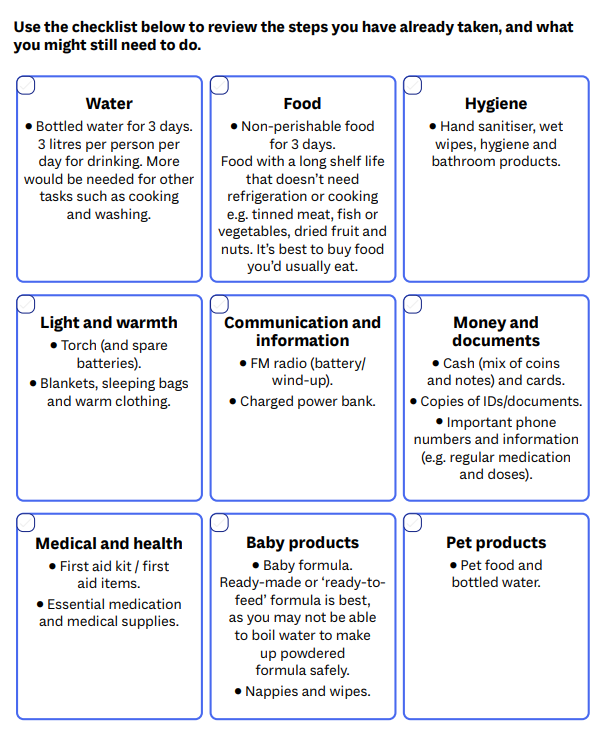
The government this week launched its long-awaited national resilience campaign, advising what essentials households should stockpile in case of an emergency.
Defence Secretary Wes Streeting told the BBC that the "Be Ready" campaign comes as the UK faces greater threat levels "than we have certainly for most, if not all, of my lifetime".
Security experts say a campaign of this nature is long overdue in Britain, pointing to growing risks posed by hostile states, cyber-attacks and climate change.
However, the relatively low-key campaign launch on Thursday, which featured neither a ministerial statement nor a speech, has prompted criticism that the government failed to convey the importance of national resilience to the public.
There was speculation that the government had been bounced into launching the campaign amid repeated questions over when it would finally be unveiled.
PoliticsHome understands that local government officials were informed on Monday by the Cabinet Office that the government did not yet have a launch date for the campaign and that materials could not yet be shared.
One local government official told PoliticsHome: “To say seeing the launch and headlines yesterday [Thursday] was a surprise is an understatement.”
The launch had originally been expected earlier this year.
One government insider with knowledge of the plans told PoliticsHome: "Burnham came in and the feeling was that it was a pessimistic and negative campaign to be launching so early in the preliminary weeks when it was originally planned for, which led to a subsequent delay.”
It is also understood that the campaign planning was being driven primarily by former Permanent Secretary Director for Government Communications at the Cabinet Office David Dinsmore, who was “preparing to run it as a national campaign with significant spend on ads". Dinsmore left his role at the end of September.
The government's launch on Thursday starts a three-year campaign that will use platforms like social media and radio to communicate national resilience messaging. There are also expected to be advertisements in settings like businesses and supermarkets.
Some European countries are much further ahead when it comes to communicating national resilience to the public. In Denmark, the government uses literature to instruct the public on what steps to take within the first 72 hours of a national emergency.
The Tories want the UK to follow suit by distributing pamphlets to every UK household advising how to respond to a civilian emergency.
Conservative MP David Reed, shadow defence minister, who recently spoke to PoliticsHome about the policy, claimed the government had been reluctant to launch the campaign as the negative tone risked undermining Burnham's governing message of hope.
"Burnham is trying to gear up for a general election, and he doesn't want to have a conversation before the general election," Reed said.
"They want to pay lip service to it before the Budget, and they've done it in a sort of haphazard way. It will dominate the headlines for 24 hours, and then they'll be gone."
Ed Arnold, senior adviser at the British Foreign Policy Group think tank, said the conversation had "already turned into a bit of a joke".
He said Burnham needs to take a strong lead on the campaign himself to give it the seriousness it deserves, and that the PM should be prepared to make joint statements with leaders of other parties to help demonstrate the importance of the issue.
“This is where it failed in the past; that it's almost seen as someone else's responsibility,” he said.
Arnold argued that national resilience must be a "recurring" theme in the government's media grid, a "weekly thing", to truly cut through with the public: "It's not about the processes. It's not about the guidance. It's not about the website. It's about the culture and the communication."
"This was almost second nature five years ago during the pandemic, and we've forgotten it all," he added.
Tobias Ellwood, the former Conservative MP who chaired the defence committee, was highly critical of Thursday's campaign launch.
“To see the most appalling, lacklustre launch of this by government, combined with the fact that it's not spending a penny more on improving defence and security, shows that I'm afraid this government is not taking this subject seriously," he said.
He called for "a calm, measured approach of educating the nation as to what's coming over the hill, the types of threats that we're going to face, and what we can do to mitigate it".
There has been disagreement within Whitehall over who should be the campaign's chief spokesperson, PoliticsHome understands.
It is understood that in recent months No 10 and the Ministry of Defence had discussed whether senior military figures should be more involved in public announcements, but that No 10 wasn't enthusiastic about the idea.
Ellwood said the government should ask a "national resilience commander" to speak to the country about resilience "in the same way that we had briefings in Covid".
The government declined to comment.
