Labour MPs Are Competing For Wes Streeting's Ear On Puberty Blockers
Demonstrators outside the Department of Health and Social Care protest against the planned clinical trial to assess the risks and benefits of puberty blockers in gender questioning children, London, December 2025 (Credit: ZUMA Press, Inc./Alamy Live News)
13 min read
Amid the persistent will-he-won’t-he speculation over Wes Streeting’s leadership ambitions, Tom Scotson and Sienna Rodgers talk to the Labour MPs applying pressure on the Health Secretary over the divisive puberty blockers trial
When Wes Streeting banned the sale and supply of puberty blockers for gender-questioning under-18s indefinitely in the first months of the Labour government, a significant cohort of his colleagues were not happy.
Furious messages were exchanged in the LGBT+ Parliamentary Labour Party (PLP) WhatsApp group, as MPs who consider themselves trans allies hoped their new Health Secretary – who is gay and a former Stonewall campaigner – would be on their side.
To justify his position, Streeting simply pointed to the landmark Cass review into gender identity services: Hilary, now Baroness, Cass had raised safety concerns around the lack of evidence for the hormone treatments and backed the government’s ban.
Now, the Health Secretary is pointing to the same set of recommendations by Cass – but this time, he finds himself on the other side of the gender argument, facing the disapproval of gender-critical MPs.
A new £10.7m clinical trial to assess the impact of puberty blockers on children with gender dysphoria is set to begin imminently. The Pathways trial will see 226 under-16s given regular injections of hormone therapy Triptorelin, which is approved for hormone-sensitive cancers, endometriosis and early puberty. When given to the gender dysphoric, such therapies are colloquially known as puberty blockers.
For the large Labour LGBT+ group of MPs and their allies, the trial is good news. It represents a route to gender-affirming healthcare being accessible once again to children, which they say could improve their quality of life and alleviate mental health problems that arise from their gender dysphoria.
With young people seeking out such drugs from unregulated providers, they say, a clinical trial is an absolute must – and the safest way to mitigate any potential risks. Without it, their thinking goes, distressed children will be left to navigate an unwanted puberty alone, which itself could lead to long-term consequences.
But for another, smaller collection of Labour MPs, the trial is unethical and represents a colossal mistake that their government will come to regret. These critics are concerned that not enough is known about the lasting impact of using these hormone injections – particularly on fertility, brain development and the risk of cancer.
In the case of gender-questioning children, who were previously being prescribed the blockers off-label (ie the treatments were not licensed for their particular condition), the anti-Pathways campaigners say the ‘wait-and-watch’ approach would be preferable as some evidence shows most children with gender distress outgrow it after puberty.
“I don’t think he’s in any way suggested that he doesn’t support the trials”
Instead of the trial, which will seek to determine over two years the short- and medium-term benefits and risks of the injections for under-18s, they would like only the ‘data linkage study’ to be undertaken. This is a retrospective study of patients seen at the Gender Identity Development Service at the Tavistock Clinic in north London, of which there were 9,000 before it was shut down in 2024, including 2,000 thought to have been given blockers.
They ask: why risk further harm when you could look back at the existing impact? Defenders of the Pathways trial counter that such data will provide valuable information but not the kind of high-quality data that a clinical trial alongside improved care can offer.
Caught between these two conflicting views, Streeting is uncharacteristically restrained on the subject, with none of his typical punchy communications style on show. He has told MPs that puberty blocker trials make him “uncomfortable” but that he was also “uncomfortable” when enforcing the ban on the treatments.
While pressing ahead with the trial, he has tried to draw the heat out of this difficult issue. “I am following clinical advice and, as Health Secretary, it is my responsibility to follow expert advice,” he told the Commons. But as with “following the science” during the Covid pandemic, the very idea that it is possible to de-politicise these decisions is highly contested.
“Wes just falls back on Cass and doesn’t tend to engage with the ethical arguments. You don’t know what he really believes,” remarks one MP opposed to the trial.
.jpg) Dr Hilary (now Baroness) Cass with her Independent Review of Gender Identity Services for Children and Young People (PA Images / Alamy Live News)
Dr Hilary (now Baroness) Cass with her Independent Review of Gender Identity Services for Children and Young People (PA Images / Alamy Live News)
As speculation that Streeting could launch a leadership challenge circles Westminster, members from both camps have come away from their discussions with the Health Secretary – known for replying quickly to MPs who WhatsApp him – believing he is really on their side.
Rachel Taylor, chair of the Labour LGBT+ PLP and a 2024 intake MP, says Streeting is navigating a “difficult path”. She believes his heart lies with those who back the trial.
“I think he’s been very clear from the start,” Taylor tells The House. “He’s always supported the recommendations of the Cass review. He’s the Secretary of State for Health. It’s obviously very important to him that this trial is safe and effective.
“I think he’s right to be careful and cautious about it. But I don’t think he’s in any way suggested that he doesn’t support the trials, or he doesn’t want them to go ahead.
“I don’t think he’s changed his position. He used language saying he was ‘concerned’, but I think he’s concerned to get it right, and that’s no different from how he dealt with the strikes, to be perfectly honest.”
Emily Darlington, another new intake Labour MP, reports that ministers are “pretty determined that we have a science-based answer” and many in government share her frustration over “what this debate has turned into”.
“The trans community is such a small population, and when we’re talking about children, we’re talking about an even smaller [group], and they’re a vulnerable population and more likely to experience domestic abuse,” she says.
“They’re more likely to experience bullying as a child, they’re more likely to be neurodivergent. There are all of these things we know about the trans community, yet it’s become this issue that is so filled with hate.”
She emphasises that, in her view, clinical trials are preferable to reviewing outcome cases: “It’s a different level of scientific inquiry than just reviewing old case files, because what you’re doing is you’re taking blood tests throughout, you’ve got a very detailed baseline, you’re measuring against that baseline.”
Darlington also points out: “Many in the PLP don’t feel that they are knowledgeable enough to have a view.”
“This is dangerous, it’s unethical, and it could end up being one of the biggest state scandals of this century”
Indeed, if the PLP is split into three groups on puberty blockers – pro, anti and silent – the largest is by far the last of these. Many will not intervene on such a divisive topic. The House has contacted a number of MPs on both sides of the divide for this piece, and the vast majority are too afraid to speak publicly.
“I don’t want this to become more of a culture war issue,” explains one Labour MP who is concerned about the Pathways trial but does not want to speak on the record.
Another Labour MP opposed to the trial describes colleagues supportive of it as “mad”, adding: “It’s quite ironic, really – a secretary of state saying he feels uncomfortable, but then lifts the pause [on supplying puberty blockers]. It doesn’t sit right.” But they do not want to criticise the government openly.
Not all of those Labour MPs who oppose the Pathways trial are critical of Streeting; the possibility has been raised, however, that he may have his own leadership ambitions in mind when deciding how to approach this tricky area. Labour members are known to be more socially liberal than MPs or voters.
Streeting is being warned by anti-Pathways MPs that public opinion is not on the government’s side. Whitestone Insight, a member of the British Polling Council, interviewed 2,082 UK adults online in December for gender-critical pressure group Transgender Trend. The poll found that 63 per cent thought the trial should be stopped, versus 14 per cent who disagreed, while 67 per cent believed puberty blockers should never be given to under-18s even as part of a clinical trial, with 13 per cent disagreeing.
This is not just an ethical but an electoral headache, they argue, pointing to the fate of the Democrats in the 2024 US election and how the Republicans are now making hay out of scrapping gender-affirming healthcare.
Veteran MP Graham Stringer, considered to be on the right of the Labour Party, tells The House: “I think Wes is trying to triangulate it, and tread a very difficult path. This just simply isn’t an issue that you can compromise on – there can’t be compromising with experimenting in a non-scientific way on children.”
David Smith, a 2024 intake MP who is part of the socially conservative Blue Labour group, expresses sympathy with Streeting’s difficult position but emphasises that ministers should be seeking a “non-ideological approach to how we support and help adults and young people”.
“We are actually trying to undo, in my opinion, very much an ideological capture of society’s response to gender dysphoria over the last 10 to 15 years,” he says. “So, the more I’ve thought about it, the more I’ve thought this is dangerous, it’s unethical, and it could end up being one of the biggest state scandals of this century.
“I’m sure Wes would say that he’s trying to take the advice of the clinicians. I think part of the challenge is we all know in the end, the clinicians are human beings too,” Smith adds.
Jonathan Hinder, another new intake MP and Blue Labour member, similarly warns that “this is going to be a state scandal within a decade or two”.
“It’s so simple to me: it’s unethical,” he says. “Children need to be supported if they’re having questions about their identity. I don’t downplay the fact that people do actually have these thoughts.
“But what they need is love, support and compassion, to ideally accept their healthy bodies as they are – because they’re just a child who’s struggling with growing up like we all do.
“If they want to start doing things to their body when they get to 18, that’s up to them. Let’s just make sure we get them there in one piece.”
Asked what message he would like to land with Streeting, Hinder replies: “There will be no escaping from the fact that this Labour government, this Health Secretary, went ahead with this, and it will be your responsibility when the kids turn around and ask, ‘Who did this to me?’, ‘I was vulnerable’, ‘I was in care’ or ‘my parents were captured by this’.”
Both sides of the debate are competing for Streeting’s ear. The LGBT+ PLP group expects to meet him soon to discuss the Pathways trial as well as priorities including the LGBT+ health evidence review and the Equality and Human Rights Commission guidance on single-sex spaces. Some are also focused on getting their Labour colleagues to meet with trans people.
Puberty blockers are so important, pro-Pathways MP Darlington says, because “you can’t go back when you’re 18 and ask for your puberty to be delayed”.
“The scrutiny you go through with the NHS services before you’re even considered for puberty blockers is a really high bar,” she adds.
The gender-critical MPs are equally looking for further opportunities to lobby Streeting directly. They don’t consider the current fight to be over – not until at least injections in the Pathways trial have started, which one source says is not expected until April, as recruitment for participants will take place first.
The House understands that Preet Kaur Gill MP, a government aide who publicly backed Blue Labour for the first time earlier this month, is arranging a meeting with Streeting and his team. She plans to bring along several clinicians who will also raise concerns over the Pathways trial.
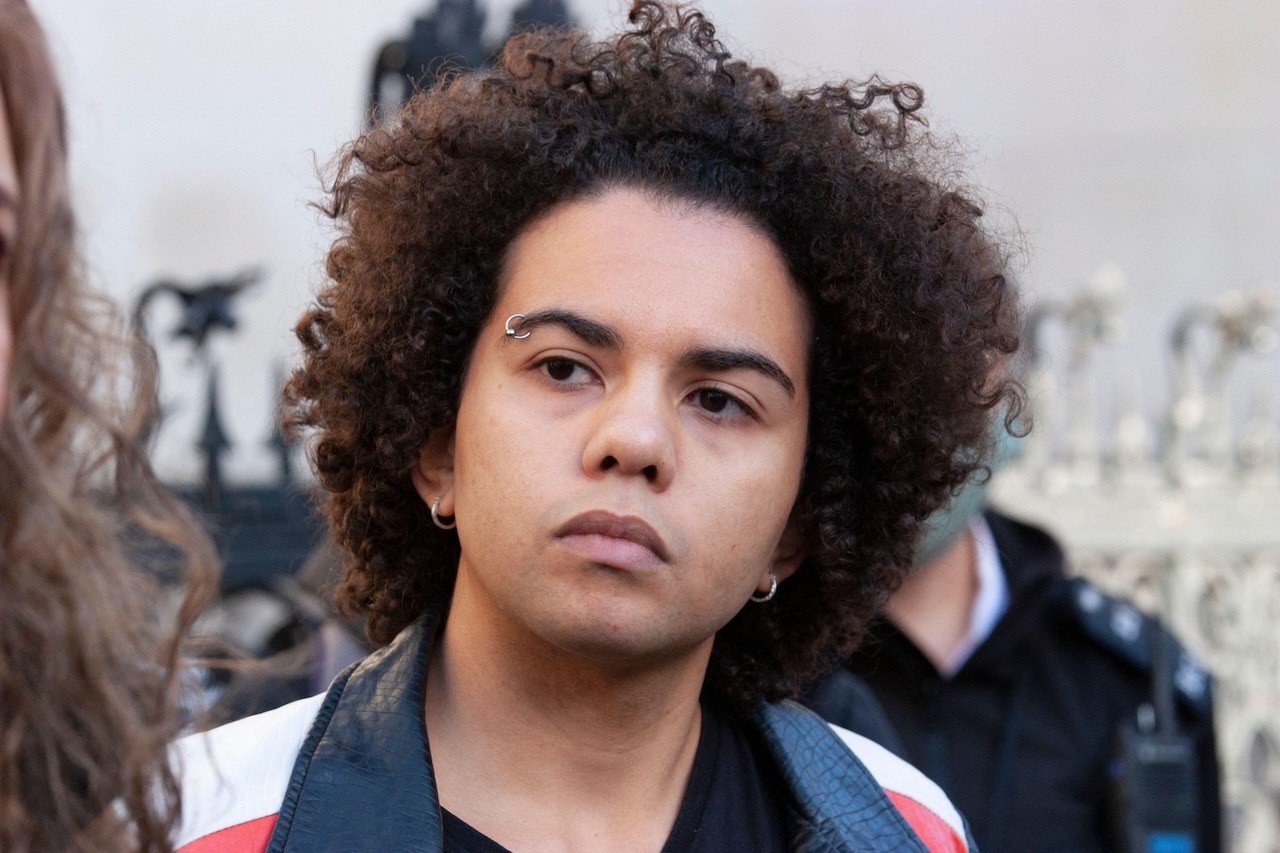 Keira Bell outside the Royal Courts of Justice after taking legal action against Tavistock and Portman NHS Trust, December 2020 (Chris Batson / Alamy Live News)
The anti-Pathways side are hopeful of securing a meet between the Health Secretary and Keira Bell too. The high-profile de-transitioner, who says she was prescribed puberty blockers aged 16 after four appointments, is joining with other claimants to bring a High Court action against the MHRA (Medicines and Healthcare products Regulatory Agency) and HRA (Health Research Authority), in a bid to stop the trial going ahead.
When Bell visited Parliament earlier this month, she met with Tory leader Kemi Badenoch and shadow equalities secretary Claire Coutinho, both of whom have been clear in their opposition to the trial. Bell has not spoken directly with the Prime Minister or Health Secretary so far, though sources say Streeting has agreed in principle to meet her.
“The door is open. I think he should take it upon himself to meet someone like me,” Bell tells The House, “to get a full understanding of the situation.
“I was one of those adamant kids,” she adds, of her own experience receiving treatment. But being adamant, she says, “doesn’t really indicate that you’re going to be happy on them”. “If anything, it means you’re most ill at the time, I would say. So, once it’s taken off the table, that’s going to prevent kids from even desiring it.”
Many disagree with that assessment, of course.
Cass wrote in her review that it was “heartbreaking to hear the struggles that young people and their families face trying to navigate their way to care”.
Under a new approach, she said, “I hope that the children and young people will benefit from access to a holistic, multi-faceted model of care, along with a research infrastructure that will provide them with more robust evidence-based information on which to make decisions that may have long-term implications”. And Cass believes the Pathways trial will help facilitate precisely this.
A Department of Health and Social Care spokesperson said: “Children’s safety must come first, and we are supporting the NHS in making research central to new children and young people’s gender services.
“The expert Cass review – which was accepted by the last government and this one – recommended both the data linkage study and the Pathways clinical trial as separately valuable studies. We will deliver both.
“The Pathways trial will help provide the evidence that is currently lacking. Its approval came only after extremely rigorous safety checks and with multiple safeguards in place to protect young people’s wellbeing – including clinical and parental approval.”
Both sides believe the alternative to their preferred path risks irreversible harm to vulnerable children. Faced with this most challenging of problems, Streeting has chosen so far to follow Cass’ lead.
Whether this carefully calculated political gamble is indeed the safest bet, or a disaster with his name on it as gender-critical campaigners contend, will not be decided in WhatsApp groups or Commons corridors but by the trial and its consequences.
