A partial account: Steven Swinford reviews 'Sanctioned'
Sweden, May 2021: Then-Chelsea FC owner Roman Abramovich attends the UEFA Women's Champions League final against Barcelona | Image by: Alamy / Associated Press
3 min read
There is a hell of a story to tell about the forced sale of Chelsea football club and Roman Abramovich. I’m just not sure this is it
It is being billed as the book where Roman Abramovich finally breaks his silence. Well, it’s true in the literal sense – in the epilogue Abramovich tells the author that “the dogs bark but the caravan keeps moving” – but if you’re looking for revelations, this probably isn’t the place to find them.
What is clear, however, is that Abramovich and his allies have clearly been closely involved in this project. The book covers one of the most extraordinary periods for any club in modern football – the sanctioning of Abramovich and subsequent sale of Chelsea against the backdrop of the war between Russia and Ukraine.
However, it is told from a singular perspective – one in which Abramovich along with Chelsea’s new co-owner Todd Boehly and his consortium come out particularly well.
In this version of events, Abramovich is motivated to buy Chelsea simply because he fell helplessly in love with football. His decision to buy Chelsea in 2003 was an act of “emotion and impulse”, a love affair that lasted nearly 20 years.
It’s a nice narrative, but Abramovich’s purchase of Chelsea also gave him power, status and fame at a time when Vladimir Putin was attempting to open up relations with the West. It was not an act of benevolence.
Some of the detail... is fascinating
The decision to sanction Abramovich is, according to this book, motivated by politics and was part of a bid by an ailing Tory government to win a “public approval boost”.
But the sanctions themselves were the product of years of concerns about Abramovich and his links to Putin within the heart of government. His public profile as Chelsea’s owner was arguably one of the reasons why he was not sanctioned sooner.
The book makes much of Abramovich’s role in brokering peace talks between Russia and Ukraine, depicting it as an act of altruism from a man intent on peace.
But it is not clear how he could have been a peacemaker without a relationship with Putin, links that he had spent two decades attempting to play down. There is also a clear personal benefit in attempting to resolve the conflict for a man whose wealth, lifestyle and interests span the East and the West.
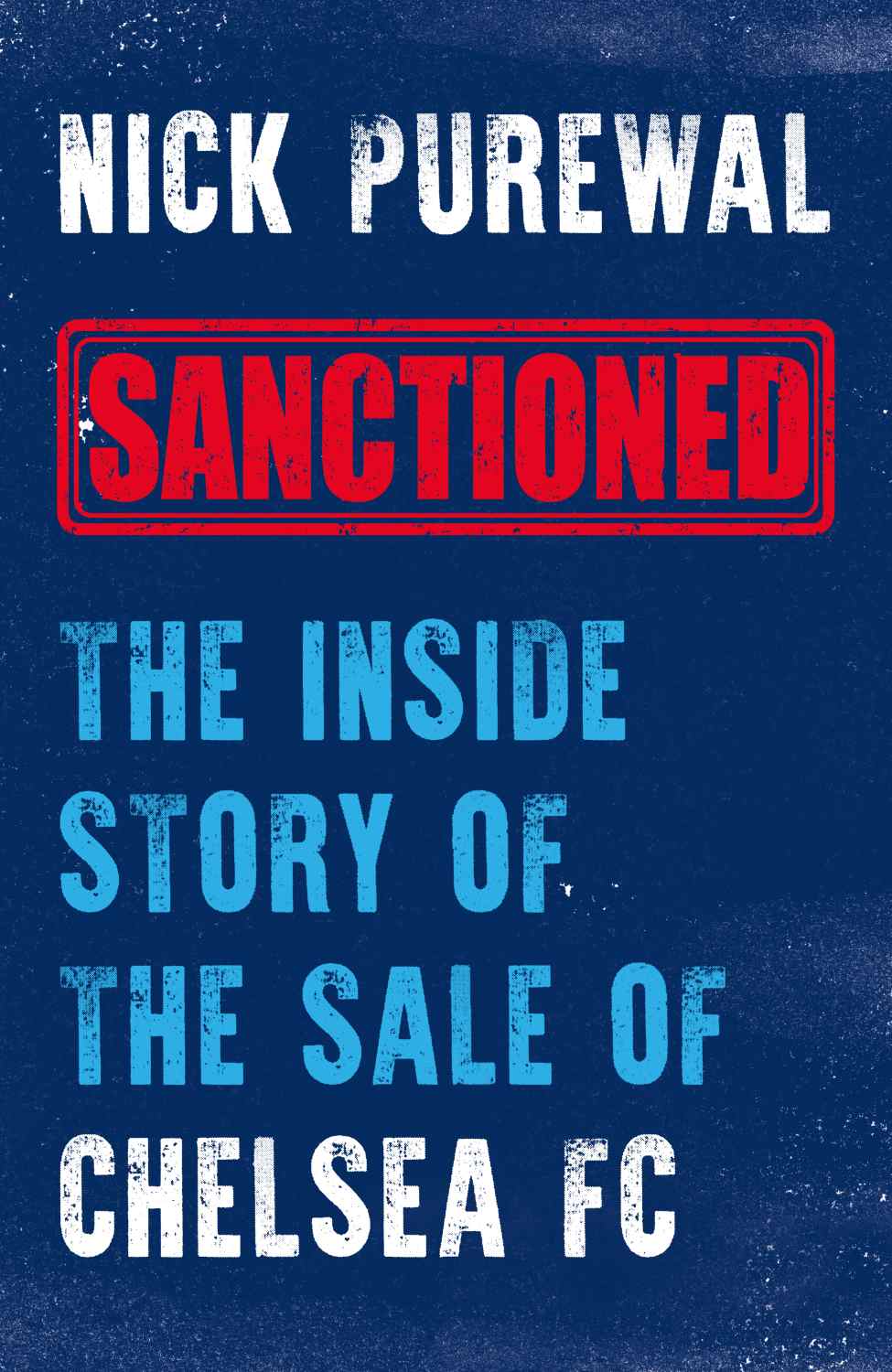 It colours the whole book. Marina Granovskaia, Chelsea’s director under Abramovich, is variously powerful, candid and forthright. Joe Ravitch, the banker who helped broker the deal, is a “gregarious, animated character with a knowing flash in his eye and a winning smile”. Boehly’s consortium combines “business acumen, financial muscle and laser-focus”.
There are sections of the book where the access pays off. The chapter in which Abramovich is poisoned, staggering through his apartment with his eyes burning with pain, is quite something. Some of the detail – the billionaire Jim Ratcliffe’s late attempt to buy Chelsea, turning up at his meeting with the chairman with an offer written on a piece of paper in his shirt pocket – is fascinating.
But the broader question is whether it is worth it. There is a hell of a story to tell about Chelsea and Abramovich. I’m just not sure this is it.
Steven Swinford is political editor of The Times and Chelsea fan
Sanctioned: The Inside Story of the Sale of Chelsea FC
By: Nick Purewal
Publisher: Biteback
