"A magnificent visual experience": Baroness Blackstone reviews 'Marie Antoinette Style'
V&A: Marie Antoinette Style | © Victoria and Albert Museum, London
4 min read
Startling, absurd and even touching, the V&A’s exhibition is opulent and imaginatively displayed – but it fails in its attempt to reframe Marie Antoinette as an early celebrity style icon
How many French queens are there whose name we can remember? Very few, I suspect, as there were no French equivalents to Elizabeth I or Victoria. How many have we even heard of? There is one exception: we have all heard of Marie Antoinette, the wife of Louis XVI, who was guillotined during the French Revolution along with key figures from the king’s court, many aristocrats, and Antoinette herself. Her grisly end, and her personal unpopularity that preceded it, may be the main reasons why we are aware of her.
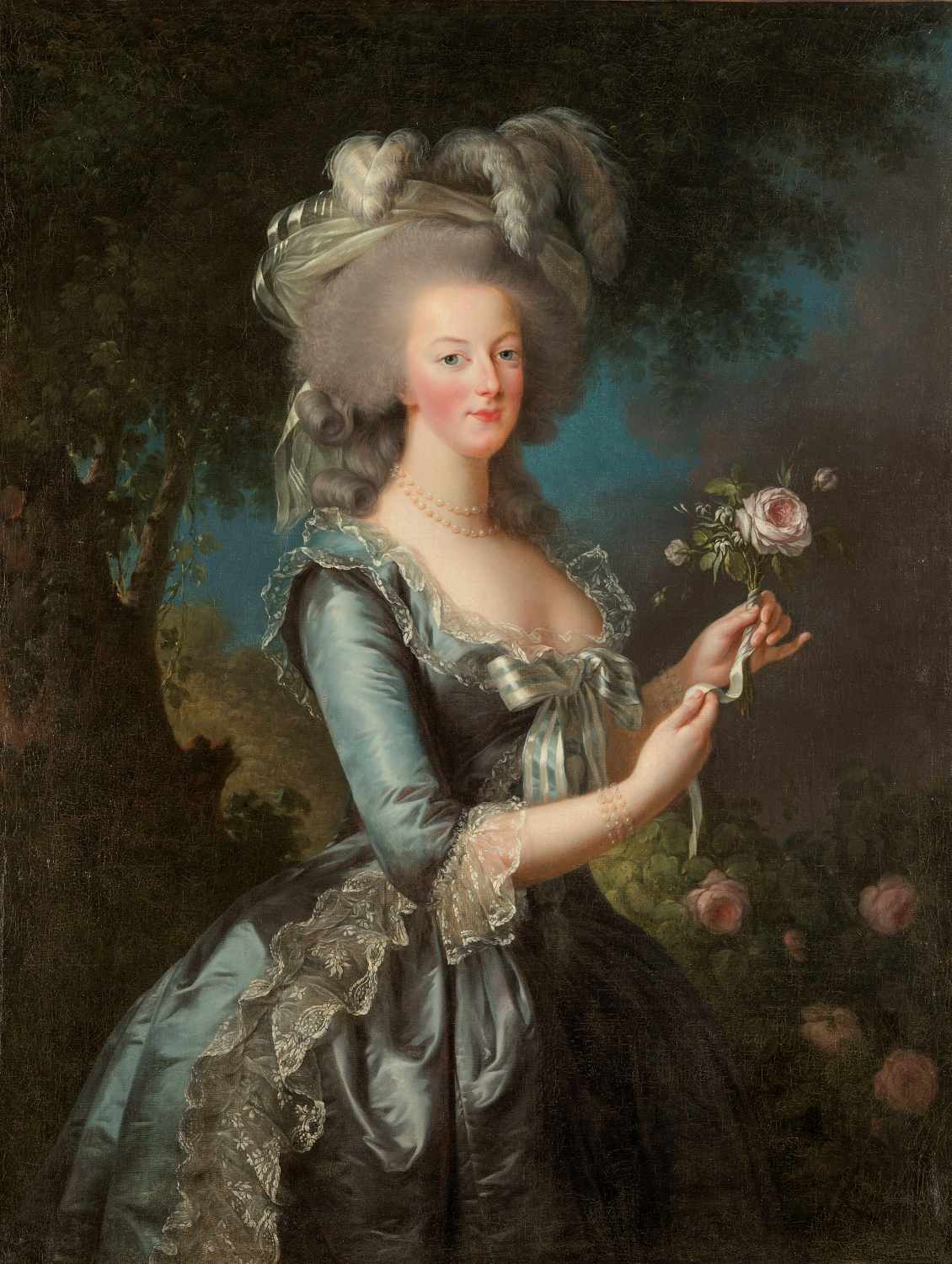 Antoinette à la rose, by Élisabeth-Louise Vigée Le Brun, 1783 | Image: © Château de Versailles, Dist. Grand Palais RMN / Christophe Fouin
Most of us are also aware of her fate as part of a dynastic marriage arranged by her mother, the Empress of Austria, with the King of France to cement good relations between the two countries. We sympathise with a 14-year-old girl sent across Europe in a coach all the way from Vienna to Paris to marry the Dauphin, a boy himself, whom she has never met. After a lavish wedding ceremony, her marriage was not consummated for some years but eventually she produced the desired heir and two other children who survived infancy.
The subject of the V&A exhibition is not the political world she occupied but rather fashion and how she shaped it through her dresses, shoes, jewellery, wigs, silverware and porcelain, and her gardens at the Petit Trianon, the small palace to which she escaped whenever she could, away from the stifling court at Versailles.
The exhibition the V&A has assembled is vast, including rarely seen personal items as well as many opulent dresses and wigs, her tiny shoes – she had four new pairs each week – and her priceless jewellery. As such, it is a magnificent visual experience.
Everything is imaginatively displayed, and there is a large and compelling final gallery of costumes in the style of Marie Antionette produced by 20th-century designers; they include Christian Dior, Vivienne Westwood and John Galliano.
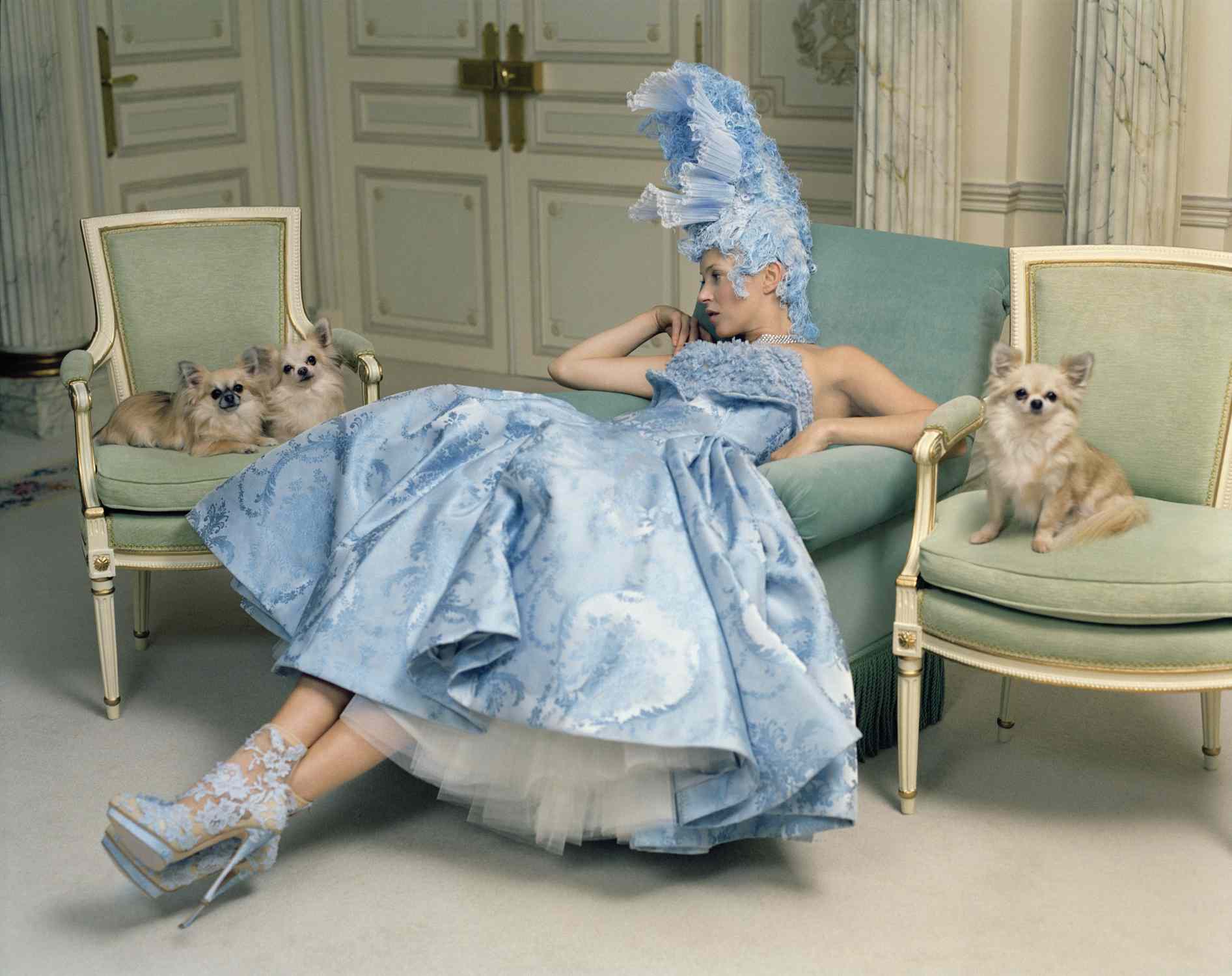 The Ritz, Paris 2012: Kate Moss, Fashion, Sarah Burton for Alexander McQueen, Van Cleef & Arpels, and Julian d’Ys | Image: © Tim Walker
Its purpose is to demonstrate her enduring influence on fashion. It is questionable whether most of these items or copies of them were widely worn – although some of them were used in the film Marie Antoinette directed by Sofia Coppola.
Although the exhibition is designed to reframe the young queen’s reputation by establishing her as a woman of style, who influenced taste in her era, I could not help sympathising with the popular view of her as unduly extravagant and out-of-touch with the terrible conditions suffered by many of her subjects.
The exhibition is vast including rarely seen personal items, as well as many opulent dresses and wigs, and her tiny shoes
Many visitors to the show will undoubtedly be impressed by the glitter and the opulence with which she surrounded herself.
Others may find the designs too overbearing and elaborate and wish for more simplicity. Dresses covered with complex embroidery and inlaid jewels, with skirts several feet wide over large panniers had a startling impact. For me, the aesthetic of such designs is unappealing.
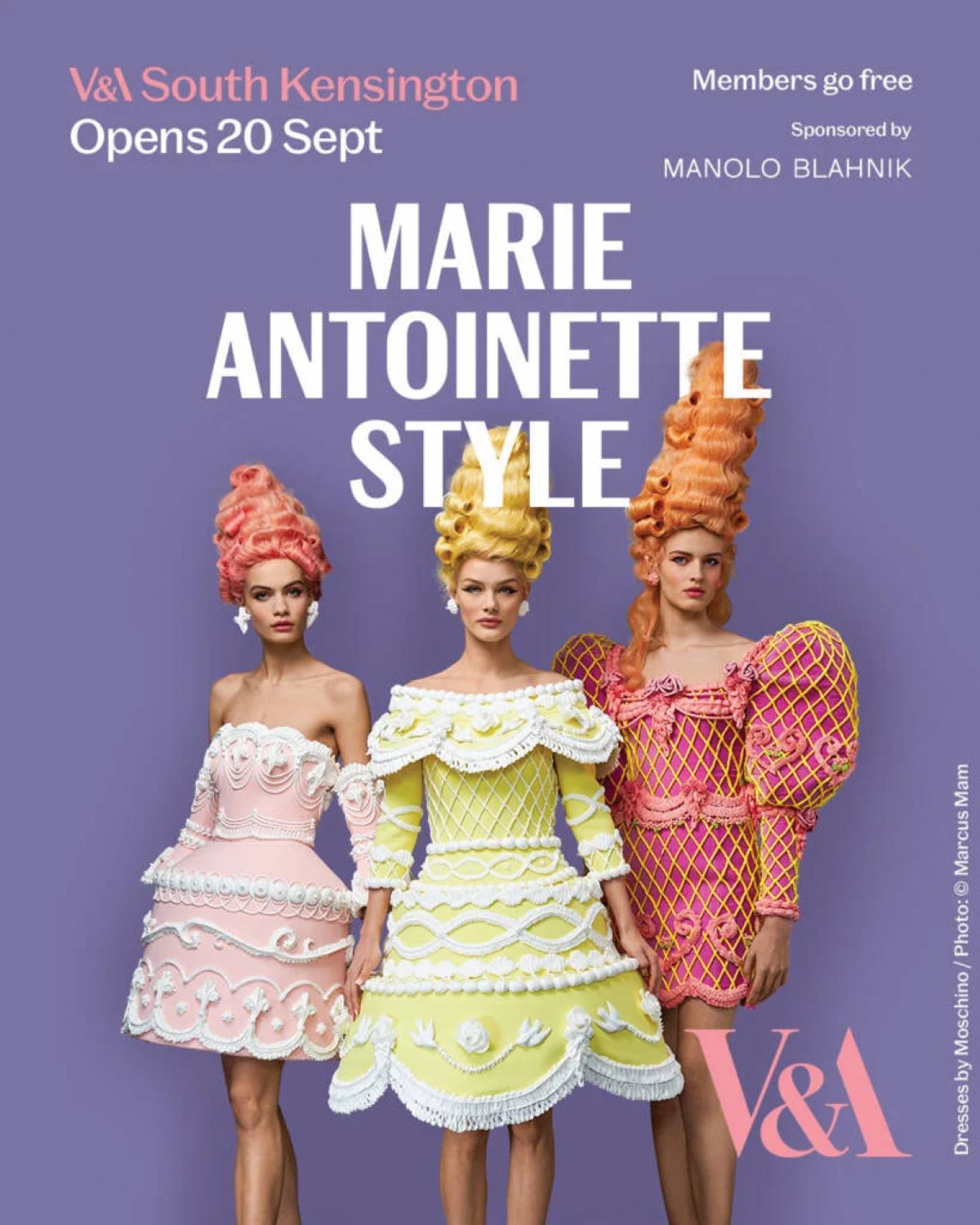 The huge wigs or ‘poufs’ as they were called – containing historical items such as ships to illustrate war victories, or small stuffed animals – would certainly have drawn attention to their wearer in spite of, or perhaps because of, their absurdity.
The fact that she was addicted to fashion, becoming an 18th-century style icon, did not save her from her gruesome death at the age of 37; indeed it may have contributed to it and the misogyny she suffered. The most touching part of the exhibition shows Marie Antoinette in her prison cell and the simple chemise she wore.
As a doomed victim of the French Revolution, she deserves our sympathy but it is hard to identify with her, as she is presented in this exhibition, as an early star of celebrity culture.
Baroness Blackstone is a Labour peer
Marie Antoinette Style
Curated by: Dr Sarah Grant, in collaboration with Manolo Blahnik
Venue: V&A, London, SW7 – until 22 March 2026
