"Superb": Alex Sobel reviews 'To Kill a Mockingbird'
Richard Coyle as Atticus Finch and Aaron Shosanya as Tom Robinson | Photo by: Johan Persson
4 min read
Aaron Sorkin's empathetic stage adaptation of Harper Lee's timeless story is a must-see for all admirers of the work of these two great American writers
A staple of GCSE English literature since the exams were first introduced nearly 40 years ago, both the book and the seminal 1962 film starring Gregory Peck have been seared into a generation of 15-year-old brains, including mine.
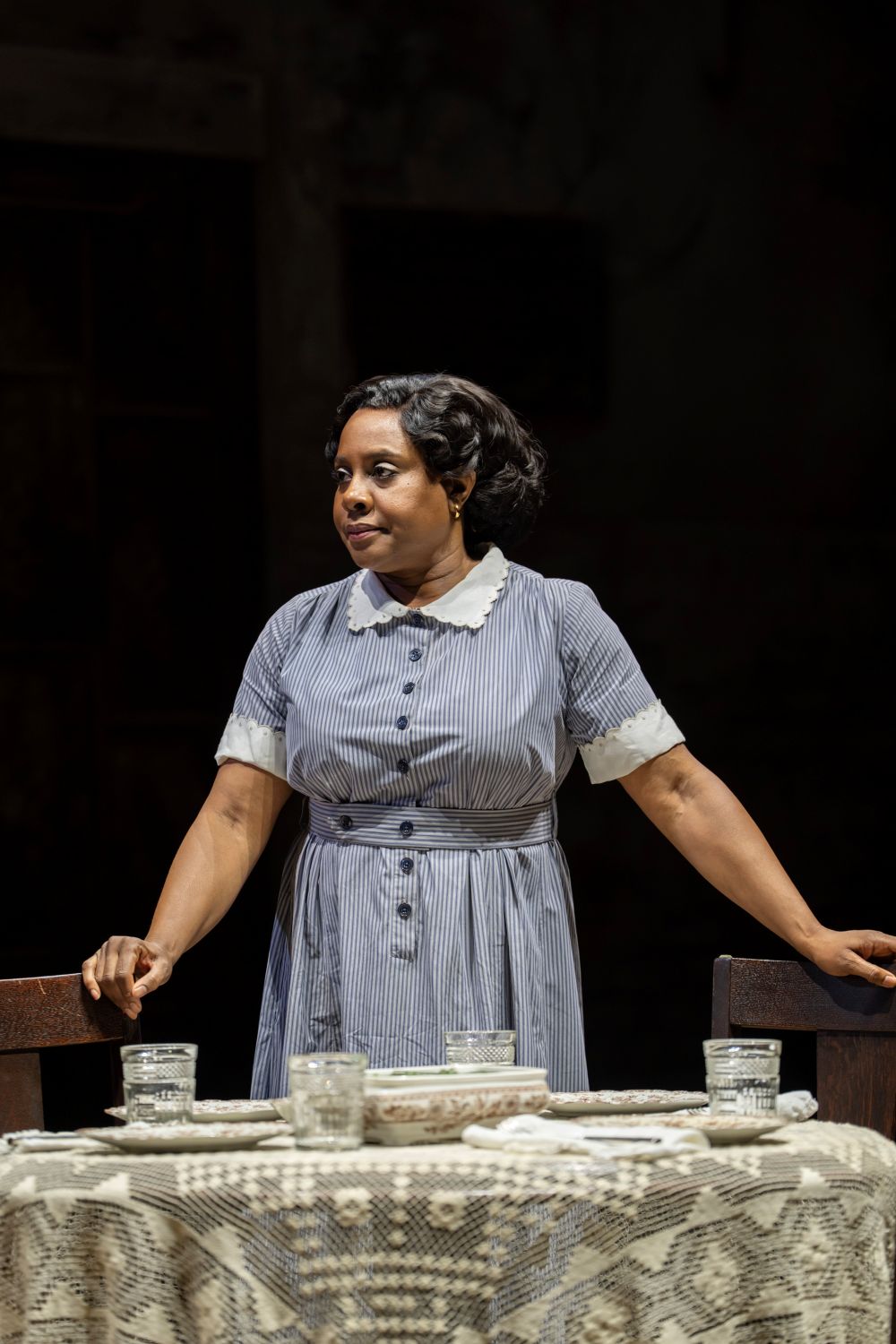 Calpurnia (Andrea Davy) | Photo by: Johan Persson
Central to the book’s plot is the wrongful accusation of rape made against Black cotton picker Tom Robinson and his subsequent trial. An intertwining sub-plot involves the reclusive Boo Radley who moves next door to the main characters, the Finch family.
To Kill a Mockingbird’s stark representation of racial injustice in the Deep South and the American legal system led me to read and watch many other cultural classics on the same theme, including Mississippi Burning, The Color Purple and In the Heat of the Night.
A few years later, the American TV phenomenon The West Wing explored many of the same themes as To Kill a Mockingbird. From race – such as the wrongful arrest of the president’s Latino Supreme Court nominee, Judge Roberto Mendoza – to my personal favourite episode, ‘Two Cathedrals’, where President Bartlet faces a challenging moral choice of whether to run again, much like lawyer Atticus Finch when deciding on whether to take Tom Robinson’s case.
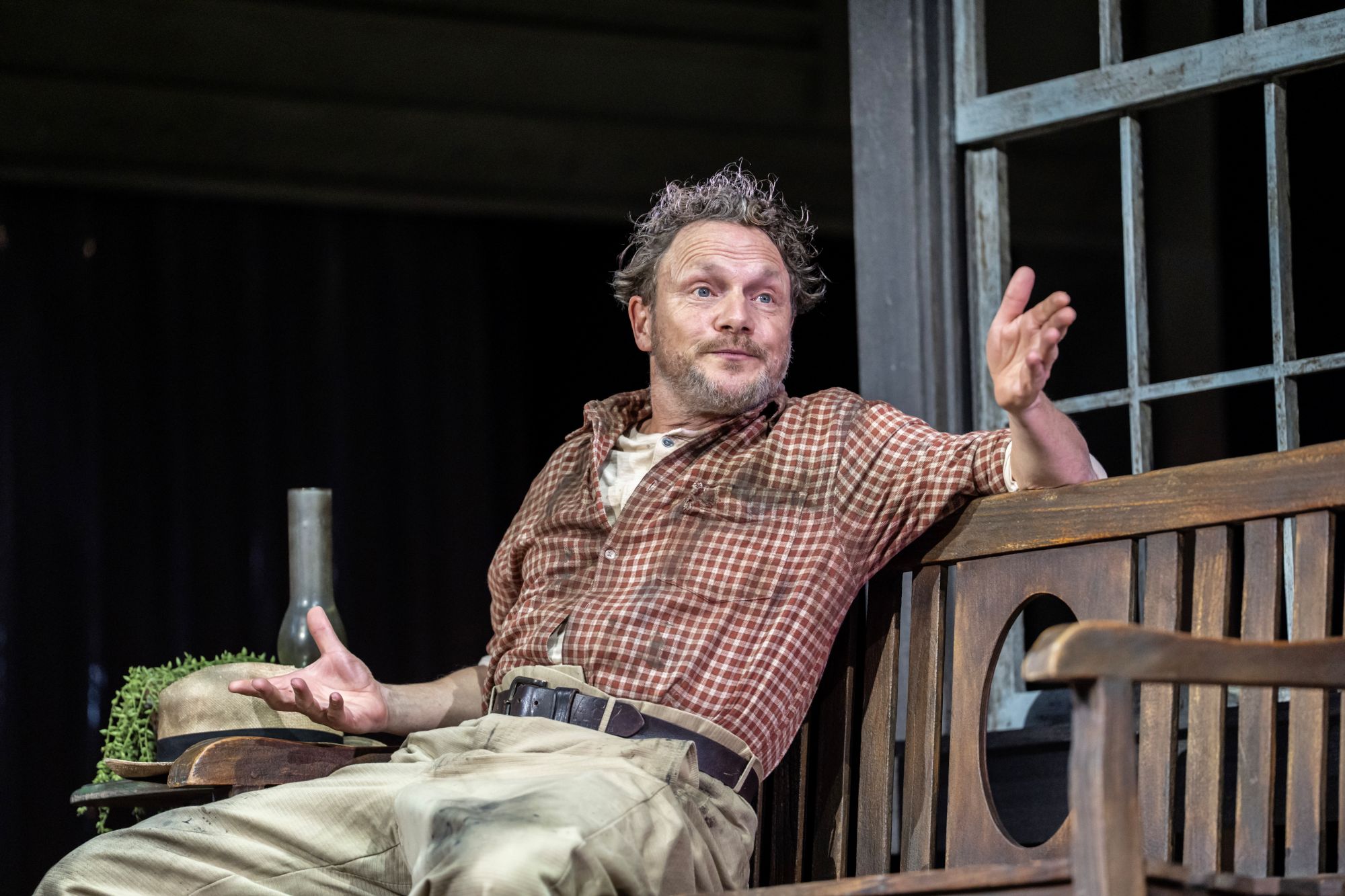 Bob Ewell (Oscar Pearce) | Photo by: Johan Persson
A scripted version of To Kill a Mockingbird written by The West Wing’s creator Aaron Sorkin is an obvious must-see for all admirers of these two great American works of fiction. The play has undoubtedly been ‘Sorkinised’ but more in the way the characters are portrayed than the dialogue. There is also a sense of the Shakespearean levity of Hamlet or The Tempest in some of the interplay between the child characters Jem Finch (Gabriel Scott) and his friend Dill (Dylan Malyn), which is reminiscent of Rosencrantz and Guildenstern.
Sorkin’s modern political subtext reflects the book’s timeless nature
The first difference between the book and this play is that all three children – Jem, his sister Scout (Anna Munden), and Dill – take a role in the narration, reaching out to the audience through the ‘fourth wall’, giving the story a new viewpoint compared to Scout’s singular perspective in the book.
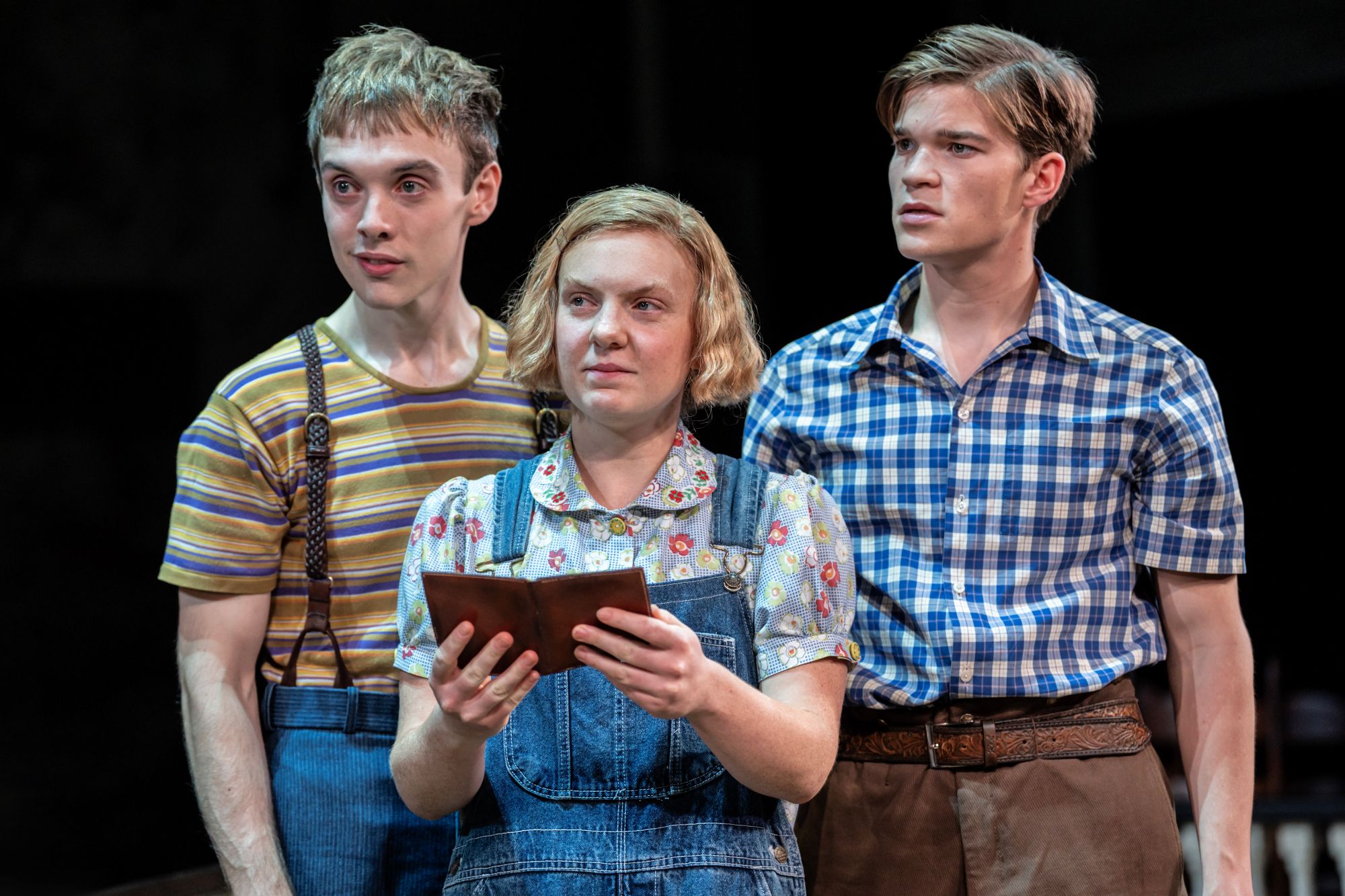 Dill Harris (Dylan Malyn), Scout Finch (Anna Munden) and Jem Finch (Gabriel Scott)
Photo by: Johan Persson
Sorkin injects some of his own Jewishness into the tale, albeit in a more subtle way than The West Wing. Accuser Bob Ewell (Oscar Pearce) is transformed into not just a racist Klan member but also an antisemite. Ewell’s statement to Atticus Finch that “I detect something a little Hebraic in you” is reminiscent of the pilot scene of The West Wing where conservative lobbyist Mary Marsh accuses Josh Lyman of having a “New York sense of humour”.
The story arc will be familiar to everyone who has read the book or watched the film. In the first half of the play, prior to the start of the trial, there is considerable levity – but once the trial starts, that is almost completely subsumed by the tense atmosphere and the burning sense of injustice that flows from the treatment of Robinson (Aaron Shosanya).
Sorkin’s modern political subtext reflects the book’s timeless nature, with the Klan characters using the language of the ‘Great Replacement Theory’ as justification for their actions, and the townspeople perceiving the Finch family as “race traitors”.
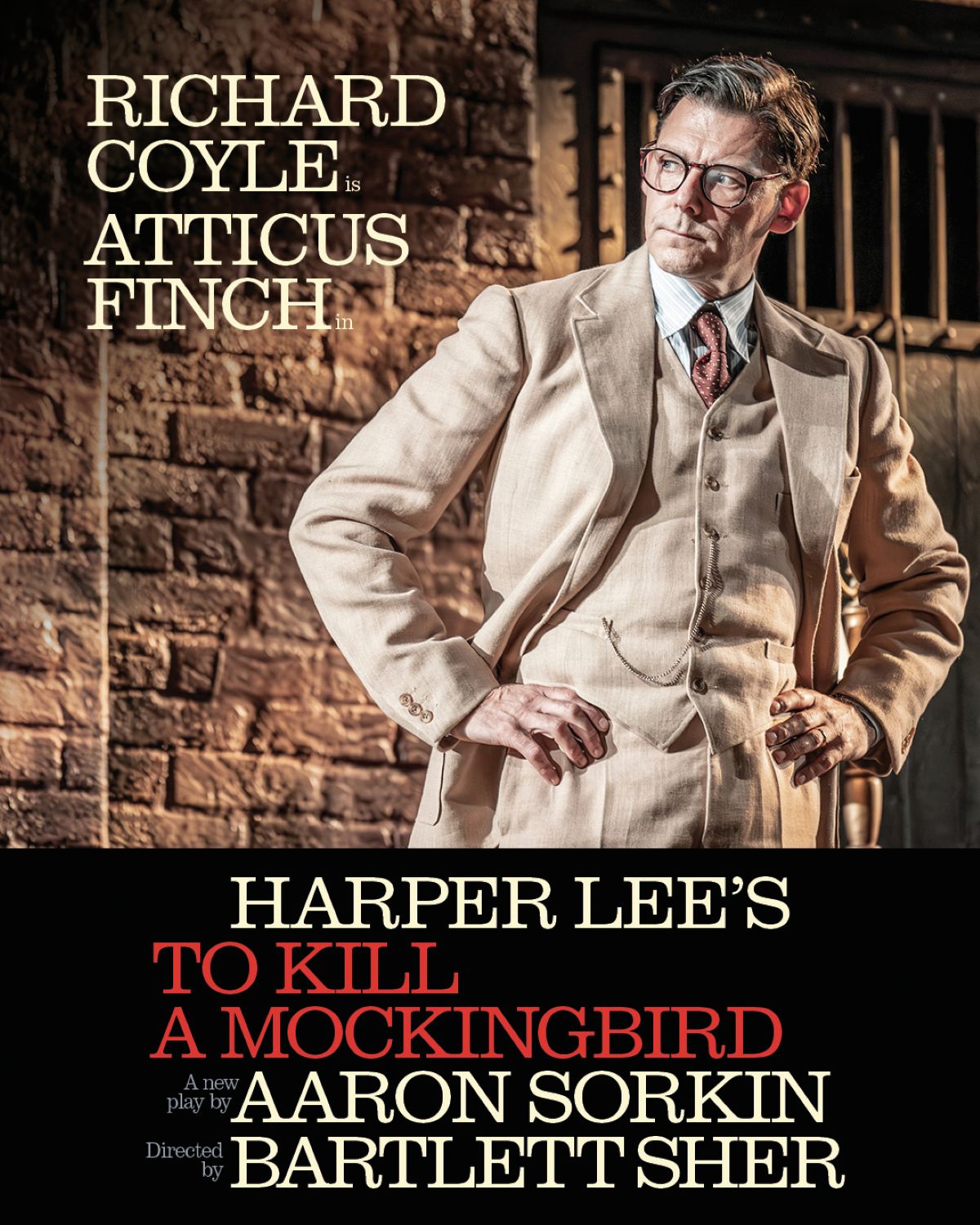 The portrayals are superb. All three actors playing the children excel, and the performances of some of the minor characters like Link Deas (Simon Hepworth) and Judge Taylor (Stephen Boxer) show incredible pathos. The character of the Finchs’ housekeeper Calpurnia (Andrea Davy) exposes some of Atticus’ own flaws, which are barely explored in either the book or the film. Richard Coyle’s performance as Atticus must be a career high (and bears no resemblance to the first time I experienced his acting in the BBC sitcom Coupling!)
Sorkin’s To Kill a Mockingbird isn’t a faithful retelling, but it still holds fast to all the story’s central tenets – and leaves the theatregoer with all the same feelings of empathy for Robinson and his family, anger at Bob Ewell, pity for his daughter Mayella Ewell and pride in the moral fortitude of the Finchs.
A must-see.
Alex Sobel is Labour MP for Leeds Central and Headingley
To Kill a Mockingbird
Adapted by/playwright: Aaron Sorkin
Director: Bartlett Sher
Venue: Wyndham’s Theatre, London WC2 – until 12 September
