'Unsatisfying': Barry Gardiner reviews 'Punch'
'Punch': David Shields plays Jacob Dunne | Photo © Marc Brenner
4 min read
A good evening out with some fine acting from the lead – but this play, with its potentially powerful story to tell about justice and redemption, fails to translate to the stage
The first line of cake is only just kicking in when David Shields’ Jacob bursts onto the stage to tell us that he’s “not proper buzzin’ yet”.
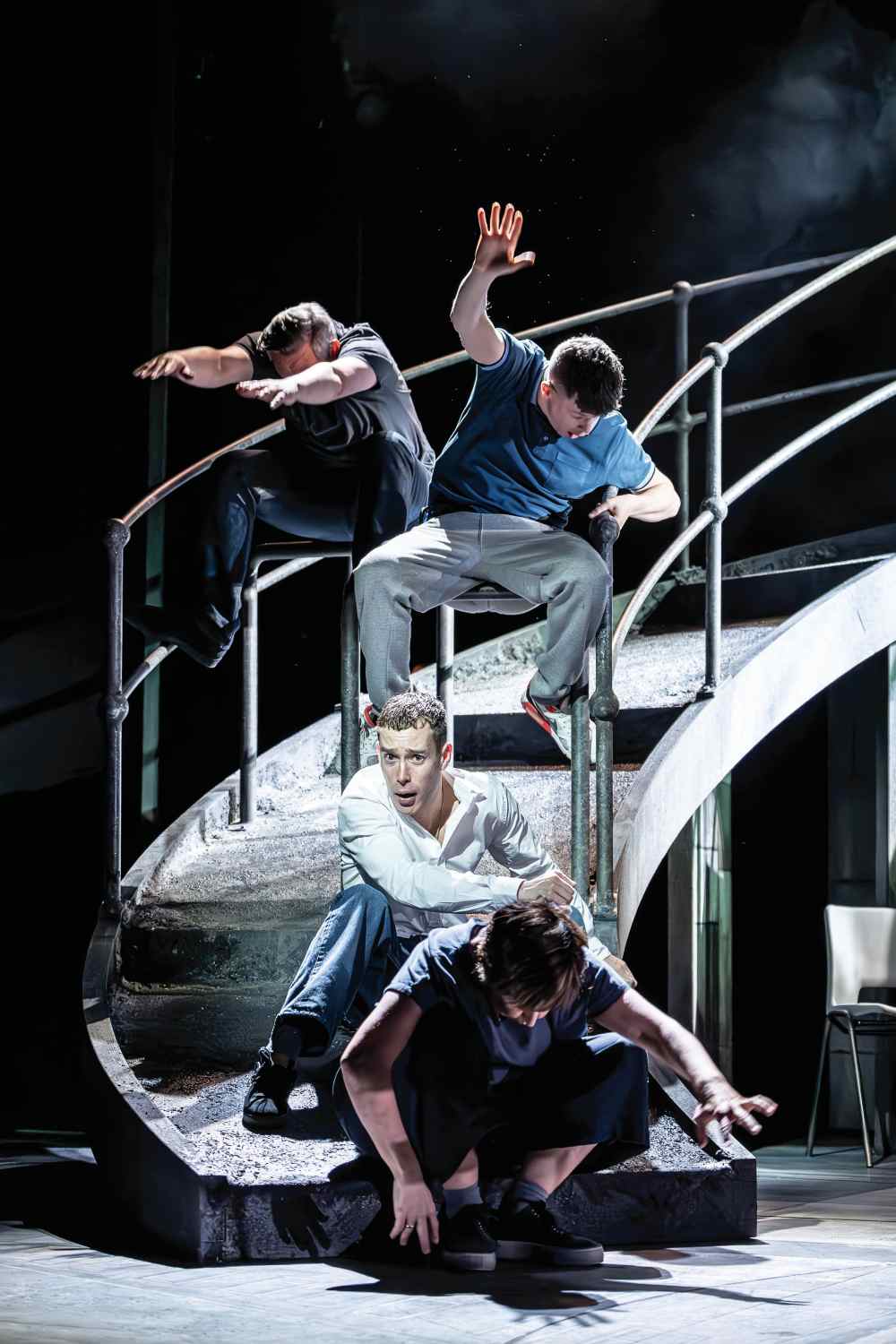 David Shields with other Punch cast members | Photo © Marc Brenner
If, like the elderly lady sitting next to me, cocaine is not your narcotic of choice, then the reference to “cake” may not quite conjure up the appropriate scene.
This is “The Meadows”: a notorious housing estate, whose bucolic name belies its brutalist reality, and where birthday cake with candles seem to be the exception rather than the rule. Jacob is 19 and has a side hustle in “selling weed ‘n shit”. But this afternoon the vodka and cocaine have made him “invincible”. His “heart is going now” and he can feel the bubbles inside as he marches into town.
Pub to pub and club to club. “Cheesy-arsed music and badass dancing” where drink is the new religion and “pulling bitches the name of the game”. Or not – Shalisha James-Davis’s Nicola is unwilling to be impressed by a man with a cracked phone screen. A metaphor which is just too obvious for comfort.
But Shields did not only convince as the pathetic braggadocio who rushes into a city centre fight to help his mates and throws one fatal punch. He convinces us with his transformation into the reflective young man ultimately redeemed, not by his 14 months in prison, but by an invitation from his victim’s mother to answer her questions as part of restorative justice.
Well-informed writing alone does not make a play
We see his carapace broken down by the ordinariness of the questions: “Why? Did he spill your drink? Was he rude to you?”. James’ mother wants to know. She needs a reason. But there is none. Her son was simply in the wrong place at the wrong time. Shields inhabits Jacob’s discomfort: his inability to look at her when answering her questions; his quaking right arm, as he tries to come to terms with who he is and what he’s done.
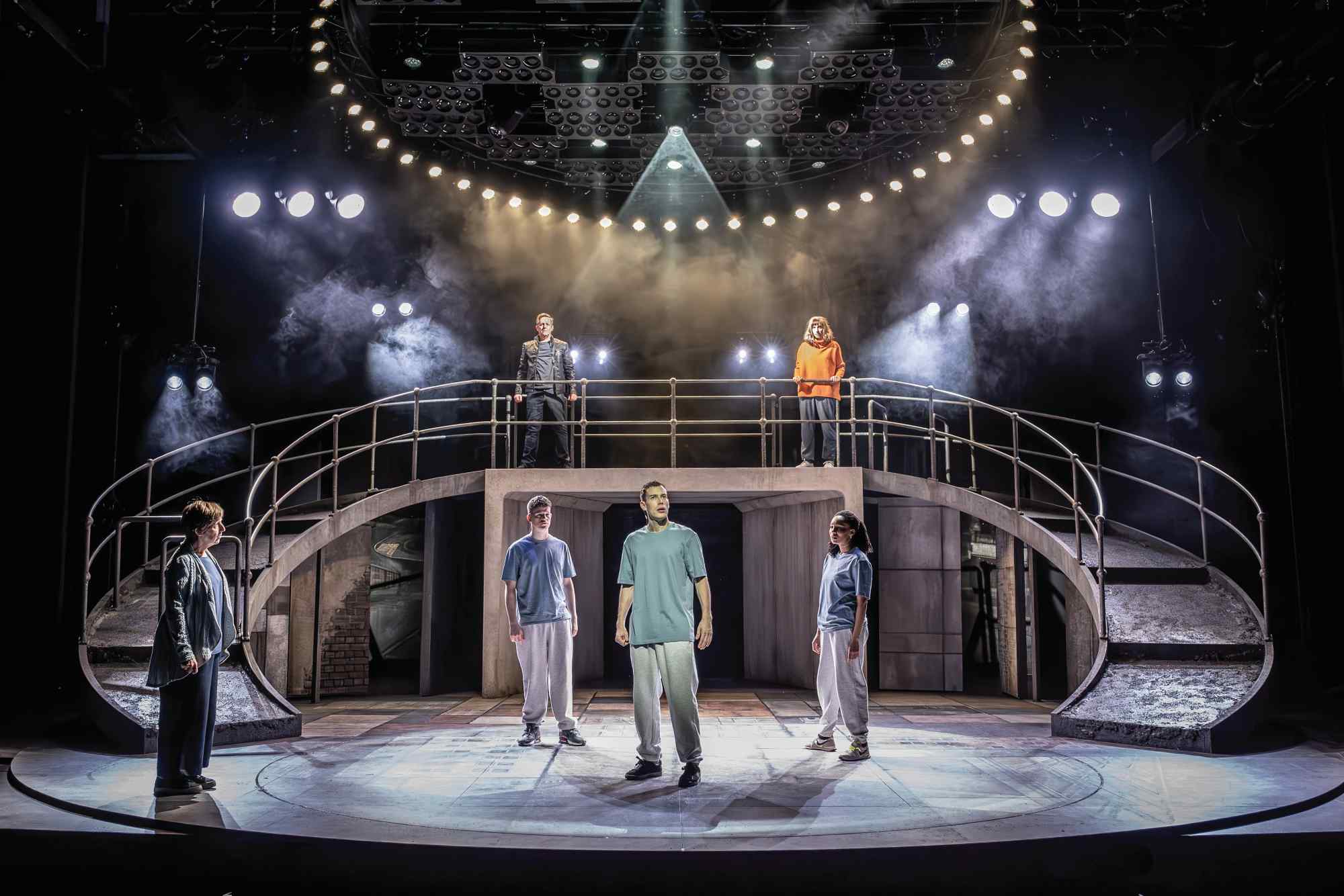 A convincing actor: David Shields as Jacob (centre) with the cast of 'Punch
Photo © Marc Brenner
Apart from Shields, the rest of the cast play multiple roles requiring some swift costume changes and a measure of generosity from the audience as Nicola becomes Teacher becomes Clare, and Tony Hirst – who gives a clear account as James’ father, reluctant to engage and ultimately unable to forgive – has to don a leather jacket to become Derek, or is it Tony? Or is it Raf’s dad?
Ultimately it doesn’t matter that much because the point of the play is clear: restorative justice works. It is a good point and it is well made. Better made than any seminar or briefing paper from the MoJ. But, just as the play asks the question, ‘What is the purpose of sending people to prison?’ So, too, we must ask: what is the purpose of drama?
 Fine acting alone does not make a play. Well-informed writing alone does not make a play. An imaginative set design does not make a play. (And nobody would make the mistake of accusing the set designer of Punch of over-extending their imagination.) Ultimately a play has to embrace you. Pull you in. Make you feel what the character feels. It is about transfiguration.
Fifty years ago Mr Ellison, a French teacher who would definitely have known what ‘cake’ was, used to tell my class: it is the triumph of art to turn a moral defeat into a spiritual victory through an aesthetic success. For me, Punch did not.
Barry Gardiner is Labour MP for Brent West
Punch
Written by: James Graham
Directed by: Adam Penford
Venue: Apollo Theatre, London W1; until 29 November
