Labour and the Tories are reasserting themselves. Will it last?
4 min read
Not so long ago, the dominance of Britain’s two main political parties looked to be in trouble.
Following this year's local elections, Reform UK appeared to have replaced the Conservatives as the primary party of the British right, and the Greens were eating into Labour heartlands all over the country. Nationalist parties are in power in Wales and Scotland too.
Yet the latest Ipsos Political Monitor, covered by PoliticsHome, suggests the traditional ‘big two’ are making a comeback.
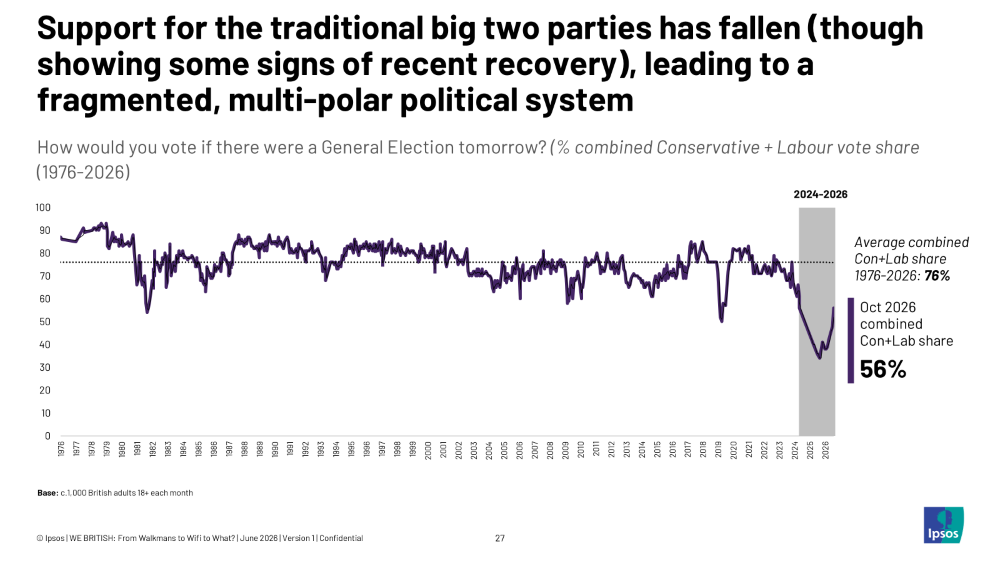
Labour now stands on 32 per cent, the Conservatives on 24 per cent and Reform UK on 20 per cent. Together, Labour and the Conservatives command 56 per cent of the vote, the highest number since Ipsos restarted voting intention polling after the 2024 election in June 2025.
Some voters appear to be drifting back towards familiar political homes
What is going on? Part of the explanation is simple. Labour is losing fewer voters to the Greens, while the Conservatives are losing fewer voters to Reform UK. Some voters appear to be drifting back towards familiar political homes.
Another factor may be the increased scrutiny insurgent parties face once voters begin viewing them as potential governing forces rather than vehicles for protest. Winning attention is one thing. Sustaining support under scrutiny is another.
The experiences of Reform and the Greens illustrate the point.
Only 19 per cent of Britons believe Reform UK is ready to form the next government, down from 29 per cent a year ago. Meanwhile, the Greens have fallen back into single digits for the first time since summer 2025, while 56 per cent of the public are dissatisfied with the job Zack Polanski is doing as leader. Reform and the Greens have been asked tough questions in recent months. The evidence suggests the public are none too impressed.
Yet it would be a mistake to conclude that the challenger-party moment has permanently passed.
the conditions for challenger parties to endure remain
For a start, a combined Labour – Conservative vote share of 56 per cent would still have looked extraordinarily weak for much of the 1990s, 2000s and 2010s, when the pair routinely attracted more than 70 per cent of voters between them. Britain's traditional parties are recovering. But their supremacy is not yet secured.
Furthermore, the conditions for challenger parties to endure remain.
Reform remains comfortably above the vote share it secured at the 2024 general election. More importantly, the issue that helped fuel its rise remains at the top of the political agenda. Immigration continues to be the number one issue facing the country in the minds of voters, and Reform retains a commanding lead as the party most trusted to handle it. The issue that fractured the right and created Reform's opportunity has not gone away.
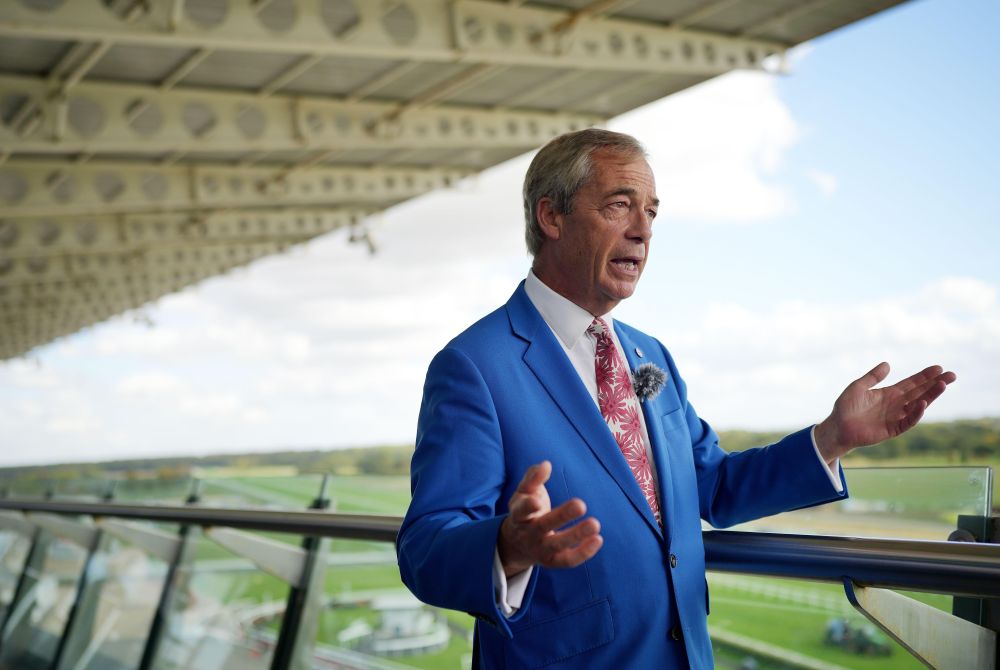 As long as immigration remains a major public concern, it would be unwise to write off Reform, argues Ipsos' Keiran Pedley (Alamy)
That brings us to the next political test for Labour: the Budget.
If this poll suggests the old parties are regaining ground, the Budget will show whether that recovery can endure. Labour enters it in a stronger political position than many expected just a few months ago, yet against a backdrop of deep economic pessimism. Four in five Britons still describe the economy as being in a poor state, while almost two-thirds expect tax rises.
Even so, Labour retains one crucial advantage: voters have not yet fully blamed the government for the country's economic difficulties. Britons are more likely to point to factors such as Brexit, global economic conditions and decisions taken by previous governments than they are to blame Andy Burnham and John Healey. The government may not have won confidence on the economy, but it still appears to enjoy something almost as valuable in politics: the benefit of the doubt.
Whether it still enjoys that benefit of the doubt once the Budget has landed remains to be seen. History shows that as time passes, the government of the day owns the economy – for good or bad.
Britain's two old parties have confounded predictions of their decline before. The latest Ipsos poll suggests they could be doing so again.
But with immigration still dominating political debate, economic pessimism still running high and a difficult Budget looming, neither can assume the ground they have regained will remain theirs for long.
In an era defined by political volatility, today's reassertion could yet prove as temporary as yesterday's revolt.
Keiran Pedley is director of politics at Ipsos
