“Profound and at times exasperating”: Lord Rowlands on Julian Barnes’ ‘Departure(s)’
May 2026: Julian Barnes in Barcelona | Image: David Zorrakino / Associated Press / Alamy
6 min read
His exceptional writing is always challenging – but is Julian Barnes’ last work a novel or a memoir? Who now cares? I don’t
In 1984 to my surprise I was invited to be a judge of the Booker Prize for Fiction, to be among a distinguished group of literati chaired by Professor Richard Cobb whose groundbreaking study of the French Revolution I had avidly read as a history undergraduate. Miraculously, we had agreed on a shortlist out of more than 120 entries.
Among them there was someone whom I had never read: Julian Barnes and his Flaubert’s Parrot, sometimes a bemusing but mesmerising read. It, in my mind, stood out as the exceptional entry only to find I was in a minority of one, the rest deeming that it wasn’t really a novel more a biography. I, also, found myself in a minority in my fallback choice JG Ballard’s Empire of the Sun, the panel preferring what I thought was the least inspiring, Anita Brookner’s Hotel du Lac.
But I became a Barnes devotee devouring his subsequent shortlisted novels – England, England, Arthur & George – until he finally won the prize with The Sense of an Ending. Fast forward: 2026. I eagerly purchase his latest, Departure(s), to find his declaration that this was to be his last.
One is driven to reach for a medical dictionary to try to understand
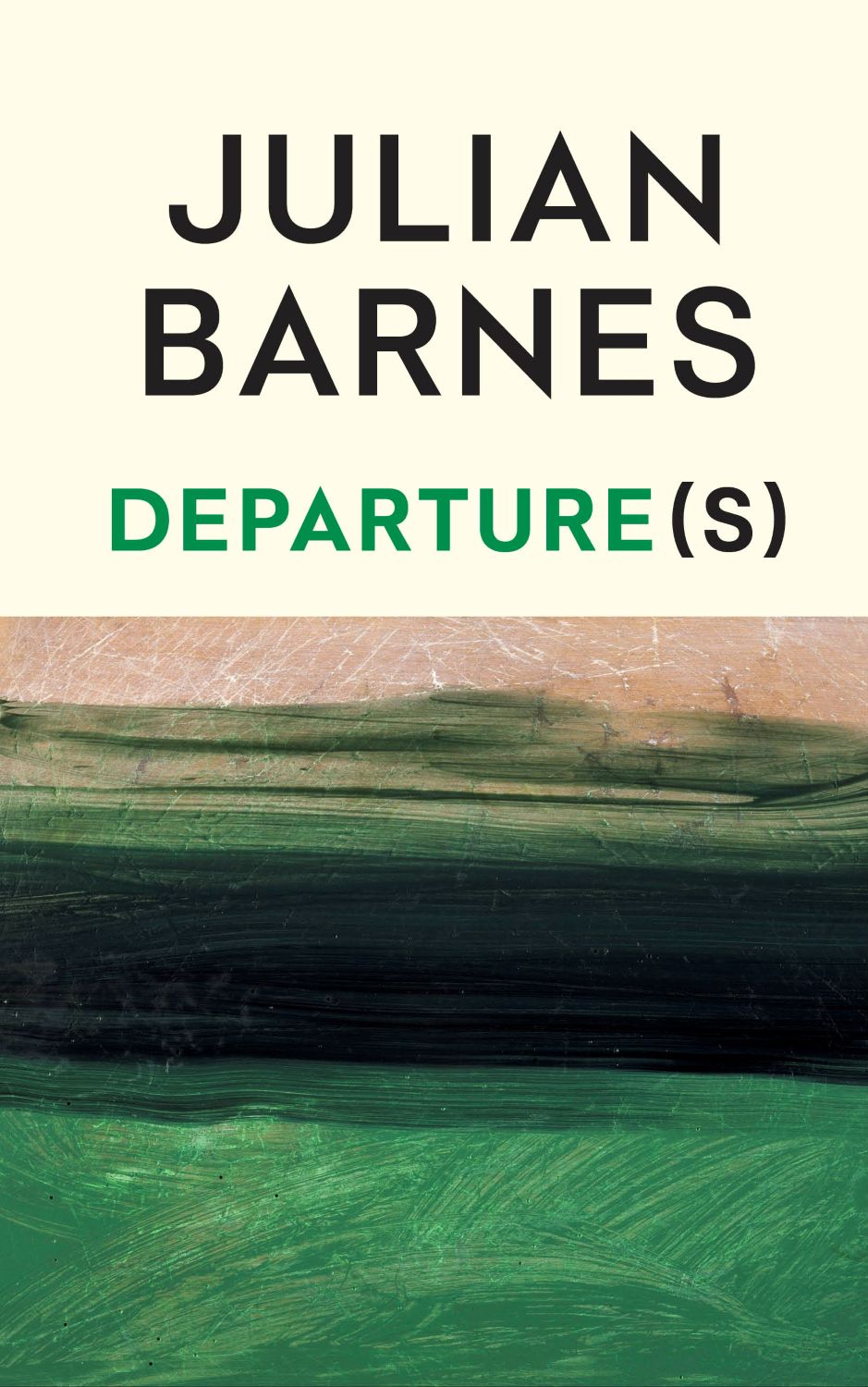
Rather hauntingly, I find that this last novel raises the same query as Flaubert's Parrot: is it a novel? Frankly, it reads like a memoir and there’s almost an admission to that in the ‘blurb’: “Departure (s) is a work of fiction but that doesn’t mean it’s not true.” However, who now cares? I don’t. It’s a book of five parts (Barnes doesn’t call them chapters).
The first is enigmatically called, “The Great I AM” – certainly not a reference to the Christian God but an acronym of ‘Involuntary Autobiographical Memory’. There follows what seems to be his ultimate challenge – to a lay reader like me – to comprehend his detailed discourse of neurological concepts of memory and mind. One is driven to reach for a medical dictionary to try to understand. (We are confronted with a mind-boggling thought. While we imagine that we tell our brains in which direction to go, our brains have more on us than we have on them. They know all that we know, whereas we only know some of what they do. We sleep but the brain doesn’t. At this point I gave up…)
At least part two, “The Beginning Of The Story”, and part four, “The End of the Story”, are an easier read – an account of a particularly special relationship with two friends, Stephen and Jean, who had met first as college students. Decades later there is a grand reunion partly engineered by Barnes himself and which leads to their marriage, at which Barnes is best man at their church wedding.
Sadly he subsequently becomes a confidant to both as they describe a deteriorating relationship and, ultimately, a breakdown of the marriage. As he explains Stephen’s tragedy is that “he can love but his love cannot be accepted” and “her tragedy is that she cannot love, but that what she does offer is accepted as love”.
What he has done is provoke me to think
Here Barnes is seeking to explore the nature of love, claiming that the great novelists understand love and most aspects of human behaviour better than the psychiatrists, scientists, philosophers, priests or lonely-heart columnists. As he reminds us, he has written about love many times in his novels and few of his characters have been granted a happy ending.
The chapter in between (part three, “Manageable”) will resonate with so many readers for Barnes chooses to describe in considerable detail his own personal experience of being diagnosed with a rare kind of blood cancer. He is told bluntly that isn’t curable but, with various drugs, should be “manageable”. It prompts reflections upon the prospect of dying, claiming that he had “a lifelong engagement with death, both theoretical and actual and have written about it many times”. But he “hadn’t received a death sentence… instead a life sentence: sentenced to live with my cancer until I died”.
The final part, “Going Nowhere”, is the author’s valedictory message to his readers of more than a generation. The title immediately acknowledges his atheism. He doesn’t belief in an afterlife. He identifies himself as a supporter of the charity Dignity in Dying, “The Church and the Law have enforced indignity for far too long.”
Barnes, then explains the significance of his book’s title Departure(s). He, inevitably, reflects on those who have been close to him, the tragic death of his wife and other friends and – perhaps intriguingly – the news of the imminent death of a long-standing friend, Martin Amis in 2023, though there is deafening silence about the violent rupture of that friendship when Amis had left their mutual agent, Barnes’ wife Pat Kavanagh.
Central to his conclusion are observations on the characteristics of ageing and how to approach the prospect of dying. Hopefully, he writes, “the head and heart are still working as the body declines”. He identifies a familiar set of symptoms which most fellow octogenarians like myself certainly share – an increasing fickle memory, and a much slower recognition of people you know and have met. But, more absorbingly, how does one address the thought of dying?
 Barnes recalls an interview when he was asked that – as he was now 76 and would never win the Nobel prize – was he raging against the dying of the light? (Though not acknowledged, it is of course a refrain from Dylan Thomas’ poem, Do not go gentle into that good night.) He admits that he did rage against his wife’s traumatic death, the dying of her light, but on further reflection he accepted that it was just the universe doing its stuff.
Barnes’ final paragraph is a personal address to his readers (like me) of over more than 40 years. He tells us that he has no “grand pronouncements, no famous last words”, though he is unable to resist telling us he had one good example: Lord Grimsthorpe’s urgent, dying message to his wife, “We are low on marmalade.”
Barnes justifiably claims that he has never been a didactic writer telling us what to think or how to live. in my case certainly not – but what he has done is provoke me to think. At times it has been an exasperating read, sometimes unnecessarily complicated and an overindulgence in literary references. Yet he has made me to think of the fundamentals in his writings: the nature of life, love, memory, mortality.
Lord Rowlands is a Labour peer
Departure(s)
By: Julian Barnes
Publisher: Jonathan Cape
