"Rip-roaring": Barry Gardiner reviews 'Alcina'
Mary Bevan as Morgana | Image courtesy of: The Royal Opera ©2026 Ian Hippolyte
5 min read
Imbued with the style of Coco Chanel and the wit of Alan Bennett, this dazzling RBO production of Handel’s masterpiece makes for a wonderfully enjoyable evening
Who knew that Hanoverian Britain could be quite so obsessed with sex? Oh yes! Sex in all its luxuriant lust and lasciviousness.
This is what Handel captures in Alcina: sex and how guilty those Hanoverians felt about it. Britain had just survived the repression of the Puritans under Oliver Cromwell, the exuberant release of the Restoration, the Glorious Revolution, the Act of Union under Queen Anne, and the reassertion of a dour Protestantism under George I.
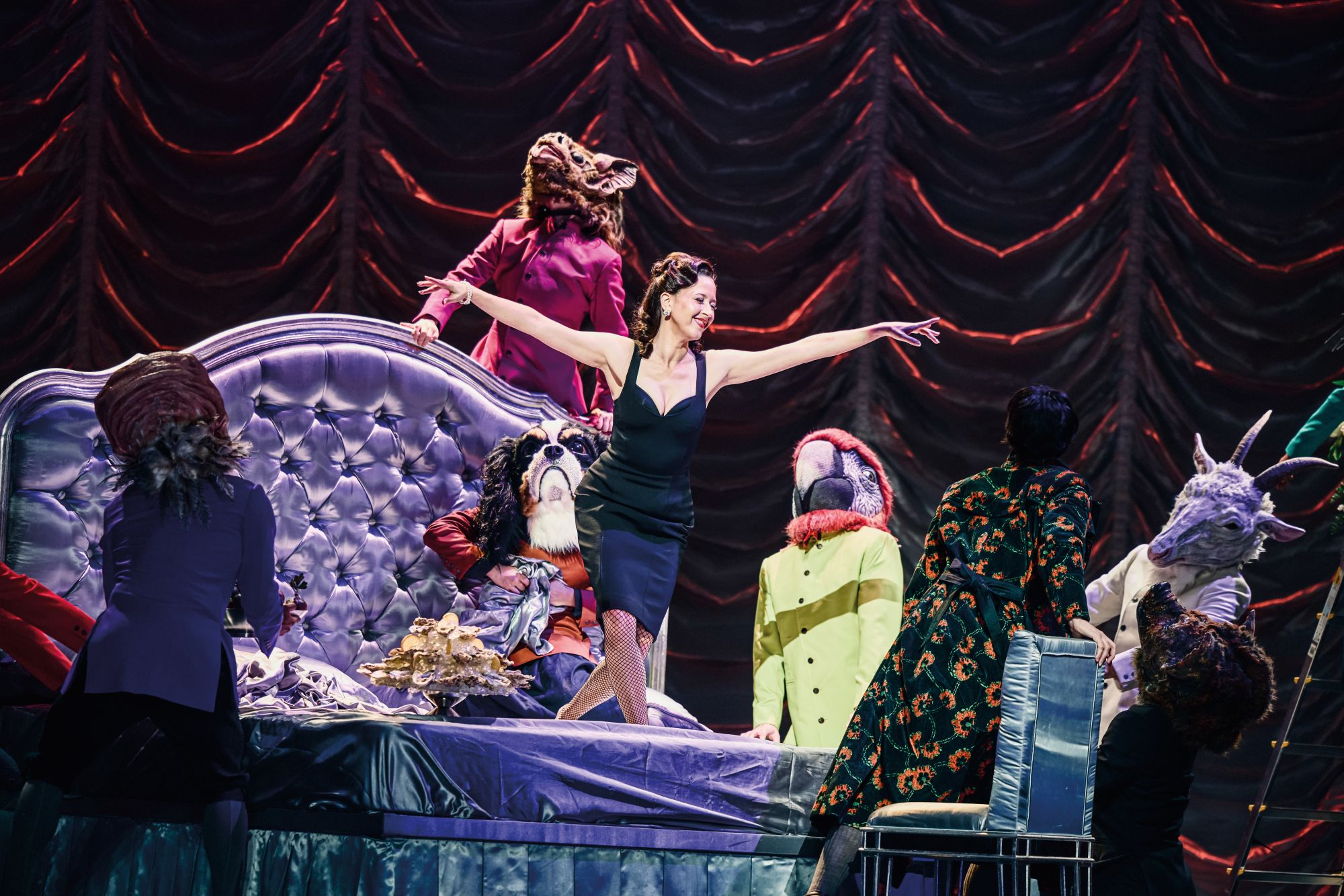 Lisette Oropesa as Alcina | Image courtesy of: The Royal Opera ©2026 Ian Hippolyte
All this is captured in this triumphant revival of the acclaimed 2022 Royal Opera production as it dissects the enchanting power of desire, the insidious cancer of jealousy and the redemptive force of faithful love. And it does it with the style of Coco Chanel (Alcina seduces Ruggiero in her little black dress and a pair of Louboutins) and the wit of Alan Bennett (the spurned and moody Oronte sulks in a potting shed replete with a voracious Venus flytrap). The serpentine twists of plot – of who is in love with whom, when and where –would be fruitless to adumbrate. So: what of the important stuff?
Prior to curtain up, the audience winced as a besuited front of house director came out to apologise that Lisette Oropesa (Alcina) had a cold but told us she was going to soldier on. He asked us to “bear with her”. He need not have bothered. Her voice needed no Strepsil to sweeten it. Dì, cor mio, quanto t’amai, her big Act One aria, established a voice of disarming tenderness as sweet as the sweetmeats she feeds to Ruggiero that are proffered by the former lovers she had turned into wild animals. Ah, mio cor! Schernito sei counterposes the rising pulse of the orchestral strings with Oropesa’s beautifully phrased realisation that Ruggiero’s love is waning, and her incredulous fury. A masterstroke of stagecraft here sees the room close in on her as the ruched curtains – now lit red – slowly descend revealing the blackness behind the inner wall and Oronte sneaking slowly off, stage right.
Costume makers and choreographers... must take their share of plaudits
Beth Taylor’s Bradamante had been much anticipated and did not disappoint. Her Act One È gelosia would make any love rival shudder to get on the wrong side of her. But it was the total command she displayed in the coloratura runs of Vorrei vendicarmi in Act Two that showed off her amazing vocal dexterity to its dazzling full. In many ways Alcina’s sister Morgana holds the opera together dramatically and few who heard Mary Bevan’s rip-roaring Uno, Due, Tre as she steals another da capo in Tornami a vagheggiar at the end to Act One would deny that she also stole the show. Her sinuous voice snakes its enchantment around the violin obbligato in Ama, sospira to persuade Alcina not to turn Ricciardo into one of the wild beasts; but it is the wit and pathos that she brings to wooing back Oronte in the sex scene in the potting shed – yes, really! – that allows one to marvel at the combination of assured vocal control, beauty of tone and acting ability.
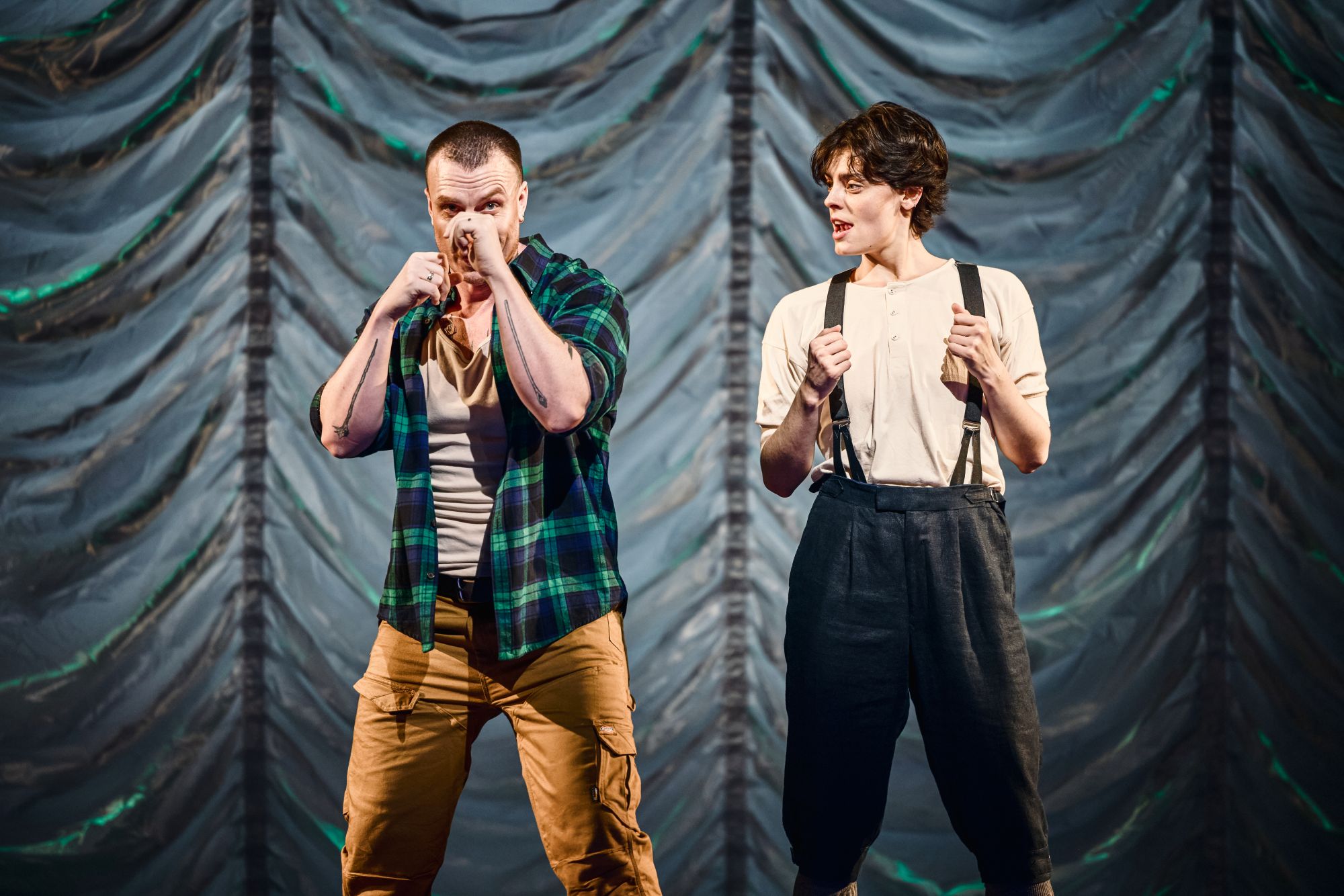 Ru Charlesworth as Oronte and Emily D’Angelo as Ruggiero
Image courtesy of: The Royal Opera ©2026 Ian Hippolyte
And while we are in the potting shed, we should give due praise to the cellos and the archlutes who kept the steady pulse racing as the stage pivoted to accommodate the couple’s modesty. Where Handel demands true ‘canto sgranato’, Ru Charlesworth as Oronte lacked precise articulation and his high ‘A’ in È un folle, è un vile affetto was simply missed. However, a beautiful rendition of Un momento di contento while emerging from the potting shed, wearing just one red sock and a most unalluring pair of boxer shorts, disposed this audience member to forgive the earlier lapse.
No forgiveness was ever needed for Emily D’Angelo’s Ruggiero. Her full deep mezzo in Mi lusinga il dolce affetto displayed a prodigious breath control and a beguiling stage presence where Ruggiero begins to awake from his enchantment and is drawn magnetically in turn to the competing images of Alcina and his spouse Bradamante. Whether I would have sat Ruggiero in a tree to sing one of Handel’s most famous arias Verdi prati matters not at all when it is sung as beautifully as D’Angelo did. It is the ultimate aria of impending loss and she imbued it with deep pathos.
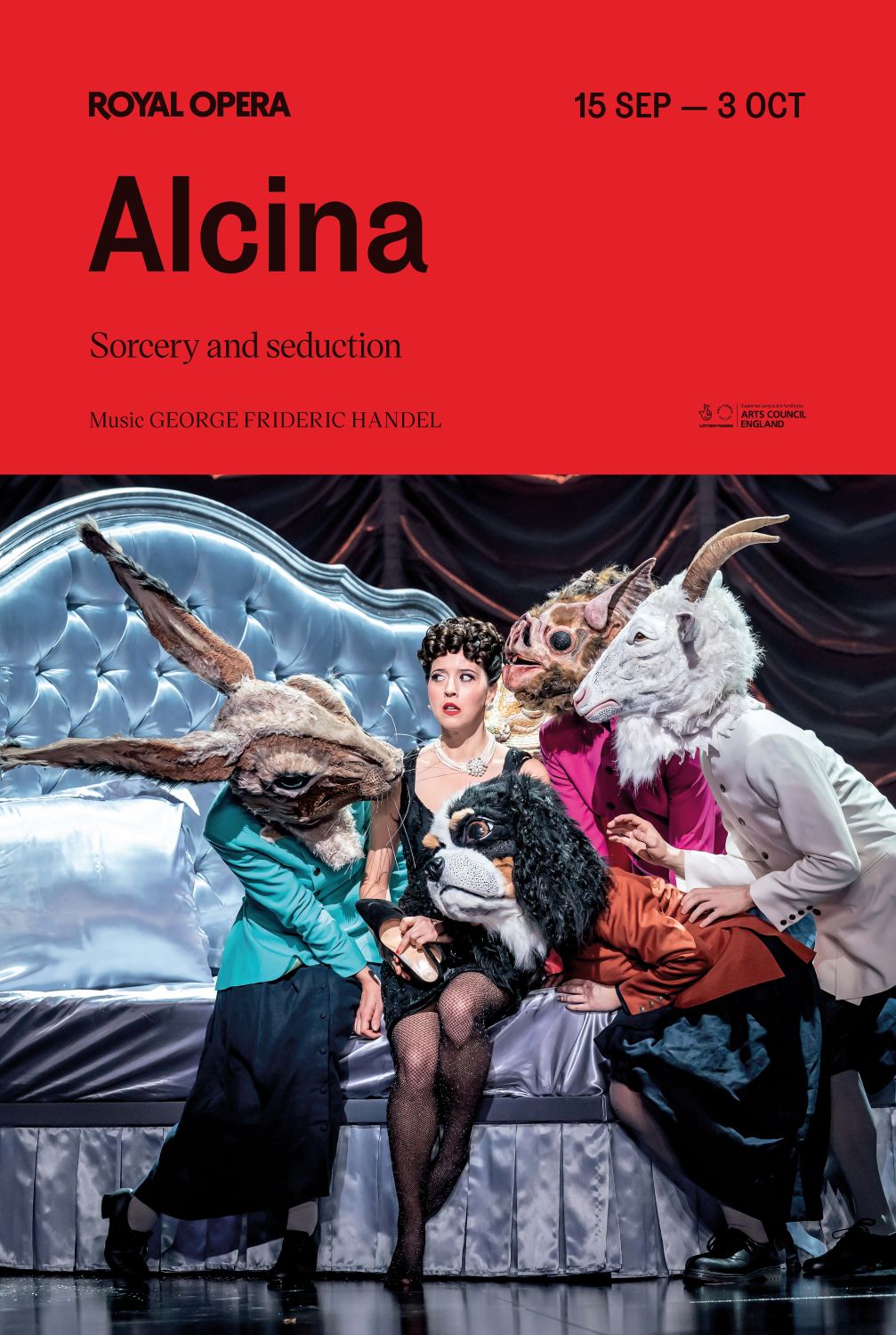 The singers were not the only stars. Costume makers and choreographers who rose to the challenge of cockerels and mandrills dancing with axes and garden hoes have to take their share of plaudits. Downsides? Some audience voices in the second interval were heard to complain that “they repeat too much and it makes it so long”. In truth the da capo musical structure A – B – A can seem strange to the modern ear where the singer is instructed to repeat the first A section. But Handel saw this as permission for the singer to improvise and ornament the original theme. Perhaps the tempi chosen by conductor David Bates sometimes did not always allow the singers enough space to elaborate their skills but then things would have taken even longer.
Ultimately, this was a wonderfully enjoyable evening where the Hanoverian puritanism of mercy, love, duty and courtesy are seen to vanquish luxury and sensuality. Or are they?
To find out, you will have to go and see for yourself. It is well worth it.
Barry Gardiner is Labour MP for Brent West
Alcina
Conducted by: David Bates
Directed by: Richard Jones
Venue: Royal Ballet & Opera – until Sunday 3 October
