"Powerful": Baroness Bennett reviews: 'Peasants: Makers of the Modern World'
Ghana: Cocoa farmer | Image by: Joerg Boethling / Alamy
4 min read
Telling the story of the world’s most overlooked majority, this important new book will enrage and horrify some of my fellow members of the Lords
Recovering, slowly, from all the defensive hubris and justifications for colonial empire, historical and political thinking has started to acknowledge the sophistication, the wisdom and capacities of indigenous cultures in the Global South.
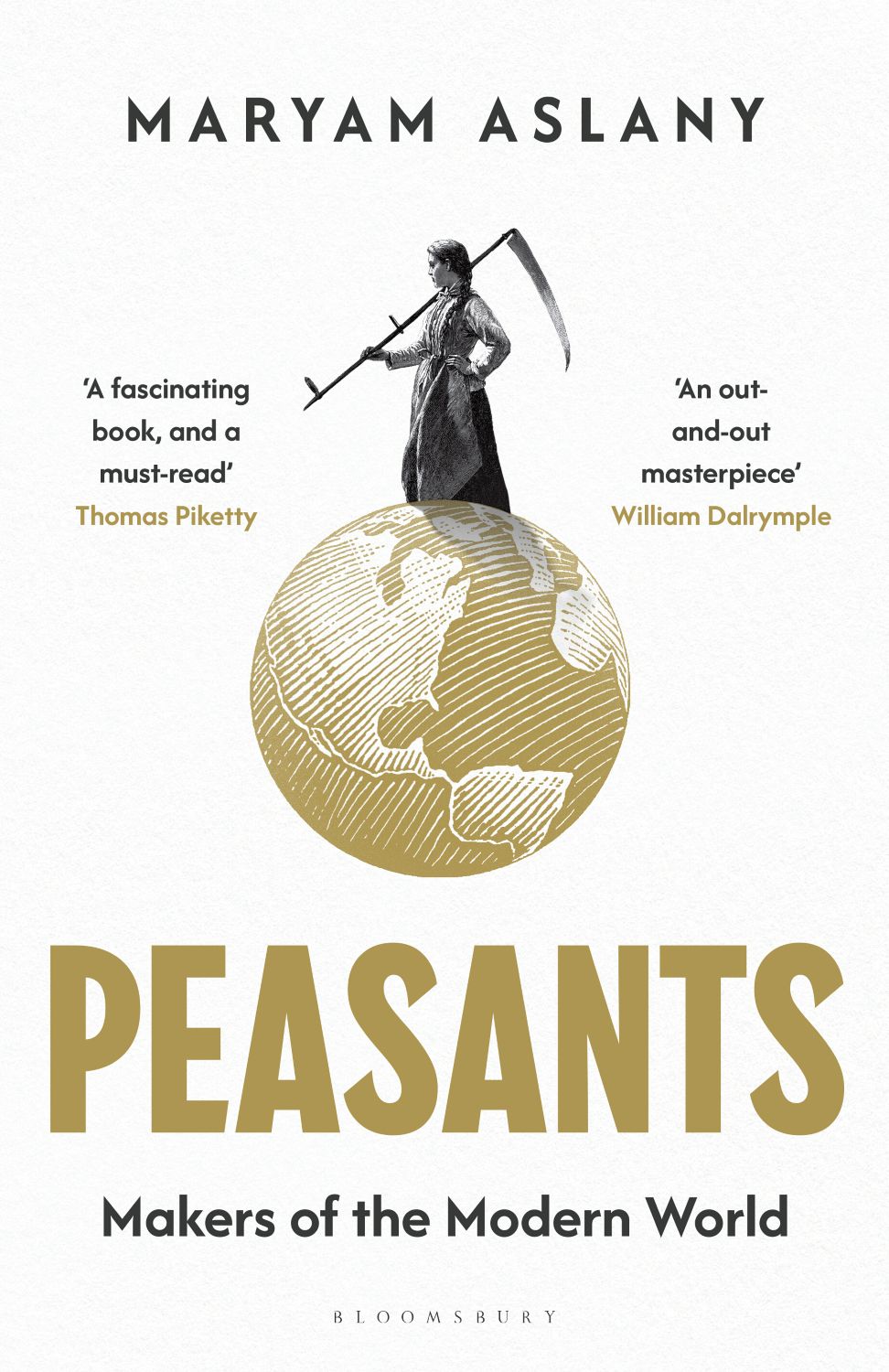
Maryam Aslany’s brilliant new book, Peasants: Makers of the Modern World, starts the task of doing the same for their compatriots across Eurasia; the cultures that for millennia tilled the soil, produced the food, and stood up to predatory elites and emperors. Their resistance was far stronger and more effective than has hitherto been acknowledged.
The first part of the book ranges across the Eurasian continent. With this refreshing foreground (not western Europe for once), she starts in China, one of the powerful agrarian empires that persisted – in some cases for millennia – with an effective formula of “high-intensity peasant agriculture, enabled by a vast irrigation system, administered by a dynamic and proactive state”.
But that historical account, as clearsighted and transformative of perspective as it is, is only the introduction to the book
Back to more familiar ground, she proceeds across Britain, France and Russia. Aslany concludes that the English Peasants’ Revolt of 1381 and the Peasant’s War in the Holy Roman Empire in the 1520s (and the many frequent, similar paroxysms) were not mindless flurries of violent anger but rather carefully calculated and sophisticated efforts. The peasants had, Aslany says, a moral and ecological vision for society that many aristocrats feared – for its mass support and also for its obvious morality and coherence.
But that historical account, as clearsighted and transformative of perspective as it is, is only the introduction to the book. The remainder, ranging through on-the-ground personal visits to fields and paddies, forests and artisanal factories, demonstrates how for sugarcane, rice, coca and cocoa, peasant agriculture is a key foundation on which late neoliberal capitalism is built.
That bar of chocolate you’re looking forward to later is not a product of giant industrial agriculture but of a peasant farmer like Kwame, whom Aslany meets outside the market town of Akim Oda, 125km from Accra. That cola drink produced by one of two giant multinational companies fuelling your afternoon is packed with sugar from cane that might have been cut by Dagubai, a mother whom Aslany meets at a makeshift workers’ camp beside a field in the Indian state of Maharashtra, a bonded labourer forced from her home with her family by the depletion of her land and destruction of her village economy.
Dagubai was cutting the cane of Hari, a more successful peasant farmer but one who still lives on the edge of economic disaster. As his son Deepak tells Aslany, “Farmers subsidise everyone else. We subsidise the sugar factories, and in turn the consumers.”
 For what the Venice and Oxford-based academic is presenting is a conception of a potential sustainable future – and a very different account of our current economic system where development sees humans overwhelmingly living in cities, fed by giant industrial agriculture trashing a depopulated countryside; the kind of vision promulgated by World Bank economists and Bill Gates Foundation funders.
Hers is a plea for an escape from our current ideological monoculture, that has seen nation states “become a vehicle for extracting natural resources as quickly as possible… to enhance balance sheets of various kinds” – GDP, multinational corporations and those of other states.
This book will enrage and horrify some of my fellow members of the House of Lords. That is a measure of its power and importance.
Baroness Bennett is a Green peer and author of 'Green Thinking: Unlearning Outdated Ideas in Science, Economics and Politics'
Peasants: Makers of the Modern World
By: Maryam Aslany
Publisher: Bloomsbury
