Credit where it’s due? Richard Foord reviews Johnny Mercer's 'No Way to Run a Country'
Staffordshire, 2023: Johnny Mercer lays a wreath at the National Memorial Arboretum | Image by: PA Images
4 min read
It was tempting to revel in Johnny Mercer’s political demise – but his book reveals schadenfreude is misplaced
“My fat face has just been beamed up onto a skyscraper in London garnished with a waving emoji and accompanied by a booming ‘So Long, Farewell’ from The Sound of Music. My humiliation is complete!” So writes former minister Johnny Mercer, about the moment of his election defeat at 1.45am on 5 July 2024.
Personally, I was fast asleep at the time. I was flat on my back after fighting my own six-week campaign, and was getting some rest before having to attend my own count, at a different sports hall in Devon. If I had been awake, I would have revelled in Johnny’s political demise. That would have been a mistake.
Reading his latest book about his experience of his time as an MP, I realise that rather than spending a couple of years disagreeing with Mercer in a knee-jerk way from the opposition benches of the Commons, I should instead have sought on occasion to give him credit.
The title of the book jumped out at me. Having observed Westminster from the inside, I too think that in many ways, it is no way to run a country. Yet for Mercer, the problem seems to be about personalities, rather than there being anything wrong with our systems of government, our relationship with Europe, or our place in the world.
He raised veterans’ issues in ways that his predecessors had not
He writes of devolution and proportional representation: “You could introduce all these things at once, but if the quality of the characters attracted to public service in elected politics did not change, neither would anything else.” To prove this thesis, he draws attention to the shortcomings of a few MPs on his own side.
My June 2022 by-election win in Tiverton and Honiton followed the revelation that the previous incumbent Neil Parish had watched pornography in the House of Commons Chamber. Mercer jokes that this “ridiculous” behaviour might have been compelled by needing “to do almost anything other than listen to yet another rambling speech from one of my colleagues about Brexit”.
He writes about how he thought he had got the candidate for leader of the Conservative Party, Liz Truss, to commit to maintaining a Cabinet-level veterans minister with a cross-government remit. He then tells us how, after securing the job of prime minister, Truss was oblivious to ever having made the commitment, and “nodded nervously, like a child, still giggling”.
 It is admirable that Mercer believed in “surrounding myself with good people, living a disciplined life, refusing to ever take the easy road”. While single-mindedly campaigning for veterans, his account makes plain that it was not enough to change entrenched policies on veterans’ issues. I was quick to attack him over the new Veterans ID not being a valid form of ID for voting at the local elections in 2024, without crediting him for the efforts that he was making behind the scenes.
Mercer was a successful single-issue campaigner, and while he sometimes fell short of his ambition for veterans, he raised veterans’ issues in ways that his predecessors had not, and that his successors will struggle to match.
If all political careers end in failure, then political humiliation may one day be complete for each of us who continue to serve as MPs. If we are fortunate, we will be able to point to an issue that we raised up the agenda and have progressed, in the way that Johnny Mercer has.
Richard Foord is Liberal Democrat MP for Honiton & Sidmouth
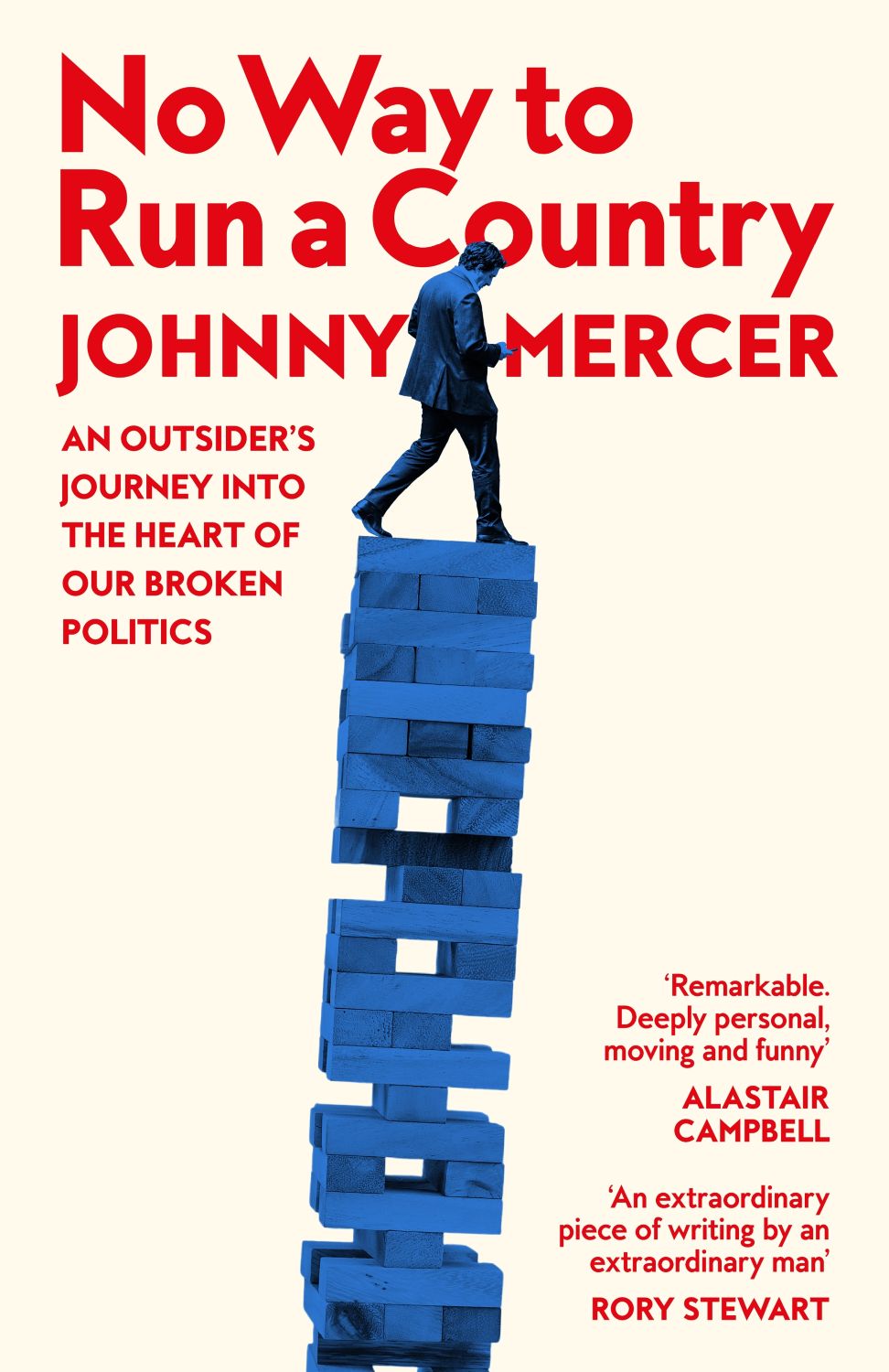
No Way to Run a Country: An Outsider’s Journey into the Heart of Our Broken Politics
By: Johnny Mercer
Publisher: Pan Macmillan
