"A number of startling mini-exhibitions, each one alone worth seeing": Lord Clancarty reviews 'Painting the French Riviera'
'Golfe Juan' by Raoul Dufy, 1927 | Image: collection of the McNay Art Museum
4 min read
An eclectic if slightly incoherent selection of art, the joy of a collection like this is the chance to discover paintings you have not seen before
One of the pleasures of such a large, somewhat sprawling exhibition is the discovery of paintings one has not seen before, this being a show drawn from numerous private collections and museums. Indeed, the curators have taken pains to highlight lesser-known artists such as Henri-Edmond Cross, whose luminous Les Iles d’Or (c.1891-92) graces the cover of the exhibition catalogue.
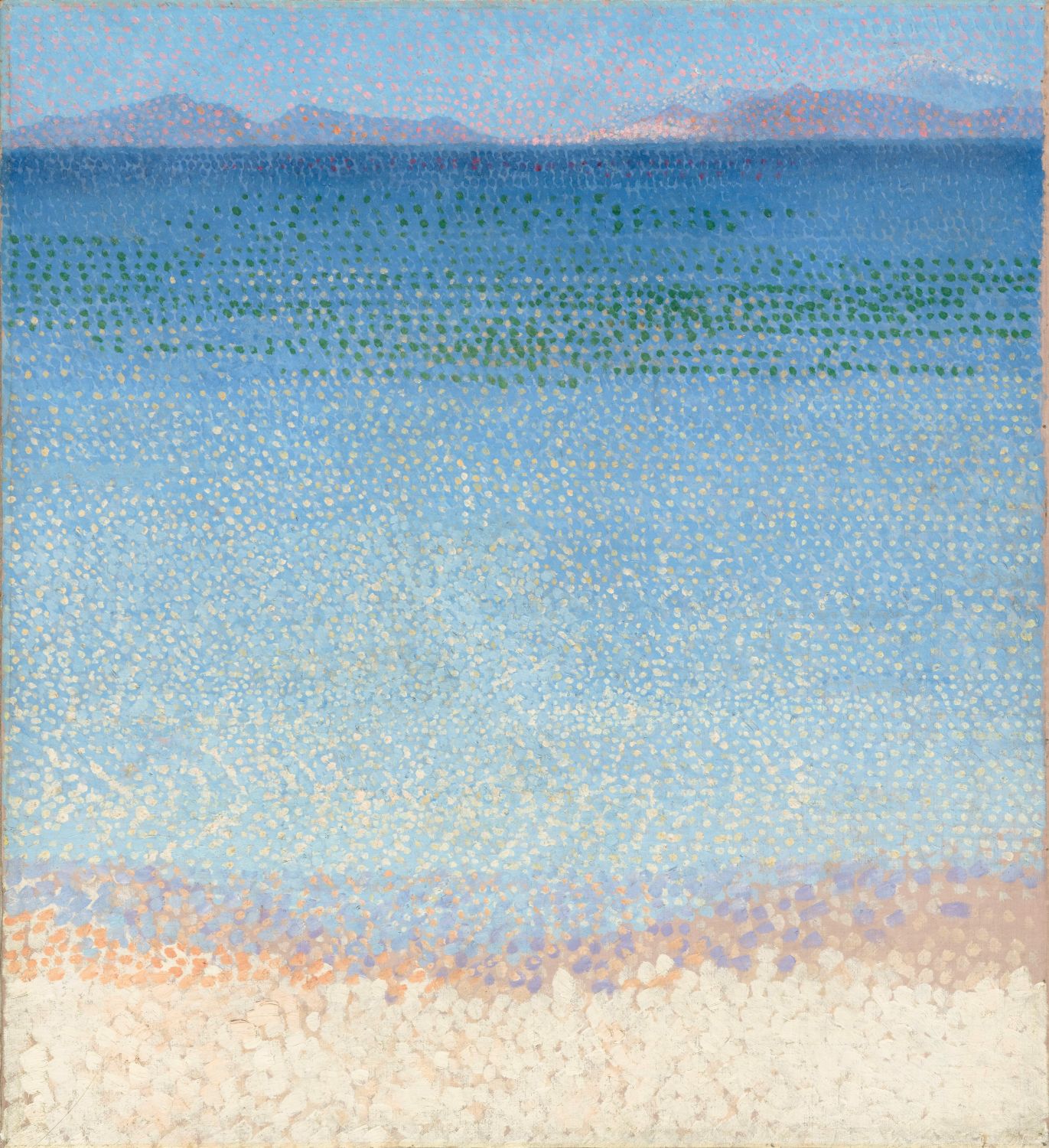 'Les Îles d’or' by Henri-Edmond Cross, c.1891-1892 | Image: Paris, Musée d’Orsay. Photo: © GrandPalaisRmn (musée d'Orsay) / Hervé Lewandowski
The exhibition is arranged broadly chronologically, beginning with Paul Cezanne and ending with a room of work by Yves Klein. The emphasis is on atmosphere and light and, perhaps inevitably, the first few rooms tell the conventional linear history of impressionism followed by neo-impressionism, post-impressionism and fauvism. Yet Vincent van Gogh – a major influence on ‘Les Fauves’ – who painted in a similar light but inland is left out, while the town of Collioure, outside the French Riviera and near the Spanish border, is given a whole room because this is where fauvism took off.
The space devoted to the less familiar Nicolas de Staël is a particular highlight
Often one will see an exhibition where the sum is greater than its parts. This feels like the reverse in that it has a number of startling mini-exhibitions, each one alone worth seeing. Rooms of work by Claude Monet and Pierre Bonnard play to the gallery but the space devoted to the less familiar Nicolas de Staël is a particular highlight. One discovery is Seagulls (1955), painted in the last year of his life and tragically reminiscent of van Gogh’s Wheatfield with Crows.
It is fascinating how many artists – Henri Matisse, Raoul Dufy and Pablo Picasso among them – paint the landscape from the inside looking out, as though the scene is so precious (or intense) it has to be protected by the frame of a window or balcony.
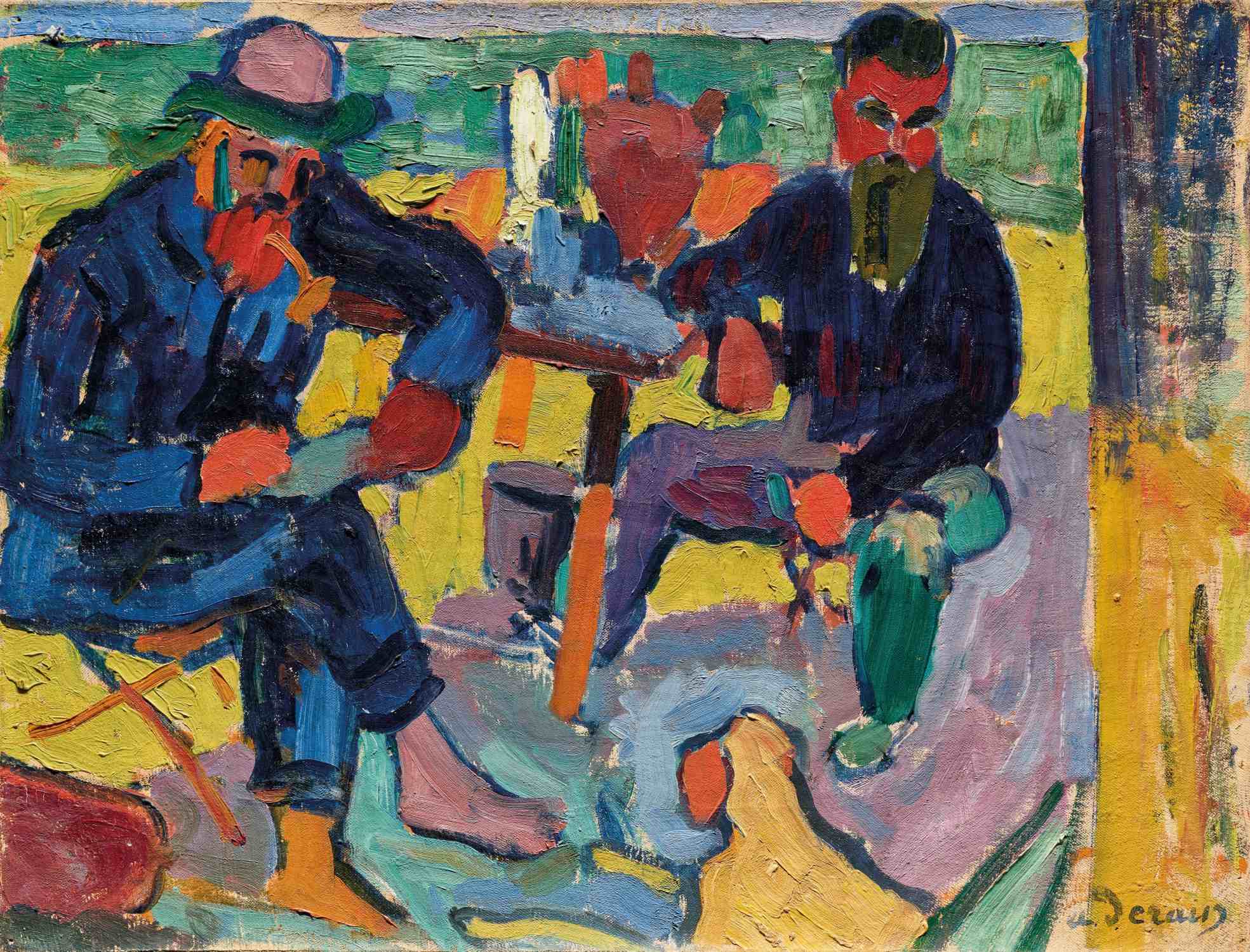 'Matisse and Terrus' by André Derain, 1905 | Image courtesy of RA / private collection
This is an exhibition then that extends further than the French Riviera, and it also extends beyond painting, with sculpture, ceramics, travel posters, literature and film thrown into the mix. Some artists are represented by just one or two works. Kees van Dongen’s sole piece The White Lady (1926) is not just about the light – it is also about style and the high life, while Francis Picabia’s painting of revellers Veglione (1924) suggests that the high life is already curdling. He said of his life: “I play baccarat and I lose, but more and more I love this empty and sick atmosphere of the casinos.”
 Politics bubbles under the surface. Among the paintings of Mediterranean fauns and centaurs, Picasso’s disjointed Landscape (1965) unexpectedly depicts the high-rises of a rampant development, a far cry from Paul Signac’s 1896 pastoral idyll In the Time of Harmony: the Golden Age is not in the Past, it is in the Future.
Today, despite or even because of the superyachts and the tourist trade, there is a considerable wealth inequality on the French Riviera, with some areas of Nice and Cannes among the poorest in France. It is no wonder that the region is a Marine Le Pen stronghold.
For the most part, the present exhibition plays along with a myth grounded in the realities of sun, sea and heat. It’s a powerful myth.
Lord Clancarty is a Crossbench peer
Painting the French Riviera
Curated by: Ann Dumas, Heather Lemonedes Brown, with Colm Guo-Lin Peare
Venue: Royal Academy of Arts – until 31 January 2027
