"A stunning cast with fabulous voices": Baroness Andrews reviews 'The Choral'
Image: Alamy / © Sony Pictures Classics / courtesy Everett Collection
3 min read
The Choral combines the power of music with the tenderness of love and the pain of war to moving and memorable effect
Yorkshire: 1916. As the film opens, we see the telegrams delivered. But for men too young to fight, the war is still a game not to be missed.
In Ramsden (the paternalistic architecture of Saltaire making the perfect setting for the fictional town), choral singing brings together the capitalist and the worker. This resonates powerfully with me.
For decades, my father was conductor and director of the Tredegar Operatic Society. The soundtrack to our lives were the oratorios of Handel, Bach, Mendelssohn and Elgar – before audiences so passionate and discerning they would join in the chorus voluntarily and then compare my Aunty Mary’s voice on a good day to the English contralto Kathleen Ferrier.
But in 1916 music is partisan. The work of German composer Bach is out: Elgar, the English hero, in. Can art and war be reconciled? Can music overcome xenophobia and hate? These are the unspoken questions in a film where the power of music, the pity of war and the tenderness of love combine to make something memorable.
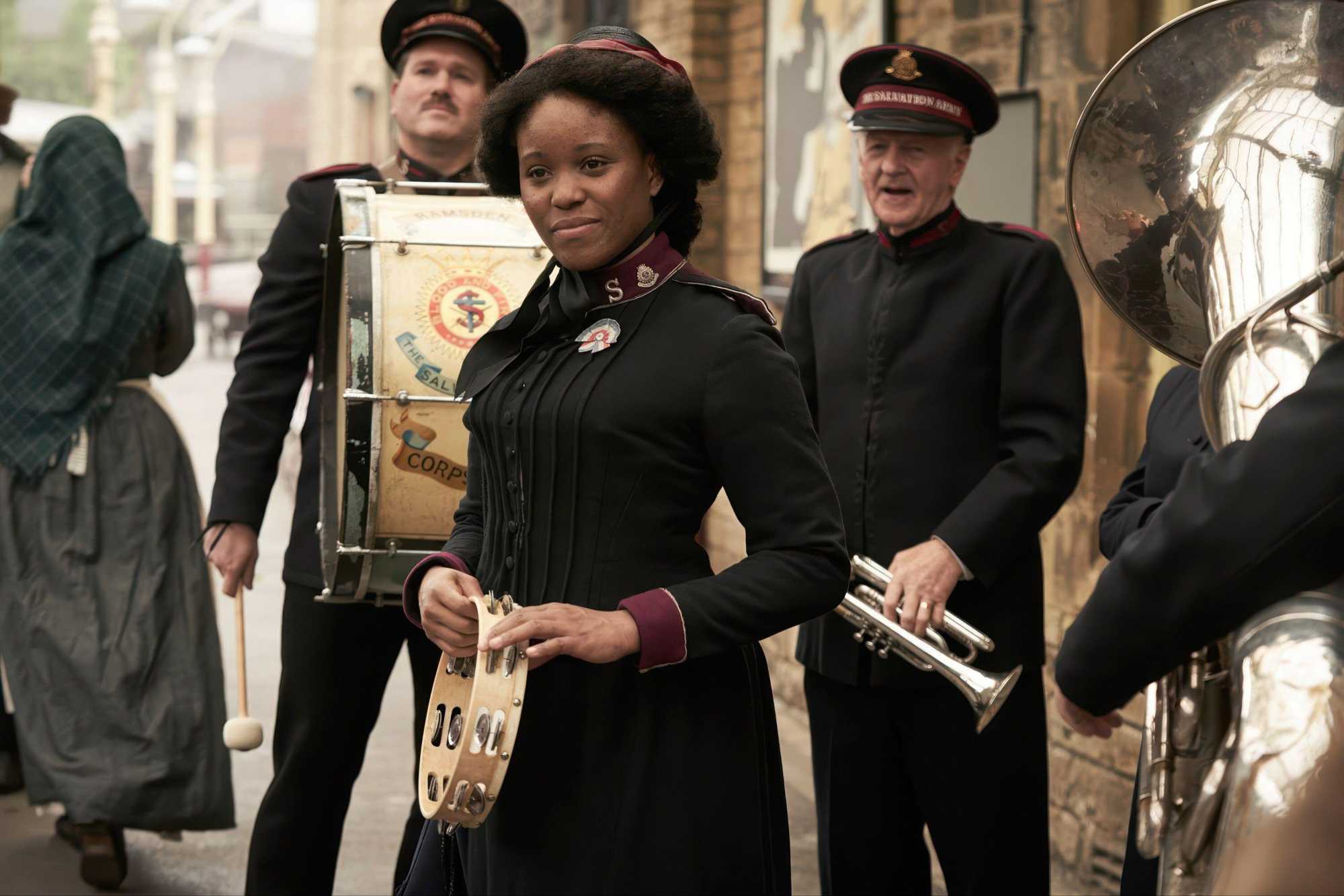 Amara Okereke as Mary
Image: Alamy / © Sony Pictures Classics / courtesy Everett Collection
The Choral, with its stunning cast and voices could easily have been a cloying depiction of the home front. In fact, it is funny, poignant and powerful. Grief, injury, sex and love bear down on young and old. Throughout the film, the glorious sound of Elgar, Handel and Gilbert and Sullivan add to the emotional swell.
The English chorus master Dr Guthrie (Ralph Fiennes), roped in when his popular predecessor signs up, is already compromised by his love of German culture. As he learns of the fate of a close friend fighting for the other side, he stands silent and alone, oblivious to the infatuation of the choral’s English pianist Robert Horner (Robert Emms) – but only too aware of the divide as the chorus break out in a raucous version of the national anthem.
The stage is set for a subversive, dramatic, concert performance
Guthrie’s work is cut out. The Dream of Gerontius is a revolutionary, and massive, oratorio for chorus and orchestra. Guthrie has a herd of amateur singers, a ‘Palm Court Trio’ and no young men. Pub soloists, butchers, postmen and invalided soldiers, are press-ganged into the choral, some attracted by the alluring young sopranos, including the Salvationist lass Mary (Amara Okereke singing the part of the angel marvellously).
 The problem is that the Gerontius in waiting – Mr Duxbury (Roger Allam), mill owner and failing baritone – is defeated by the part of the dying man, the old England, on his tormented journey to salvation. Guthrie’s choice for Gerontius however is war casualty Clyde (Jacob Dudman, a fabulous lyric tenor) – a young man whose heart as well as body is broken and who has gone through his own purgatory.
So the stage is set for a subversive, dramatic, concert performance – an analogy for the war itself. But what would Elgar (Simon Russell Beale in triumphant form) think?
Suffice it to say the musical resolution to this story is overwhelming.
And as the rest of the young men leave for the front, on the same train that will bring back the casualties, their bravado fades. The game is over. The song is sung; the war is real.
Baroness Andrews is a Labour peer
The Choral
Directed by: Nicholas Hytner
Written by: Alan Bennett
Venue: General cinema release
