"Gray brings a fascinating lady to life": Baroness Laing reviews 'Red Duchess'
November 1924: Kitty Atholl takes up her post as parliamentary secretary at the Board of Education | Image by: Smith Archive / Alamy
3 min read
Amy Gray tells a compelling story in this inspirational new biography of Scotland's first female MP
I had often wondered who the elegant lady was in the portrait that hangs in the corridor of the House of Commons just behind the Speaker’s Chair. She looks intriguingly intelligent but also attractive and fashionable. Why was she worthy of having her portrait in such a prominent place?
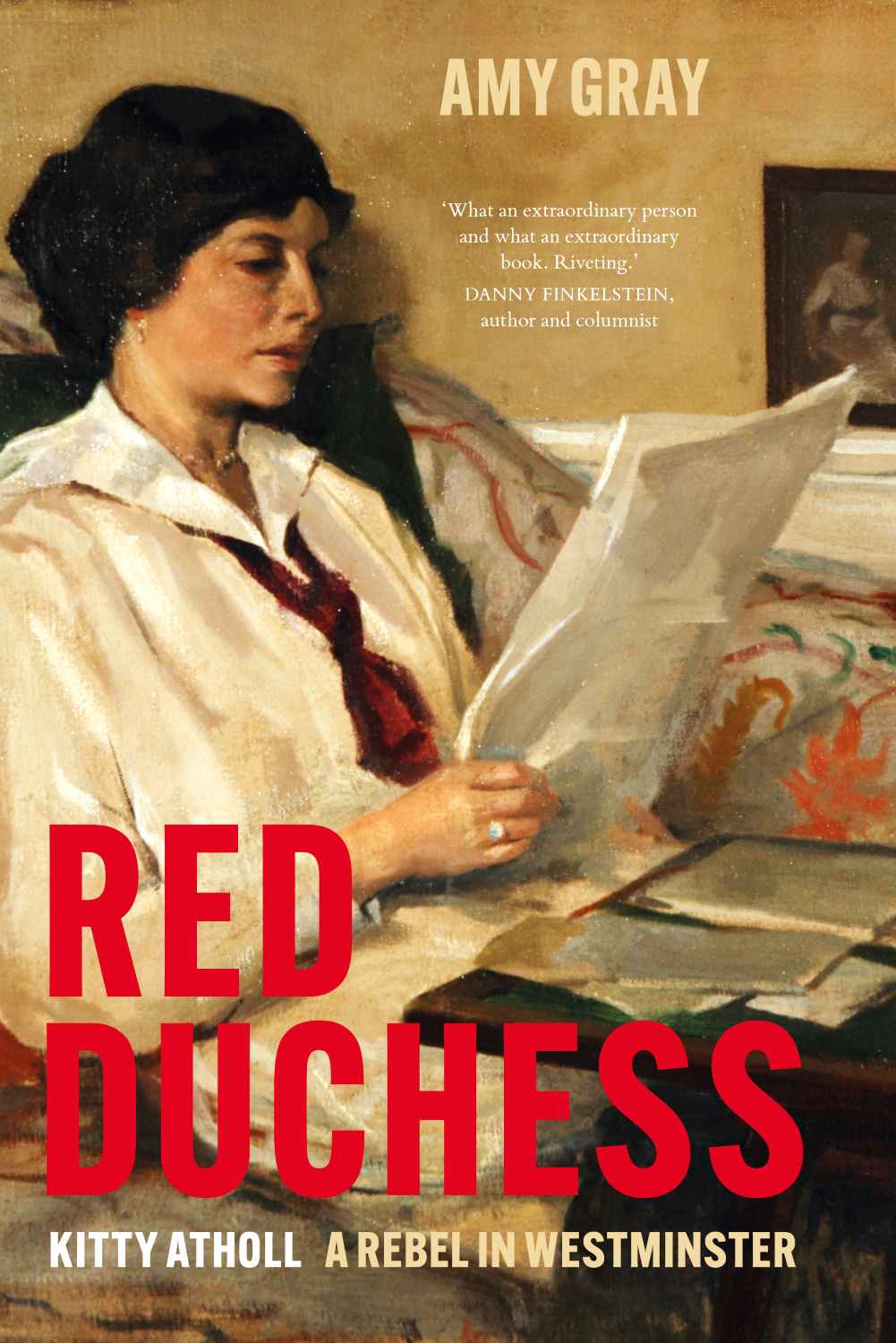
My question has been comprehensively answered by Amy Gray in this inspirational new biography. Kitty, Duchess of Atholl, was a courageous trailblazer – the first Scottish woman to be elected to the House of Commons and an outspoken critic of appeasement.
Gray’s compelling narrative brings this fascinating lady to life and I recommend it to anyone who believes in the necessity of shattering glass ceilings.
Born in Edinburgh in 1874, Kitty had the unusually good fortune of having a father who believed in educating girls. A talented and accomplished musician, she began to breach boundaries by attending the Royal College of Music as one of its first female students.
The direction of her life was set when she married the heir to the Duke of Atholl in 1899, putting her in a position to work effectively for the causes in which she so fervently believed. Although their marriage was somewhat unconventional, she enthusiastically supported her husband’s political career and subsequently he supported hers. Hers was by far the more successful!
Kitty’s life, spanning as it did eight decades from the Victorian era to the swinging 60s, is a vivid reflection of the social and political change through which she lived and which she herself did so much to enhance. The many quotations in Kitty’s own words, from her own published works, brings the story to life.
Kitty was fiercely opposed to Neville Chamberlain’s appeasement policy
The value of this book lies, therefore, not only in its portrayal of one very significant woman but also in its accurate and well-researched evidence of how and why our country was changing.
But plus ça change, plus c’est la même chose: why is Kitty’s story so uncannily relevant today?
Having travelled widely in Europe, in 1938, meeting a variety of political leaders, Kitty was fiercely opposed to Neville Chamberlain’s appeasement policy. She had long warned about the dangers posed by antisemitism and the rise of fascism. She was threatened with deselection by her local Conservative association. Her principles were far more important to her than any personal ambition. Her sincerity, moral courage and dignity far outweighed any thoughts of expediency.
 She resigned her seat and fought a by-election as an Independent against the official Conservative candidate. Her stance was “Country Before Party”. She lost the election and her formal political career was over. But history has proved that she was right.
Gray’s title of the final chapter sums up Kitty’s story and its lessons for today: “Every Warning She Has Given Us Came True”.
Kitty Atholl has not had the recognition she deserves. This very significant lady merits the attention that this new publication provides, not just because of her achievements as a female political pioneer, but because her detractors were wrong and she was right.
Baroness Laing of Elderslie is a Conservative peer
Red Duchess: Kitty Atholl, A Rebel in Westminster
By: Amy Gray
Publisher: The History Press
